Stainless Steel Paradox: Why a $29 Headphone Built to Outlast Everything Else
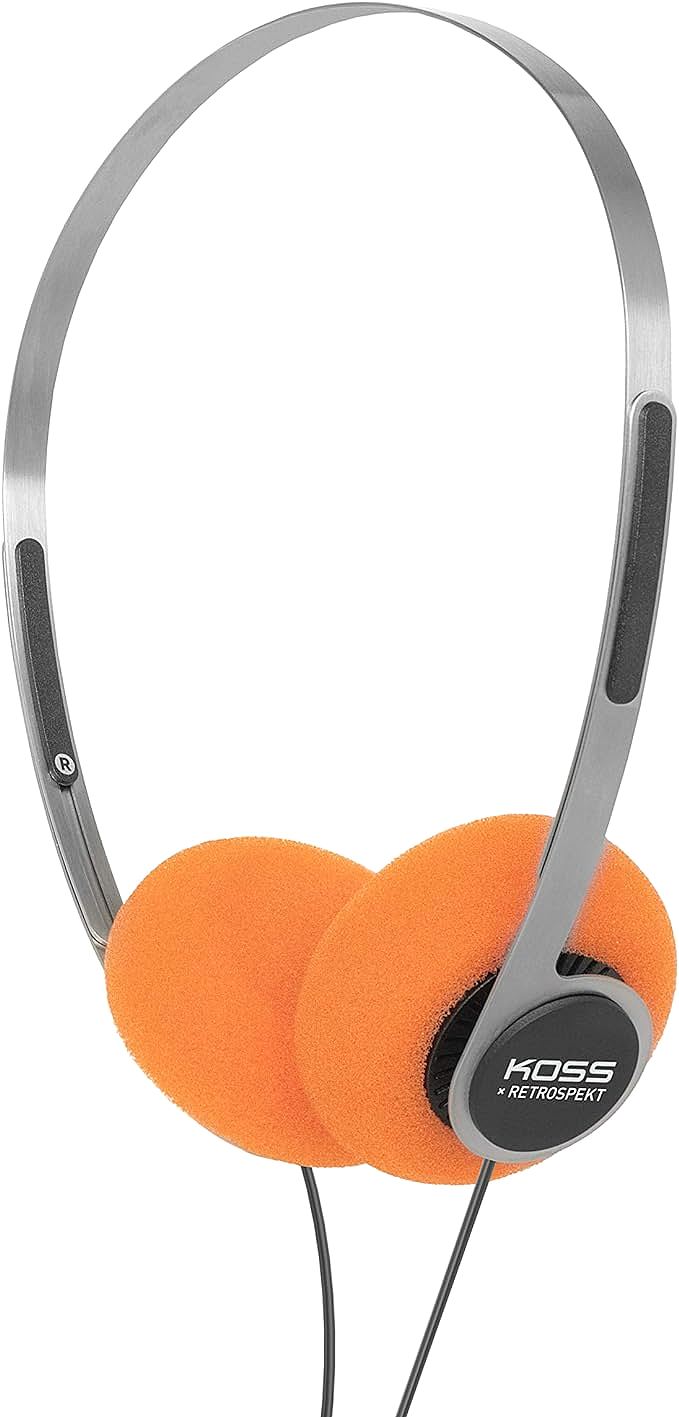
Koss x Retrospekt P21 Retro On-Ear Headphones
Plastic headbands snap. Every single one of them. The Sony MDR-ZX110 cracks around month six. Skullcandy's hinge gives out after a year of pocket carry. Even the revered Koss Porta Pro, with its metal-sprung headband, develops play in the plastic joints after sustained daily use. The cycle is so predictable that most people no longer notice it: buy cheap headphones, break them, throw them away, repeat.
Somewhere along the way, the audio industry quietly redefined "disposable" to include products that cost between ten and fifty dollars. The economics seem reasonable until you add them up. A $12 pair replaced twice a year runs you $24 annually. Over five years, that is $120 spent on headphones that never sounded good to begin with.
The alternative costs $29 once.

Why Stainless Steel Bends Without Breaking
The engineering behind a headband that survives thousands of adjustments comes down to a single material property: fatigue life. When you bend plastic, microscopic cracks form at stress concentration points. Each bend propagates those cracks further. After approximately 500 to 2,000 bend cycles, depending on the polymer blend, the structure fails catastrophically. That is not a defect. That is how plastic works.
Stainless steel follows a different physics entirely. When you flex a thin strip of austenitic stainless steel, the crystalline lattice deforms elastically and returns to its original shape without accumulating structural damage. The fatigue endurance limit for common grades sits around 10,000 cycles minimum. In practice, a well-designed stainless headband can survive tens of thousands of adjustments without any measurable degradation.
This is not theoretical. The Koss x Retrospekt P21 uses a single strip of thin stainless steel as its entire structural element. There are no ratcheting mechanisms, no clicking adjusters, no hinges with tiny plastic pins. Two metal arms slide through friction clips. The adjustment mechanism is the material itself.
The result is a structural design with essentially zero failure points. You could shove it in a backpack, sit on it, drop it down a flight of stairs, and the headband would spring back to its original shape. Try that with any plastic headband in the same price range and you will be shopping for replacements.
The cost-per-year math becomes stark when you project over time. A $12 pair that lasts six months costs $24 per year. A $23 pair that lasts a year costs $23 per year. A $29 pair with a stainless steel frame and a limited lifetime warranty has an effective annual cost that approaches zero after the first year, assuming the frame outlasts the foam pads, which themselves are replaceable.
The Open-Back Sound You Cannot Get From Sealed Designs
Most headphones under $50 use sealed earcups. The back of each earcup is a solid wall that traps air between the driver and your ear. This creates a pressurized chamber that boosts bass response. It also creates the single most common complaint about budget headphones: everything sounds like it is happening inside a box.
Open-back designs perforate the back of the earcup. Sound waves radiate outward through the openings instead of reflecting back toward your ear. The immediate acoustic effect is a dramatic increase in perceived soundstage width. Instruments separate spatially. Vocals sit in front of you rather than inside your head. The listening experience feels less like wearing headphones and more like sitting in a room with speakers.
This is not subtle. The difference between open-back and sealed soundstage is one of the most immediately perceptible changes in headphone listening, comparable to the difference between mono and stereo. And yet, among headphones priced under $50, open-back designs are vanishingly rare.
The reason is economic, not acoustic. Sealed designs isolate the listener from ambient noise, which is a marketable feature. They also allow cheaper drivers to produce acceptable bass by using the trapped air as an acoustic spring. Open-back designs expose the driver's raw performance. There is nowhere to hide.
At 104 dB sensitivity and 32 Ohms impedance, this headphone's driver delivers enough acoustic energy to create a convincing sense of space without requiring amplification. The sensitivity rating means that even a low-power source, a phone headphone jack, a laptop, a handheld game console, produces volume levels that are not just audible but genuinely engaging. The 30 to 17,000 Hz frequency response covers approximately 90 percent of the audible spectrum. The roll-off at the extremes contributes to what listeners describe as a warm, natural presentation rather than a clinically flat response.
The trade-off is real and should be stated plainly: open-back designs do not isolate you from external noise, and they do not produce the kind of sub-bass impact that sealed designs can achieve through air pressure. If deep bass is your primary criterion, this design philosophy will frustrate you. But if spatial presentation and tonal clarity matter more than thump, the open-back approach at this price point offers something that sealed alternatives simply cannot replicate.

32 Ohms: The Impedance That Works With Everything
Headphone impedance is one of the most misunderstood specifications in consumer audio. Low impedance, typically 16 to 32 Ohms, means the headphones require less voltage to reach a given volume level. High impedance, 250 Ohms and above, requires more voltage but offers better damping and lower distortion when driven by a capable amplifier.
At 32 Ohms, this design sits at the impedance sweet spot for universal compatibility. It is low enough to be driven cleanly by the anemic headphone amplifiers built into smartphones and laptops. It is high enough to avoid the background hiss that plagues ultra-low-impedance designs when connected to more powerful sources.
This is why users report success plugging it into devices that struggle with other headphones. A Gameboy Color's headphone output delivers roughly 10 milliwatts into a 32 Ohm load. That is enough to push the 104 dB sensitivity drivers to comfortable listening levels. The same output would barely register on a pair of 250 Ohm headphones.
The practical implication extends beyond retro gaming. Any device with a 3.5mm output, including older receivers, airline seat jacks, portable CD players, and the dwindling number of phones that still include analog audio outputs, will drive this headphone without additional amplification. The 4-foot cable is optimized for portable use, which is both a strength, it does not tangle, and a limitation, it restricts desktop use unless you add an extension.
When the Headband Outlasts the Drivers
Here is where the Koss product family reveals an unusual architectural decision. The P21, the Porta Pro, and the KPH-40 all share a driver-mounting form factor. The small circular drivers snap into the headband assembly with a consistent attachment mechanism. This is not accidental. It means that drivers from one model can be physically removed and attached to the headband of another.
Users who own both the stainless-frame model and the Porta Pro discovered this years ago. The Porta Pro has superior drivers with a wider frequency response, 20 to 20,000 Hz versus this model's 30 to 17,000 Hz, but its headband uses a combination of plastic and a metal tension spring that is less durable. The stainless frame has the stronger structure but the weaker drivers.
The solution is straightforward: remove the Porta Pro drivers, attach them to the stainless headband, and you have effectively built a headphone that combines the acoustic performance of a $50 model with the structural durability of stainless steel. The total cost for this combination is approximately $79 if you buy both new, or $29 if you already own Porta Pro drivers from a previous purchase.
This modularity is uncommon in modern audio products. The industry trend has moved aggressively toward integrated, non-serviceable designs. Wireless earbuds are glued shut. Noise-canceling headbands embed batteries and circuit boards into the structural elements. Repair requires specialized tools and voids warranties. The Koss product family moves in the opposite direction: standardized parts, friction-fit assembly, and a limited lifetime warranty that covers the frame.
The modding aspect is not a hack. It is an implicit design philosophy. By using consistent driver mounting across multiple product lines, Koss has created an accidental platform. Whether this was intentional engineering or simply cost-saving standardization, the result is a family of headphones that can be mixed, matched, and upgraded by anyone with functioning hands and five minutes of patience.

What Break-In Actually Does
Multiple reviewers mention a break-in period during which the sound improves. This is not audiophile mythology. There is a physical mechanism at work.
The mylar diaphragm in a small moving-coil driver arrives from the factory with residual stiffness from the manufacturing process. After several hours of use at moderate volume, the suspension surround loosens incrementally. The diaphragm gains a small amount of additional excursion, which extends the effective low-frequency response.
Simultaneously, the foam ear pads compress to match the contour of the listener's head. On-ear designs are particularly sensitive to pad compression because the acoustic seal, or lack thereof, directly affects bass response. As the foam settles, the driver-to-ear distance stabilizes, and the frequency response becomes more consistent.
One reviewer noted that manually increasing the clamping force improved bass response after break-in. This is consistent with the physics of open-back designs. More clamping force presses the foam pads more firmly against the ear, reducing the gap through which sound escapes. The trade-off is comfort: higher clamping force means more pressure on the pinna, which can become uncomfortable during extended listening sessions.
The engineering reality is that the sound signature of any open-back, on-ear design is a direct consequence of its architecture. No amount of break-in will turn it into a bass cannon. But understanding the physics of why it sounds the way it does allows listeners to set accurate expectations before purchasing, rather than being disappointed by a sound signature that was never designed to deliver sealed-cup bass.
Choosing Retro Headphones: What Actually Matters
The retro headphone category under $50 is crowded with products that trade on nostalgia without delivering on engineering. The relevant criteria for separating substance from styling are few and specific.
First, headband material. Plastic headbands are a planned replacement cycle. Stainless steel or spring-steel headbands are not. This single factor determines whether you will be shopping again in six months or six years.
Second, driver accessibility. Can you remove and replace the drivers without tools? If yes, the headphone is a platform. If no, it is a disposable product. The distinction matters because driver technology improves over time while structural components do not need to. A good frame can survive multiple driver generations.
Third, acoustic design philosophy. Open-back designs trade isolation for spatial presentation. Sealed designs trade soundstage for isolation and bass impact. Neither is objectively superior. The question is which trade-off matches your listening environment and preferences.
Fourth, warranty terms. A limited lifetime warranty at a $29 price point is an unusually strong signal from the manufacturer. It indicates that the company expects the structural components to outlast any reasonable product lifecycle. Products priced similarly that offer only a one-year warranty are telling you exactly how long they expect to survive.
Fifth, impedance and sensitivity ratings. If the manufacturer does not publish these numbers, the drivers are likely generic and unremarkable. Published specs of 32 Ohms and 104 dB indicate intentional engineering for universal device compatibility, which is particularly relevant if you plan to use the headphones with low-power sources like portable gaming devices or older audio equipment.
The pattern across these criteria is consistent: material choices and published specifications tell you more about a headphone's long-term value than any marketing description. A $29 headphone with a stainless steel frame, published impedance and sensitivity data, a modular driver system, and a lifetime warranty is making specific engineering claims that can be independently verified. A $15 headphone in a retro-styled plastic shell with no published specs is making aesthetic claims that cannot.
Koss x Retrospekt P21 Retro On-Ear Headphones
Related Essays
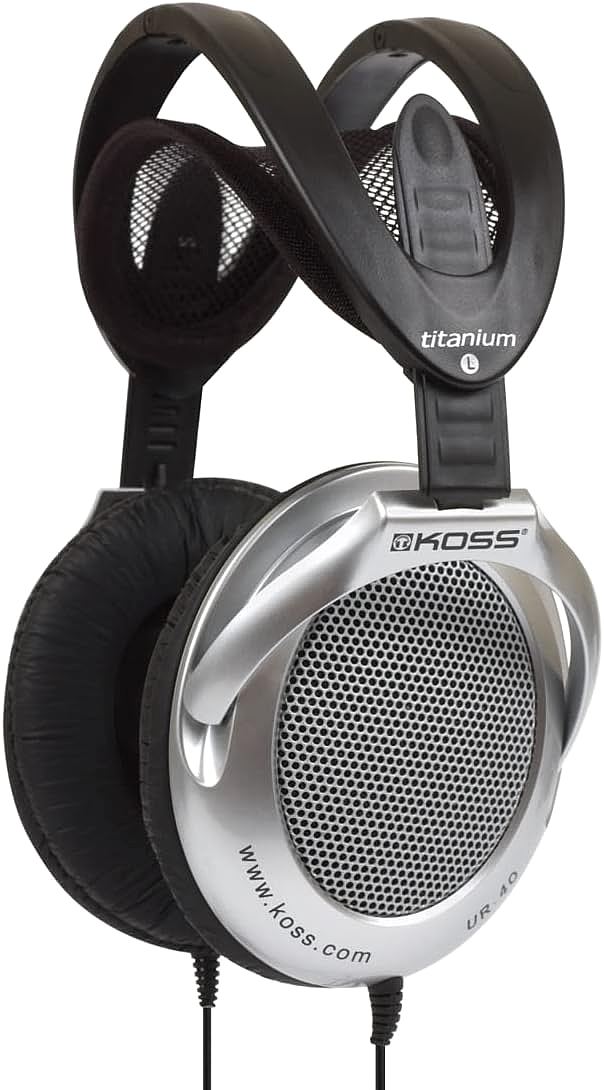
The Physics of Fidelity: Understanding Open-Air Acoustics Through the Lens of Legacy Engineering

The Physics of Value: Decoding Dual-Magnetic Circuits and Composite Diaphragms in Modern IEMs
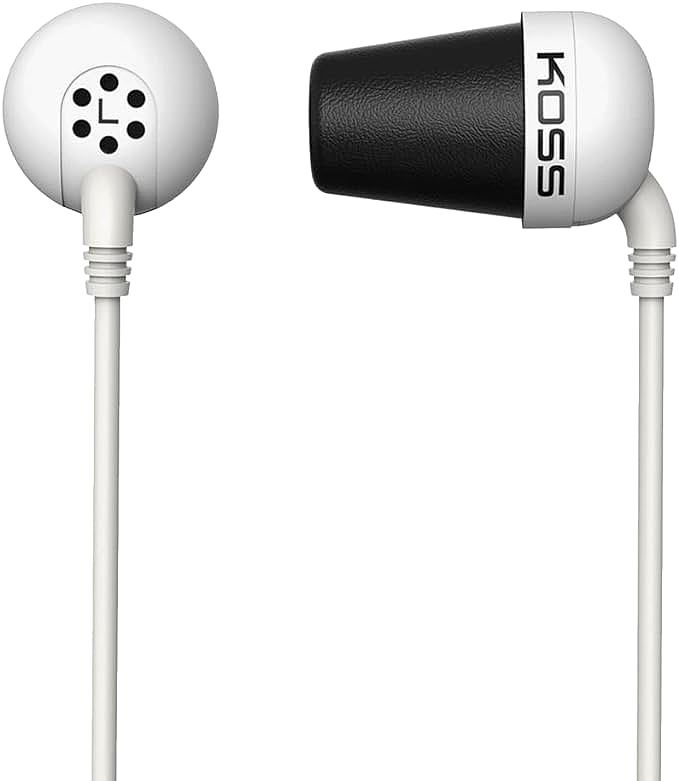
Koss The Plug In-Ear Headphones: Superior Sound Isolation and Comfort

Betron B750 Earphones - Quality Sound on a Budget

The Science of Sound: Engineering Analysis of the Koss KSC75

Navigating the Intersection of Biomechanics and RF Propagation

Wired Earbuds vs Wireless: Why Signal Path Engineering Still Matters in 2026

Decoding Hybrid ANC, AI Calls & Powerful Audio: The Science...

Why Bone Conduction Bypasses Your Eardrums and What That...
