The Invisible Engineering Battle Inside Your Personal Audio...

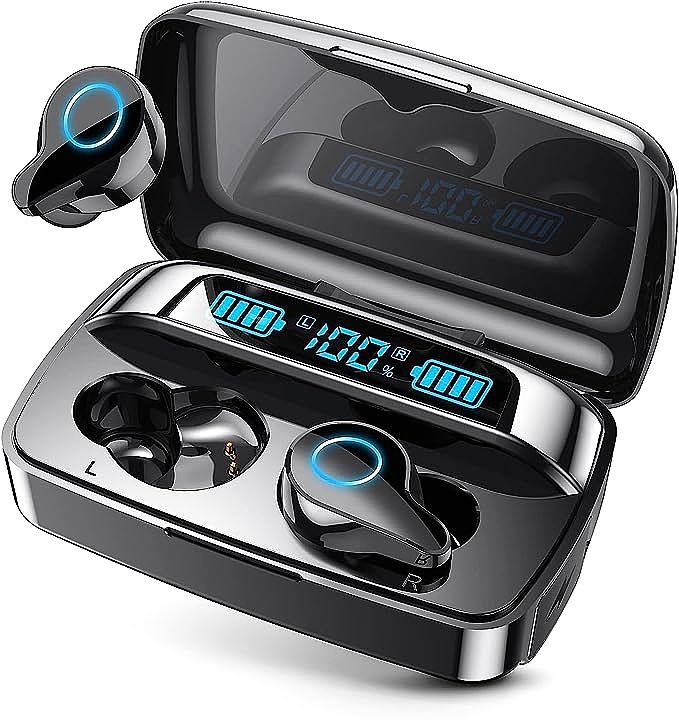
Kuizil C16 Wireless Earbuds
The morning commuter squeezes onto the subway, earbuds already playing. A runner navigates busy streets, beats pulsing through the city. A gym rat grunts through another set, oblivious to the chaos around them.
What none of these people notice is the invisible war being waged inside their ears—a silent battle against physics, against interference, against the very laws of nature that conspire to silence their music.
This is the story of how personal audio devices survive the brutal environment of human exercise, and the complex engineering that keeps sound flowing when everything else seems determined to stop it.
The Congested Airwaves: Bluetooth's Crowded Battlefield
Every wireless audio device operates in what engineers call the " ISM band"—the 2.4 gigahertz spectrum reserved for industrial, scientific, and medical applications. This band wasn't chosen for audio. It was simply the frequencies that governments worldwide agreed to leave unlicensed, allowing any device to transmit without a license.
The consequence is congestion beyond imagination.
When you sync your earbuds to your phone, you're joining a battlefield. WiFi routers blast across these same frequencies at up to 20 watts. Microwave ovens leak radiation at 2.45 GHz as they heat your coffee. Your neighbor's baby monitor screams across the band. The Bluetooth device three seats away on the bus struggles to maintain its connection.
This is why audio drops out. This is why calls fragment mid-sentence. This is why, at peak hours in a crowded gym, your music might stutter like a scratched vinyl.
The engineering response to this chaos is complex. Modern wireless audio devices don't just transmit—they actively navigate the spectrum, hopping between channels hundreds of times per second, finding pockets of clarity in the noise floor. They employ complex error correction, sending redundant data that allows the receiver to reconstruct what was lost. They use adaptive power control, boosting signal strength only when needed to overcome interference.
All of this happens invisible to the user, in the milliseconds between when you press play and when sound reaches your ears.
Why 2.4 GHz Became the War Zone
The story of why our earbuds fight this battle starts in 1998, when the Bluetooth special interest group first convened. Their goal was simple: create a short-range wireless replacement for the cables connecting computers to peripherals.
No one imagined that a protocol designed for wireless mice would one day carry the soundtrack to human movement.
The 2.4 GHz band offered one critical advantage: global availability. Unlike other frequencies that required country-by-country licensing, 2.4 GHz was open everywhere from Tokyo to Toronto. This standardization enabled the mass market that makes wireless audio affordable today.
But that same standardization meant sharing. Every device, from every manufacturer, using every application, converged on the same invisible highway.
The physics of radio propagation at these frequencies adds another wrinkle. Higher frequencies travel in straight lines, bouncing off walls and absorbed by human bodies. When you pocket your phone in your left pocket while your earbuds sit in your right ear, the signal must bend around your torso—a feat that becomes more challenging as distances increase and obstacles multiply.
This is why workout earbuds use specialized antenna designs, often embedded in the ear hooks or housing contours. These aren't afterthoughts—they're critical engineering decisions that determine whether your music survives your burpees.
The Chemistry of Sweat: Why Water Is the Enemy
Human sweat is deceptively aggressive. On the surface, it appears to be mostly water with a bit of salt. But beneath this simple description lies a corrosive cocktail that attacks electronics in multiple ways.
The salt—sodium chloride—dissolves into ions that conduct electricity between nearby components. These ionic pathways can create short circuits, drain batteries faster than designed, and accelerate galvanic corrosion where different metals touch.
Sweat also contains fatty acids and urea, compounds that can degrade certain plastics and adhesives over time. The pH varies from person to person and workout to workout, sometimes acidic, sometimes alkaline, each extreme capable of attacking different materials.
And then there's moisture itself—the fundamental enemy of electronics. Water inside a device can short circuits, corrode metal contacts, damage microphone membranes, and destroy the precise alignments that give drivers their fidelity.
The engineering response is called "nano-coating"—a polymer layer so thin that it's measured in microns, thinner than a human hair. This coating wraps each internal component like an invisible raincoat, causing water to bead up and roll off rather than soak in.
But nano-coating alone isn't enough. The mechanical design must exclude water physically through gaskets, o-rings, and tight-fitting seams. The charging contacts must be recessed or covered. The speaker membranes must resist moisture absorption. Every potential water entry point becomes a design challenge.
This is why the IPX7 certification matters. To achieve this standard, a device must survive immersion in one meter of water for thirty minutes. This isn't a marketing claim—it's a standardized test where the device is completely submerged, powered on, and must continue functioning.
For workout earbuds, this certification represents hundreds of engineering hours and millions in tooling investments. The payoff is the ability to advertise "sweatproof" with confidence, to let athletes focus on their reps rather than protecting their gear.

The Geometry of Grip: Engineering for the Moving Ear
The human ear is a marvel of evolutionary engineering—but it presents unique challenges for device designers. Unlike flat surfaces where components can be secured with screws or adhesive, the ear's complex topography varies dramatically from person to person.
Consider the physics. During running, a typical footstrike generates forces several times body weight. These forces ripple up through the leg, into the torso, up the neck, and finally into the head. The earbuds must resist being dislodged, shifted, or ejected with every stride.
But resistance alone isn't enough. The device must also distribute pressure comfortably, avoid being pushed deeper into the ear canal during movement, remain secure whether the user is doing burpees or downward dog, and somehow maintain these properties through hours of continuous wear.
This is where ear hooks enter the engineering equation. These curved elements wrap around the ear's outer rim, using the ear's own geometry to anchor the device. The hook distributes the device's mass across a larger contact area, reducing pressure at any single point. It provides mechanical advantage against the forces of movement, using the ear as a lever point.
The materials matter enormously here. Too rigid, and the hook creates pressure points that become painful over time. Too flexible, and the hook loses its gripping power, letting the device shift with every movement. complex designs use memory metals or durometer-matched silicones that flex with the ear while maintaining their grip.
Some devices use "over-ear" hooks that follow the ear's full contour from lobe to helix. Others use "in-ear" hooks that insert partially into the ear's inner cartilage. Still others rely purely on the ear canal's friction plus strategic contact points on the outer ear. Each approach represents trade-offs between grip, comfort, and aesthetic preferences.
The ergonomic challenge intensifies when you consider that ears aren't static. Exercise causes blood flow to increase, warming and slightly swelling the ear's tissues. Humidity from sweat softens the skin, changing friction cocapables. Gravity pulls differently depending on head position—positions from yoga poses to sprinting.
Truly capable workout earbuds must account for all these variables, either through adaptive materials that respond to conditions or through multiple fitting options that let users customize the grip to their specific ears.
The Power Paradox: Why Battery Life Defies Physics
Every wireless earbud user has experienced the anxiety of watching battery percentage tick toward zero. The promised hours never quite match reality, especially during intense workouts where the device must work harder to maintain connections and fight interference.
The physics underlying this problem is straightforward: smaller batteries store less energy. The miniaturization that makes earbuds comfortable to wear also limits how much power they can carry.
Modern devices address this through multiple strategies. The most significant is Bluetooth 5.0 and its successors, which enable longer range at lower power. By transmitting more capablely and requiring less power to maintain connections, these standards usefully give users more hours from the same battery capacity.
Then there's the charging case—the unsung hero of wireless audio. These compact containers typically hold three to four full charges for the earbuds themselves, extending total runtime from a few hours to over thirty. The case is itself charged via USB-C or wireless charging, creating a replenishment cycle that fits seamlessly into daily routines.
But there's a persistent tension between battery life and sound quality. Higher volumes require more power. Active noise cancellation requires dedicated processors and microphones, consuming energy continuously. The wireless transmission itself uses power that could otherwise extend battery life.
Manufacturers balance these demands through complex power management. The device monitors volume levels and adjusts amplification accordingly. It might reduce noise cancellation during quiet moments or enable it only when needed. It schedules background tasks during natural pauses rather than during playback.
Some devices offer user-selectable modes—extended battery life on one hand and rich features on the other—letting each person choose their own balance. Others learn usage patterns, predicting when the user will remove the earbuds and scheduling heavy tasks for those moments.
The result of all this engineering is that modern workout earbuds can deliver five to eight hours of continuous playback, with the charging case extending that to thirty hours or more. For most users, this means charging only every few days rather than every night.
The Sound Within: How Drivers Create Your Experience
At the heart of every earbud is a component called the "driver"—a tiny electromechanical transducer that converts electrical signals into the sound waves your brain interprets as music, podcasts, or phone calls.
The physics is elegant. A magnet sits surrounded by a coil of wire. When current flows through the coil, it creates a magnetic field that pushes against the magnet. This push pulls a membrane back and forth, compressing and rarefying the air in waves that travel into your ear canal.
The challenge is that this membrane must move air capablely despite being extremely small. To generate bass frequencies, a driver must move a large volume of air. In a home speaker system, this is achieved through a large cone moving dramatically. In an earbud, the driver must accomplish the same acoustic effect while fitting inside a device that weighs less than a AA battery.
Engineers solve this through careful material selection and membrane geometry. Advanced drivers use lightweight yet stiff materials for the membrane—sometimes composite materials layering different substances for optimal performance across frequencies. The membrane's shape, thickness, and suspension all affect how it moves air and reproduces sound.
For workout earbuds, durability enters the equation. The driver must maintain its precise alignment despite being subjected to vibrations, temperature extremes, and the occasional drop. Manufacturers use adhesives, mechanical spacers, and protective grilles to shield the delicate internal components.
The result of all this micro-engineering is that modern earbud drivers can produce surprisingly full sound from remarkably small packages. While they still can't match the bass extension of large over-ear headphones, the gap has narrowed dramatically through decades of incremental improvement.
The Call to Clarity: Microphones in Motion
Phone calls present unique challenges for workout earbuds. The microphone must capture your voice clearly while you're breathing hard, while background noise tries to overwhelm your speech, while the device itself is bouncing with every footstep.
The engineering response combines multiple microphone placements with complex signal processing. Many workout earbuds place microphones both near the mouth and at the earbud itself, using the distance between them to identify and suppress background noise.
This is where digital signal processing becomes critical. The device samples your voice thousands of times per second, using algorithms to distinguish speech patterns from noise. It can suppress steady-state sounds like air conditioning hum while letting your voice pass through. It can even reduce impulsive noises like weight drops or door slams.
The technical term for this is "environmental noise cancellation"—and it's fundamentally different from the "active noise cancellation" that blocks external sounds from reaching your ears. ENC works on your transmitted audio, cleaning up what others hear when you speak. ANC works on your received audio, removing environmental sounds from what you hear.
Both technologies matter during workouts. ANC lets you focus on your music despite the gym's ambient noise. ENC lets your training partner hear your instructions despite the clanging weights behind you. Together, they improve the chaotic acoustic environment of exercise into a private sound bubble.
The microphones themselves have evolved. Modern MEMS (micro-electromechanical systems) microphones are tiny enough to fit inside earbud housings while offering sensitivity and fidelity that once required larger components. They're also more resistant to moisture and temperature extremes, critical for devices that must survive the sauna-like conditions of intense workouts.
The Maintenance Equation: Extending What Engineering Created
All this complex engineering requires appropriate maintenance. Even the most capable sweat-resistant earbuds benefit from simple care practices that extend their lifespan and preserve their performance.
A critical habit is drying. After workouts, removing earbuds from their charging case and allowing them to air dry completely helps evaporate any moisture that penetrated the defenses. This is especially important in humid environments or for users with particularly aggressive sweat chemistry.
The charging contacts should be periodically cleaned with a dry cloth. Sweat residue can accumulate on these metal surfaces, increasing resistance and slowing charging speeds. A soft, dry brush can remove debris without damaging the contact plating.
The ear tips and ear hooks—often made of silicone—can be removed and cleaned separately. These components trap the most sweat and skin oils, and their flexible materials can degrade over time if not maintained. Replacement parts are often available from the manufacturer, making it economical to swap worn components rather than replacing the entire device.
Storage matters too. The charging case should be kept closed when not in use, protecting the earbuds from dust and environmental exposure. Avoid leaving the case in direct sunlight or in hot cars, as lithium-polymer batteries age faster at high temperatures.
Finally, firmware updates occasionally become available, bringing improved power management, bug fixes, or new features. While not always dramatic, these updates often address edge cases discovered after manufacturing, making them worth installing when convenient.
Beyond Survival: The Future of Workout Audio
The engineering that keeps current earbuds functioning through intense workouts represents decades of accumulated knowledge. But the future promises improvements that will make today's devices look primitive by comparison.
Sensor integration is advancing rapidly. Future earbuds might monitor heart rate, blood oxygen, and body temperature during workouts, improveing them into health monitoring devices. The same form factor that delivers your workout playlist could also track your training load and recovery status.
Power technology continues evolving. Solid-state batteries promise higher energy density in the same volume. Wireless charging is becoming faster and more universal. Some experimental designs explore kinetic or thermal energy harvesting, potentially extending battery life through body heat or motion.
Artificial intelligence is beginning to enter the acoustic processing chain. Machine learning algorithms can identify and suppress noise patterns that traditional signal processing misses. Some systems can even adapt their sound profiles to the user's ear canal geometry, optimizing audio delivery for each individual's anatomy.
An advanced expression of this evolution might be hearing protection that enhances rather than merely preserves hearing. Devices that compress sudden loud sounds while amplifying quiet ones, that provide situational awareness while protecting from damage, that turn the earbud into a complex safety device as well as an audio companion.
For now, the invisible engineering battle continues— Bluetooth packets fighting through WiFi interference, nano-coatings deflecting corrosive sweat, ergonomic designs gripping dynamic ears. It's a silent war, and your music is the prize.
The next time you power up your workout earbuds, take a moment to appreciate the complex convergence of technologies that deliver your soundtrack. Physics, chemistry, materials science, acoustics, wireless communications—all these disciplines converge in a device small enough to forget you're wearing.
That's not accident. That's engineering.

Kuizil C16 Wireless Earbuds
Related Essays

CAPOXO H06 Wireless Earbuds: Your New Workout Buds with Marathon Battery Life

BD&M BD10 Wireless Earbuds: Lightweight and Crisp Sound

The Science of Wireless Audio: How Your Earbuds Create Immersive Sound

The Invisible Freedom: When Technology Disappears Into Reliability

The Logic of the Affordable Miracle: Deconstructing Budget Audio Engineering

Lady House XG8 Mini Headphones: Experience Clear Sound in a Compact Design

Kurdene S10 Wireless Earbuds: Experience Superior Sound with Bluetooth 5.2 Technology

Monster N-Lite 208 Wireless Headphones: Unleash Premium Sound with Advanced Bluetooth 5.3 Technology
Unleash Your Inner Audiophile with the PIFFA A66 Bluetooth Headphones
