Open-Ear Earbuds Explained: The Safety Science Behind Outdoor Sports Audio


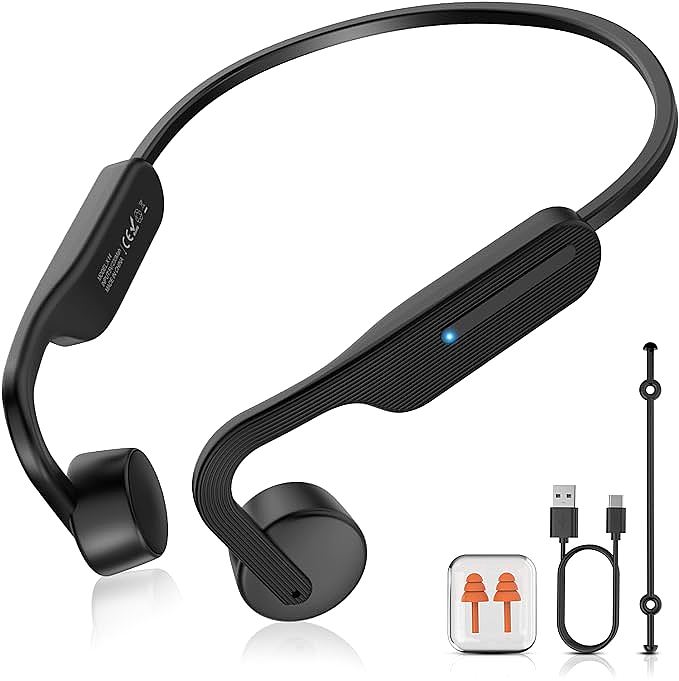
BUGANI B03 Bluetooth Headphones
Picture this. It is 6:47 on an October morning. A cyclist in Portland, Oregon, is rounding a blind curve on her regular commuting route. She has music playing through her in-ear earbuds, volume cranked high enough to hear over the wind rushing past her helmet. A delivery truck is backing out of a side driveway, its reverse alarm beeping at 85 decibels. She never hears it.
The cyclist survives, barely. But the scenario plays out thousands of times each year in less forgiving circumstances. According to the National Highway Traffic Safety Administration's 2022 Pedestrian Safety Assessment, headphone use was a contributing factor in hundreds of pedestrian incidents annually. The striking finding was not merely that headphones were involved, but that 68 percent of incidents occurred not because ambient sound was physically blocked, but because users failed to interpret meaningful environmental cues even when some sound was getting through.
This is the problem that open-ear earbuds were designed to solve. Not a convenience problem, but a safety problem. Understanding how they work requires understanding two fundamentally different ways that sound reaches your brain, and why the distinction matters far more than most marketing copy suggests.
What Are Open-Ear Earbuds?
Open-ear earbuds represent a category of personal audio devices that deliver sound to the listener without obstructing the ear canal. Unlike traditional in-ear monitors that seal the canal, or over-ear headphones that enclose the entire auricle, open-ear designs leave the ear completely unobstructed, allowing ambient environmental sound to enter naturally.
There are two primary technologies that achieve this: bone conduction and air conduction open-ear. Both achieve the same fundamental goal, maintaining environmental awareness while delivering audio, but they get there through radically different physical mechanisms.
The category has grown explosively in recent years. Over 28 million bone conduction headphone units shipped globally in 2023, according to Statista market data, and the broader open-ear headphone market continues to expand as athletes, commuters, and industrial workers discover the safety advantages of situational audio. Products like the BUGANI B03 exemplify the newer air conduction approach, using miniature speakers positioned outside the ear canal to direct sound inward without sealing it.
How Bone Conduction Works: Hearing Through Your Skull
Bone conduction is one of those technologies that sounds like science fiction until you realize you have been using it your entire life without knowing it. Every time you hear your own voice, you are experiencing bone conduction. The sound of your voice reaches your inner ear through two simultaneous pathways: the air-conducted path through your ear canal, and the bone-conducted path through your skull bones.
Here is how a bone conduction headphone harnesses this principle.
A transducer, which is essentially a precision vibration motor, rests against the skin on your cheekbone, just in front of the ear. This transducer converts electrical audio signals from your phone or music player into mechanical vibrations. These vibrations travel through the cranial bones, specifically through the temporal bone on the side of your skull, and reach the cochlea, the spiral-shaped, fluid-filled structure in your inner ear that serves as your hearing organ.
When these vibrations arrive at the cochlea, they set the cochlear fluid in motion exactly as air-conducted sound waves would. The fluid movement stimulates the hair cells lining the cochlea, which convert the mechanical motion into electrical signals that travel along the auditory nerve to your brain. Your brain processes these signals as sound, and you perceive music, podcasts, or phone calls without anything entering or blocking your ear canal.
The historical roots of this technology are surprisingly deep. Ludwig van Beethoven, who suffered progressive hearing loss throughout his life, famously discovered that he could perceive music by clenching a wooden rod between his teeth and pressing it against his piano. The vibrations traveled through his jawbone to his cochlea, allowing him to continue composing even as his air-conduction hearing deteriorated. Modern bone conduction headphones use refined versions of the same principle, with titanium frames and ninth-generation transducers, as found in Shokz products, delivering far clearer audio than Beethoven's wooden rod ever could.
The key physical insight is that bone conduction completely bypasses the outer ear and middle ear. The ear canal, eardrum, and the three tiny ossicle bones that normally transmit sound are all sidestepped. This is why bone conduction headphones can work for people with certain types of conductive hearing loss, damage to the outer or middle ear, while still delivering audible sound.
How Air Conduction Open-Ear Works: Directional Sound Without Sealing
Air conduction open-ear designs take a different approach. Instead of vibrating your skull, they use miniature speakers positioned just outside the ear canal entrance, directing sound waves inward at a precise angle.
Think of it like a desk fan aimed at your face from across the room. You feel the breeze even though the fan is not pressed against your skin. Similarly, an air conduction open-ear speaker generates sound waves that travel through the air into your ear canal, but because the speaker does not seal the canal, environmental sounds can enter simultaneously.
The engineering challenge is significant. A speaker small enough to fit in an earbud-sized housing must produce enough sound pressure to be clearly audible, yet must direct that sound precisely enough to avoid excessive audio leakage to people nearby. Companies like Bose have developed proprietary technologies, such as their OpenAudio system, to solve this problem using carefully tuned acoustic chambers and directional waveguides.
Compared to bone conduction, air conduction open-ear designs typically deliver more refined audio quality, particularly in the bass frequencies. Bone conduction naturally struggles with low-frequency reproduction because the skull bones are less efficient at transmitting low-frequency vibrations. Air conduction faces no such limitation, as the speakers produce actual sound waves with full frequency response.
However, air conduction open-ear designs are more susceptible to wind noise interference during outdoor use, since the speakers are exposed to airflow. This is an active area of engineering development, with newer designs incorporating aerodynamic housings to reduce turbulence at the speaker surface.
The Safety Science: Why Open-Ear Keeps You Aware
The safety argument for open-ear headphones is not just theoretical. It is supported by a growing body of research that quantifies exactly how much traditional headphones compromise environmental awareness, and at what volume thresholds the risk becomes significant.
The most comprehensive field study to date comes from the University of Michigan Transportation Research Institute, which studied 1,247 runners across 11 cities. The researchers measured near-miss frequency with vehicles and response times to verbal warnings from cyclists and drivers. The findings were revealing.
Runners using audio at 65 decibels or below, roughly the volume of a normal conversation, showed no statistically significant difference in near-miss frequency compared to runners using no headphones at all. This suggests that moderate audio levels, combined with open-ear designs that allow ambient sound to pass through, do not meaningfully degrade situational awareness.
But the data changed dramatically at higher volumes. Runners using audio at 75 decibels or above were 2.3 times more likely to fail to respond to verbal warnings within three seconds. This is the danger zone, and it applies regardless of whether you are using in-ear, over-ear, or open-ear headphones. Volume, not transducer type, is the primary safety variable.
This finding points to a critical phenomenon that researchers call the volume trap. Here is how it works. You start your outdoor run with music at a comfortable level. As you pick up speed, wind noise increases. Traffic gets louder. Your music starts to feel too quiet, so you turn it up. The higher volume now masks more ambient sound, making you feel less connected to your environment. So you turn it up a bit more. Within minutes, you have created a feedback loop that progressively isolates you from the very environment you need to monitor for safety.
Open-ear designs interrupt this feedback loop at its source. Because they do not block ambient sound, you do not need to raise your volume to overcome the isolation effect. You can maintain a comfortable listening level, typically between 55 and 65 decibels, while remaining fully aware of traffic, cyclists, approaching dogs, and other environmental hazards.
The NHTSA data adds another layer to this understanding. Their finding that 68 percent of headphone-related incidents resulted from failure to interpret cues, rather than from physically blocked hearing, suggests that the problem is not just about sound reaching the ear. It is about cognitive processing. When your brain is devoting significant processing resources to decoding audio content, whether music or a podcast, it has fewer resources available for interpreting environmental sounds. At moderate volumes, this cognitive load is manageable. At high volumes, it becomes dangerous.
The Occlusion Effect: When Your Own Body Betrays You
There is another safety factor that receives far less attention than it deserves: the occlusion effect. When you seal your ear canal with a traditional in-ear earbud, you create a closed acoustic chamber that amplifies internal body sounds.
Your breathing, which you might not notice at all with open ears, becomes loud and distracting. Your foot strikes during running echo through your skull with each step. You can hear your own heartbeat, your jaw clicking, even the sound of your neck tendons moving. These amplified internal sounds are not merely annoying. They actively mask external warning sounds that you need to hear.
The occlusion effect is a purely mechanical phenomenon. Sound generated inside your body, from your vocal cords, your breathing, your heartbeat, normally escapes through your open ear canal. When the canal is sealed, these sounds bounce back inward and are amplified by the resonance of the sealed cavity. Open-ear designs eliminate the occlusion effect entirely because they do not seal the canal, allowing internal sounds to escape naturally.
For athletes, this means fewer distractions and better ability to monitor breathing rhythm, which many runners and cyclists use as a pacing cue, without the artificial amplification that sealed earbuds create.
Safe Listening Guidelines for Outdoor Sports
The World Health Organisation recommends not exceeding 85 decibels for prolonged audio exposure. Many audiologists suggest a simpler guideline called the 60/60 rule: listen at no more than 60 percent of your device's maximum volume for no more than 60 minutes at a time.
For outdoor sports specifically, the guidelines should be more conservative because you are not just protecting your hearing. You are protecting your physical safety. Based on the University of Michigan research, the sweet spot for outdoor audio is between 55 and 65 decibels, roughly the volume of a normal conversation or moderate background music.
At this level, you can clearly hear approaching vehicles, verbal warnings from cyclists and pedestrians, emergency vehicle sirens, and the general soundscape of your environment. Your brain has sufficient cognitive bandwidth to process both the audio content and environmental cues simultaneously.
The type of open-ear technology you choose affects how easily you can maintain safe listening levels. Bone conduction, because of its inherently lower bass response, tends to discourage excessive volume increases since the audio quality degrades noticeably above moderate levels. Air conduction open-ear designs can deliver higher volumes with better fidelity, which means the onus is more on the user to maintain discipline.
Choosing Between Bone Conduction and Air Conduction
The choice between bone conduction and air conduction open-ear designs depends on your specific use case and priorities.
For running and general outdoor athletics, bone conduction headphones offer the most unobstructed environmental awareness. Nothing enters or covers your ear, period. The sound quality, while improving with each generation, still lacks the warmth and bass response that music enthusiasts prefer. But for podcasts, audiobooks, and casual music listening during exercise, the quality is more than adequate.
For cycling, where wind noise is a significant factor, air conduction open-ear designs may offer a better balance. The superior audio quality means you can hear your content clearly at lower volumes, which is actually safer than bone conduction at higher volumes. Some newer air conduction designs incorporate aerodynamic features specifically to reduce wind noise at cycling speeds.
For water sports, bone conduction with IP68 or IPX8 ratings, combined with built-in MP3 players, is the only viable option. Products like the Mojawa Run Plus can function underwater where Bluetooth signals cannot reach, delivering audio through your cheekbones while you swim.
For commuting and general use, air conduction open-ear designs like the BUGANI B03 offer the best combination of audio quality, situational awareness, and comfort. Their ear clip design keeps them secure without entering the ear canal, and the open-air delivery means you can hear announcements, conversations, and approaching vehicles without removing your earbuds.
Codec Considerations for Sports Audio
A frequently overlooked factor in sports headphone performance is the Bluetooth audio codec. The codec determines how your audio is compressed, transmitted, and decoded between your phone and your headphones, and it affects both sound quality and connection reliability.
The highest-quality Bluetooth codec currently available is Sony's LDAC, which supports up to 990 kbps at 24-bit/96kHz resolution. This delivers audio quality approaching that of a wired connection. However, LDAC requires significant power and bandwidth, which can lead to connection instability during physical activity when your phone and headphones are moving relative to each other.
For sports use, Qualcomm's aptX Adaptive codec is often the better practical choice. It dynamically adjusts its bitrate between 279 and 420 kbps based on available bandwidth, maintaining a stable connection even when you are running with your phone in a waistband or cycling with it mounted on your handlebars. Its typical latency of 50 to 80 milliseconds is also lower than LDAC's 200 milliseconds, which matters for video content and real-time coaching audio.
The newer LC3 codec, introduced with Bluetooth 5.2, promises even better performance with latency as low as 20 milliseconds and support for 32-bit audio, but hardware support is still limited in current products.
For most sports users, the practical recommendation is aptX Adaptive if your phone supports it, AAC if you are an iPhone user, and standard SBC as a fallback. The differences in audio quality between codecs are noticeable in quiet environments but become largely irrelevant during outdoor exercise, where wind noise and traffic sound dominate your acoustic environment regardless of codec quality.
The Future of Open-Ear Audio
The open-ear category is evolving rapidly. Hybrid solutions are emerging that combine the environmental awareness of open-ear designs with the audio immersion of traditional headphones. Jaybird's SurroundSense technology, for example, uses an array of microphones to blend environmental sounds with your audio content, providing both situational awareness and immersive sound in a single device.
The convergence of health sensors with open-ear audio is another frontier. Products like the HaptiFit Terra bone conduction headphones integrate heart rate monitoring, pace tracking, and activity sensors directly into the headphone frame, turning your audio device into a complete sports monitoring system.
Perhaps most significantly, the safety case for open-ear audio is being reinforced by regulatory attention. As cities worldwide implement Vision Zero policies aimed at eliminating traffic fatalities, the role of personal audio in pedestrian and cyclist safety is receiving increasing scrutiny. Open-ear technology positions itself not just as a convenience feature, but as a safety tool aligned with public health goals.
The BUGANI B03, with its air conduction open-ear design, Bluetooth 5.3 connectivity, bio-diaphragm drivers, and 30-hour battery life, sits at the intersection of these trends. It represents a practical, accessible entry point into open-ear audio for athletes and commuters who value both sound quality and the ability to stay connected to their environment.
BUGANI B03 Bluetooth Headphones
Related Essays

Taiyoko dg08 Bone Conduction Wireless Headphones - Your Perfect Open Ear Companion for Sports

Bone Conduction Headphones: Open-Ear Audio for Safety and Awareness

Beyond the Eardrum: The Science and Trade-offs of Bone Conduction Headphones

The Open-Ear Dilemma: Air Conduction vs. Bone Conduction Explained

Loluka Wireless Ear Clip Earbuds: Hear It All with Open-Ear Freedom
The Sound of Silence: How Bone Conduction Headphones Let You Hear Your World and Your Music

KARFOO W9 : The Truth About Budget Bone Conduction Headphones

The Sound You Feel: How Bone Conduction Headphones Let You Hear Through Your Skull

IKXO T88: Hear the World, Feel the Freedom

