Neckband Audio: Spatial Separation Enables aptX-HD at Budget Prices

SoundPEATS Q30 HD+ Wireless Earbuds
Your wireless earbuds die halfway through a commute. The bass sounds thin. The connection stutters when you walk past a coffee shop. You paid for Bluetooth 5.0, a decent codec, and ten hours of battery life — but the reality falls short on every count. The problem is not your ears.
The problem is physics, specifically the physics of trying to cram a battery, a Bluetooth chip, a DAC, two microphones, and a speaker driver into a space the size of a jellybean.
True Wireless Stereo earbuds face a trilemma that no amount of marketing can solve. In a housing of two to three cubic centimeters, you can pick two: small size, quality components, or low price. The third suffers. This is not a design flaw — it is a geometric constraint as rigid as the speed of light.
Every cubic millimeter allocated to a larger driver is stolen from battery capacity. Every milliamp devoted to a high-resolution DAC shortens playback time. The TWS form factor is an exercise in zero-sum engineering.
The Architecture of Compromise
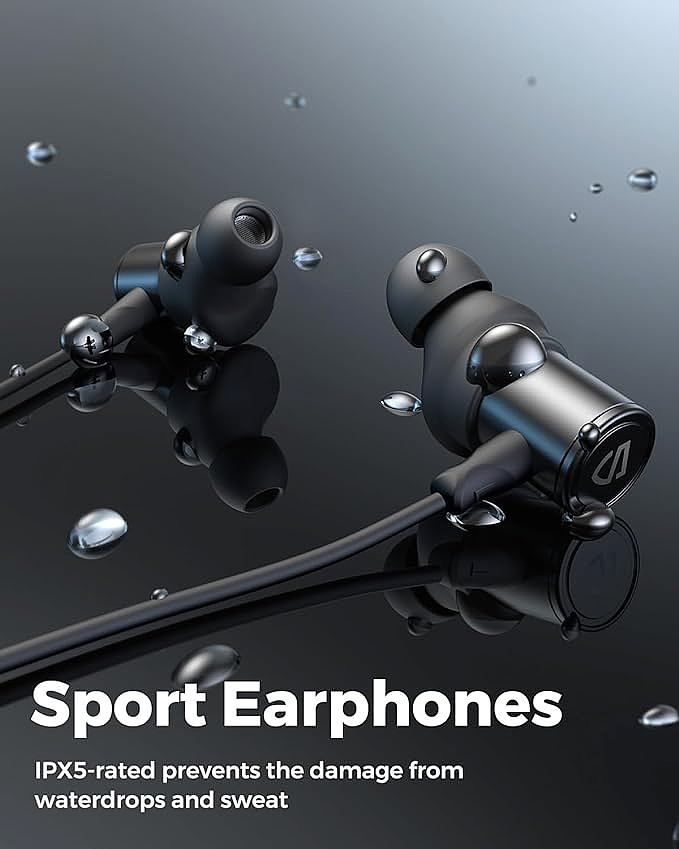
Think of a TWS earbud as a micro-apartment in a dense city. The kitchen, bedroom, bathroom, and living room must all fit into 400 square feet. You can make the kitchen bigger, but only by shrinking the bedroom. There is no expansion — the walls are fixed by the ear canal's diameter. The Bluetooth SoC, the battery, the driver, and the microphones are tenants competing for the same limited floor plan.
A neckband design operates on a different principle entirely. It is more like a campus: the earbuds are studio spaces dedicated to a single function, while the neckband houses the infrastructure — power plant, server room, communications hub. Its earbuds contain only a large-driver moving-coil driver and a microphone. The Qualcomm the Bluetooth SoC chip, the 120mAh battery, and the digital-to-analog converter all live in the neckband. This is not a minor rearrangement. It is a fundamental shift in what the audio pipeline can accomplish.
Why the high-resolution codec Lives Where LDAC Cannot Afford To
the high-resolution codec encodes audio at 24-bit/48kHz resolution with a bitrate of 576kbps. That specification is not arbitrary — it represents the threshold where most listeners can no longer distinguish compressed Bluetooth audio from a wired connection in blind tests. The codec achieves this through a clever encoding strategy: instead of transmitting raw PCM samples, the high-resolution codec uses adaptive differential pulse-code modulation, predicting each sample based on previous ones and transmitting only the prediction error. When the signal is predictable — as most music is — the error values are small, and the effective data rate drops well below 576kbps, leaving headroom for the moments when the waveform surprises the predictor.
Running the high-resolution codec requires processing power. The the Bluetooth SoC handles this with a dual-core 120MHz DSP fabricated on a 40nm CMOS process. That process node is not leading-edge by semiconductor standards — modern phone chips use 3nm — but it is mature, cheap, and power-efficient. The chip draws less than 5mA during music playback. In a TWS earbud, even 5mA is a significant drain on a 60mAh battery. In a neckband with 120mAh, it is sustainable for hours.
This is the core insight: the high-resolution codec does not require exotic hardware. It requires adequate hardware with adequate power. The neckband form factor provides both without asking the earbud to sacrifice driver size or acoustic chamber volume. LDAC, Sony's 990kbps codec, demands even more processing overhead and a cleaner RF environment — which is why you rarely see it in products under $100. the high-resolution codec hits a sweet spot: high enough resolution to matter, low enough overhead to run on budget silicon.
The large-driver Driver and the Physics of Low Frequency
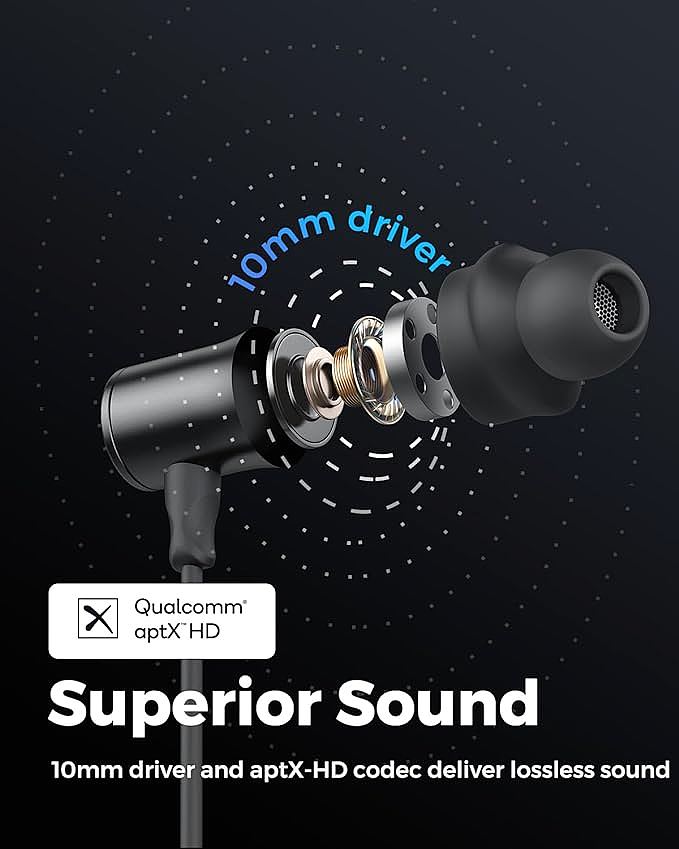
Sound is a pressure wave. Low frequencies require more air displacement than high frequencies to achieve the same perceived loudness — this is why subwoofers are large and tweeters are small. In an earbud, the driver's diaphragm is the piston that pushes air. A 6mm driver moves roughly 28 square millimeters of air. A large driver driver moves approximately 78 square millimeters. That is nearly a threefold increase in radiating area, and it translates directly to low-frequency output.
The math is straightforward. Sound pressure level at low frequencies is proportional to volume velocity — the product of diaphragm area and peak displacement. Double the diaphragm area, and you can achieve the same bass output with half the excursion. Less excursion means less distortion, less power consumption, and less mechanical stress on the suspension. This is why the jump from 8mm to large-driver yields an estimated 15% improvement in low-frequency extension: the larger diaphragm does not have to work as hard to move the same amount of air.
In a TWS earbud, fitting a large driver driver means the battery must shrink. A typical TWS earbud with a large driver driver carries about 40-50mAh per earbud. With the high-resolution codec active, that translates to roughly two hours of playback. The neckband carries 120mAh and delivers four to six hours in the high-resolution codec mode at moderate volume. The battery is not larger by accident — it is larger because the form factor permits it.
Zoning Laws for Audio: The Separation Principle
Urban planners discovered something in the early twentieth century that audio engineers are still learning: separating incompatible functions produces better outcomes than mixing them. When factories and apartments share a building, both suffer. When a Bluetooth radio and a speaker driver share a housing, the radio's electromagnetic interference couples into the audio path, and the driver's mechanical vibrations disturb the MEMS microphones.
The neckband acts as a zoning ordinance. The RF section — antenna, Bluetooth radio, codec processing — is physically distant from the acoustic section. Electromagnetic coupling drops with the cube of distance. Even a few centimeters of separation between the the Bluetooth SoC's radio and the 10mm driver reduces interference by orders of magnitude. The integrated DAC in the the Bluetooth SoC can deliver a cleaner signal because it is not sitting next to a vibrating membrane and a current-hungry voice coil.
This separation also explains the signal-to-noise ratio advantage. An independent DAC, free from the electromagnetic noise of a driver coil operating millimeters away, can achieve approximately 20dB better SNR than a DAC crammed into the same housing. Twenty decibels is the difference between hearing a faint hiss during quiet passages and hearing only silence. In recording studios, engineers pay thousands for that margin. In a neckband earbud, it comes free with the geometry.
The Latency Question: Why 80 Milliseconds Matters
the high-resolution codec achieves approximately 80ms of total latency — encoder delay plus transmission delay plus decoder delay plus DAC buffer. SBC, the default Bluetooth codec, typically runs at 150ms or higher. That 70ms difference is imperceptible when you are listening to music, but it is the boundary between usable and unusable for video playback. Human perception detects audio-visual desync above roughly 100-120ms. Below that threshold, the brain fuses the audio and visual streams into a single experience.
The the Bluetooth SoC contributes to this low latency through its dedicated audio processing pipeline. The dual-core DSP handles codec decoding and audio post-processing in parallel, rather than time-sharing a single core. This architectural choice — possible because the neckband has room for a larger die and more power budget — keeps the processing delay to a fraction of the total latency budget. A TWS earbud using the same codec might achieve similar encoding latency, but the re-encoding and re-transmission between left and right earbuds in a true wireless relay adds 20-40ms. Neckband designs transmit directly to both drivers through a wired connection from the neckband, eliminating that relay hop entirely.
The Battery Paradox: Specification vs. Reality
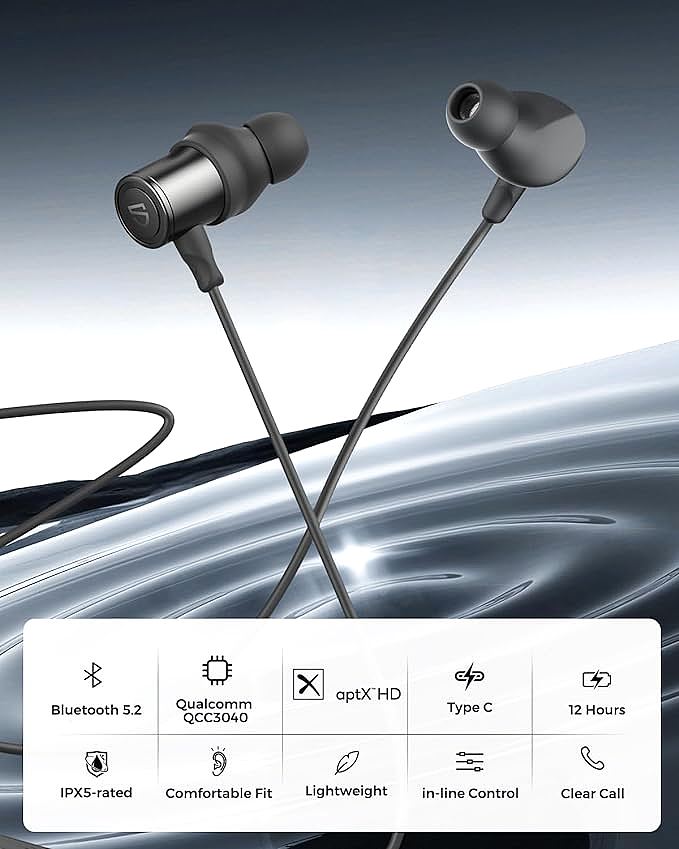
The neckband specifies approximately 12 hours of battery life. Users report four to six hours with the high-resolution codec active at moderate volume. This gap is not deception — it is the difference between SBC at 50% volume and the high-resolution codec at 70% volume. the high-resolution codec's higher bitrate means the Bluetooth radio transmits more data per second, which consumes more power. Higher volume means more current through the driver's voice coil. Both factors compound.
The honest specification would list two numbers: twelve hours on SBC, four to six on the high-resolution codec. But marketing departments do not love nuance. The engineering reality is that the 120mAh battery in the neckband is still roughly double what each TWS earbud carries, and the neckband does not need to power a Bluetooth relay between left and right channels. Even at its real-world the high-resolution codec endurance, the neckband outlasts most TWS competitors in the same price range.
There is a deeper lesson here about how we evaluate battery life. The relevant metric is not hours-per-charge in an abstract best case. It is hours-per-charge at the quality level you actually use. A TWS earbud that lasts eight hours on SBC but drops to two hours on aptX is not an eight-hour earbud if you care about audio resolution. The neckband's larger battery makes the high-quality mode sustainable.
What Durability Data Tells Us About Form Factor
Multiple users report 1.5 to 2.5 years of regular use from this neckband design. One user has worn them daily for fitness sessions over eighteen months with no water damage at IPX5. Another reports a broken battery cover after two and a half years — but the earbuds still function. This durability profile is consistent with the neckband's mechanical advantages: fewer drop events (the neckband catches the earbuds), less exposure to pocket lint and sweat (the electronics are not in your ear canal), and a single charging port rather than two delicate contact-based charging cases.
TWS earbuds fail differently. The most common failure mode is charging case degradation — the pogo pins corrode, the case battery degrades, or the earbuds simply stop making contact. This neckband design uses a USB-C port on the collar, which lasts longer than pogo-pin contacts and does not require a separate charging case. The case itself is a failure point eliminated by design.
The Pragmatic Engineer's Choice
The neckband form factor is not glamorous. It will not appear in a celebrity endorsement or a minimalist product photograph. But it solves a real engineering problem that TWS has not solved: how to deliver high-resolution wireless audio, adequate battery life, and a decent driver in a package that costs under $35. The answer is spatial separation — putting each component where it performs best rather than where it fits.
This principle extends beyond earbuds. Server farms separate compute from storage. Electric vehicles separate the battery pack from the passenger cabin. Recording studios separate the control room from the live room. In each case, the separation is not a compromise — it is the condition that makes high performance possible.
The next time you see a neckband earbud and think it looks dated, consider what that extra physical space is buying you: a codec that runs at 24-bit resolution, a driver with enough diaphragm area to produce real bass, a battery that lasts through a full work session, and a signal path free from the electromagnetic noise of its own radio. The stillness of the neckband is what makes the fidelity of the sound possible.
SoundPEATS Q30 HD+ Wireless Earbuds
Related Essays

The Science Behind Wireless Audio: From Bluetooth Origins...

Silencing the Copper Wire: The Invisible Architecture of Modern Audio

The Physics of Silence: How Active Noise Cancellation Works
The Four Pillars of Unbreakable Sport Audio

How True Wireless Stereo Technology Rewired the Way We...

Why Your Wireless Earbuds Last 48 Hours: The Physics Behind Battery and Sound

Why Your Wireless Earbuds Betray You Mid-Workout: The Physics of Sweat and Signal

From Stage to Studio: The Engineering Legacy Inside the Marshall Woburn III

The Latency Paradox: Why 'Perfect' Wireless Sound is a Matter of Timing
