The Science Behind Wireless Audio: From Bluetooth Origins...

Lrecat J52 Wireless Earbuds
The Paradox of Motionless Sound
A helicopter hovers motionless above a mountain rescue scene. Its rotors spin at 400 revolutions per minute, yet the aircraft itself remains fixed in space. Three thousand feet below, in a Manhattan apartment, a similar paradox plays out at a microscopic scale. Inside a personal audio device, a diaphragm vibrates thousands of times per second—but the device itself sits perfectly still.
This is the fundamental paradox of acoustic reproduction: creating chaos in the air while remaining physically motionless. To understand how wireless audio technology achieves this feat, we must venture beyond the marketing claims of "crystal-clear sound" and "immersive bass" to explore the actual physics at play.
The technology that makes this possible traces its roots to a 1998 handshake between major electronics companies, yet its conceptual foundations reach back over a century to the work of pioneers like Oliver Lodge and Lee De Forest. Understanding these foundations improves how we evaluate any audio device, from budget earbuds to flagship headphones.

From Viking Kings to Radio Waves: The Bluetooth Story
The name "Bluetooth" carries an unlikely history. Harald Gormsson ruled Denmark in the 10th century, famous for uniting warring Scandinavian tribes into a single kingdom. Over a millennium later, engineers at the Swedish telecommunications company Ericsson chose this name for a wireless protocol designed to unite disparate electronic devices.
In 1998, Ericsson partnered with IBM, Intel, Nokia, and Toshiba to form the Bluetooth Special Interest Group. Their goal was ambitious: create a universal short-range wireless communication standard that would replace the maze of cables connecting everything from computers to keyboards.
The original Bluetooth 1.0 specification, released in 1999, offered a maximum data rate of just 721 kilobits per second—barely sufficient for monophonic voice calls. The protocol used frequency-hopping spread spectrum (FHSS), rapidly switching between 79 designated radio channels in the 2.4 gigahertz band 1,600 times per second. This elegant technique minimized interference from other devices operating in the crowded 2.4 GHz ISM (Industrial, Scientific, Medical) band, which shared spectrum with Wi-Fi routers, microwave ovens, and countless other gadgets.
The Viking connection became a self-fulfilling prophecy. Like Harald Bluetooth's political unification, the protocol unified competing device ecosystems. By the mid-2000s, Bluetooth had become the de facto standard for wireless personal area networks, embedded in over a billion devices.
The Invisible Bridge: How Bluetooth Actually Works
Understanding Bluetooth requires abandoning the intuitive image of sound waves traveling through air. Radio waves—specifically those in the 2.4 GHz frequency band—carry audio data through space. The process begins when your phone's digital audio file undergoes compression, typically using codecs like SBC (Low Complexity Subband Coding), AAC (Advanced Audio Coding), or higher-fidelity options like LDAC and aptX HD.
These compressed packets then modulate a radio carrier wave using one of several techniques. The receiving device—the earbud or headphone—demodulates the signal, decompresses the audio data, and converts it to an analog electrical signal. This signal then drives the voice coil in the driver, creating sound through the same electromagnetic principles that Alexander Graham Bell exploited in his telephone receiver.
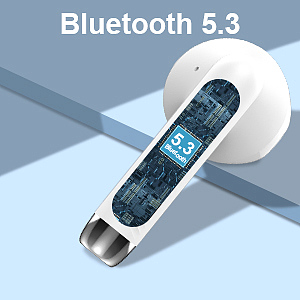
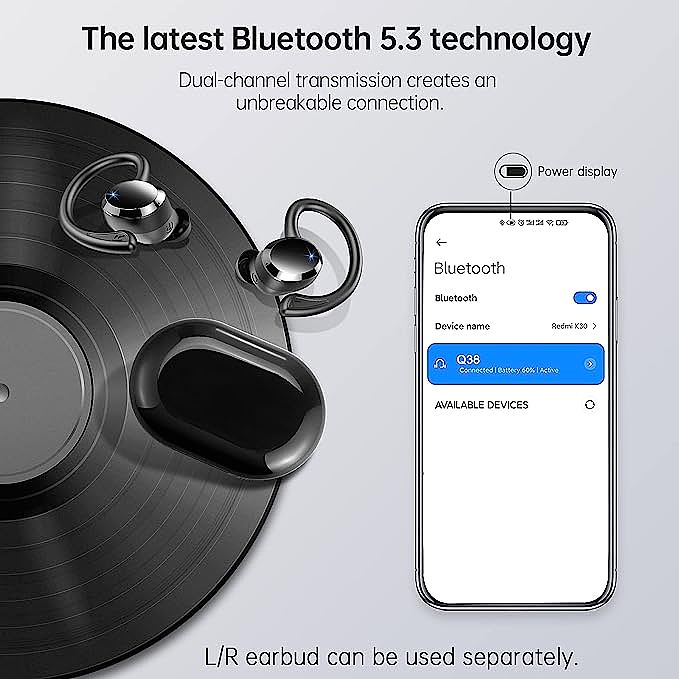
Bluetooth 5.3, the version found in modern wireless audio devices, represents a dramatic evolution from those early specifications. Maximum data rates have increased to approximately 2 megabits per second in ideal conditions. More significantly, improvements in codec efficiency mean that high-quality audio streaming no longer requires the full bandwidth that earlier codecs demanded.
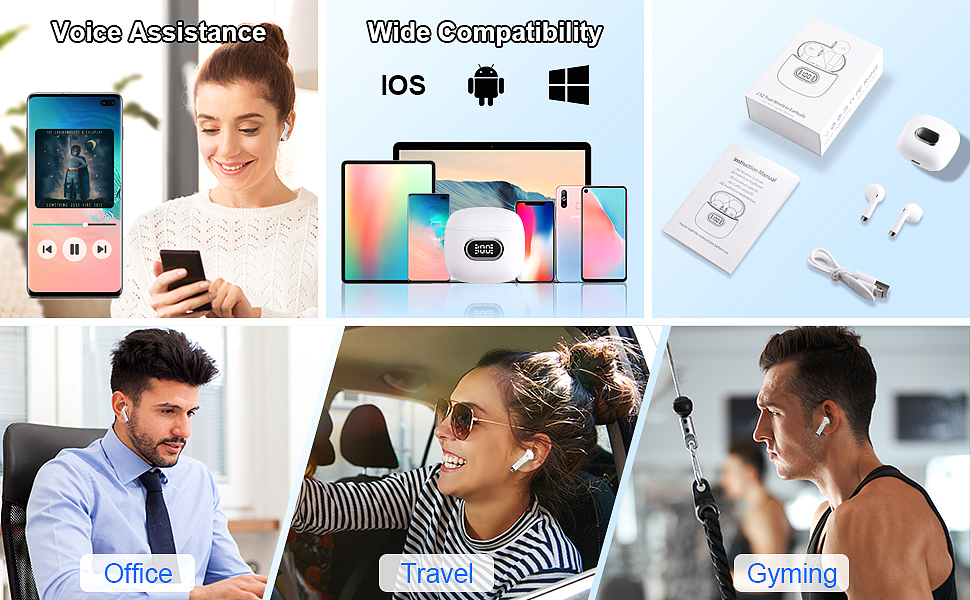
The frequency-hopping algorithm itself has grown more sophisticated. Modern implementations can detect congested channels and avoid them dynamically, switching to cleaner frequencies within milliseconds. This adaptive hopping explains why Bluetooth audio has become notably more reliable in crowded environments like gymnasiums, coffee shops, and urban transit systems.
The Physics of Miniature Sound: Driver Mechanics
If you've ever disassembled a speaker driver, you encountered one of physics' most elegant demonstrations. A typical dynamic driver consists of four primary components: a diaphragm (usually made from synthetic materials like polyetheretherketone or composite laminates), a voice coil (copper wire wound around a former), a magnet (typically a neodymium-iron-boron compound), and a suspension system (surround and spider) that centers the coil within the magnetic gap.
When electrical current flows through the voice coil, it creates a magnetic field that interacts with the permanent magnet's field. According to Fleming's left-hand rule for motors, this interaction generates a force proportional to the current's amplitude. The coil moves because it experiences unequal forces across its diameter, pushing it toward one pole while the other resists. Since the coil attaches directly to the diaphragm, the entire diaphragm moves in concert.
What makes this remarkable in modern earbuds is scale. The drivers in today's wireless earbuds measure typically between 6 and 14 millimeters in diameter. The voice coil in a 10mm driver might contain several meters of copper wire, wound in dozens of precise layers. The magnetic gap—where the coil operates—may be less than a millimeter wide. Maintaining consistent clearance while the coil heats up during operation (copper's resistance increases with temperature, affecting the magnetic interaction) demands extraordinary manufacturing precision.
The diaphragm material science represents another frontier. Engineers seek materials that balance three competing properties: stiffness (to prevent bending modes that color sound), low mass (to respond quickly to transient signals), and damping (to control resonance). Early speaker diaphragms used paper pulp, which offered good damping but degraded with humidity. Modern composites like titanium, beryllium, and graphene-coated materials push stiffness-to-weight ratios to theoretical limits.
Triple-layer composite diaphragms—combining different materials to optimize each property—have become common in premium earbuds. The physics is unforgiving: a diaphragm that resonates at its own natural frequency will emphasize those frequencies regardless of the input signal, creating the "" (coloration) that audio engineers spend careers eliminating.
Echoes and Silence: Microphone Technology
Modern wireless earbuds contain multiple microphones for different purposes. Primary microphones capture voice for phone calls and voice assistant interaction. These are typically electret condenser microphones, miniaturized through MEMS (Micro-Electro-Mechanical Systems) fabrication techniques that etch mechanical structures onto silicon wafers.
The CVC (Clear Voice Capture) algorithms found in premium earbuds represent sophisticated digital signal processing. When you speak into an earbud microphone in a windy environment, the system must somehow isolate your voice from wind noise that might be 20 decibels louder. This requires analyzing the incoming signal in both time and frequency domains, identifying the characteristic patterns of wind turbulence (typically broadband, random noise) against human speech (harmonic, structured, with predictable spectral envelopes during voiced sounds like vowels).
Beamforming represents another advanced technique. Bytime-delaying signals from multiple microphones and summing them constructively, the system can create a directional pickup pattern. Your voice arrives at a slightly different time at each microphone, while sounds from other directions may cancel out. This spatial filtering can provide 10-15 decibels of noise reduction, effectively making a whispered voice sound as clear as normal speech in a quiet room.
The irony of noise-canceling earbuds is that they must create sound to eliminate sound. The outward-facing microphones capture ambient noise, and the system generates an inverted waveform through the driver. When this anti-sound meets the original noise in your ear canal, they theoretically cancel completely. In practice, achieving perfect cancellation requires extremely precise timing (within microseconds), sophisticated acoustic modeling of the ear canal's resonance characteristics, and adaptation to changes in the noise environment within milliseconds.
The Evolution of Effortless Audio
The trajectory of wireless audio technology mirrors broader patterns in consumer electronics: initial compromises that would have seemed unacceptable become invisible through incremental improvement. Early Bluetooth audio, particularly the mono earpieces used for phone calls in the early 2000s, offered audio quality that could generously be described as "telephone-like."
The introduction of Bluetooth 2.0 with EDR (Enhanced Data Rate) in 2004 roughly doubled the available bandwidth, enabling stereo audio for music, though compressed heavily. The real improveation came with the A2DP (Advanced Audio Distribution Profile) specification, which standardized how stereo audio traversed the Bluetooth connection.
Codec improvements followed. SBC remained the mandatory baseline codec for Bluetooth audio, but its perceptual coding approach introduced audible artifacts, particularly on complex musical passages. one manufacturer's adoption of AAC in iPhones provided improved quality at similar bitrates. Qualcomm's aptX family, which uses ADPCM (Adaptive Differential Pulse Code Modulation) rather than perceptual coding, offered near-cd-quality audio at 352 kilobits per second—though this required both source and sink devices to support the codec.
The latest generation of codecs represents a fundamental shift. LDAC, a leading codec developer's contribution to the Bluetooth ecosystem, can transmit up to 990 kilobits per second at 24-bit depth and 96 kilohertz sample rate. While this still requires lossy compression (nothing transmits lossless audio wirelessly within Bluetooth's bandwidth constraints), the enhanced bitrate means that audible artifacts occur only on the most demanding material, and even then minimally.
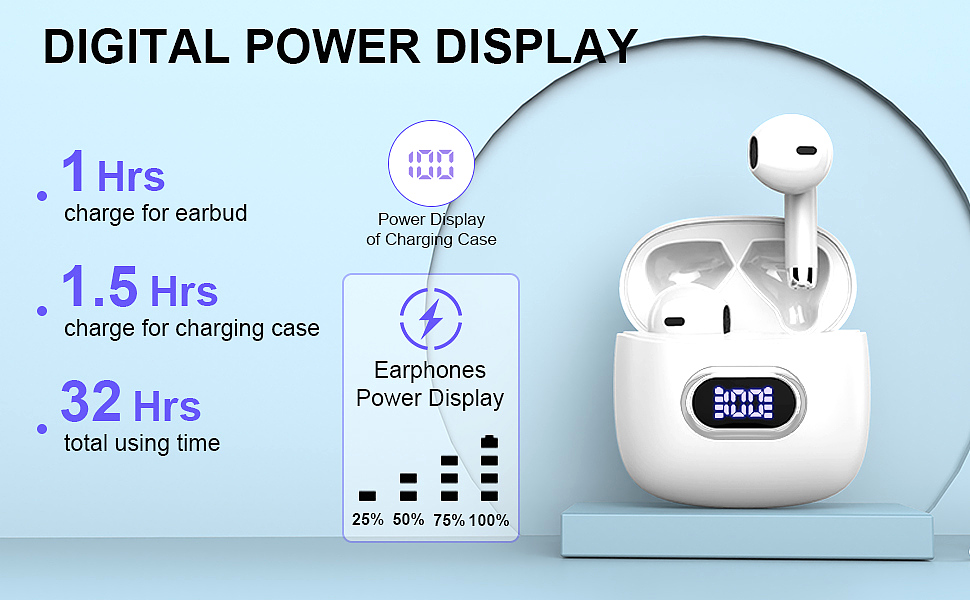
Battery technology improvements paralleled codec evolution. Early wireless earbuds offered perhaps three hours of playback; today, eight hours is common, with case charging extending total runtime to 30 or even 40 hours. This improvement stems partly from more efficient codecs (requiring less processing power) and partly from lithium-ion battery energy density increases that follow a roughly 5% annual trajectory.
Engineering Tradeoffs: Why No Solution Is Free
The physics of acoustic reproduction imposes fundamental constraints that no engineering ingenuity can eliminate. Smaller drivers cannot produce low frequencies as efficiently as larger ones because bass reproduction requires moving more air. A subwoofer driver measuring 12 inches can move substantial air volume with modest excursion; an earbud driver measuring 8 millimeters must vibrate its diaphragm far more rapidly and with greater excursion to achieve similar acoustic output at 40 hertz.
This size-frequency relationship explains why earbuds cannot match over-ear headphones for bass extension and impact. It also explains why marketing claims about "powerful bass" from tiny drivers should be viewed skeptically—physics simply won't be deceived by clever engineering, though psychoacoustics can fool perception somewhat through frequency response shaping.
Power consumption presents another inescapable tradeoff. Higher playback volume demands more current through the voice coil, draining batteries faster. Active noise cancellation requires continuous microphone sampling, signal processing, and driver output for the anti-sound—all power-intensive operations. Manufacturers balance these features against battery life, typically tuning the ANC to provide meaningful (rather than maximum possible) noise reduction to preserve runtime.
Wireless transmission itself consumes power. The radio transceiver, baseband processor, and codec encoder/decoder all draw current continuously during playback. The Bluetooth 5.0 specification's introduction of Dual Audio (streaming to two devices simultaneously) and improved power efficiency helped extend battery life, but wireless transmission still represents a meaningful fraction of total power consumption.
What This Means for Your Listening Experience
Understanding the underlying technology improves how we evaluate audio purchases. Rather than accepting frequency response graphs at face value, we can ask informed questions: What driver size does this device use, and how does that constrain its low-frequency performance? Which Bluetooth codec does it support, and does my source device also support that codec?
These questions matter because codec support varies dramatically. A pair of earbuds might list "aptX support" in their specifications, but this tells only part of the story. aptX comes in several variants: aptX (original), aptX LL (Low Latency), aptX HD (High Definition), and aptX Adaptive. Each offers different bitrates and latency characteristics. Using an iPhone with AAC-capable earbuds typically sounds superior to using the same earbuds with an older Android device limited to SBC, even if both claim Bluetooth audio support.
The future of wireless audio points toward higher resolution and lower latency. Bluetooth LE Audio, introduced with the Bluetooth 5.2 specification, brings a new codec called LC3 (Low Complexity Communication Codec) that offers improved quality at lower bitrates than SBC. More significantly, LE Audio enables Auracast—a technology that allows a single audio source to broadcast to multiple receivers. Imagine walking through an airport where the departure board announcements automatically stream to your earbuds, or attending a conference where the keynote audio broadcasts directly to your personal audio device.
As we conclude, consider again that helicopter. It remains motionless not because it lacks power, but because its design converts rotational energy into lift through precise aerodynamic principles. Similarly, your earbuds remain motionless while producing sound because physics has not changed since the first scientist observed that vibrating objects create pressure waves in air. The technology has refined the mechanisms, improved the efficiency, and added conveniences like noise cancellation and wireless connectivity—but the fundamental principle remains exactly as it was when Helmholtz first described it in the nineteenth century.
The paradox resolves itself: sound requires motion, but that motion can be precisely controlled. What changes across generations of audio technology is not the physics but our ability to harness it. Each improvement in wireless audio brings us closer to the ideal of reproducing a live performance in miniature—economical, convenient, and physically motionless, yet capable of moving the listener profoundly.
The Human Element## The Human Element: Why Understanding Matters
Every decision in audio engineering represents a tradeoff between competing physical realities. There is no perfect driver material, no ideal codec, no optimal balance between size and bass extension that doesn't sacrifice something else. This fundamental constraint means that two different listeners, prioritizing different aspects of the listening experience, may reasonably disagree about which device is "better."
Understanding this context enhances the consumer from passive recipient of marketing claims to active evaluator of technical merit. When a manufacturer claims "studio-quality sound," ask what that means. When they advertise "40-hour battery life," consider the test conditions and whether real-world usage typically achieves that number. When they promise "crystal-clear calls," investigate which noise reduction technologies they employ and how those technologies interact with your typical calling environment.
This knowledge also explains why audio enthusiasts often prioritize older, wired solutions for critical listening. Wireless audio has improved dramatically and continues improving, but it still involves compromises: codec compression, transmission artifacts, added noise from electronics, and power constraints that limit dynamic range. For casual listening during exercise or commuting, these compromises matter little. For focused appreciation of demanding musical material, they may matter significantly.
The choice between wireless and wired ultimately reflects how you value convenience against theoretical perfection. Neither position is incorrect; both reflect legitimate priorities. What matters is making that choice consciously, understanding what you're gaining and what you're surrendering.
Wireless audio technology represents one of consumer electronics' most successful miniaturization stories. In twenty-five years, we progressed from monophonic phone calls at 721 kilobits per second to stereophonic music streaming at near-CD quality with active noise cancellation, voice assistant integration, and all-day battery life. The physics didn't change; our ability to implement it did. That trajectory suggests that tomorrow's wireless audio will make today's modern seem primitive, just as today's earbuds would have seemed miraculous to an engineer from the 1990s.
The paradox remains: stillness creating chaos. But the distance between stillness and chaos has never been shorter.
Lrecat J52 Wireless Earbuds
Related Essays

Silencing the Copper Wire: The Invisible Architecture of Modern Audio
The Four Pillars of Unbreakable Sport Audio

How True Wireless Stereo Technology Rewired the Way We...

Why Your Wireless Earbuds Last 48 Hours: The Physics Behind Battery and Sound

Senso PODS Plus Wireless Earbuds - True Wireless Earbuds for Everyday Use

How Compact Speakers Defy Bass Physics

The Physics of Silence: How Active Noise Cancellation Works

The Science of Gaming Audio: How Sound Becomes Your...
The Physics of Acoustic Sealing: Why Fit Is the Foundation...