The Four Pillars of Unbreakable Sport Audio
Wireless Earbuds
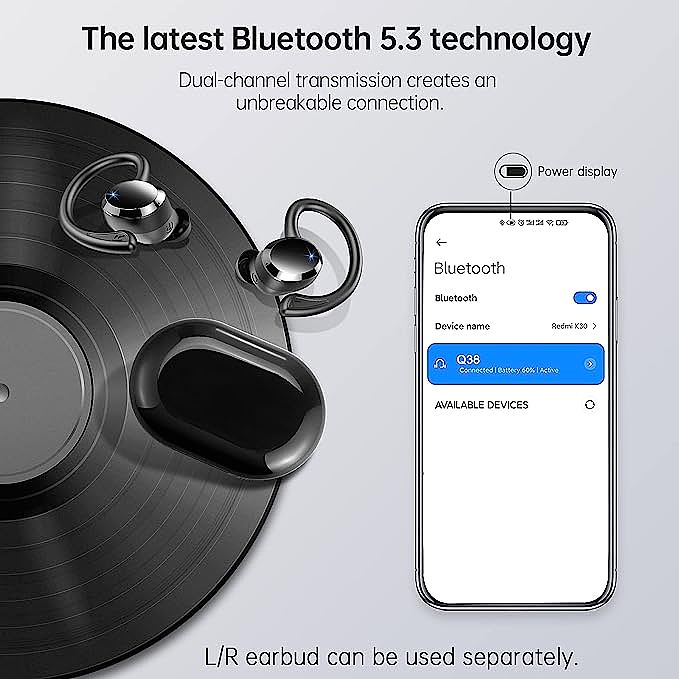
The Taipei 101 tower stands 508 meters tall in one of the most earthquake-prone cities on the planet. Between its 87th and 92nd floors hangs a 660-ton steel pendulum, swaying freely to counteract the building's movement during typhoons and seismic events. Most visitors never notice it. Most never should. The best engineering is invisible. You do not think about the tuned mass damper keeping a skyscraper steady. You do not consider the expansion joints flexing beneath a bridge as temperatures shift. These systems work silently, and their success is measured by the fact that you never have to think about them at all. Sport audio should work the same way. During a trail run in steady rain, during a HIIT session that leaves you drenched, during the moment your earbud slips and bounces off concrete, your music should not skip. Yet for most product-672, these moments expose a cascade of engineering compromises that nobody talks about until the gear fails mid-workout. The frustration is familiar. You are six miles into a run, rain is coming down steadily, and your right earbud starts cutting out. Or you drop an earbud on the gym floor, pick it up, and notice a hairline crack near the charging port that you know will let moisture in next time you sweat. Or the earhooks that felt secure during your warm-up have loosened after forty minutes of jumping intervals, and now you are constantly adjusting them instead of focusing on your pace. A pair of wireless sport earbuds like the Rulefiss Q38 prompted a deeper question: what engineering principles actually make sport audio unbreakable? The answer involves four interdependent pillars, and understanding how they interact changes the way you evaluate every pair of earbuds on the market. ## The Alphabet Your Earbuds Hope You Never Decode Every time you see "IPX4" or "IP67" stamped on a product page, you are reading a certification born from a standard called IEC 60529, published by the International Electrotechnical Commission in the 1970s. Those two digits are not marketing language. They are the result of specific, repeatable laboratory tests with defined parameters for water pressure, spray angle, and exposure duration. The first digit measures dust protection on a scale from 0 to 6. A rating of 6 means the device is completely dustproof, tested against talcum powder in a vacuum chamber for up to 8 hours. The second digit measures water protection from 0 to 9K. Each number represents a progressively more severe test: from dripping water at IPX1 through powerful high-temperature water jets at IPX9K. An "X" in either position means that specific test was not performed. It does not mean zero protection, only that the manufacturer chose not to certify that particular metric. For sport earbuds, the most common ratings you will encounter are IPX4, IPX5, IPX7, and IP67. IPX4 means splash-resistant from any direction. Devices are tested with omnidirectional water spray for at least 10 minutes. This is the de facto minimum for anything marketed as a sport earbud, though there is no official IP rating specifically for sweat resistance. IPX4 is simply the standard manufacturers use as a proxy. IPX5 means protected against water jets at 12.5 liters per minute at 30 kPa pressure, suitable for heavy rain and outdoor training. IPX7 means waterproof for immersion up to 1 meter for 30 minutes, surviving accidental drops in puddles or poolside splashes. IP67 combines complete dustproofing with submersion resistance, making it the gold standard for rugged outdoor use. Here is the critical nuance that almost no marketing material mentions: IP ratings are tested on pristine, undamaged units straight from the production line. According to manufacturer testing data from Sapulo, cracked casings from drops invalidate all IP certification immediately. The testing standard uses freshwater only, and saltwater corrodes components roughly five times faster when seals fail. Beach runners and watersports enthusiasts should look for devices explicitly tested for saltwater exposure, such as the Jabra Elite 8 Active, which Jabra specifically rates for saltwater durability. The implication is sobering. A device rated IPX7 is waterproof only while its casing remains structurally intact. The moment it hits pavement and develops a hairline crack at a seam, the seal is broken, and water finds its way in through capillary action. This is why water resistance cannot be evaluated in isolation from impact resistance. The two are fundamentally linked. ## The Shape-Memory Materials Keeping Sound in Place The single biggest complaint from active users is not audio fidelity. It is stability. Knowing your earbuds will stay put during a sprint, a set of box jumps, or a yoga inversion matters more than whether the soundstage is slightly wider. Reviewers at CNET, SoundGuys, and RTINGS consistently confirm that fit security is the primary differentiator between sport earbuds and general-purpose models. The human ear is a complex landscape of ridges and hollows. The concha is the bowl-shaped depression in the center. The antihelix is the curved ridge above it. The ear canal angles inward from the concha. Secure fit design leverages all three features simultaneously, creating multiple anchor points that resist the forces generated by running, jumping, and head movement. Ear hooks represent the highest level of security for sport earbuds. Made from flexible, shape-retaining materials, they wrap around the top of the ear and distribute retention forces across a larger surface area than any tip or wing alone can achieve. The engineering principles behind these hooks draw directly from materials science developed for aerospace and medical applications. The Beats Powerbeats Pro 2 uses nickel-titanium (NiTi) alloy hooks. This is a shape-memory alloy that undergoes phase improveation between austenite and martensite crystalline structures when stressed. Originally developed for aerospace actuators and medical stents that must flex inside blood vessels without fatigue failure, NiTi alloy allows the hooks to be 50 percent smaller than the previous generation while maintaining consistent
flex recovery across thousands of bending cycles. The material literally remembers its shape at the atomic level. The JBL Endurance Peak 3 takes a different approach with a bendable TwistLock design that users adjust to their individual ear geometry. The Anker Soundcore Sport X20 offers rotating ear hooks adjustable up to 30 degrees and 4mm of extension, recognizing that no single angle fits all ear shapes. Each approach reflects a different engineering philosophy for solving the same biomechanical problem. The material at the heart of most sport earhooks, including those on the Rulefiss Q38, is thermoplastic polyurethane, or TPU. This polymer combines flexibility with structural memory, returning to its original shape after repeated deformation. It resists sweat, UV exposure, and temperature extremes from minus 20 to 45 degrees Celsius, which covers everything from winter trail runs to desert ultramarathons. It is soft enough for multi-hour comfort against the skin yet durable enough to withstand thousands of flex cycles without developing fatigue cracks at stress concentration points. Ear tips and wings provide a secondary retention system, hooking into the antihelix of the outer ear while the silicone or memory foam tip fills the ear canal to create an acoustic seal. The earbud body itself should nestle within the concha, leveraging the ear's natural bowl shape rather than fighting against it. Weight matters too: sport earbuds typically weigh between 5 and 10 grams per earbud. Anything heavier creates lever-arm forces that progressively pull the earbud outward during repetitive vertical movement, like running or jumping. Jabra's ShakeGrip technology represents an alternative approach entirely. It uses a liquid silicone rubber coating that provides high-friction grip without wings or hooks, proving that multiple engineering solutions can address the same fundamental biomechanical challenge. ## The Drop That Silences Everything While IP ratings dominate marketing copy and product packaging, impact resistance is the forgotten pillar of sport audio durability. It receives far less attention because there is no standardized consumer-facing rating system equivalent to IP codes. But the data tells a stark story about why it matters. According to drop survival testing conducted by Sapulo on product-672, the material of the casing determines survival more than any other single factor. Glossy plastic casings survive a 5-foot drop onto a hard surface only 43 percent of the time, with seam joints and button edges being the most vulnerable failure points. Matte composite casings manage 71 percent survival, typically failing at hinge mechanisms. Aluminum alloy reaches 82 percent, with microphone mesh as the weak point. Rubberized TPU achieves a 92 percent survival rate, the highest of any material tested, because its inherent elasticity absorbs and disperses impact energy rather than transmitting it to internal components. Several sport earbuds now meet MIL-STD-810G/H military ruggedness standards, a testing framework originally designed for battlefield electronics that must survive extreme environments. The Jabra Elite 8 Active passed nine separate durability tests for military specification, including drop-proof certification to 1 meter, temperature survival from minus 20 to 45 degrees Celsius, and humidity exposure. Independent testing by CNET confirmed the earbuds survived multiple shoulder-height drops onto pavement without visible marks or functional damage. The Jaybird Vista also carries MIL-STD 810G compliance alongside IPX7 waterproofing. The key construction features that distinguish impact-resistant earbuds include rubberized TPU casings with integrated shock dispersion channels, engineering-grade plastics that survive twice as well as standard glossy finishes, silicone buffers at stress concentration points like hinge joints and button cavities, and reinforced seams that resist crack propagation from impact stress. The critical engineering insight is the compound failure mode. IP ratings become void the moment a casing cracks because the hermetic seal that prevents water ingress is broken. Even a microscopic fracture at a seam creates a pathway for moisture through capillary action. The very activities that demand waterproofing, like running outdoors and training in variable weather, are the same activities that increase drop risk. The best sport earbuds therefore combine both impact resistance and waterproofing as a single interdependent design challenge rather than treating them as separate specifications.  ## Why Your Signal Dies at the Worst Moment Bluetooth 5.3, ratified in July 2021 and widely implemented in consumer earbuds by late 2022, is frequently mischaracterized as an audio specification. It is actually a core protocol update focused on reliability, efficiency, and connection management. Four features matter most for true wireless stereo stability. Connection Subrating allows devices to dynamically adjust connection intervals based on real-time needs. During silent passages between songs or during podcast pauses, the link conserves power by extending the interval between data exchanges. When audio resumes, the connection snaps back to low-latency mode without the perceptible delay that plagued older true wireless designs. This eliminates the "laggy wake-up" phenomenon where resuming playback after a pause resulted in a half-second of silence before the audio stream re-established. Periodic Advertising Sync Transfer, or PAST, enables seamless handoff of synchronization data between the left and right earbuds. In traditional true wireless designs, brief signal dropouts require the earbuds to re-negotiate their synchronization, causing audible stutters. PAST reduces this reconnection latency from roughly 100 milliseconds to under 20 milliseconds in laboratory conditions, making brief dropouts imperceptible to the listener. The Enhanced Attribute Protocol, or EATT, allows multiple simultaneous attribute operations over a single Bluetooth connection. Before version 5.3, negotiating volume changes, checking battery status, and managing playback controls could interrupt or delay audio packets because these operations competed for the same communication channel. EATT parallelizes these operations, so adjusting volume never causes an audio stutter. Enhanced Channel Classification addresses the fundamental congestion problem of the 2.4 GHz radio spectrum. This frequency band is a shared highway occupied by Wi-Fi networks, microwave ovens, Bluetooth devices, and countless other radio sources. Bluetooth 5.3 improves the protocol's ability to classify which channels are congested and dynamically route around interference, reducing the frequency of dropouts in environments dense with wireless signals, like
gyms and urban running routes. But here is the gap between specification and experience. A budget true wireless model using a Bluetooth 5.3 chip may still exhibit audio dropouts and signal stuttering if the antenna design is inadequate. Real-world stability depends on antenna quality and placement, RF shielding around the antenna, ground plane layout on the circuit board, and housing materials. Metal casings can attenuate or block Bluetooth signals entirely. Poor PCB design introduces electromagnetic interference that degrades the radio link. The protocol sets the theoretical ceiling, but the physical implementation determines where you actually land. Outdoor Tech Lab conducted 60 days of testing comparing AirPods Pro 2 and Sony WF-1000XM5 during outdoor runs in Michigan, reporting zero Bluetooth dropouts with the AirPods Pro 2. This demonstrates that when Bluetooth 5.3 is paired with well-designed antenna systems, reliable sport performance is achievable. The lesson is clear: the chip specification tells you what is possible, but antenna engineering determines what you actually experience. LE Audio, maturing alongside Bluetooth 5.3, introduces the LC3 codec, which delivers superior audio quality at 50 percent lower bit rate than the legacy SBC codec, and multi-stream audio through the Coordinated Set Identification Profile, which solves the core true wireless instability problem of left-right desynchronization. Instead of the traditional relay chain where the phone sends audio to one earbud, which then relays it to the other, LE Audio mandates synchronized independent streams to each earbud, eliminating an entire category of connection instability. ## Where the Pillars Intersect The four durability factors are not independent columns holding up a structure. They are interwoven strands in a single cable, where weakness in one compromises all the others through cascading failure. Impact damage voids waterproofing. A cracked casing breaks the seal that IP ratings depend on, creating pathways for water and sweat to reach sensitive electronics. Poor fit causes earbuds to shift during movement, and this shifting can block the Bluetooth antenna, degrading signal quality at the exact moment you need stability most, like during an intense workout when pausing to fix your earbuds breaks your flow. Water on the skin surface affects antenna coupling and signal propagation, meaning the conditions that demand waterproofing simultaneously challenge wireless stability. TPU serves triple duty across the pillars. It provides flexible fit through earhooks that maintain their shape across thousands of flex cycles. It maintains seal integrity for waterproofing because its elasticity ensures the earhook maintains consistent pressure against the ear. And it absorbs shock for impact resistance through its inherent ability to deform under stress and return to its original shape without permanent damage. This interconnection explains why evaluating sport earbuds by individual specifications is fundamentally misleading. A device with an excellent IP rating but poor impact resistance will fail in the real world the first time it hits the ground. A device with a secure fit but unstable Bluetooth will frustrate during outdoor runs where tall buildings and other wireless signals create challenging environments. A device with strong wireless performance but poor fit will cut out every time the earbud shifts enough to reposition its antenna. The budget-to-mid-range segment is particularly vulnerable to this mismatch. Manufacturers may invest heavily in one pillar while neglecting the others, creating a product that looks impressive on a spec sheet but fails when real-world conditions compound. A product listing IPX7 and Bluetooth 5.3 means nothing if the casing shatters on first drop and the antenna design is an afterthought.  ## Reading Through the Marketing Understanding the four-pillar framework gives you a practical evaluation lens. Instead of comparing spec sheets in isolation, ask specific questions about how the pillars interact. For water resistance, check whether the device specifies saltwater testing or only freshwater certification. Verify whether the IP rating applies to the earbuds alone or also includes the charging case. Many manufacturers certify the earbuds at IP68 while the case sits at IP54, meaning your gear is protected during use but vulnerable when charging. For impact resistance, look for MIL-STD-810 references or rubberized TPU construction rather than relying on vague "durable" claims. Ask whether the device has been tested for repeated drops or only rated for a single impact event. Check for silicone buffers at stress concentration points like hinge joints and charging port covers. For fit stability, prioritize ear hooks over wings for high-intensity use, and check whether the hook material is TPU or a cheaper polymer that loses elasticity over time. Consider whether the design allows for individual adjustment, since no single geometry fits all ear shapes. For wireless stability, Bluetooth 5.3 is necessary but not sufficient. Look for reviews that specifically test connection stability during outdoor activity rather than desk-bound scenarios, because the interference environment of a quiet office is fundamentally different from a crowded gym or urban running path. Products like the Rulefiss Q38, the JBL Endurance Peak 3, and the Jabra Elite 8 Active represent different points on the engineering spectrum. The framework lets you evaluate each on its own technical merits across all four pillars rather than being swayed by whichever specification a manufacturer chooses to highlight. ## Engineering Over Hype The paradox of durability is that the best gear is the gear you never think about. You do not notice the dampers keeping a skyscraper steady in the wind. You do not think about the flex joints in a bridge as trucks rumble overhead. And in a well-engineered sport earbud, you never once think about the technology keeping your music playing, until the day you drop it on concrete, step into a downpour, and the beat goes on without interruption. That invisibility is the highest compliment engineering can receive. It means the four pillars, water resistance, structural fit, impact survival, and wireless stability, are working together as intended, each reinforcing the others, each silent and reliable. The specifications on a product page only tell you
what was
Wireless Earbuds
Related Essays

The Science Behind Wireless Audio: From Bluetooth Origins...

Silencing the Copper Wire: The Invisible Architecture of Modern Audio

How True Wireless Stereo Technology Rewired the Way We...

Why Your Wireless Earbuds Last 48 Hours: The Physics Behind Battery and Sound

Senso PODS Plus Wireless Earbuds - True Wireless Earbuds for Everyday Use

The Physics of Silence: How Active Noise Cancellation Works
How Hollywood, Radio Physics, and Neural Networks Built the...

Sport Earbuds Technology Explained: The Physics of Fit, Waterproofing, and Sound

Bluetooth 5.3: How Radio Physics Solves Your Wireless Audio Problems
