The IPX Waterproof Code: What Those Numbers Actually Mean for Your Earbuds

Gravastar P9 Sirius Pro Wireless Earbuds
Your earbuds died after one gym session. Not from battery drain. Not from a drop. From sweat. You checked the box -- it said "IPX4" -- and you assumed that meant waterproof. It does not. That string of letters and numbers carries a precise engineering definition, and misunderstanding it is the fastest path to a dead pair of wireless earbuds.
The IPX specification system was never designed for consumers. It comes from IEC 60529, an international standard published by the International Electrotechnical Commission, originally written for industrial enclosures, outdoor junction boxes, and electrical panels. The fact that it now appears on a product you shove into your ear canal is a quirk of consumer electronics marketing catching up to engineering taxonomy. Understanding what these classifications actually measure -- and what they silently leave out -- changes how you think about every waterproof claim you read.

Two Digits, Two Different Threats
The "IP" in IPX stands for Ingress Protection. The standard uses two digits: the first rates protection against solid objects like dust and debris, and the second rates protection against water. When you see "IPX," the X means the manufacturer did not test or certify the first digit. This is not the same as a zero. An X could mean the device passes IP5X dust protection, or it could mean nobody bothered to test it. The consumer sees "X" and assumes invulnerability. The engineer sees a blank.
A specification of IP54, for instance, tells you the device is dust-protected (5) and splash-resistant (4). IPX4 tells you only the splash resistance. This distinction matters because dust and water are fundamentally different enemies. Dust particles are solid. They accumulate over time, clogging microphone ports and speaker grilles. Water is a liquid conductor. It bridges electrical contacts, corrodes metal traces, and shorts circuits. The IPX system separates these threats for a reason: sealing against one does not guarantee sealing against the other.
The IEC 60529 standard defines specific laboratory conditions for each water protection level. These are not rough guidelines. They are repeatable test protocols with calibrated equipment, controlled water pressure, and defined durations. The problem is that real life does not happen in a laboratory.
The Scale: What Each Number Actually Tests
IPX0 means no water protection whatsoever. Water touches the device, water enters the device. Most indoor electronics sit here -- your desktop speakers, your TV remote. Nobody pretends otherwise.
IPX1 protects against vertically falling water drops. Think condensation dripping from a ceiling. The test positions the device upright under a rainfall simulator delivering 1 millimeter per minute for 10 minutes. IPX2 increases the angle: the device is tilted 15 degrees in four orientations, still under that gentle rain. Neither of these classifications prepares your earbuds for a workout.
IPX3 introduces spraying water. A oscillating nozzle sprays the device from angles up to 60 degrees from vertical for at least 5 minutes. Water pressure is low, roughly 50 to 150 kilopascals. this level handles light rain if you are walking, but not if you are running -- the impact velocity of raindrops against a moving earbud exceeds the spray pressure in the IPX3 test.
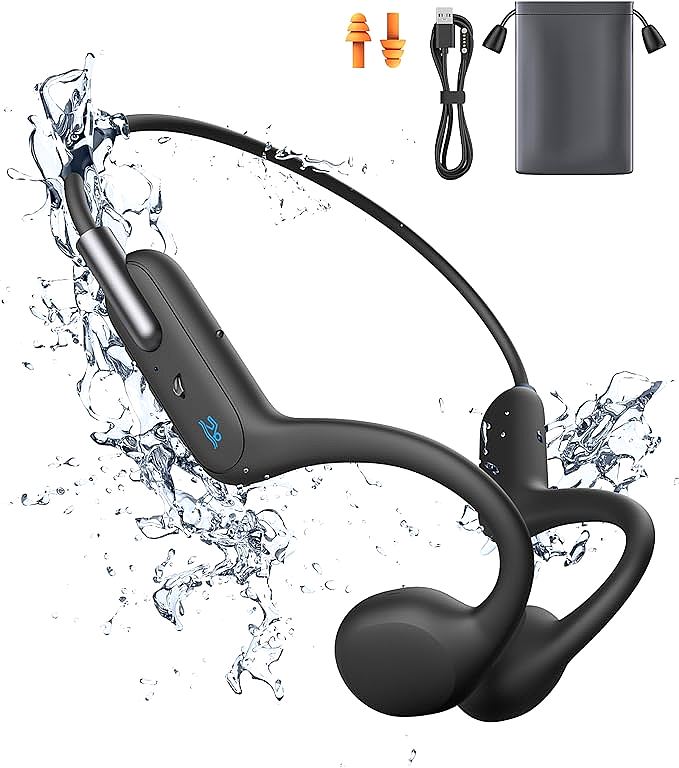
IPX4 is where most consumer earbuds land, including models like the Gravastar P9 Sirius Pro. The test splashes water against the device from every direction using a similar oscillating nozzle, but the spray pattern surrounds the enclosure. Duration: at least 10 minutes. The key word is "splashing." IPX4 certifies that water hitting the surface from any angle will not penetrate the seals in harmful quantities. It does not certify submersion. It does not certify high-pressure jets. It does not certify hot water, soapy water, or salt water. IPX4 means your earbuds survive sweat and light rain. That is the full extent of the promise.
IPX5 raises the stakes to water jets. A 6.3-millimeter nozzle directs a stream of water at 30 kilopascals (approximately 12.5 liters per minute) at the device from all directions for at least 3 minutes. This simulates a forceful spray -- a garden hose at moderate pressure. If your earbuds carry IPX5, they can handle a thorough rinse under a tap. IPX6 goes further still: a 12.5-millimeter nozzle delivers 100 liters per minute at 100 kilopascals. This is a fire-hose level test for industrial equipment. Few earbuds need this level, but some rugged outdoor models carry it.
IPX7 shifts the methodology entirely. Instead of spraying, the device is immersed in water 1 meter deep for 30 minutes. The water is fresh, still, at room temperature. this level certifies temporary submersion. You drop your earbuds in a puddle, you fish them out, they survive. IPX8 goes beyond IPX7 with conditions set by the manufacturer -- typically deeper than 1 meter, longer than 30 minutes, sometimes both. The exact depth and duration appear in the product documentation, not in the IPX8 label itself. Two IPX8 earbuds from two different brands might survive completely different underwater scenarios.

The Chemistry Your specification Does Not Account For
Here is where the IPX system stops being useful. Every IPX test uses fresh, room-temperature water. Sweat is not fresh water. It contains sodium chloride at concentrations between 0.5 and 0.9 percent, similar to seawater. It carries lactic acid from muscle metabolism, sebum from sebaceous glands, and urea. This cocktail is mildly corrosive to the rubber O-rings, silicone gaskets, and adhesive seals that keep water out of your earbuds.
Over months of regular gym use, sweat degrades these seals in ways that fresh water never would. The salt crystals that form as sweat evaporates wedge into microscopic gaps between the earbud housing and the rubber gasket, prying the seal open millimeter by millimeter. Lactic acid weakens the adhesive bonds that hold the driver housing together. The IPX4 specification on your earbuds was certified on day one, in a lab, with distilled water. Six months of sweaty workouts later, the physical integrity of those seals bears no resemblance to the tested condition.
This is not a flaw in the IPX system. The standard was written for stationary enclosures, not devices that sit inside a human ear canal during vigorous exercise. But it means that an IPX4 specification is a snapshot, not a guarantee. The real water resistance of your earbuds degrades over time, and the degradation rate depends on factors the IPX system was never designed to capture.
Hot water presents a similar blind spot. Most seal materials -- silicone, thermoplastic elastomers, polyurethane -- soften at elevated temperatures. A warm shower at 40 degrees Celsius is well above the room-temperature water used in IPX testing. The thermal expansion of the earbud housing at 40 degrees differs from its expansion at 20 degrees, and that differential stress can open micro-gaps in the seal. This is why IPX7 earbuds that survive a dunk in a swimming pool sometimes fail after a single hot shower. The water was not deeper. It was hotter.
The Sealing Paradox: Water Protection Versus Sound Quality
Protecting earbuds from water requires sealing the enclosure. Sealing the enclosure changes how the drivers inside interact with air pressure. A moving-coil driver -- the tiny speaker cone inside most earbuds -- pushes air to produce sound. In a sealed chamber, the air trapped behind the driver acts as a spring, resisting the cone's motion and altering its frequency response. The tighter the seal against water ingress, the stronger this spring effect.
This creates a direct engineering trade-off. Manufacturers pursuing higher IPX ratings add thicker gaskets, tighter tolerances, and sometimes conformal coatings on the circuit boards. Each of these measures eats into the internal air volume of the earbud. Less air volume means the driver cone encounters more resistance at low frequencies, which can produce a thinner, less resonant bass response. This is why many IPX7 and IPX8 earbuds sound noticeably less open than their IPX4 or unprotected equivalents -- the acoustic chamber has been sacrificed for waterproofing.
Some manufacturers use nano-coatings instead of physical seals. These ultra-thin hydrophobic layers, often applied through chemical vapor deposition, repel water at a molecular level without reducing internal air volume. The trade-off is durability: nano-coatings can wear off over time, especially at friction points like the charging contacts. A nano-coated IPX4 earbud might lose its water resistance after a year of daily use, while a physically sealed IPX4 earbud retains its protection (though the rubber may degrade from sweat chemistry, as discussed earlier).
Hybrid driver systems present an additional challenge. An earbud that combines a moving-coil driver for low frequencies with a balanced armature for high frequencies has two separate sound-producing elements that must both be protected, plus a crossover network that routes the correct frequencies to each driver. More internal components mean more potential entry points for water, and more seals that must all hold simultaneously. Choosing IPX4 for a hybrid driver earbud is often a deliberate engineering decision: it provides adequate everyday protection while preserving the acoustic performance that dual-driver designs exist to deliver.

Matching Ratings to Real Life
The practical question is simple: what specification do you actually need? The answer depends entirely on what you do with your earbuds.
For commuting and office use, IPX4 is more than sufficient. You are protecting against accidental spills and the occasional walk in light rain. No jets, no submersion, no sustained exposure. For gym workouts and running, IPX4 handles sweat. IPX5 gives you margin for heavier perspiration and the ability to rinse the earbuds under a tap afterward. For outdoor running in rainy climates, IPX5 or IPX6 provides the jet resistance that corresponds to rain hitting a moving target at speed.
For swimming, only IPX7 or IPX8 applies, and with caveats. The IPX7 test uses still fresh water at 1 meter for 30 minutes. A swimming pool introduces chlorine, which accelerates seal degradation. Open water introduces salt, organic matter, and variable pressure from arm strokes. If you swim regularly with earbuds, look for IPX8 and check the manufacturer's specified depth and duration -- then assume real-world performance is approximately 70 to 80 percent of the rated specification, because chlorine and salt are not part of the test.
For showering, no IPX specification is formally appropriate. The combination of elevated water temperature, soap surfactants that break down hydrophobic coatings, and steam that penetrates seals in vapor form creates conditions outside the scope of any IPX test. Some IPX7 earbuds survive showers. Many do not survive them for long.
When the level Becomes Meaningless
Every IPX specification is tested on a new, undamaged device. Drop your earbuds on concrete once, and the impact can crack a seal invisible to the naked eye. Charge them repeatedly, and the heating cycles fatigue the gasket around the charging port. Store them in a damp gym bag, and humidity creeps into every micro-gap over hours -- a slow infiltration that no splash test captures because the test lasts minutes, not the eight hours your earbuds sit in a bag after a workout.
The IPX system is a binary pass-fail snapshot under controlled conditions. Real water exposure is continuous, cumulative, and chemically complex. the level tells you what the earbuds survived on their peak day in a laboratory. It does not tell you what they will survive on their worst day in your gym bag.
Water resistance in consumer electronics is not a permanent property. It is a depreciating asset. The seals age, the coatings wear, the adhesives weaken. Understanding the IPX system means understanding not just what the numbers promise, but what they cannot promise: that the protection will last. Treat every IPX specification as a description of the optimal-case scenario, plan for the worst case, and your earbuds will live long enough for you to lose them in a couch cushion instead of killing them with a water bottle.
Gravastar P9 Sirius Pro Wireless Earbuds
Related Essays
The Physics of Feeling Sound: How Bone Conduction Rewrites...
