Why Your Wireless Earbuds Drop Signal: The Physics Behind Bluetooth Audio

AOTONOK C16 Wireless Earbuds
You are halfway through a run, perfectly in rhythm, when the music stutters. A half-second gap, then another. The connection between your phone and your earbuds has broken, not because you wandered far, but because you turned your head at the wrong angle. Wireless audio feels like magic until it does not. And for anyone who has experienced this frustration mid-workout, mid-call, or mid-song, the question becomes unavoidable: why does something so small struggle with something so basic?
The answer sits at the intersection of radio physics, material science, and the peculiar congestion of the 2.4 GHz frequency band. Understanding it changes how you think about every wireless device you own.

The Invisible Highway and Its Traffic Problem
Bluetooth operates in the 2.4 GHz ISM band, a slice of the radio spectrum designated for Industrial, Scientific, and Medical use. This band is unlicensed, meaning anyone can use it without paying for spectrum rights. That openness made it the logical home for short-range wireless communication, but it also made it crowded.
Your Wi-Fi router lives here. Your microwave oven emits energy in this band. Baby monitors, garage door openers, older cordless phones, and every other Bluetooth device within a hundred meters all share the same roughly 80 MHz of bandwidth. Imagine a highway with no lanes, no traffic lights, and thousands of cars trying to reach different destinations simultaneously.
To manage this chaos, Bluetooth uses a technique called Adaptive Frequency Hopping, or AFH. The transmitter and receiver agree on a sequence of channels and hop between them 1,600 times per second. When AFH detects that a particular channel is noisy, occupied by a Wi-Fi signal for instance, it marks that channel as unavailable and avoids it in future hops. The system continuously remaps its path through the spectrum, dodging interference in real time.
This is why Bluetooth audio usually works. It is also why it sometimes fails. When the interference is dense enough, when too many devices compete for too few clear channels, even the smartest hopping algorithm runs out of road.
What Bluetooth 5.3 Actually Fixes
Bluetooth versions are not marketing labels. Each iteration modifies the protocol stack in ways that affect real-world performance. Bluetooth 5.3, adopted by the Bluetooth Special Interest Group in 2021, introduced several targeted improvements.
One of the most consequential is Connection Subrating. Previously, when two Bluetooth devices needed to switch from a low-power idle state to an active data exchange, the transition could take tens of milliseconds. Connection Subrating allows devices to pre-negotiate a faster wake-up interval. For audio, this means less time spent re-establishing the data link after a momentary disruption, resulting in fewer audible dropouts.
Another change involves Channel Classification. In earlier versions, only the central device, typically your phone, decided which channels were too noisy to use. Bluetooth 5.3 allows the peripheral device, your earbuds, to contribute its own channel quality data. This dual-perspective classification produces a more accurate map of the RF environment, because the earbuds may detect interference from a direction your phone cannot see.
LE Power Control is also relevant. It allows the transmitter to adjust its output power in real time based on the receiver's reported signal strength. When the link quality is good, the transmitter reduces power, which saves battery and, critically, reduces the amount of RF energy added to the already congested 2.4 GHz band. When the link weakens, power increases to maintain the connection. This feedback loop helps conserve the shared spectrum rather than shouting louder than everyone else.
The Diaphragm Problem: Turning Electricity Into Sound
While Bluetooth handles getting the data to your earbuds, a completely different physics challenge takes over once that data arrives: converting a digital bitstream into pressure waves your cochlea can interpret.
The component responsible is the driver, a miniature loudspeaker. At its center sits a diaphragm, a thin membrane that vibrates to produce sound. The diaphragm's material composition determines how faithfully it reproduces the electrical signal it receives.
This is where engineering runs into a fundamental materials trilemma. An ideal diaphragm would be simultaneously stiff, light, and well-damped. Stiffness allows the diaphragm to move as a unified surface, piston-like, without flexing or bending in ways that introduce distortion. Lightness allows it to accelerate and decelerate quickly, which is essential for reproducing high frequencies. Damping allows it to stop moving the instant the signal stops, preventing ringing and smearing of transients.
No single material achieves all three properties perfectly. A stiff material like aluminum or beryllium tends to be light but poorly damped, producing resonant peaks at certain frequencies. A well-damped material like certain polymers tends to be too flexible, losing high-frequency detail. This is why engineers developed composite diaphragms, layering or blending materials to balance these competing demands.
A typical composite construction might use a lightweight polymer substrate, such as polyethylene terephthalate, for its flexibility and low mass, then deposit a thin coating of a stiffer material, perhaps a vapor-deposited ceramic or a Liquid Crystal Polymer film, to add rigidity. The result is a diaphragm that responds quickly enough to reproduce treble detail while maintaining enough structural integrity to push air effectively for bass frequencies.
The diameter of the driver matters as well. A 6mm driver, common in in-ear designs, represents a compromise between physical size and acoustic capability. Larger drivers move more air and generally produce stronger bass, but they require larger housings that may not fit comfortably in the ear. Smaller drivers fit more easily but struggle to generate the air displacement needed for satisfying low-frequency reproduction. The 6mm size sits in a middle ground that has proven effective for the form factor.

Water, Sweat, and the Physics of Ingress
Wireless earbuds for active use face an environmental challenge that wired earbuds largely avoided: the entire electronic package sits inside or on the ear, directly exposed to sweat, rain, and humidity. The IP rating system, defined by IEC standard 60529, provides a standardized way to describe how well a device resists these threats.
The rating consists of two digits. The first describes protection against solid objects like dust. The second describes protection against liquids. A device rated IPX7, or IP7 as some manufacturers abbreviate it, has been tested to withstand temporary immersion in water up to one meter deep for 30 minutes.
Achieving this rating requires careful engineering of the earbud shell. Seals must be placed at every seam, port, and joint. Microphone openings need acoustic membranes that allow sound pressure through while blocking water molecules, which is a nontrivial filter design when the holes need to be microscopic. Charging contacts, typically exposed metal pads on the exterior, must either be designed to tolerate brief wetness or rely on the charging case to provide protection when the earbuds are stored.
An additional layer of defense comes from hydrophobic nanocoatings applied to internal circuit boards. These coatings, often a type of parylene deposited through chemical vapor deposition, create a molecular-thin barrier that causes water to bead and roll off rather than spreading across the surface. They do not make the device waterproof by themselves, but they buy time and margin if the primary seals are compromised.
There are practical limits worth noting. IP7 ratings are tested with fresh water under controlled laboratory conditions. Saltwater is far more corrosive and can degrade seals over time. Hot water and steam can soften adhesives. Soaps and detergents can strip hydrophobic coatings. An IP7 rating means your earbuds will survive a rainstorm or a sweaty workout; it does not mean they belong in a swimming pool or a shower.
Why Your Earbuds Keep Falling Out
The human ear is a structure of remarkable complexity. The auricle, the visible part of the outer ear, contains folds, ridges, and a bowl-shaped depression called the concha. Earbuds that rely solely on friction within the concha and ear canal are betting that the geometry of the ear will provide enough grip to counteract the forces of movement.
This bet loses frequently. Running generates vertical oscillation forces of approximately 2 to 4 times body weight at each footstrike, transmitted through the skeleton to the head. Head turns during exercise or conversation create lateral forces. Even jaw movement from chewing or speaking can subtly shift the fit of an in-ear device.
Earhook designs address this by adding a second point of mechanical constraint. A flexible loop extends from the earbud body and wraps over and behind the upper ear, anchoring the device against a much larger and more stable structure. The hook does not prevent all movement, but it shifts the failure mode from catastrophic, the earbud falling to the ground, to minor, a slight shift in position that the user can adjust without interrupting activity.
The material of the hook matters as much as its geometry. Thermoplastic elastomers and medical-grade silicones are common choices because they combine flexibility with shape memory. The hook needs to bend enough to accommodate different ear shapes without exerting sustained pressure that causes discomfort over hours of wear. It also needs to return to its original shape after repeated flexing, maintaining its grip over the product's lifespan.
A proper ear canal seal remains important even with earhooks. The seal provides passive noise isolation, physically blocking external sounds, and is essential for bass reproduction. Sound is a pressure wave, and if the ear canal is not sealed, low-frequency pressure escapes through the gap, resulting in thin, tinny audio regardless of how good the driver is. This is why multiple ear tip sizes are provided, and why spending time to find the right size has a greater impact on sound quality than almost any other single variable.
The Battery Equation: Energy Density Versus Safety
The 40-hour total playback claim found on many modern wireless earbuds rests on lithium-polymer battery technology. Li-Po cells store energy through the movement of lithium ions between a graphite anode and a lithium-cobalt-oxide cathode, suspended in a polymer electrolyte. Their advantage over traditional cylindrical lithium-ion cells is form factor flexibility: the polymer electrolyte allows the cell to be manufactured as a thin pouch rather than a rigid cylinder, which is critical for devices where every cubic millimeter matters.
Energy density in Li-Po cells has improved steadily, roughly doubling over the past fifteen years to approximately 250-300 Wh/kg in commercial cells. But this improvement has a ceiling imposed by chemistry. The theoretical maximum energy density of a lithium-ion chemistry using current electrode materials is well understood, and commercial cells are approaching a significant portion of that limit. Future gains will require fundamentally different chemistries, such as lithium-sulfur or solid-state batteries, which remain years from mass-market viability.
For wireless earbuds, total battery life is a function of three variables: the capacity of the battery in each earbud, the power consumption of the chipset and driver, and the efficiency of the Bluetooth connection. Bluetooth 5.3's power control features contribute to the third variable, allowing the radio to transmit at the minimum power needed rather than a fixed maximum. The chipset contributes through process node improvements: smaller transistors consume less power per operation. The driver contributes through impedance matching and magnetic efficiency in the voice coil.
Charging case displays, particularly dual LED numerical indicators, solve a specific user-experience problem. Battery level estimation in lithium cells works by measuring terminal voltage and comparing it against a known discharge curve. A fully charged Li-Po cell reads approximately 4.2 volts; a depleted one reads around 3.0 volts. The relationship between voltage and remaining capacity is not linear, so the estimation circuitry applies a correction curve. Temperature compensation is also necessary, as cold cells read lower voltages for the same remaining charge. A numerical percentage display is more useful than a simple LED because it allows the user to make informed decisions about when to recharge, reducing the anxiety of uncertainty.

Capacitive Touch: The Sensor on Your Ear
Physical buttons on small devices present manufacturing challenges: they require moving parts, create entry points for moisture, and take up space. Capacitive touch sensors solve these problems by replacing mechanical switches with electric field detection.
The principle is straightforward. A conductive trace beneath the earbud's surface maintains a stable electrostatic field. When a finger, which is conductive due to the electrolytes in human skin, approaches the sensor, it draws a small amount of charge, changing the measured capacitance. A controller chip detects this change and registers it as a touch event.
Projected capacitive touch, the technology used in most earbuds, employs a grid of conductive traces rather than a single sensor. This allows the system to detect not just whether a touch occurred, but where it occurred on the grid. Different locations or patterns, single tap, double tap, long press, can be mapped to different commands: play, pause, skip, volume, voice assistant.
The main engineering challenge is false positive rejection. When you adjust an earbud in your ear, your fingers contact the touch surface. Rain hitting the surface can trigger a response. Some designs use pressure sensitivity as a secondary signal: a touch must register both capacitance change and a slight physical depression to count as intentional. Others define a specific touch zone and ignore input outside that zone. The trade-off is between responsiveness and reliability.
What Microphones Hear That You Do Not
Voice pickup in wireless earbuds uses MEMS microphones, Micro-Electro-Mechanical Systems. These devices fabricate a microscopic diaphragm and its associated electronics on a single silicon chip, achieving sensitivity and consistency that traditional electret microphones cannot match at the same size.
Wind noise is the primary adversary. When air flows across a microphone port, it creates turbulence that produces a low-frequency rumble, typically between 20 and 500 Hz, that can exceed the voice signal by 20 dB or more. Two approaches mitigate this. Physical design places the microphone port in a sheltered location and may incorporate a mesh screen that breaks up laminar airflow before it reaches the diaphragm. Digital signal processing identifies the spectral signature of wind noise, concentrated low-frequency energy with specific temporal patterns, and applies a filter that attenuates those frequencies while preserving the voice band.
More sophisticated systems use multiple microphones and beamforming. By comparing the arrival time and amplitude of sound at two or more microphones, the system can construct a spatial filter that favors sounds arriving from the direction of the user's mouth while suppressing sounds from other directions. This is the same principle used in sonar arrays and radio telescope interferometry, applied at a scale of millimeters rather than kilometers.
The fundamental limit is the distance between microphones. Beamforming resolution improves with microphone separation, but earbuds offer very little physical space. Practical beamforming on earbuds provides modest improvement in noisy environments rather than the dramatic noise cancellation of larger devices with wider microphone spacing.
The Engineering of Invisible Things
Wireless earbuds are a study in constraint optimization. Every design decision, driver size, battery capacity, antenna placement, seal integrity, touches multiple other decisions in ways that produce trade-offs rather than clean solutions. A larger driver improves bass but shortens battery life. A tighter seal improves noise isolation but increases occlusion effect, the booming sound of your own voice and footsteps transmitted through bone conduction. More powerful Bluetooth transmission improves range but radiates more interference into an already crowded band.
The devices that work best are not the ones that solve any single problem most aggressively. They are the ones that find the most livable compromise across all of them simultaneously. This is engineering at its most constrained and, when it succeeds, its most elegant. The next time your earbuds hold a steady connection through a crowded gym, reproduce a bass line you can feel, and survive the sweat running down the side of your head, consider that none of those outcomes was guaranteed. Each one required someone to solve a physics problem inside a device the size of a jellybean.
AOTONOK C16 Wireless Earbuds
Related Essays

Why Wireless Earbuds Sound Flat: DSP Trade-Offs Explained

Semi-Open, Closed, or Open: How Headphone Acoustic Design Shapes What You Hear

Why Your Bass Sounds Like Mud: The Physics of Controlled Low Frequencies in IEMs

Why Your Portable Speaker Dies at the Worst Moment: The Hidden World of PMICs

How $10 Wireless Earbuds Actually Work: The Engineering Inside

How ENC Technology Uses Physics to Isolate Your Voice From Chaos
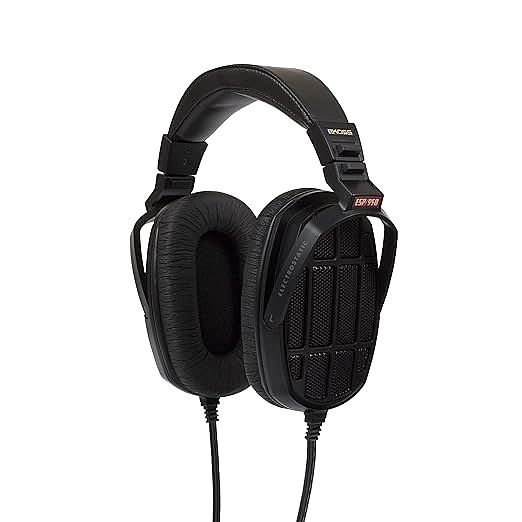
Why Your Headphones Sound Slow: The Electrostatic Answer to Audio Transparency
