The Physics of Feeling Sound: How Bone Conduction Rewrites...
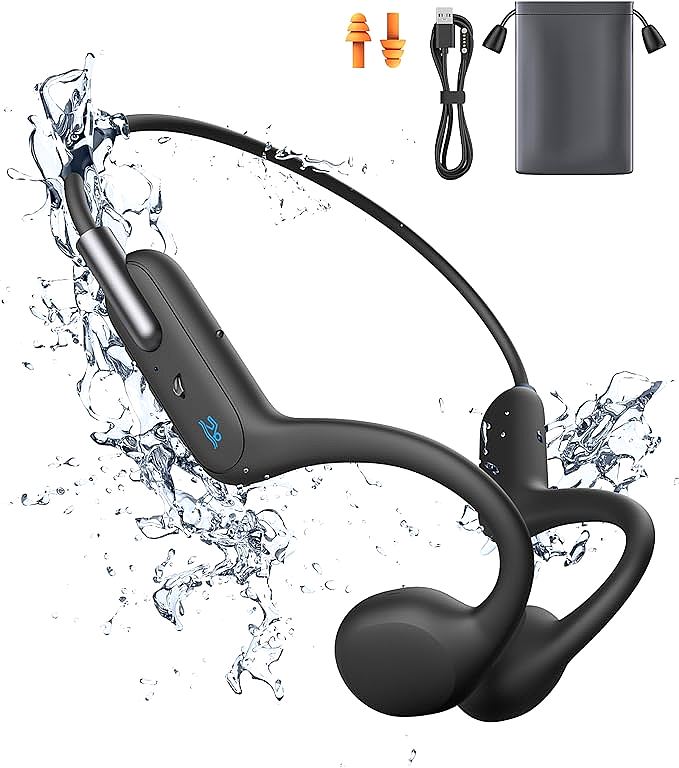
Rumatas X6 Max Bone Conduction Wireless Headphones
The Physics of Feeling Sound: How Bone Conduction Rewrites Human Hearing
The human ear is a masterwork of biological engineering, yet it carries an inherent vulnerability. It relies on the eardrum to translate air vibrations into neural signals. But what happens when the environment that carries those vibrations becomes a liability?
For a swimmer pushing through lap after lap, water blocks sound before it reaches the eardrum. For a cyclist navigating city traffic, covering the ear canal with an earbud removes awareness of approaching vehicles. For a runner on a cold morning, sweat turns earbuds into unwelcome slipping obstacles. These are not edge cases. They are the daily reality for millions of active people who want to listen to music or podcasts without sacrificing situational awareness.
Bone conduction technology exists at the intersection of acoustics, materials science, and human factors engineering. It does not replace the ear. It supplements it. By bypassing the eardrum entirely and transmitting sound directly through the skull, it creates a parallel auditory pathway that the brain has used since before humans invented microphones.
Ludwig van Beethoven understood this principle over two centuries ago, long before bone conduction had a name. As his hearing deteriorated, he discovered he could still perceive the notes of his piano by biting down on a wooden rod connected to the instrument. The vibrations traveled through his jawbone, bypassed his failing eardrum, and reached the cochlea directly. The trick was not new to science. It was simply new to consumer technology.
What Bone Conduction Actually Is
Sound is a vibration, whether it travels through air, water, or solid bone. In traditional hearing, sound waves enter the ear canal and vibrate the eardrum. The eardrum passes those vibrations to three tiny bones in the middle ear (the malleus, incus, and stapes), which amplify the signal and transmit it to the cochlea. Inside the cochlea, fluid movement stimulates hair cells that convert mechanical energy into electrical impulses. The auditory nerve carries those impulses to the brain, which interprets them as sound.
Bone conduction takes a shortcut. A transducer — typically a small electromechanical driver — sits against the skin above the cheekbone or just in front of the ear canal. When it receives an audio signal, it vibrates at precise frequencies. Those vibrations travel through the skull bone directly to the cochlea. The ear canal and eardrum remain completely bypassed. The cochlea does not care how the vibrations arrive. It responds the same way.
The efficiency of this pathway depends on material properties. Bone conducts sound approximately three times faster than air. This is why people who have never tried bone conduction headphones often describe the initial experience as hearing their own voice through a telephone. The sound feels internal, slightly muffled in the highs, but unmistakably present.
The Engineering Behind the Transducer
Modern bone conduction headphones pack surprisingly sophisticated engineering into a form factor that weighs around 30 grams. The core component is an electrodynamic or piezoelectric transducer. The electrodynamic version, found in most consumer models, uses a voice coil and permanent magnet to convert electrical signals into mechanical motion. A lightweight diaphragm attached to the voice coil presses against a contact surface that touches the user's skin.
The contact surface is critical. It must transfer vibrations efficiently while remaining comfortable. Many manufacturers use medical-grade silicone for the pad that touches the cheekbone. Silicone distributes pressure evenly and maintains flexibility across temperature ranges. The choice of material matters for acoustic performance too. Silicone transmits a broad frequency range without resonant peaks that would distort the audio signal.
The frame that holds the transducer in place introduces a second engineering challenge. It must maintain constant, light pressure against the head without causing discomfort. This requires materials with specific spring characteristics. Many high-end models use titanium wire for the frame. Titanium provides an excellent strength-to-weight ratio, resists corrosion from sweat, and offers predictable elastic recovery after bending.
The combination of a lightweight transducer and a titanium frame results in a total weight that averages between 25 and 35 grams. This is roughly the weight of a small pair of sunglasses. The distributed pressure across the cheekbones means users can wear bone conduction headphones for hours without the ear fatigue that in-ear designs commonly cause.
Waterproofing for the Pool
Water presents a unique problem for wireless audio. Most modern headphones rely on Bluetooth, which operates in the 2.4 GHz frequency range. Water absorbs 2.4 GHz signals effectively, making Bluetooth unreliable underwater. Even a thin layer of water on the skin can attenuate the signal enough to cause dropout.
The solution adopted by manufacturers like Rumatas for the X6 Max model is to store audio locally. The headphones contain 32GB of internal memory, which translates to roughly 8,000 songs or several hundred hours of audiobook content. Users transfer audio files from a computer via magnetic charging cable. Once loaded, the headphones operate entirely independently of a phone.
This approach is not new. Dedicated MP3 players for swimming have existed for over a decade. What distinguishes modern bone conduction headphones is the dual-mode capability. On land, they pair with Bluetooth 5.3 for seamless streaming. Underwater, they switch to MP3 mode. The Bluetooth module is completely bypassed when playing from internal storage, eliminating any water-related interference.
The IPX8 waterproof rating represents the highest level of water resistance defined by the IEC 60529 standard. "8" indicates the device can withstand continuous immersion beyond 1 meter depth. Rumatas specifies 2 meters for 2 hours. This level of protection requires sealed enclosures, gasketed seams, and a charging interface that eliminates traditional ports. Magnetic pogo pins achieve this by providing electrical contact without any opening in the sealed housing.
Battery Efficiency and Power Management
A 10-hour battery life from a single charge is notable given the power demands of driving bone conduction transducers at audible volumes. The efficiency comes from several factors. The transducer itself is relatively lightweight and requires less mechanical energy to produce sound than a traditional speaker cone. Bluetooth 5.3 consumes less power than earlier Bluetooth versions. The firmware manages power dynamically, reducing transmission power when the paired device is nearby and increasing it when the user moves farther away.
A 1 to 2 hour charge time for 10 hours of playback translates to a charging efficiency of approximately 5 to 10x. The magnetic charger simplifies the user experience by removing the fiddly USB connectors that most budget headphones still use. Users simply align the magnet and attach. The charging contacts are sealed behind the magnetic plate, maintaining the waterproof integrity.
Real-World Applications Beyond Swimming
The swimming use case is the most distinctive application of waterproof bone conduction headphones, but it represents only one segment of the market. The open-ear design creates situational awareness that benefits many types of users.
Cyclists ride exposed to traffic. Bone conduction headphones allow them to hear traffic approaching from behind while listening to navigation directions or music. Runners benefit from the same safety factor, plus the comfort of not having something inserted into the ear canal during long runs. People who work in warehouses or construction sites use them to hear radio broadcasts while remaining aware of safety announcements.
The weight advantage is particularly significant for people with sensory sensitivities. In-ear headphones create pressure in the ear canal that some users find uncomfortable over extended periods. Bone conduction headphones completely eliminate this pressure by staying outside the ear entirely.
Where the Technology Falls Short
Bone conduction is not a universal replacement for traditional audio. The technology has well-defined limitations.
Bass response is inherently weaker. Low frequencies require larger diaphragms and greater air displacement to produce the same perceived volume. A 30-gram transducer pressed against the skull simply cannot move enough mass to create deep bass notes. Users who prioritize heavy bass may find the sound thin compared to a dedicated subwoofer or even a quality pair of in-ear monitors.
Sound isolation is the flip side of situational awareness. In noisy environments — a busy street, a windy day — ambient noise masks the bone-conducted signal. The transducer vibrates the skull, but the ear canal simultaneously picks up environmental noise. For users who want to listen at high volumes in noisy settings, traditional noise-canceling earbuds remain the better choice.
Sound leakage is another limitation. Bone conduction headphones leak less sound than traditional speakers, but they are not perfectly silent. Someone sitting next to you at moderate volume can hear a faint vibration. This is not a privacy concern at normal volumes, but it is something to consider in quiet environments.
These limitations do not diminish the value of the technology. They define its use cases. Bone conduction is not trying to replace all headphones. It is trying to provide a safe, comfortable, practical audio solution for people who need to stay aware of their surroundings while listening to audio. For that specific set of requirements, it remains the most effective technology currently available.
The Broader Context
Bone conduction technology represents a shift in how we think about audio interfaces. Traditional headphones reinforce the idea that sound must enter the ear canal to be heard. Bone conduction challenges that assumption by using the body itself as a transduction medium.
The same principle that allows a swimmer to hear music underwater is being explored in medical devices. Bone conduction hearing aids bypass damaged eardrums for people with conductive hearing loss. The technology is also used in aviation headsets, where pilots need communication clarity without occluding the ear canal.
As materials science advances, the transducer efficiency and battery density will continue improving. Titanium frames, medical-grade silicones, and Bluetooth 5.3 are not the final form of this technology. They are milestones in a trajectory that started with Beethoven biting a wooden rod and continues toward a future where audio interfaces integrate more seamlessly with the human body.
Rumatas X6 Max Bone Conduction Wireless Headphones
Related Essays

The IPX Waterproof Code: What Those Numbers Actually Mean for Your Earbuds
