Semi-Open, Closed, or Open: How Headphone Acoustic Design Shapes What You Hear


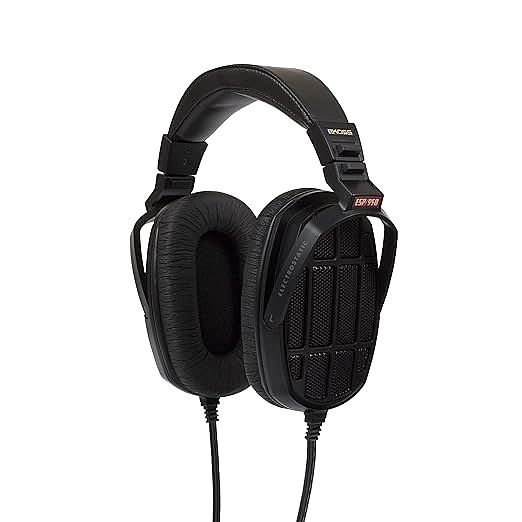
AKG K240 MK II Stereo Studio Headphones
Headphone Acoustic Design: Why the Sealed Room Matters
You sit down to mix a track you have been building for weeks. The bass sounds full and controlled in your headphones, so you push the levels confidently. Then you play the same mix through your studio monitors, and the low end is a muddy mess. What happened?
The culprit is not your ears. It is the sealed chamber behind your ear cups. When headphones trap air between the driver and your eardrum, that enclosed volume becomes a resonant cavity with its own acoustic signature, one that has nothing to do with the music you recorded. Every frequency below roughly 300 Hz gets artificially boosted or suppressed depending on the cavity size, the seal quality, and the damping material inside the cup. You are not hearing your mix. You are hearing your mix filtered through a small, unpredictable room.
This is the fundamental problem that drives headphone acoustic design. And the three architectures used to solve it -- closed-back, open-back, and semi-open -- each carry distinct trade-offs rooted in physics.

The Sealed Box: Isolation at a Cost
A closed-back headphone seals the space between the driver and your ear from the outside world. Think of it as a small pressure vessel. Sound leaves the front of the diaphragm and enters your ear canal. Sound leaving the rear of the diaphragm bounces around inside the ear cup, reflects off the inner wall, and comes back toward the diaphragm.
This reflected energy is the source of both the closed-back's greatest strength and its most stubborn flaw. On the positive side, the sealed enclosure prevents external noise from leaking in. A drummer tracking live drums can hear the click track without cranking the volume to damaging levels. A vocalist recording in the same room as a guitar amp will not bleed headphone audio into the microphone.
But the reflected energy inside the cup creates standing waves. When the distance between the diaphragm and the back wall equals half a wavelength of a particular frequency, that frequency gets reinforced. When it equals a quarter wavelength, that frequency gets cancelled. The result is an uneven frequency response that manufacturers try to tame with acoustic damping foam, felt pads, and carefully tuned venting holes. These measures help, but they cannot fully eliminate the physics of a sealed cavity.
The subjective effect is what audio engineers call a "closed-in" sound. Instruments feel like they are playing in a small closet rather than a room. Stereo imaging narrows. The sound stage collapses inward. And after extended listening, many people report a sense of pressure or fatigue that goes beyond simple volume exposure. The ear canal is a sensitive pressure-sensing mechanism. Trapped low-frequency pressure waves inside a sealed cup create a mild but persistent physical discomfort that accumulates over hours.
Breathing Room: The Open Architecture
Open-back headphones take the opposite approach. The back of the ear cup is perforated or completely open, allowing air and sound to pass freely in both directions. Rear-firing sound waves from the diaphragm exit into the room rather than reflecting back.
This eliminates most of the standing wave problems that plague closed designs. Without a sealed cavity, there is no resonant chamber to artificially color the bass response. The frequency response tends to be flatter and more natural, particularly in the midrange and treble. Stereo imaging opens up. Instruments occupy distinct positions in space rather than clustering in a narrow band between your ears.
Recording studios have relied on open-back designs for critical listening tasks for decades. When an engineer needs to evaluate the spatial placement of a reverb tail or the stereo width of a keyboard patch, the open-back headphone provides a transparency that closed designs struggle to match. The sense of "air" around each instrument comes from the absence of internal reflections.
But open designs pay a steep price for that transparency. Because the ear cup is open, you hear everything happening around you, and everyone around you hears what you are listening to. In a shared studio, open-back headphones are useless for tracking. The click track bleeds into the vocal microphone. The guitar riff leaks into the room and gets picked up by every other microphone.
There is also a bass response issue, though it is more nuanced than most people assume. The low-frequency output of any driver depends partly on the acoustic load behind it. An open back provides very little acoustic loading at low frequencies, which means the diaphragm has less resistance to push against. The result is a bass response that rolls off sooner and more gradually than a closed design. It is not that open headphones cannot produce bass. It is that the bass lacks the sense of physical weight and impact that a sealed enclosure provides.

The Middle Path: Controlled Leakage
Semi-open designs occupy the territory between full isolation and full openness. Rather than leaving the entire back wall open, they use a partially perforated back with tuned ports or vents that allow a controlled amount of air exchange.
The physics here is analogous to a bass reflex speaker cabinet. In a ported speaker enclosure, a carefully sized tube allows air to move in and out of the cabinet at specific frequencies, extending the bass response below what the driver could achieve in a sealed box of the same volume. The semi-open headphone uses the same principle on a miniature scale. The vents are tuned to release enough internal pressure to prevent the worst resonances of a fully sealed design, while retaining enough acoustic loading to maintain bass authority.
When recording studios first adopted semi-open headphones in the late 1970s, engineers discovered something unexpected: the design reduced listening fatigue in a way that neither fully open nor fully closed designs managed. The reason involves psychoacoustics, the study of how the brain interprets sound.
The human auditory system evolved to process sound arriving from multiple directions with natural room reflections. When you listen to music in a real room, your brain receives a direct sound from the source, followed by early reflections off walls, floor, and ceiling, followed by a diffuse reverberant tail. Your brain uses the timing and spectral content of these reflections to construct a spatial image of the sound source. A fully closed headphone delivers sound with almost no natural reflections, which conflicts with the brain's expectations. A fully open headphone provides some relief, but the lack of any enclosure means the sound feels disembodied, like listening to speakers in an anechoic chamber.
The semi-open design provides a small amount of controlled reflection and resonance inside the ear cup, combined with the spatial openness of the vented back. This creates a pattern of direct and reflected energy that is closer to what the brain expects from a real acoustic environment. The result is a sound that feels "present" without feeling claustrophobic, and spacious without feeling disconnected.
The AKG K240 MK II is a widely referenced example of this approach. Its semi-open back, combined with a 30 mm Varimotion driver that varies the diaphragm thickness between the center and the edge, demonstrates how controlled venting can preserve bass definition while maintaining the sense of spatial openness that mixing engineers depend on.

Matching Design to Task
Understanding these acoustic differences changes how you choose headphones for specific work. Tracking, the recording phase where musicians perform while listening to a backing track, demands isolation above all else. A closed-back design prevents the backing track from bleeding into the recording microphone. Comfort and sound quality are secondary considerations.
Mixing, where the engineer balances and processes individual tracks into a final stereo image, demands accuracy and spatial transparency. An open-back or semi-open design reveals the stereo field and frequency balance more honestly. Many engineers prefer semi-open designs for extended mixing sessions because they reduce fatigue without sacrificing too much isolation.
Mastering, the final quality-control step before release, is often done on open-back headphones in treated rooms, or on reference monitors. The mastering engineer needs the flattest possible frequency response and the widest possible sound stage to catch problems that would be masked by a closed design.
For casual listening, the choice depends on environment. Commuting on a train or working in an open office favors closed-back or noise-canceling designs for isolation. Quiet home listening favors open or semi-open designs for sound quality. The semi-open design serves as a practical compromise for people who want better-than-closed sound quality but cannot tolerate the total lack of isolation that open-back designs impose.
The Honest Acoustic
Headphone design is an exercise in choosing which compromises to accept. Closed-back designs sacrifice spatial accuracy for isolation. Open-back designs sacrifice bass authority and isolation for transparency. Semi-open designs sacrifice some of both to gain a middle ground that works well across a wider range of situations.
None of these architectures is inherently superior. The physics of each one creates a distinct acoustic signature that suits particular tasks and environments. The engineers who designed the first semi-open headphones in the 1970s were not trying to create a "better" headphone. They were trying to solve a specific problem: how to give recording artists enough isolation to track live, while preserving enough spatial honesty to hear what they were actually playing. That the design also turned out to reduce listening fatigue was a bonus that emerged from the physics, not from the marketing department.
The next time you put on a pair of headphones, consider what is happening behind the driver. The air trapped -- or not trapped -- in that space is shaping every sound you hear. Choosing the right architecture for the right task is not about brand loyalty or price. It is about understanding the acoustic physics at play and selecting the set of compromises that serves the work you need to do.
AKG K240 MK II Stereo Studio Headphones
Related Essays

Why Your Bass Sounds Like Mud: The Physics of Controlled Low Frequencies in IEMs

Why Wireless Earbuds Sound Flat: DSP Trade-Offs Explained

Why Your Portable Speaker Dies at the Worst Moment: The Hidden World of PMICs

Why Your Wireless Earbuds Drop Signal: The Physics Behind Bluetooth Audio

How ENC Technology Uses Physics to Isolate Your Voice From Chaos