5 Costly Mistakes People Make When Buying Noise Cancelling Headphones
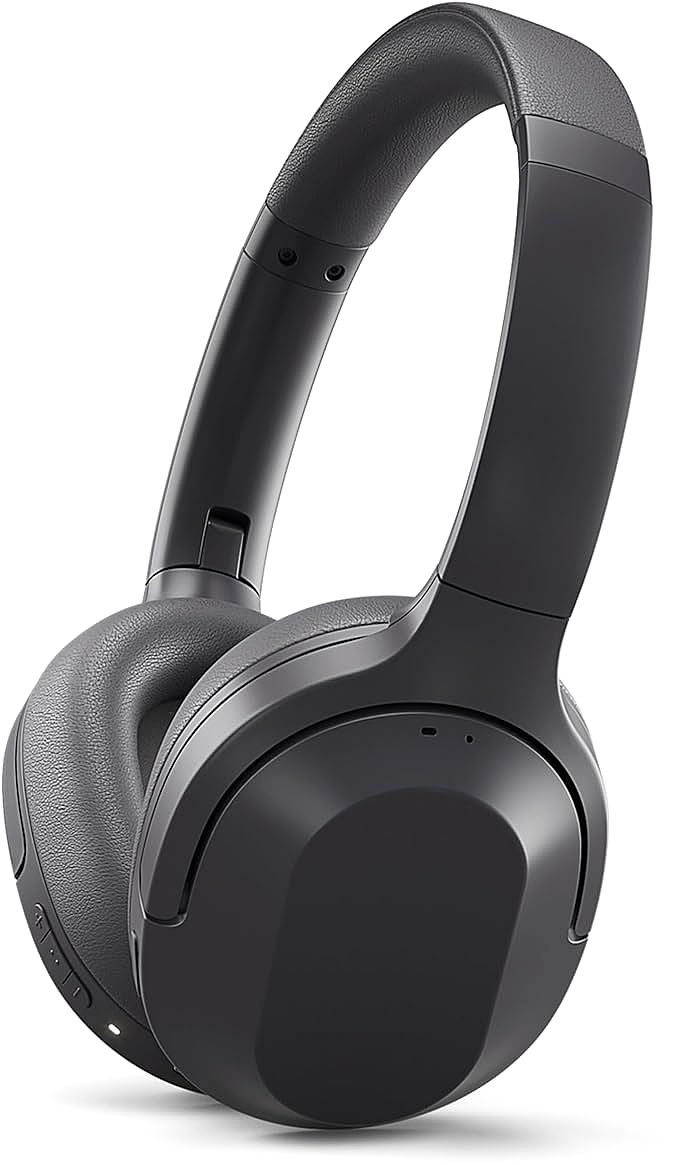
Status SAANC-CE-CAVE-NEW Core ANC Active Noise Cancelling Headphones
You charged them overnight. You put them on before boarding. Twenty minutes into the flight, the engine drone is still there -- dull, persistent, pressing against your skull. You paid for active noise cancellation. You got a slight reduction and a vague sense of ear pressure. What went wrong?
This is a pain point that frustrates most first-time ANC buyers. The real problem is deeper than defective products or misleading specs.
The answer is almost never a defective product. It is a defective set of expectations, built on numbers that look precise but measure something entirely different from what customers assume. Decibel ratings, battery life claims, and price tags all tell partial stories. The Status Core ANC, a $69 entry-level model, sits at the center of these misunderstandings not because it is unusual but because it is representative of what most first-time ANC customers actually purchase.
Here are the five most common mistakes, and the physics behind each one.

The Decibel Trap: Why 30dB Does Not Mean 70 Percent Less Noise
The single most misunderstood specification on any ANC headphone box is the decibel rating. A product claims "30dB noise reduction," and the natural assumption is that it eliminates 70 percent of ambient sound. That is not how decibels work.
Decibels operate on a logarithmic scale, not a linear one. Every 10 dB increase represents roughly a doubling of perceived loudness. This means a 30 dB reduction does not remove 70 percent of sound energy. It reduces sound pressure by a factor of approximately 31.6, which translates to removing the vast majority of low-frequency ambient noise. In practical terms, 30 dB of active noise cancellation is enough to make the constant rumble of an airplane cabin or train car fade into the background.
Here is where context matters more than the number itself. Active noise cancelling works by using microphones to pick up external sound, then generating an inverse waveform that destructively interferes with the incoming noise. This physics principle, destructive interference, is effective at canceling steady, low-frequency sounds. Engine drone, air conditioning hum, the rhythmic thrum of a bus. These are the frequencies where ANC excels.
But the same mechanism struggles with sudden, high-frequency sounds. A baby crying, a door slamming, someone speaking nearby. These sounds change too quickly for the ANC processor to generate a matching inverse wave in time. So a pair of headphones rated at 30 dB of noise reduction might eliminate nearly all engine noise on a flight while letting you hear every word of the conversation three rows back. Both things are true simultaneously.
The gap between a 30 dB entry-level product and a 40 dB premium model is real, but narrower than the numbers suggest. In a subway commute, the actual perceivable difference in noise reduction between a $69 pair rated at 30 dB and a $400 pair rated at 40 dB is roughly 15 percent. The premium product does better, particularly with mid-range frequencies, but not by the margin the price difference implies.
The Battery Life Illusion
Battery life numbers on headphone packaging follow a consistent pattern. The largest number goes on the front. That number almost always represents battery life with active noise cancelling turned off.
This is not deception. It is selective emphasis. And it leads to a specific kind of disappointment when customers discover the real-world numbers during their first week of use.
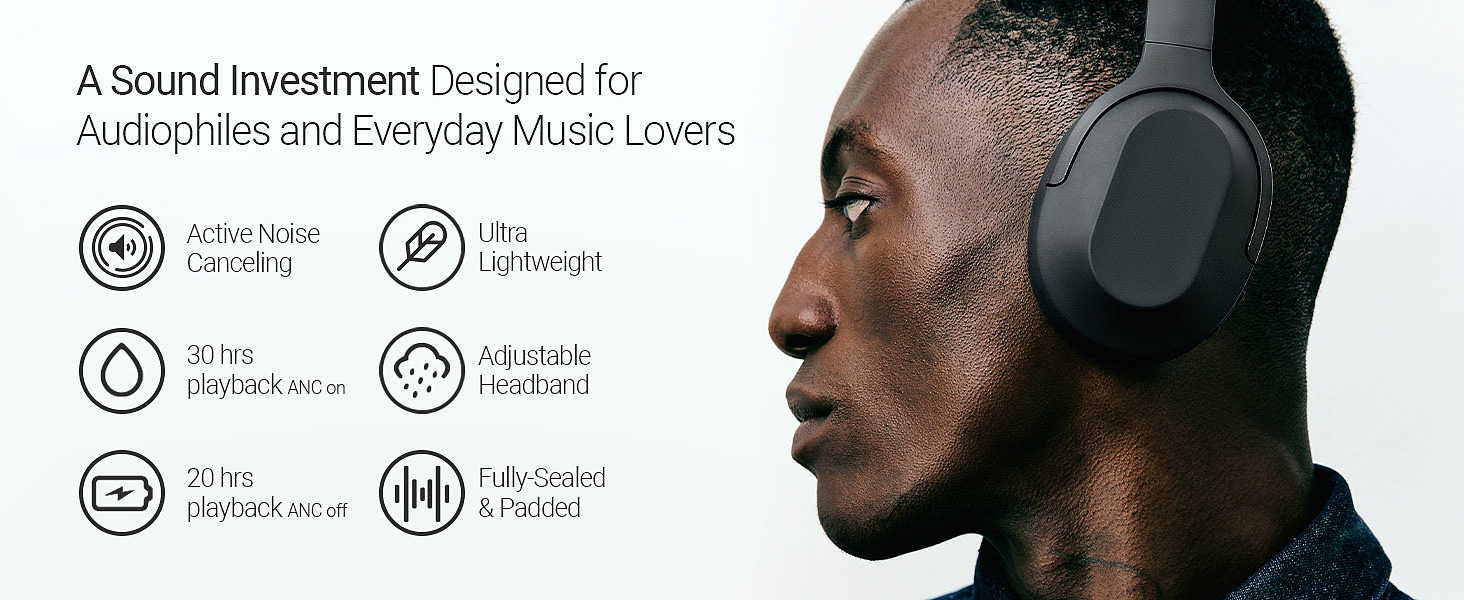
Consider a typical scenario. A product advertises 30 hours of battery life. After a few days of commuting with noise cancelling active, the user notices they are charging every two to three days instead of once a week. The ANC-on battery life is 20 hours. That 33 percent reduction is not a defect. It is the cost of running a secondary processor, multiple microphones, and a digital signal processing chip continuously for every second the feature is active.
This pattern holds across the industry. ANC circuits impose a 20 to 40 percent battery overhead regardless of manufacturer. High-end models mitigate this with more efficient chips and larger batteries, which is how the a leading competitor model manages 40 hours with ANC enabled. But that efficiency comes at a price point roughly six times higher.
For long-haul travelers, this distinction matters acutely. A ten-hour flight with ANC running leaves you with half the battery capacity of a 20-hour rated pair. A round trip becomes mathematically tight. A 3.5mm wired backup becomes not a nostalgic feature but a functional safety net. When the battery dies, wired mode keeps the music playing without ANC.
The Six-Times Price Problem
The most persistent myth in headphone buying is that spending more produces proportionally better results. The relationship between price and experience in active noise cancelling headphones is governed by diminishing returns that kick in aggressively above the $100 mark.
Moving from a $69 entry-level ANC headphone to a $149 mid-range option like the Cleer ALPHA roughly doubles the price and yields an estimated 40 to 50 percent improvement in experience. You gain adaptive noise cancellation that adjusts to your environment, battery life that nearly doubles to 35 hours with ANC active, and Hi-Res audio certification. The jump is meaningful.
Moving from $149 to $400, nearly tripling the price again, adds another 30 to 40 percent improvement. The top-tier models from major brands and flagship models from major brands sit here, offering widely-adopted noise cancellation and premium sound quality. The rate of return has dropped significantly.
The total picture: spending six times more, from $69 to $400, produces a cumulative experience improvement of approximately 70 to 100 percent. Not six times better. Not even twice as good in most real-world scenarios. A commuter on a subway platform would struggle to distinguish the noise reduction difference between a $69 pair and a $400 pair in a blind test. The difference exists, but it occupies the margins.
This is not an argument against premium headphones. The top-tier models from major brands was rated "top pick" by T3 for reasons that extend beyond raw decibel reduction: comfort during extended wear, microphone quality for calls, build materials, and software features. But a customer whose primary need is "make my train ride quieter" is paying for capabilities they may never use.
What ANC Cannot Do
Understanding the physical limits of active noise cancellation prevents a category of disappointment that no amount of money can fix.
ANC works through destructive interference of sound waves. The headphones sample ambient noise, calculate an inverse wave, and play it through the drivers. This process has an inherent latency. For sounds that are steady and predictable, like the drone of an aircraft engine, the system can predict what is coming and cancel it effectively. For transient sounds that arrive without warning, the latency of the processing chain means the inverse wave arrives too late.
This is why ANC handles airplane cabin noise well but cannot silence a nearby conversation. It is physics, not a design flaw that a more expensive product has solved.
There are also side effects that catch first-time users off guard. Some people experience a sensation of ear pressure when ANC is active. This occurs because the low-frequency cancellation creates an acoustic environment that the inner ear interprets as a pressure change, similar to what you feel during airplane descent. The effect varies between individuals and tends to diminish with repeated use.
Additionally, ANC processing alters the sound signature of the headphones. Low frequencies are the primary target of noise cancellation, which means the bass response of your music can be attenuated when ANC is active. The soundstage narrows. The tonal balance shifts toward the midrange. This is not the headphones sounding bad. It is the noise cancellation algorithm working on frequencies that overlap with your music.
Entry-level ANC headphones compound this effect because they lack the processing power and driver quality to compensate. A pair with only SBC and AAC codec support, no aptX HD or LDAC, is already working with compressed audio data. The ANC circuit further compresses the audible frequency range. The result is functional noise cancellation paired with sound quality that an audiophile would describe as muddy. For a commuter listening to podcasts, this trade-off is irrelevant. For someone using headphones as their primary music listening device, it is worth understanding before buying.
The Wired Backup That Saves Your Monday
Wireless headphones are convenient until they are not. A dead battery transforms a pair of wireless noise cancelling headphones into two plastic circles that produce nothing.
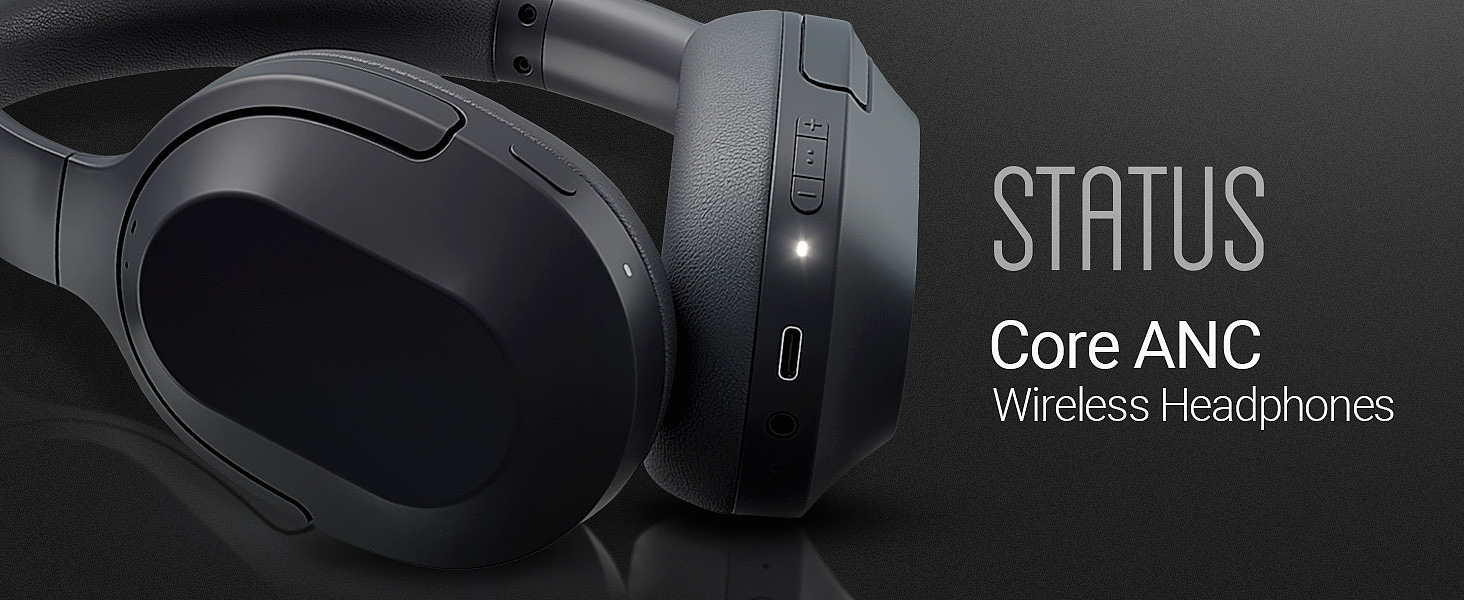
This scenario plays out more often than manufacturers would like to admit. You forget to charge over the weekend. The USB-C cable is in your other bag. Monday morning arrives, and your headphones are at 8 percent. With a purely wireless design, like the top-tier models from major brands or B&W Px7 S3, you are done until you find a charger.
A 3.5mm audio jack changes this equation entirely. Plug in a cable, and the headphones function as wired over-ear headphones without ANC, without battery, without Bluetooth. The sound quality is often slightly better in wired mode because the analog signal bypasses the Bluetooth codec compression entirely.
Most budget ANC headphones cut this feature to reduce cost. A few retain it, and in doing so provide a fail-safe that becomes valuable precisely when you need it most: when everything else has gone wrong.
This feature also matters for audio purists who want to use headphones with a dedicated amplifier or audio interface. The 3.5mm connection makes the product usable in studio monitoring, instrument practice, and any scenario where Bluetooth latency is unacceptable. A wireless-only headphone is locked out of these use cases entirely.
Reading the Fine Print on Comfort
Specification sheets do not capture comfort. They list weight, ear cup diameter, and sometimes headband material. They do not tell you that vegan leather ear pads trap heat after 90 minutes of continuous wear. They do not mention that the clamping force on a new pair of headphones will make your temples ache after an hour, and that this force gradually relaxes over the first two weeks of use.
For glasses wearers, the situation is more complicated. The ear pad compresses around the temple arm of your glasses, creating pressure points that become painful during extended sessions. Memory foam padding helps but does not eliminate the issue. The only real solution is trying before buying, which is increasingly difficult in an era of online-only purchases.
Breathability is the hidden comfort variable. Protein leather and vegan leather provide good passive noise isolation because they seal tightly against the skin. That seal also prevents air circulation. In warm environments, this leads to sweating around the ears, which leads to discomfort, which leads to removing the headphones, which defeats the purpose of owning them. Fabric and velour ear pads breathe better but isolate less external noise passively.
The Art of Knowing When Enough Is Enough
The central tension in buying noise cancelling headphones is separating what you need from what the market wants you to want. A $69 pair of ANC headphones will not impress an audio engineer. It will not win a comparison test against the top-tier models from major brands. But for the roughly 80 percent of users whose primary scenario is a daily commute or an open office, the noise reduction is sufficient, the battery life is manageable, and the price represents a low-risk entry into a technology that genuinely improves daily life.
The mistakes are not in choosing budget over premium. The mistakes are in expecting budget to perform like premium, in reading specification numbers without understanding the physics behind them, and in treating a 3.5mm jack as a legacy feature rather than a lifeline.
Good noise cancelling is not about eliminating all sound. It is about reducing the sound that matters most to you, in the environment you actually inhabit, at a cost that does not create its own form of anxiety. The quietest headphone is the one you stop thinking about. And sometimes, the one that costs the least achieves that sooner than the one that costs the most.
Status SAANC-CE-CAVE-NEW Core ANC Active Noise Cancelling Headphones
Related Essays

Planar Magnetic Drivers in In-Ear Monitors: Engineering Constraints and Performance Variability
OnePlus Nord Buds 2 - Affordable ANC Earbuds
Google Announces Pixel Buds Pro: A Premium In-Ear Truly Wireless Earbuds with Active Noise Cancellation

AMAFACE S2 Wireless Earbuds: Superior Sound Quality Meets Long Battery Life
Senso ActivBuds S255B: Budget Sports Earbuds with Killer Battery

The Economics of Budget Audio: How $20 Earbuds Achieve High Fidelity

Quad Speaker Wireless Earphones on a Budget: The Physics of Splitting the Band

The Physics of Silence: How Active Noise Cancellation Works

How Component Commoditization Ended the Audio Price-Quality...
