Sound Localization: How Your Brain Maps Audio Space with 600 Microseconds

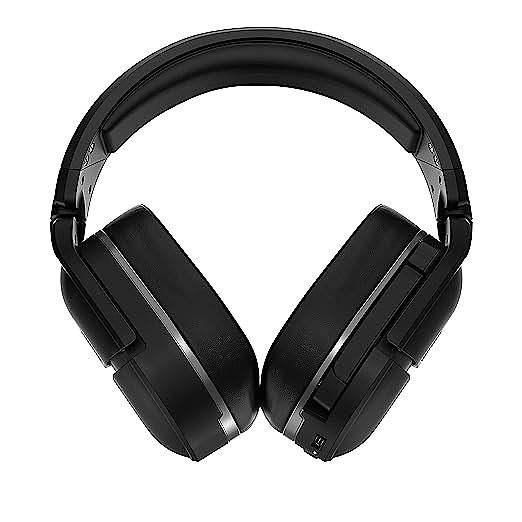
Turtle Beach Stealth 700 Gen 2 Wireless Gaming Headset
Turtle Beach Stealth 700 Gen 2 Wireless Gaming Headset
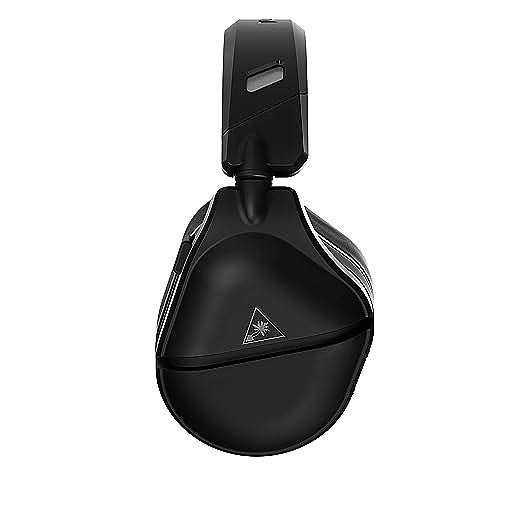
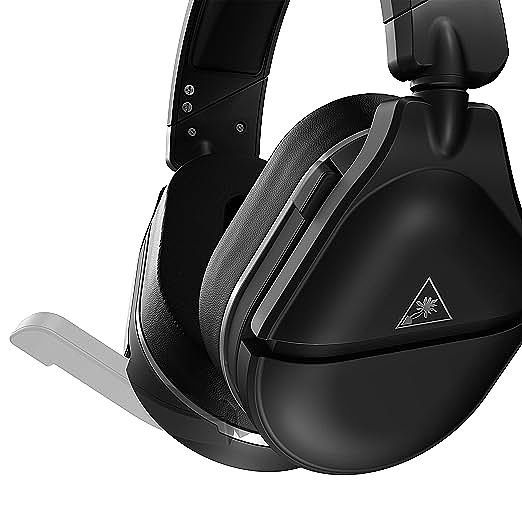
The Turtle Beach Stealth 700 Gen 2 Wireless Gaming Headset combines solar charging technology with active noise cancellation, offering up to 80 hours of battery life on a single charge — and potentially infinite playtime in sunlight.
Priced at $135.99 for Midnight Black and $199.00 for Sand Gold, it targets outdoor commuters and travelers who want to eliminate cable anxiety.
The Footstep Problem
You hear it. Left side. No -- right side. Behind you? The sound wraps around your skull with no clear origin ,. and by the time you spin your character to face the threat ,. it is already too late. Anyone who has played a competitive shooter has lived this moment. The kill cam reveals your opponent was crouched three meters to your northwest the entire time. You heard them. You just could not place them.
This is not a skill issue. It is a physics problem. Stereo audio -- two channels ,. left and right -- gives your brain roughly twelve percent of the spatial information it uses in the real world to locate a sound source. The remaining eighty-eight percent comes from timing differences ,. frequency filtering by your outer ear ,. and spectral cues that a pair of speakers pressed against your head simply cannot reproduce without help. Gaming headsets like the Turtle Beach Stealth 700 Gen 2 attempt to reconstruct those missing cues through digital signal processing ,. but to understand whether that reconstruction works -- and why -- you need to understand what your ears actually do with sound.
 .
.
Two Ears, Six Hundred Microseconds
Sound travels at approximately 343 meters per second in air at room temperature. If a source sits directly to your left, the sound wave reaches your left ear roughly 600 microseconds before it reaches your right. That gap -- the Interaural Time Difference, or ITD -- is the primary cue your auditory system uses for horizontal localization.
Six hundred microseconds is short enough that you cannot consciously perceive it as a delay. Your brain does not hear two separate sounds. Instead, specialized neurons in the superior olivary complex, a cluster of cells in the brainstem, act as coincidence detectors. They compare incoming signals from both cochleae and encode the timing offset as a spatial position. This mechanism operates below conscious awareness, which is why localizing sound feels instantaneous. The processing happens before the signal ever reaches your cerebral cortex.
The ITD cue works well for frequencies below roughly 1,500 Hz. Above that threshold, the wavelength of sound becomes shorter than the distance between your ears, and the phase of the wave wraps around too many times for the coincidence detectors to lock onto a single solution. For higher frequencies, your auditory system switches to a different strategy.
The Shadow Your Head Casts on Sound
Your skull is dense. Bone attenuates high-frequency sound waves far more effectively than low-frequency ones. When a sound source sits to your left, your head creates an acoustic shadow on the right side, reducing the volume at the right ear. This volume gap is the Interaural Level Difference, or ILD.
Low frequencies -- bass tones below about 500 Hz -- have wavelengths longer than your head is wide. They diffract around your skull with minimal loss, so the ILD at those frequencies is negligible. But at 4,000 Hz and above, your head blocks a significant portion of the incoming energy. A 4 kHz tone arriving from directly to your left can be up to 15 decibels louder at the left ear than at the right.
Your brain uses ILD as a complementary cue to ITD. Together, they cover the full audible spectrum: ITD handles low frequencies, ILD handles high frequencies, and the overlapping middle band reinforces both. This dual-cue system works well for horizontal localization. Research published in the Journal of the Acoustical Society of America shows that humans can resolve angular differences as small as one to two degrees in the horizontal plane under controlled conditions.
But there is a catch. Both ITD and ILD operate primarily along the horizontal axis. They tell you left from right. They are far less useful for distinguishing front from back, or above from below.
The Outer Ear as a Spectral Encoder
The pinna -- the cartilaginous folds of your outer ear -- is not decorative. Its ridges, hollows, and curves create a system of micro-reflections that alter the frequency spectrum of incoming sound in ways that depend on the angle of elevation and front-back orientation.
When a sound arrives from above, it bounces off the concha bowl and the upper folds of the pinna before entering the ear canal. This introduces a series of spectral notches and peaks -- narrow frequency bands that are amplified or attenuated -- that serve as a fingerprint for elevation. A sound from below produces a different spectral fingerprint. A sound from behind produces yet another.
These pinna cues are individual. The exact pattern of spectral modification depends on the physical geometry of your specific ears. Two people with different ear shapes will receive slightly different spectral fingerprints from the same source position. Your brain learns your own pinna filtering characteristics over years of accumulated auditory experience, building an internal model that maps specific spectral patterns to specific spatial locations.
This is why, when you put on someone else's glasses, the world looks wrong. With ears, the equivalent effect is subtler but real: a spatial audio system that uses an averaged ear model will produce localization errors versus one calibrated to your individual pinna geometry.
 .
.
Head-Related Transfer Functions: The Mathematical Ear
All of these cues -- ITD, ILD, pinna filtering, shoulder reflections, torso diffraction -- can be expressed as a single mathematical operation. The Head-Related Transfer Function, or HRTF, is a set of frequency-response filters that describe how sound is modified as it travels from a point in space to your eardrum.
An HRTF is typically measured by placing microphones inside a listener's ear canals and playing test signals from hundreds of positions around their head. The resulting dataset maps each spatial direction to a pair of filters -- one for each ear -- that encode the full set of localization cues for that direction. When a spatial audio system wants to make a sound appear to come from a specific location, it applies the corresponding HRTF filters to the audio signal before delivering it to the headphones.
The quality of the HRTF determines the quality of the spatial illusion. A generic HRTF, averaged across many listeners, works reasonably well for most people but produces audible localization errors -- particularly in elevation and front-back discrimination -- for anyone whose ear geometry deviates significantly from the average. A personalized HRTF, measured from your actual ears, can reduce those errors dramatically.
The challenge is measurement. Traditional HRTF measurement requires an anechoic chamber, microphone probes, and several hours of recording. Recent research explores using smartphone cameras and machine learning to estimate HRTF from photographs of the ear, but consumer-grade personalization remains an active area of development.
From Channels to Objects
Legacy surround sound -- 5.1, 7.1, even 11.2 -- is channel-based. Each channel maps to a fixed speaker position. The audio engineer mixes the soundtrack by routing sounds to specific channels, and the listener's playback system must match the expected speaker layout. This works well in a calibrated home theater. It breaks down in headphones, where there are only two physical drivers.
Virtual surround sound attempted to bridge this gap by applying HRTF processing to a 7.1 channel mix, simulating the effect of eight speakers placed around the listener. The result is usable but imprecise. The audio has already been collapsed into channels, losing the spatial resolution that object-based formats preserve.
Object-based audio takes a fundamentally different approach. Instead of routing sounds to channels, each sound source -- a footstep, a bird call, an explosion -- is tagged with metadata that describes its position in three-dimensional space. The rendering engine, not the mixing engineer, determines how to present each sound to the listener. This allows the engine to account for the listener's head orientation, the playback device, and the HRTF being used.
Sony's Tempest 3D AudioTech, built into the PlayStation 5, is an object-based renderer. The Tempest engine processes up to 128 simultaneous audio objects, applying HRTF filtering in real time. Game developers assign each sound a position in the game world, and the Tempest engine translates that position into binaural audio that accounts for distance attenuation, room reflections, and head-related spectral cues.
The practical difference is audible. In titles designed for object-based audio, sounds move smoothly through three-dimensional space rather than snapping between discrete speaker positions. A creature circling overhead traces a continuous arc above the listener. Rain does not come from left and right; it comes from everywhere above.
The Precedence Effect and Why First Arrivals Win
Psychoacoustics adds another layer of complexity. The precedence effect, also known as the Haas effect, describes how the auditory system prioritizes the first-arriving sound wave over subsequent reflections. When a direct sound and an echo reach the ear within one to five milliseconds of each other, the brain attributes the perceived location to the first arrival and suppresses the spatial information in the reflection.
Game audio engines exploit the precedence effect to create convincing room acoustics without confusing the listener about source direction. Early reflections -- the first few bounces off walls, floor, and ceiling -- are rendered with appropriate delays and spectral modifications. The listener perceives the room size and surface materials through these reflections but localizes the source to the direct path.
When the delay between direct sound and reflection exceeds roughly 40 milliseconds, the brain begins to perceive them as separate events. This is the boundary between a spacious room sound and a discrete echo. Game audio engines calibrate reflection delays to stay below this threshold for nearby surfaces while allowing longer delays for distant walls.
This balancing act -- providing enough spatial context to feel immersive without obscuring the directional cue -- is one of the more delicate aspects of game audio design.
 .
.
Frequency Masking and the Footstep Arms Race
Competitive gaming introduces a different set of constraints. In a multiplayer shooter, the sounds that matter most -- footsteps, weapon reloads, ability activations -- occupy specific frequency ranges. Footsteps cluster between 200 Hz and 4 kHz, depending on the surface material and footwear model in the game.
The problem is auditory masking. When a loud explosion occurs at 100 Hz, it raises the threshold of audibility for nearby frequencies, making quieter sounds in the same critical band harder to detect. An explosion at 80 Hz can partially mask a footstep at 300 Hz. A distant gunshot at 1 kHz can mask a reload sound at 1.2 kHz.
Equalizer presets designed for competitive play, such as the Superhuman Hearing mode found on certain gaming headsets, address this by boosting the frequency bands where critical gameplay sounds reside while cutting bands where ambient noise dominates. The label is marketing. The underlying mechanism is a targeted frequency-shelving filter that exploits the same psychoacoustic principle hearing aids have used for decades: increase the signal-to-noise ratio in the bands that carry information the listener needs.
The effectiveness of this approach depends on the game's audio mix. A well-designed competitive game already ensures that critical sounds sit in relatively unmasked frequency bands. A poorly mixed game benefits more from external EQ correction. In either case, the EQ preset is a compromise. It cannot know which frequencies are occupied by signal and which by noise at any given moment, so it applies a static boost across the target band regardless of content.
The Latency Budget
Spatial audio processing adds computational overhead. Every audio object must be filtered through the HRTF, reflected off virtual surfaces, and rendered to the output buffer -- all within a time budget tight enough that the player does not perceive a delay between action and sound.
The total acceptable latency for gaming audio is approximately 30 milliseconds for competitive play. That budget covers the entire signal chain: game engine audio generation, middleware processing, console audio pipeline, wireless transmission, digital-to-analog conversion, and driver response. Each stage consumes a portion of the budget.
A 2.4 GHz wireless link typically adds 10 to 30 milliseconds of latency. Bluetooth adds considerably more -- 100 to 200 milliseconds with the standard SBC codec -- which is why headsets designed for competitive gaming use a dedicated 2.4 GHz radio for game audio while reserving Bluetooth for secondary functions like simultaneous phone connectivity. The dual-wireless approach preserves low-latency game audio while offering the convenience of a Bluetooth channel for voice calls or music.
Inside the headset, the DAC and amplifier add roughly one to two milliseconds. The driver itself responds in under a millisecond. The bottleneck is almost always the wireless link and the processing pipeline.
The Uncanny Valley of Spatial Audio
When HRTF processing is accurate, the result is convincing. When it is slightly off -- and with generic HRTFs, it usually is -- the effect lands in an auditory uncanny valley. Sounds appear to come from approximately the right direction but with a diffuse quality that makes them feel artificial. Front-back confusion is the most common artifact: a sound intended for the front hemisphere is perceived as coming from behind, or vice versa.
This happens because front-back discrimination depends heavily on pinna cues, which are the most individualized component of the HRTF. A generic HRTF represents an averaged pinna that matches no real person. The spectral notches it encodes will be slightly wrong for most listeners, producing localization errors in precisely the dimension where humans are already least accurate.
Head tracking can mitigate this problem. When the audio engine knows the orientation of the listener's head, it can update the HRTF in real time as the head turns. A sound that was in front stays in front as you rotate, rather than rotating with you. The difference between head-relative and world-relative reference frames provides a powerful confirmatory cue: if a sound source remains fixed in world space while your head moves, your brain can triangulate its position more accurately.
Consumer headsets with integrated head tracking remain uncommon, though the technology is maturing. The PS5's DualSense controller contains an accelerometer and gyroscope that could theoretically feed head-tracking data to the Tempest engine, though this requires the player to wear the controller on their head -- an approach Sony has not pursued commercially.
What Remains Unmapped
The current state of spatial audio in gaming sits at an interesting inflection point. The rendering engines -- Tempest, Dolby Atmos, Windows Sonic, DTS Headphone:X -- are capable of producing genuinely convincing three-dimensional soundscapes. The bottleneck is no longer processing power. It is personalization.
Generic HRTFs work. They provide a measurable improvement over stereo for horizontal localization. But the vertical dimension remains noisy, front-back confusion persists, and no amount of algorithmic refinement can fully compensate for the fact that the filter being applied does not match the ears receiving the signal. The problem is not unlike trying to correct vision with prescription lenses averaged from a population: the mean helps some people and hinders others.
The next frontier is accessible individual HRTF measurement. If smartphone-based ear scanning reaches consumer-grade accuracy, spatial audio could approach the fidelity that personalized optics brought to vision correction. Until then, the gap between what the technology can render and what the listener perceives remains defined by the shape of their own ears -- a geometry that no software can guess with certainty.
Turtle Beach Stealth 700 Gen 2 Wireless Gaming Headset
Related Essays

The Computational Ear: Signal Processing and the Illusion of 3D Sound

Computational Audio Soundbar: How Five Drivers Replace a Room Full of Speakers

AirPods (3rd Gen): Immersive Sound, Personalized for Your Ears

The Evolution of Earbuds: How AirPods Pro 3 Redefined Personal Audio

Why Your Room Is Sabotaging Spatial Audio Before It Even Starts

How Spatial Audio Technology Creates Immersive Cinematic Experiences at Home

How Spatial Audio Creates Immersive 3D Sound From Just Two Speakers

Razer Leviathan V2 Pro: Immersive Sound with AI-Powered Head-Tracking Beamforming

What is 5.1.3 Audio? Unlocking True Dolby Atmos with Room Calibration