The Science of Gaming Audio: How Sound Becomes Your Competitive Edge

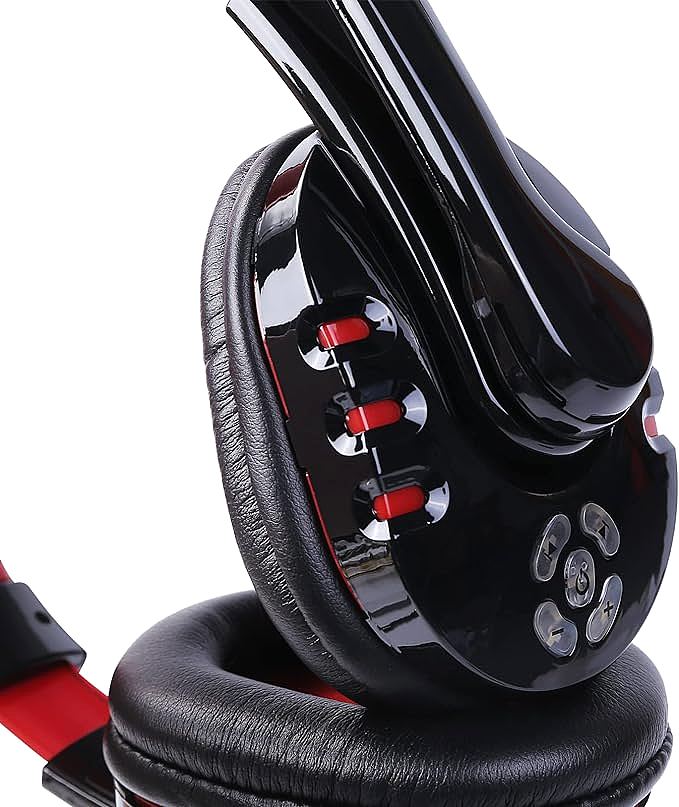
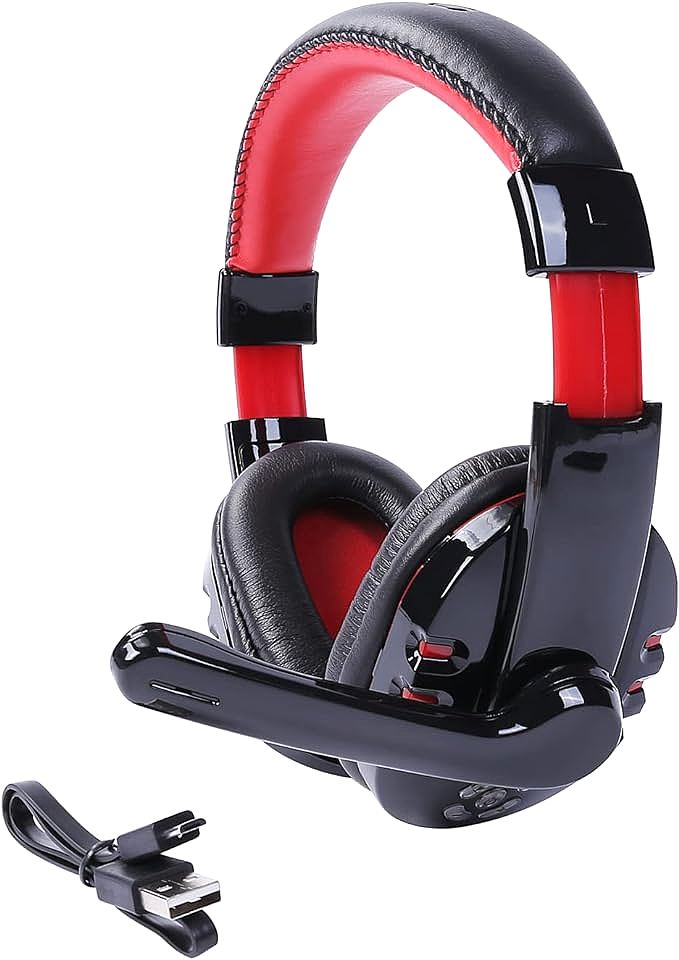
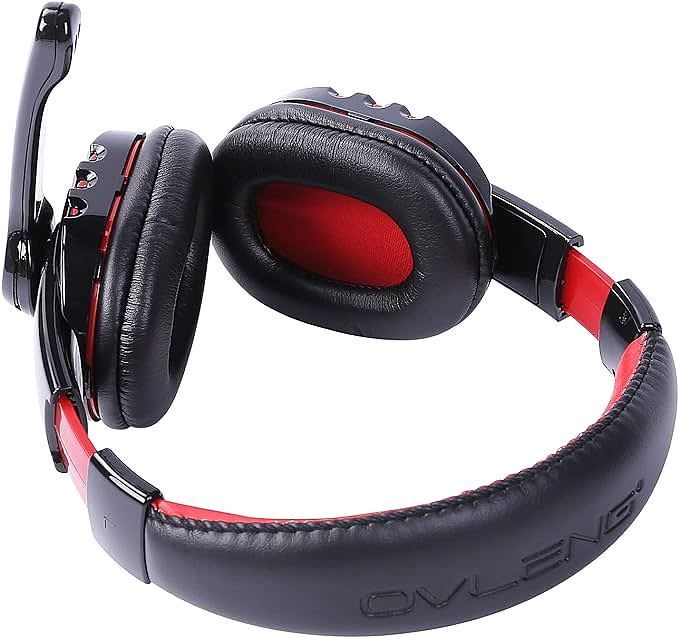
Generic BGDDR Wireless Headphones
The final seconds ticked away. Tension hung thick in the air, heavier than the humid summer night. My character crouched behind a crumbling wall, heart pounding in my chest—or was that just the in-game bass? A faint rustle… left? Right? I strained to hear, my old headphones muddying the crucial sound. Too late. A flash of movement, a burst of gunfire, and the dreaded DEFEAT screen splashed across my monitor.
That missed footstep, that tiny auditory clue, cost me the match. It was a stark reminder: in the competitive world of gaming, sound is not just an enhancement—it is a weapon.
And that is what makes understanding gaming audio science so critical for any player seeking an edge. It is not about blasting explosions at maximum volume; it is about providing the clarity, precision, and comfort needed to gain a true competitive advantage. This article explores the fascinating science behind gaming audio—from the physics of latency to the neuroscience of sound localization—and explains why these factors matter more than any marketing claim about driver size or frequency response.
The Demands of the Digital Battlefield
Before we even begin to understand gaming audio technology, we need to consider what gamers actually require from their audio equipment. It boils down to four key factors that determine whether a headset helps or hinders performance.
Low latency means the delay between when a sound occurs in-game and when you hear it. A significant lag can be the difference between victory and defeat, especially in fast-paced games where hearing an enemy reload before they fire can provide crucial split-second awareness. Imagine hearing the enemies reload after they have already fired—not a good situation for competitive play.
Clarity is not enough to just hear sounds; you need to hear them clearly. This means a balanced sound profile that does not overly emphasize any particular frequency range. You need to distinguish between the subtle rustle of footsteps and the booming roar of an explosion without either drowning out the other.
Positional audio is where the magic happens. The ability to pinpoint exactly where a sound originates in three-dimensional space provides enormous tactical advantages. When you can accurately determine whether an enemy is above you, below you, or behind a wall, you gain information that can be the difference between winning and losing.
Comfort becomes paramount during extended gaming sessions. A headset that causes fatigue or discomfort after an hour will inevitably distract you, reducing your overall performance just when endurance becomes critical.
The Millisecond That Matters: Understanding Audio Latency
Audio latency is the time elapsed between an audio event being generated—for example, a gunshot on-screen—and the corresponding audio being reproduced in your headphones. In gaming, latency is typically measured in milliseconds (ms). Research from the University of Regensburg found that experienced players can detect audio delays above 19-40ms, while casual gamers might not notice delays under 50ms.
Every link in the signal chain adds delay. Microphone and DAC/ADC conversion, digital signal processing, encoding to wireless stacks, speaker drivers, operating system audio subsystems like Windows WASAPI or macOS CoreAudio, and game engine processing—all contribute to the final latency figure. Perhaps surprisingly, games themselves add 40-60ms of audio processing regardless of your hardware quality.
Latency varies dramatically by connection type. Wired connections via 3.5mm jack typically introduce just 1-5ms of latency, while USB wired connections add 5-8ms. Premium 2.4GHz wireless gaming headsets now achieve 15-25ms latency, well below the 25-30ms threshold where humans can perceive delay. Bluetooth connections, unless using low-latency codecs like aptX Low Latency or LC3plus, typically add 80-200ms of delay—acceptable for music but problematic for competitive gaming.
Jitter matters as much as raw latency. A steady 15ms delay is perceptually better than a variable 5-30ms delay, because inconsistency disrupts the brains ability to build reliable mental models of audio timing. Packet loss or excessive buffering compounds perceived delays and causes audio dropouts that can be genuinely disorienting during gameplay.
Understanding these numbers changes how you think about your equipment choices. The difference between 5ms and 15ms latency is imperceptible to most humans, so chasing the absolute lowest numbers provides diminishing returns. What matters is consistency and keeping total system latency below the perception threshold.
Where Sounds Live in 3D Space: The Science of Positional Audio
The ability to locate sounds in three-dimensional space seems almost magical until you understand the neuroscience and physics behind it. Human sound localization relies on several sophisticated mechanisms that gaming audio engineers must account for when designing headsets.
The brain determines sound direction using multiple cues. Interaural Time Difference occurs when sound reaches the nearer ear a fraction of a millisecond earlier than the far ear. For sounds directly in front, this time difference is zero, which is why front-back localization can be confusing without additional cues.
Interaural Level Difference is the head shadowing effect. High frequencies are attenuated more as they travel around the head, making sounds quieter in the far ear. The brain uses this volume difference, especially at higher frequencies, to determine horizontal positioning.
Spectral cues come from the pinna—the outer ear—which filters sounds differently based on direction. Sounds from behind are slightly muffled compared to sounds from the front because of how the folds of your ears reflect and absorb different frequencies. These subtle spectral differences, though we rarely notice them consciously, provide crucial information about whether a sound is above, below, in front, or behind.
Head-Related Transfer Functions quantify these filtering effects. HRTFs are mathematical models that describe how your head, ears, and torso modify sound waves before they reach your eardrums. Everyone has slightly different HRTFs based on their unique anatomy, which is why personalized spatial audio can be more effective than generic implementations.
Modern gaming headsets and game audio engines use HRTF algorithms to simulate three-dimensional sound positioning through standard stereo drivers. Games like Valorant and Counter-Strike 2 allow players to enable HRTF processing in their audio settings. Once enabled, players wearing headphones perceive audio cues from every direction, enhancing their ability to locate enemies with remarkable precision.
The frequency sensitivity of human hearing plays a crucial role here. We are particularly sensitive to sounds within the 2kHz-5kHz range, which happens to be where many critical gaming audio cues live—footsteps, weapon sounds, and verbal communication all occupy this range. Binaural simulations that accurately reproduce these frequencies work best for gaming applications.
Understanding HRTF science reveals why some headsets perform better for positional audio than others. If a headset adds its own frequency coloration—boosting bass or smoothing highs—it can interfere with the subtle spectral cues that the brain uses for localization. Flat frequency response is actually desirable for accurate spatial audio reproduction.
Building the Perfect Sound: The Engineering of Gaming Headphones
The drivers inside gaming headphones are where electrical signals become the sound waves your ears detect. Understanding driver technology helps explain why different headsets sound different and how engineering choices affect performance.
Dynamic drivers are the most common type, using a diaphragm that moves back and forth in response to electromagnetic forces. When an audio signal passes through the voice coil, it creates a magnetic field that pushes and pulls the diaphragm, causing air molecules to vibrate and create sound waves. The size, material, and design of the diaphragm all affect how accurately the driver reproduces sound.
Frequency response describes the range of frequencies a driver can reproduce and how loudly it reproduces each frequency relative to others. Gaming headsets often emphasize certain frequency ranges—the thump of explosions, the crispness of footsteps—but this coloring can reduce accuracy for other sounds. Audiophile-grade equipment typically aims for flat frequency response, meaning all frequencies are reproduced at equal loudness, which provides the most accurate sound reproduction.
Driver size affects several characteristics. Larger drivers can typically move more air, which helps with bass reproduction and allows for higher maximum volume without distortion. However, larger drivers can also introduce more distortion at lower frequencies and may not respond as quickly to rapid transients—the quick changes in sound that are crucial for accurately reproducing impacts and attacks.
Total Harmonic Distortion measures how much a driver adds unwanted frequencies that were not present in the original signal. Lower THD means cleaner, more accurate sound reproduction. Premium drivers aim for THD below 0.1% across the frequency range, while budget drivers may show much higher distortion levels.
The acoustic enclosure design matters as much as the drivers themselves. The volume and shape of the ear cups, the type and thickness of padding, and the presence or absence of acoustic ports all affect final sound quality. Closed-back designs create isolation by preventing sound from escaping and entering, while open-back designs allow more natural sound but at the cost of isolation.
Wireless transmission adds another layer of engineering complexity. The wireless module must encode audio data, transmit it with minimal delay, and the receiver must decode it with precision. Premium wireless headsets use dedicated 2.4GHz protocols that bypass Bluetooth latency issues entirely, while maintaining near-CD-quality audio.
The Marathon Mindset: Why Comfort Is a Performance Factor
Comfort is not a soft, subjective concern—it directly affects gaming performance during extended sessions. Understanding the ergonomics of headset design reveals why certain designs excel during marathon gaming sessions while others cause fatigue.
Weight distribution matters enormously. Research indicates that headsets under 300g significantly reduce neck strain during extended use, but absolute weight matters less than how that weight is distributed. A well-balanced headset feels lighter than a poorly balanced one, even if the numbers suggest otherwise.
Memory foam ear cushions conform to your head shape and relieve pressure points. Standard foam can trap heat during marathon sessions, causing discomfort and sweating. Advanced materials like cooling gel-infused foam, breathable athletic weave fabrics, and hybrid leatherette combinations address these issues. The goal is maintaining comfort without sacrificing acoustic performance.
Clamping force—the pressure headphones apply to create a seal around the ears—requires careful engineering. Too loose and you lose bass response and isolation; too tight and you create discomfort and pressure points that become painful over time. Self-adjusting suspension bands and floating cup designs that automatically adapt to head shape represent attempts to solve this problem.
Ear cup size and shape affect comfort for different ear types. Larger cups accommodate more ear shapes comfortably, while smaller cups may press against the outer ear in uncomfortable ways. The oval shape of premium ear cups often works better than circular ones because ears themselves are more oval.
Breathability becomes critical during long sessions. Open-back designs allow heat escape and reduce the stuffiness that closed-back headsets can cause during extended wear. The trade-off is that open-back designs allow sound to leak both ways—you hear ambient noise and others can hear your game audio.
For glasses wearers, special design considerations apply. Recessed channels in ear cups for glasses arms, flexible ear cup edges that accommodate various frame sizes, and swivel adjustments that provide better fit for different face shapes all help glasses wearers achieve comfortable long-term use.
The cumulative effect of these factors determines whether a headset remains comfortable or becomes distracting after several hours of play. When your headset is uncomfortable, your brain devotes cognitive resources to monitoring the discomfort rather than focusing on the game—making comfort a genuine performance factor.
Wireless Wars: The Battle for Low-Latency Audio
The debate between wired and wireless connectivity for gaming headsets has evolved dramatically as wireless technology has improved. Understanding the technical trade-offs helps you make informed decisions about your audio setup.
Bluetooth has improved significantly over its history. Bluetooth 4.2 introduced around 2014 typically added 80-200ms of latency—genuinely problematic for gaming. Bluetooth 5.0 and later versions brought better efficiency and slightly lower latency, but standard codecs still struggle to achieve competitive gaming latency.
Bluetooth 5.4 with LC3plus codec delivers around 25-30ms latency—much better than older codecs but still not quite at the level required for competitive gaming where every millisecond matters. Some phones and headsets support this codec, but compatibility remains inconsistent across devices.
Proprietary 2.4GHz wireless protocols have emerged as the preferred solution for gaming headsets. These dedicated protocols bypass Bluetooth entirely, using custom firmware that prioritizes latency over everything else. High-end gaming headsets achieve 8-14ms latency with these systems, while mainstream options deliver 15-25ms—well below the perception threshold for most users.
The trade-off is convenience. Bluetooth works with virtually any device, while proprietary wireless typically requires a dedicated USB dongle. For competitive gaming where you mostly play on one platform, the dongle is a minor inconvenience. For multi-device users, the lack of cross-platform compatibility can be frustrating.
Dual wireless systems have emerged as a premium feature, offering both 2.4GHz for gaming and Bluetooth for other devices. You might use low-latency 2.4GHz for your gaming PC while staying connected to your phone via Bluetooth for music or calls, with seamless switching between sources.
Battery technology has also improved dramatically. Modern gaming headsets offer 20-60 hours of battery life per charge, with some premium options featuring swappable batteries or charging bases that allow continuous play without interruption. Battery life matters less than it once did, though wireless headsets still require planning that wired ones do not.
The Invisible Advantage: What Competitive Gamers Actually Need
After understanding the science behind gaming audio, we can distill what actually matters for competitive performance. This knowledge separates informed decisions from marketing-driven purchases.
Latency matters, but you probably have more than you think from your headset. If you are playing on a modern gaming setup with a dedicated GPU and a premium wireless headset, your total system latency is probably dominated by the game and operating system, not the headset. Focus on keeping headset latency below 25ms, but do not obsess over whether it is 10ms or 20ms.
Positional accuracy is genuinely important for competitive gaming. The ability to accurately locate enemies by sound provides real information advantages. Look for headsets with good HRTF implementation and avoid those with heavily colored frequency response that might obscure spatial cues.
Comfort directly affects performance during extended sessions. If your headset becomes uncomfortable after a few hours, you will lose focus at exactly the moment when endurance matters most. Prioritize comfort features that address your specific needs—breathability if you run hot, clamping force adjustability if you wear glasses, or weight distribution if you play very long sessions.
Microphone quality matters for team communication but often gets overlooked in favor of speaker performance. If you play competitively with teammates, a good noise-canceling microphone provides real value by ensuring clear communication.
Wireless is now viable for competitive gaming. Premium 2.4GHz wireless headsets match wired performance for latency while eliminating cable drag. Unless you have specific interference concerns or are playing at the absolute highest competitive levels, wireless should not be a disqualifying factor.
The science of gaming audio reveals that much of what marketing claims about drivers, frequency response, and special features is either irrelevant or misleading. What actually matters—latency, spatial accuracy, comfort, microphone clarity—is measurable and understand able when you know what to look for.
The next time you gear up for a competitive match, remember that your audio setup is a sophisticated system combining physics, neuroscience, and engineering. Understanding how these elements work transforms your equipment choices from marketing-driven guesswork into informed decisions based on your actual needs. That understanding itself becomes an invisible advantage—one that no amount of driver size or frequency range specifications can match.
The best gaming audio is not about the most expensive equipment or the most impressive specifications. It is about the invisible advantage that comes from understanding what actually matters: clear sound delivered at the right moment, positioned accurately in space, experienced comfortably through hours of intense competition. That is the science of gaming audio—and it is more accessible than you might think.
Generic BGDDR Wireless Headphones
Related Essays

The Science Behind Wireless Audio: From Bluetooth Origins to Modern Earbuds

Reshaping Acoustic Spaces: The Mathematics of Synthetic Reverberation and Phase Alignment

Beyond the Wall of Sound: Decoding Hybrid Driver Architecture (Case Study: KZ ZSX)

Raycon RBH841 Fitness Headphones: Unleash Your Workout with Powerful Sound and Active Noise Cancellation

Pamu S29: Your Pocket-Sized Portal to Pure Sound

IDE11 MD-04 Wireless Earbuds: Your Gateway to Affordable, Immersive Sound
Falebare Q99-01 Wireless Bluetooth Headphones : Excellent Sound and Endless Playtime

The Unsung Physics of the Party: A Deep Dive Into the Modern Karaoke Machine

Cut the Cord and Elevate Your Audio Experience with the SteelSeries Arctis Nova Pro Wireless
