The Engineering Zero-Sum Game Behind Marathon Battery Claims


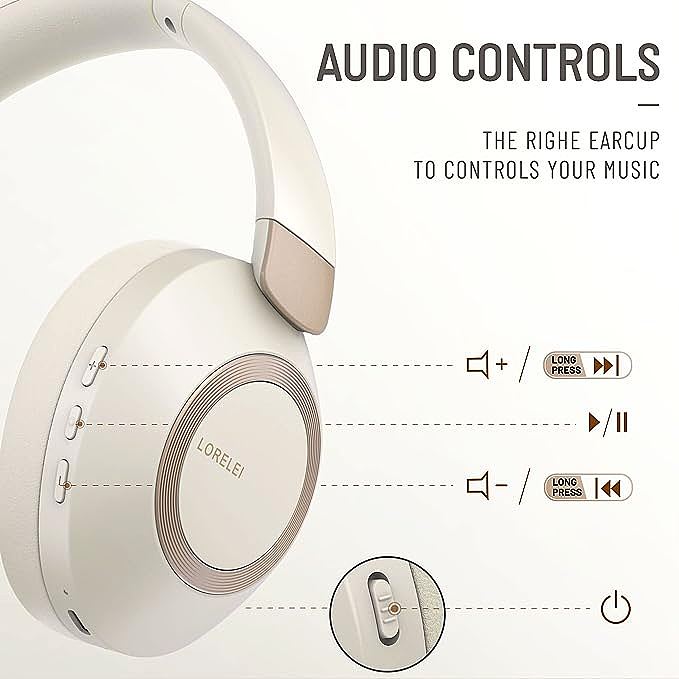
LORELEI B-C6 Wireless Over Ear Headphones
LORELEI B-C6 Wireless Over Ear Headphones
The LORELEI B-C6 Wireless Over Ear Headphones combines solar charging technology with active noise cancellation, offering up to 80 hours of battery life on a single charge — and potentially infinite playtime in sunlight.
Priced at $135.99 for Midnight Black and $199.00 for Sand Gold, it targets outdoor commuters and travelers who want to eliminate cable anxiety.
The Paradox of Plenty: When More Battery Means Less Everything Else
In the thermodynamics of machines, there exists a cruel irony that every engineer eventually confronts: the most efficient system is often the one that does the least. A refrigerator with a perfect insulation rating doesn't cool faster—it stops cooling sooner. An electric car with optimal energy recovery doesn't drive farther at 80 mph—it coast more at 60. And a pair of headphones rated for 50 hours of playback doesn't play louder—they last longer between charges.
This is the paradox at the heart of modern wireless audio endurance: to achieve marathon battery life, engineers must ruthlessly eliminate every unnecessary action, every wasted milliwatt, every moment of inefficiency. The headphones that promise to outlast your work week don't achieve that through brute power—they achieve it through radical restraint.
Consider the physics for a moment. A typical 500mAh lithium-polymer battery, the kind found in most over-ear wireless headphones, stores approximately 1.85 watt-hours of energy at its nominal voltage. At an average consumption rate of 3.7 milliwatts during audio playback—a figure that represents roughly 10% of theoretical efficiency once you account for the Bluetooth radio, digital-to-analog conversion, signal processing, and amplifier—you might expect around 500 hours of playback. The fact that real-world headphones deliver only 50 hours, one-tenth of that theoretical maximum, tells you everything about the engineering compromises involved.
The paradox deepens when you consider what those compromises actually mean for the listener. The very optimizations that enable 50-hour battery life often manifest as quieter output, tighter headbands, smaller drivers, and a frequency response that prioritizes efficiency over maximum SPL. The headphones that never need charging may leave you reaching for the volume knob more often than you'd like.
This is the zero-sum game of headphone engineering, and it's the game every manufacturer plays when they chase the 50-hour mark. Understanding how this game works—its rules, its players, and its invisible refereeing by the fundamental laws of physics—transforms the question from "which headphones should I buy?" to something far more interesting: "what am I actually trading away when I choose endurance?"
The Milliwatt Economy: Where Every Unit of Power Goes
To understand why 50-hour headphones behave the way they do, you must first understand where the power actually goes. A wireless headphone is not a simple transducer—it is a miniature radio station, a signal processing plant, and an acoustic actuator all running simultaneously on a battery designed to last a full work week.
The largest consumer is the Bluetooth radio and modem, which typically accounts for 30-40% of total power draw. When your headphones receive an audio stream from your phone, the radio must maintain a constant connection, negotiate interference avoidance with neighboring Wi-Fi networks, and handle the complex dance of packet acknowledgment and retransmission that ensures your music arrives without gaps. In the Bluetooth 5.3 era, this radio has become remarkably efficient—it can cycle between high-power transmission states and low-power maintenance modes with microsecond precision—but it still represents the single largest drain on the battery.
The amplifier comes second, consuming another 25-35% of total power. This is the component that takes the digital audio signal and converts it into the electrical current that drives the drivers. Class-D amplifiers, the type used in nearly all modern wireless headphones due to their high efficiency, still lose some energy to heat during the switching process that creates the audio waveform. At high volumes, these amplifiers work harder, and the power consumption curve rises steeply—doubling your perceived loudness requires roughly ten times the power, following the fundamental relationship where acoustic power is proportional to the square of the voltage.
Digital signal processing accounts for 15-25% of consumption. This includes the DAC (digital-to-analog converter) that transforms the Bluetooth stream into an analog signal, any active noise cancellation processing, equalization algorithms, and the various DSP stages that shape the final sound. Each processing step consumes power, and manufacturers must decide which features are worth the battery cost.
Finally, the drivers themselves—the actual transducers that convert electrical energy into sound—consume 15-25% of the total budget. Larger drivers with stronger magnets produce more sound with less power, but they weigh more and require more robust enclosures. Smaller drivers are more efficient in terms of size but often require more power to achieve the same output level, creating an early engineering tradeoff that cascades through the entire system.
Understanding this power budget reveals why achieving 50 hours requires optimization at every level. You cannot simply add a bigger battery—you must also reduce consumption everywhere possible, or the weight becomes unbearable and the headphones fall off your head.
Sleeping Between Notes: How Your Headphones Conserve Energy in Silence
The secret to Bluetooth 5.3's power efficiency lies not in what it does when music plays, but in what it does between notes. The Connection Subrating feature, introduced in the Bluetooth 5.0 specification and refined in 5.3, allows devices to maintain a connection that is mostly asleep.
Imagine you are listening to a symphony. Between the notes, between the movements, there are silences—moments where no audio data needs to transmit. In earlier Bluetooth versions, the connection would remain at full power during these silences, maintaining a constant data pipe just in case something arrived. In Bluetooth 5.3, the Connection Subrating feature allows the headphones to negotiate a "low duty cycle" connection state where the radio spends approximately 90% of its time in a low-power sleep mode, waking only briefly to confirm the connection is still alive and that no new data has arrived.
When new audio data does arrive—say, the conductor raises the baton for the next crescendo—the headphones can switch to a high-power, low-latency connection state in under 2 milliseconds. To the listener, there is no perceptible gap. But to the battery, this invisible breathing pattern represents a 30-40% reduction in radio power consumption relative to maintaining a constant full-power connection.
The LE Channel Classification system adds another layer of efficiency. The 2.4GHz radio band, shared by Bluetooth, Wi-Fi, and countless other devices, becomes congested in offices, apartments, and public spaces. In earlier Bluetooth versions, a congested channel meant packet loss and retransmission—wasted energy on data that had to be sent again. Bluetooth 5.3's Channel Classification allows devices to proactively identify "bad" channels—those with high interference—and switch to cleaner frequencies before retransmission becomes necessary. Each avoided retransmission is pure battery savings.
The Periodic Advertising Enhancement completes the picture. When headphones emerge from a low-power state to receive new data, they must synchronize with the transmitter. Older Bluetooth versions required lengthy synchronization procedures that kept the radio at high power. Bluetooth 5.3 reduces this synchronization overhead, allowing faster transitions from sleep to full operation and back again.
The result of these invisible optimizations is that a Bluetooth 5.3 headphone can achieve power consumption figures that would have seemed impossible a decade ago. The radio that once drained 20 milliwatts continuously now averages under 10 milliwatts when you factor in the sleep cycles—and that difference is the difference between 20 hours of battery life and 50.
The Decibel Tax: Why Doubling Loudness Costs Ten Times the Power
Here is a truth that manufacturers rarely advertise: if you run your 50-hour headphones at maximum volume, you will not get 50 hours. You might get 15. The relationship between volume and power consumption is not linear—it is exponential, following the fundamental acoustic equation where power is proportional to the square of the voltage required to produce a given sound pressure level.
The physics are unforgiving. To increase the perceived loudness of your headphones by just 3 decibels—the smallest change most listeners can consciously perceive—you must double the acoustic power output. To sound twice as loud as you consider "comfortable," you might need ten times the power. This exponential relationship means that a pair of headphones rated at 50 hours at moderate volume will deliver dramatically less endurance when pushed to their limits.
This is why many users report that their long-battery headphones sound "super quiet." It is not a defect—it is a design choice. To achieve 50 hours of playback at a comfortable listening level (around 70-75 dB SPL, typical for office or commute use), engineers must optimize the drivers for efficiency at that power level. When you crank the volume to 85 dB for that immersive experience, you are asking the drivers to work ten times harder, and the battery feels it immediately.
Driver size plays a crucial role here. A 40mm driver, common in portable over-ear headphones, typically has a different efficiency profile than a 50mm driver found in home audio or larger studio headphones. The smaller driver must work proportionally harder to move the same amount of air, consuming more power for equivalent output. But the 50mm driver adds weight—sometimes 30-50 grams more per ear cup—and that weight creates its own power drain through the increased structural requirements to support and drive it.
The impedance of the voice coil also matters. A 32-ohm driver presents more resistance to the amplifier than a 16-ohm driver, which affects how much current the amplifier must supply. Lower impedance drivers can achieve higher efficiency, but they may compromise frequency response or introduce other artifacts. The choice of driver impedance is another point in the zero-sum game, another variable that must be balanced against battery life.
Understanding the decibel tax changes how you think about battery claims. A headphone rated for 50 hours at "typical listening volumes" is making an implicit promise about the trade-off between loudness and endurance. Push the volume slider to the right, and you are essentially paying a battery tax with every decibel of extra loudness.
Newtons Against Your Skull: The Spring-Constant Problem Nobody Solves
When a headphone creates an acoustic seal—when it sits on your head and forms the closed chamber necessary for bass response—it must exert clamping force. This force, measured in Newtons or expressed informally as "tightness," is what prevents the ear cups from falling off during movement and what ensures the noise isolation that lets you hear the music instead of the subway.
But clamping force is a paradox of comfort. Too little force, and the headphones slip off or allow noise to leak in, ruining both the acoustic experience and the noise cancellation. Too much force, and you get the headaches that many users report after 2-3 hours of continuous use, the pressure marks on the temples, the general discomfort that makes you want to tear the headphones off and rub your ears.
The physics of clamping force follow Hooke's Law, the same spring equation that governs car suspensions and building structures. The force required to maintain a seal is proportional to the spring constant of the headband multiplied by the displacement from the rest position. Headphones with stiffer headbands require more force to achieve the same seal—they feel tighter but maintain their shape better over time. Headphones with softer headbands distribute force more evenly but may compress more during extended use, requiring periodic readjustment.
The industry standard for over-ear headphones targets 300-500 grams of clamping force per ear cup. At the lower end of this range, you get comfort but potentially compromised noise isolation. At the higher end, you get a solid acoustic seal but the fatigue that makes marathon listening sessions unpleasant.
Manufacturers use several strategies to balance this tradeoff. Memory foam ear cushions conform to the shape of your face, distributing pressure more evenly and allowing an aggregate clamping force to achieve the same seal. Protein leather provides a soft touch but offers less breathability, leading to heat buildup during extended use. Lightweight construction materials reduce fatigue but may compromise durability or require more frequent replacement.
Each of these solutions adds weight, however. Additional cushioning adds 20-50 grams per ear cup. Heavier ear cups require stronger—thus heavier—headband structures. Stronger headbands require more robust adjustment mechanisms. And every gram added to the headphone must be lifted by your neck, carried on your head, and supported by the clamping force that is simultaneously trying to be both tighter for acoustics and looser for comfort.
This is the cascade effect in action: solving the comfort problem creates the weight problem, which creates the battery problem, which creates the efficiency problem, which circles back to affect the sound quality. There is no single solution that fixes everything—there are only trade-offs, and the engineers who design 50-hour headphones are playing all sides against each other.
Half the Bits, Same Music: The Mathematics That Doubled Battery Life
In 2020, Bluetooth SIG introduced the LC3 codec as part of the LE Audio specification. Within three years, it had become the secret weapon behind the 50-hour battery claims appearing on modern headphones. Understanding why requires understanding the mathematics of audio compression.
The codec your Bluetooth headphones probably used five years ago is called SBC, the Low Complexity Subband Coding standard that has been part of Bluetooth since the beginning. SBC works by dividing the audio signal into frequency bands, analyzing each band for psychoacoustic redundancies—sounds that humans are unlikely to perceive—and discarding them. It achieves decent quality at 328 kilobits per second, but it is inefficient. There is significant overlap between what SBC transmits and what human ears can actually hear, meaning that SBC wastes bandwidth transmitting sounds that no one will notice are missing.
LC3, the Low Complexity Communication Codec, applies the same basic principle but with a more sophisticated psychoacoustic model and better optimization algorithms. The result is that LC3 can deliver audio quality equivalent to SBC at approximately 160 kilobits per second—half the bitrate. At this reduced bitrate, LC3 sounds as good as or better than SBC at 328 kbps, and it consumes half the wireless transmission power.
This bitrate reduction directly translates to battery savings. The Bluetooth radio consumes power proportional to the data rate it must transmit. Halve the data rate, and you halve the radio's power consumption during active streaming. For headphones that may spend 30-40% of their battery budget on the radio, this represents a 15-20% aggregate battery life improvement from codec efficiency alone.
The adoption of LC3 has been gradual, held back by the chicken-and-egg problem of backwards compatibility. For LC3 to work, both the source device (your phone) and the headphones must support it. Early smartphones shipped with Bluetooth 5.0 or 5.1 but without LE Audio support, limiting the codec to legacy options. By 2024, most flagship phones and an increasing number of mid-range devices had added LE Audio support, making LC3 a practical option for mainstream headphones.
The codec revolution is not over. LDAC, Sony's high-resolution audio codec, offers bitrates up to 990 kbps—six times the rate of SBC—at the cost of significantly higher power consumption. AAC, Apple's preferred codec, sits somewhere in between in terms of efficiency. The choice of codec is always a choice between quality and endurance, and manufacturers must decide which trade-offs their target customers value most.
The Cascade Effect: How Fixing One Problem Creates Three More
The most important lesson in headphone engineering is that everything connects. Change one variable, and you find yourself chasing effects through the entire system, solving problems that ripple outward in unexpected directions.
Consider the decision to add memory foam ear cushions for comfort. The memory foam adds perhaps 30 grams per ear cup. That additional weight requires a stronger headband to maintain proper clamping force—the headband must press harder to achieve the same seal against the additional mass of foam and your ears. The stronger headband requires more robust adjustment mechanisms, adding another 10-15 grams. And now you have headphones that weigh 300 grams instead of 250 grams.
A 300-gram headphone needs more powerful drivers to achieve the same acoustic output at a given volume level—the larger mass of the ear cup and headband system means the driver must work harder to overcome inertia. More powerful drivers require more amplifier power, which means a bigger battery if you want to maintain 50 hours of endurance. A bigger battery adds weight—perhaps another 20 grams. And now your comfortable headphones weigh 320 grams and require a battery that somehow must not add more weight, which means the battery technology must be more energy-dense, which costs more.
This cascade effect appears everywhere in headphone design. Increase the clamping force for better noise isolation, and you get complaints about discomfort. Loosen the clamp for comfort, and you get complaints about bass leakage and poor seal. Make the drivers more efficient to extend battery life, and you may compromise the frequency response or maximum SPL. Increase driver size for better bass, and you add weight that requires stronger structure that requires better batteries that add weight that...
The engineering team that achieves 50 hours of battery life while maintaining acceptable comfort and sound quality is not solving one problem—they are balancing a dozen interconnected problems simultaneously, and every decision ripples through the entire system in ways that only become apparent during extended listening tests.
This is why the 50-hour mark has become a meaningful milestone. It represents not just a battery capacity achievement but an entire systems engineering achievement, a demonstration that the manufacturer has successfully navigated the cascade effect and found a configuration where all the variables work together acceptably.
Fifty Hours on Paper, Thirty in Practice: Where Engineering Meets Marketing
When a manufacturer claims 50 hours of battery life, they are making a promise based on specific test conditions. Understanding those conditions—and how they differ from your actual use—is essential to understanding whether the 50-hour claim reflects reality.
The industry standard for battery life testing uses a volume level of approximately 50-60% of maximum, with the SBC codec at its default bitrate, at room temperature (20-25°C), with no active noise cancellation enabled. These conditions represent the controlled test conditions specified by manufacturers for battery life, optimized for endurance rather than experience.
In real-world use, several factors immediately reduce that figure. Volume is the largest variable—average listening volume for most users is closer to 65-75% of maximum, which can reduce battery life by 20-30%. If you prefer to drown out subway noise or airplane engine roar, you might be listening at 80-90% volume, which could cut battery life in half.
Codec choice matters significantly. LDAC at 990 kbps can reduce battery life by 30-40% versus SBC at default bitrates. AAC sits somewhere in between. If you enable LDAC on your flagship Android phone, you are paying a battery tax for every hour of higher-quality audio.
Temperature has a dramatic effect on lithium-polymer batteries. Cold weather—below 10°C—can reduce effective capacity by 20-30% as the chemical reactions that store and release energy slow down. Hot weather above 35°C can temporarily increase capacity but accelerate long-term degradation. Using headphones in a cold environment, or storing them in a cold car, will immediately reduce your effective battery life.
Active noise cancellation is perhaps the largest single consumer of power after the Bluetooth radio. ANC processors must continuously sample ambient noise through microphones, calculate the inverse waveform, and drive the speakers to create destructive interference—all in real time. Enabling ANC can reduce battery life by 30-50%, turning a 50-hour headphone into a 25-35 hour headphone.
The result is that your 50-hour headphones may deliver 30-35 hours in typical real-world use with moderate volume, AAC codec, and ANC enabled. They may deliver 20 hours at high volume with LDAC and ANC. They may deliver 50 hours only under the specific test conditions that the manufacturer used for marketing purposes.
This is not deceptive marketing—the 50-hour figure is real, achievable under the specified conditions. But it is the controlled test conditions specified by manufacturers, and understanding the gap between that scenario and your actual commute or work session helps calibrate expectations. The engineering that achieves 50 hours is impressive; the real-world usage that realizes 40 hours is still excellent; and even 25 hours with heavy usage is competitive with most alternatives.
The Wisdom of Engineering Compromise
The next time you see a marathon battery claim on a pair of wireless headphones, remember that you are looking at the visible result of an invisible game. That 50-hour figure represents thousands of engineering decisions, each one a trade-off between competing priorities—power against weight, comfort against isolation, volume against endurance, efficiency against sound quality.
The manufacturers who achieve an optimal equilibrium in this zero-sum game are not the ones who add the biggest battery. They are the ones who optimize every milliwatt, who exploit every efficiency gain in Bluetooth protocols and codec mathematics, who find the sweet spot in driver size and clamping force and amplifier design where all the variables work together acceptably.
Understanding this changes how you evaluate headphone specifications. The 50-hour claim is not just a number—it is evidence that the engineering team solved a complex systems problem, that they found a configuration where the cascade effect works in their favor rather than against them. Whether that specific balance matches your priorities—whether you value that particular combination of endurance, comfort, and sound quality—is a question only you can answer.
But now you know what you are trading away when you choose marathon battery life. You are trading away maximum volume, perhaps. You are trading away the loosest headband and the softest ear cushions, because those add weight that requires power that reduces endurance. You are trading away the highest codec quality, because the bitrate that enables it also drains the battery faster.
And that trade-off is not a failure of engineering. It is engineering itself—the art of the possible, the science of compromise, the fundamental reality that in a world of finite batteries and competing priorities, there is no free lunch. The headphones that promise to outlast your work week have made their choices. The question is whether those choices align with yours.
LORELEI B-C6 Wireless Over Ear Headphones
Related Essays

The Science Behind True Wireless Audio: Belkin SoundForm...

Budget Wireless Earbuds Review: What to Look for Under $50

Audio Science: How Sound Technology Transforms Workout...
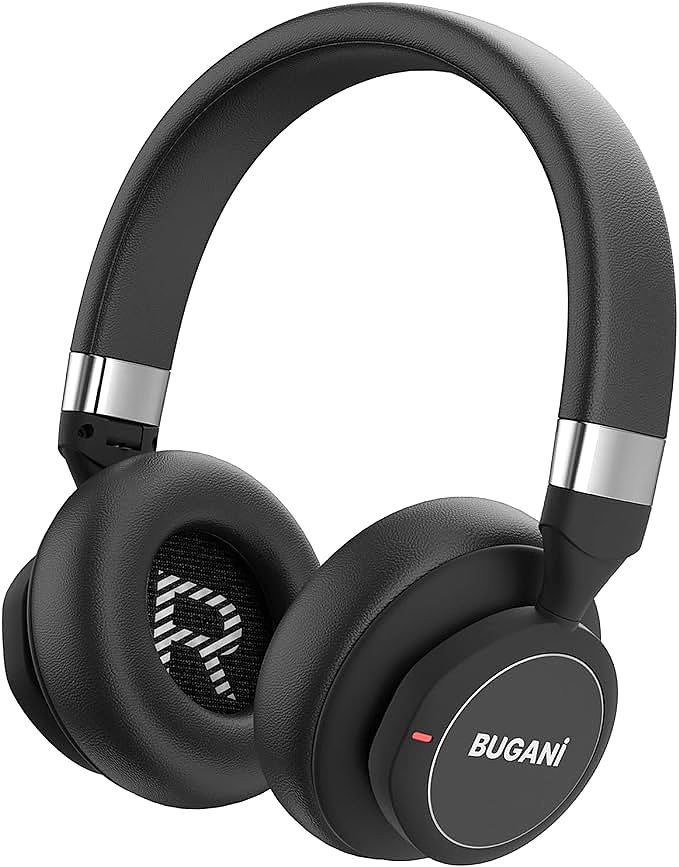
BUGANI Over-Ear Wireless Headphones: Excellent Sound Quality and Comfort for Music Lovers

The Invisible Wire: Unpacking the Engineering of Modern Wireless Audio

The Wireless Handshake: Bluetooth 5.3, Frequency Hopping, and the Quest for Stability

The Software-Defined Earbud: How Algorithms Are Reshaping Budget Audio

The Commoditization of Audio: Deconstructing Bluetooth 5.3 and 13mm Drivers in Entry-Level Gear

The Anatomy of Affordable Hi-Fi: Decoding Drivers, Diaphragms, and Connectivity

