The Physics of Noise Cancellation: Why Perfect Silence Fails


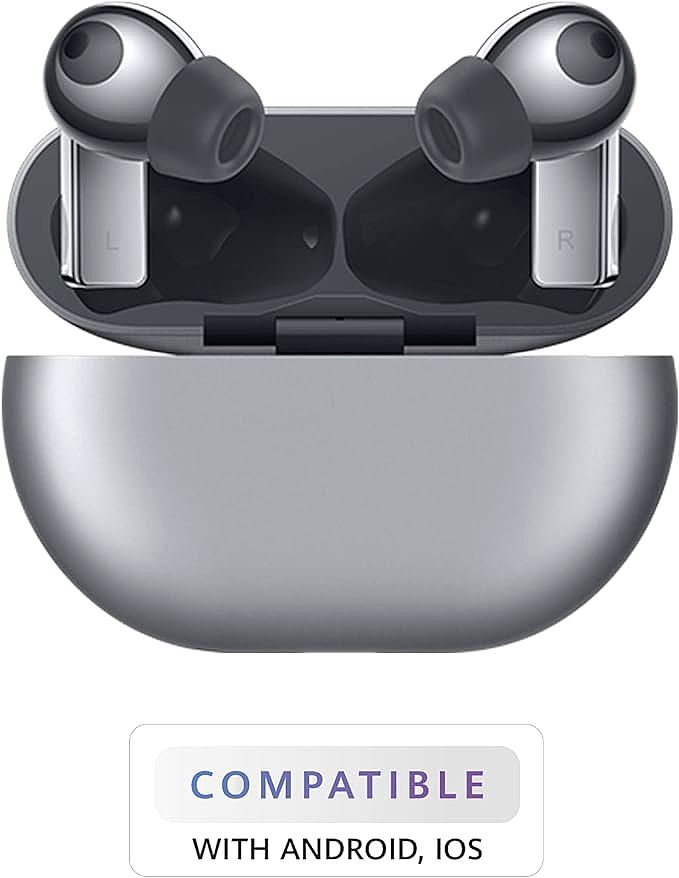
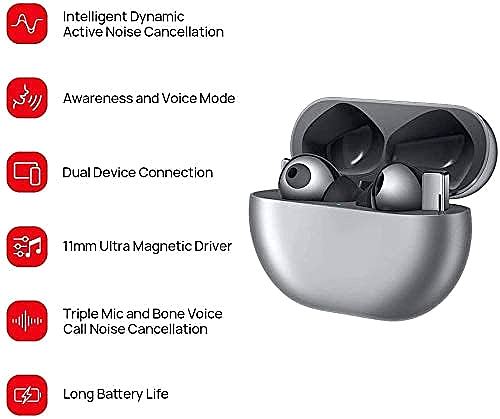
Huawei Freebuds Pro Active Noise Cancellation Earbuds
Imagine a world where the only way to escape unwanted sound is to create more of it. This is not a riddle or a thought experiment. It is the operational principle behind the noise-canceling technology found inside personal audio devices worn by millions of commuters, office workers, and travelers every single day. The concept sounds like a contradiction: to fight noise, you deploy noise. But beneath this apparent paradox lies one of the most elegant applications of wave physics ever engineered, and a sobering reminder that nature does not yield perfect silence, no matter how clever our circuits become.
The Paradox of Adding Sound to Create Silence
The idea that sound can destroy sound feels like saying fire can extinguish fire. Yet this is precisely what destructive interference achieves. Picture yourself on a Tuesday morning, standing on a crowded subway platform at 7:43 AM. The screech of steel wheels against rails hammers your eardrums at 95 decibels, enough to cause hearing damage with prolonged exposure. You place a pair of in-ear devices into your ears, tap once, and the world goes quiet. Not silent, but dramatically, almost eerily, hushed.
What just happened inside your ear canal is a controlled physics experiment happening in real time. The device did not block sound with a physical barrier, at least not primarily. It listened to the incoming noise, calculated its mirror image, and played that mirror image back into your ear. The two sound waves, the original noise and the manufactured anti-noise, collided. Where one wave pushed air molecules outward, the other pulled them inward. The net result: less movement of air molecules, which your brain interprets as less sound.
This is destructive interference, and it works because sound is a wave. Waves have crests and troughs, regions of high pressure and low pressure that propagate through air at roughly 343 meters per second at room temperature. When two waves of identical frequency and amplitude meet with their crests perfectly aligned, they reinforce each other, creating a wave twice as tall. This is constructive interference, the physics behind musical instruments resonating and ocean swells combining into massive rogue waves. But when the crest of one wave aligns with the trough of another, they cancel. The peaks fill in the valleys. The result, in the ideal case, is flat. No wave. No sound.
The elegance of this principle has captivated physicists since the 19th century. Thomas Young demonstrated wave interference with light in his famous double-slit experiment of 1801. The same mathematics that describes light interference governs sound, water ripples, and even quantum probability waves. Destructive interference is not an engineering trick; it is a fundamental property of all wave phenomena in the universe.
Wave Mechanics: Why One Wave Can Cancel Another
To understand why noise cancellation works, and more importantly why it fails, we need to look at the mathematics of waves with some precision. A sound wave can be described by a sine function:
y = A sin(2pi ft + phi)
Here, A is the amplitude, which determines loudness. f is the frequency, measured in Hertz, which determines pitch. t is time. And phi (phase) is the critical variable, the angular offset that tells us where in the cycle the wave begins.
Destructive interference occurs when we generate a second wave with the same amplitude and frequency, but shifted by exactly 180 degrees, or pi radians. Mathematically:
y_anti = A sin(2pi ft + phi + pi) = -A sin(2pi ft + phi)
When we add the original wave and the anti-wave together:
y_total = A sin(2pi ft + phi) + (-A sin(2pi ft + phi)) = 0
Zero. Complete cancellation. In theory, perfect silence.
The critical insight here is that this cancellation is not approximate. It is mathematically exact, provided three conditions are met simultaneously: the anti-noise must have identical amplitude, identical frequency, and a phase relationship of exactly 180 degrees relative to the original sound. If any of these conditions deviates even slightly, the cancellation becomes imperfect. A phase error of just 10 degrees reduces cancellation effectiveness by roughly 15 percent. A 30-degree error cuts it nearly in half. This razor-thin margin for error is the reason noise cancellation works brilliantly for some sounds and barely at all for others.
Consider a real-world scenario: you are working in an open-plan office. The HVAC system hums at a steady 120 Hz. This is a drone, a predictable, repeating waveform that a noise cancellation system can analyze, predict, and counter with high accuracy. The anti-noise generator has time to lock onto the frequency, match the amplitude, and calibrate the phase. The result is satisfying and effective. Now imagine your coworker drops a coffee mug on the desk. That impact is a transient event, a burst of energy spanning multiple frequencies simultaneously, lasting perhaps 50 milliseconds. By the time the system detects the sound, analyzes it, generates the anti-noise, and plays it through the speaker, the original sound has already passed. The cancellation window has closed.
This difference between steady-state and transient sounds is the central challenge of active noise cancellation, and it brings us to the physics of frequency.
The High-Frequency Wall: Mathematical Limits of Noise Cancellation
Sound at different frequencies behaves fundamentally differently, and this difference determines everything about what noise cancellation can and cannot achieve. The relationship between frequency and wavelength is given by:
wavelength = speed of sound / frequency
At 100 Hz, a bass rumble from a truck engine, the wavelength is approximately 3.43 meters. At 1,000 Hz, a mid-range tone like a car horn, the wavelength shrinks to 34 centimeters. At 10,000 Hz, the sibilant hiss of cymbals, it is just 3.4 centimeters.
These numbers matter because wavelength determines the spatial region over which cancellation can occur. A low-frequency wave with its 3-meter wavelength changes slowly and predictably across the few centimeters between an external microphone and your eardrum. The noise at the microphone is essentially the same noise arriving at your eardrum, just slightly delayed. This gives the system a fighting chance to generate accurate anti-noise.
High-frequency waves tell a different story. At 10,000 Hz, the wavelength is only 3.4 centimeters. Over the distance between a microphone on the outside of an earbud and the speaker driver inside the ear canal, perhaps 1.5 centimeters, the phase of a 10,000 Hz wave rotates through nearly 160 degrees. The noise the microphone measures bears almost no phase relationship to the noise arriving at the eardrum. Generating useful anti-noise under these conditions is like trying to photograph a hummingbird's wings with a camera that has a one-second shutter delay.
This is not an engineering limitation that better chips or faster algorithms can overcome. It is a geometric constraint imposed by the speed of sound itself. To cancel high-frequency noise, you would need to either predict the sound before it arrives (impossible without a time machine) or place the microphone at the exact same point as the eardrum (physically impossible). This is why the frequency response curve of any active noise cancellation system shows a steep rolloff above approximately 1,000 to 2,000 Hz. Above this threshold, passive noise isolation, the physical sealing of the ear canal, takes over as the primary defense against sound.
The mathematics here connects to the Nyquist-Shannon sampling theorem, one of the foundational results of information theory. To accurately represent and cancel a signal at frequency f, your processing system must sample at a rate of at least 2f. But there is an additional, more punishing constraint: the total processing chain, from microphone input through analog-to-digital conversion, digital signal processing, digital-to-analog conversion, and speaker output, must complete within a fraction of one period of the target frequency. For a 1,000 Hz wave, one period is 1 millisecond. For 10,000 Hz, it is 100 microseconds. The processing budget shrinks as frequency climbs, and eventually the physics simply runs out of room.
Feedforward vs. Feedback: Two Architectures, One Goal
Engineers have developed two primary architectures for active noise cancellation, each with distinct trade-offs rooted in control theory. Understanding these architectures reveals why no single design can be optimal for all situations.
Feedforward ANC places the reference microphone on the exterior of the device, capturing ambient noise before it reaches the ear. The system processes this signal and generates anti-noise through the internal speaker. The advantage is that feedforward systems have a slight time advantage: they hear the noise before it arrives at the eardrum. This extra time window allows more sophisticated processing and makes feedforward particularly effective against low and mid-frequency noise.
However, feedforward has a significant vulnerability. Because the microphone is on the outside, it cannot hear what is actually happening inside the ear canal. It operates open-loop, meaning it has no way to verify whether its anti-noise is actually working. If the fit of the earbud changes slightly, if the user turns their head and alters the acoustic path, or if the internal speaker's response drifts with temperature, the feedforward system will continue blithely producing anti-noise based on stale assumptions. In the worst case, instead of cancelling noise, it can amplify it, a phenomenon engineers call constructive interference contamination.
Feedback ANC takes the opposite approach. The microphone is placed inside the ear canal, downstream of the speaker. It listens to what the user actually hears, the combined result of environmental noise plus the anti-noise signal. The system then adjusts its output to minimize the residual noise. This is a closed-loop system, and control theory tells us that closed-loop systems are inherently more robust to disturbances and parameter variations.
The trade-off is stability. Feedback systems must be carefully tuned to avoid positive feedback, where the correction signal reinforces the error instead of canceling it. In audio engineering, this manifests as oscillation, an audible whistling or buzzing that occurs when the feedback loop becomes unstable. Anyone who has heard a microphone screech when brought too close to a speaker has experienced positive feedback. Designing a feedback ANC system that remains stable across all frequencies, all ear shapes, and all ambient conditions is one of the most challenging problems in audio engineering.
Modern high-performance systems typically employ a hybrid approach, combining feedforward and feedback microphones. The feedforward path provides the primary noise cancellation, leveraging its time advantage. The feedback path monitors the result and makes corrections, compensating for fit variations and speaker non-idealities. This hybrid architecture is more complex and consumes more power, but it delivers the best overall performance across the widest range of conditions.
The Geometry Problem: Microphone Placement and Physical Trade-offs
Beyond circuit design and algorithm sophistication, the physical geometry of the human ear imposes constraints that no amount of engineering cleverness can fully overcome. The ear canal is roughly 2.5 centimeters long and 0.7 centimeters in diameter. An in-ear device must fit within this space while accommodating a speaker driver, at least one microphone, a battery, a Bluetooth antenna, and the electronics for signal processing.
The placement of the reference microphone determines the system's ability to accurately sample the incoming noise field. Place it too far from the ear canal entrance, and the measured noise differs significantly from what reaches the eardrum due to diffraction effects around the ear and head. Place it too close to the speaker, and the microphone picks up the anti-noise signal, creating a feedback path that corrupts the noise measurement.
The geometry problem becomes even more complex when you consider that no two ear canals are identical. The shape, length, curvature, and compliance of the ear canal vary significantly between individuals, and even between the left and right ears of the same person. A noise cancellation system that is perfectly calibrated for one ear may perform poorly in another. This is analogous to the problem faced by optical lens designers: a lens that corrects perfectly for one person's vision will blur another's.
The interaction between device geometry and acoustic performance creates what engineers call a multi-objective optimization problem. Making the device smaller improves comfort and fit but reduces the size of the speaker driver, limiting its ability to move air and generate low-frequency anti-noise. Adding more microphones improves spatial sampling but increases power consumption and algorithmic complexity. Sealing the ear canal more tightly improves passive isolation but can create an occlusion effect, where the user's own voice sounds hollow and booming, a phenomenon familiar to anyone who has tried to speak while wearing tightly sealed earplugs.
From Cockpit to Commute: How ANC Migrated from Aerospace to Consumer Audio
The story of active noise cancellation begins not in a consumer electronics lab, but in the cockpit of a military aircraft. In the early 1950s, Dr. Lawrence Jerome Fogel filed a patent for an active noise cancellation system designed to protect the hearing of helicopter and airplane pilots. The noise environment inside a helicopter cockpit exceeds 100 decibels, a level that causes permanent hearing damage with as little as 15 minutes of unprotected exposure. Conventional hearing protection, foam earplugs and heavy earmuffs, provided adequate attenuation at high frequencies but were largely ineffective against the low-frequency rotor drone that permeated the entire airframe.
Fogel's insight was that low-frequency sound waves, with their long wavelengths, were ideal candidates for active cancellation. The wavelength of the main rotor blade passage frequency, typically between 10 and 30 Hz, is 11 to 34 meters. At these wavelengths, the acoustic field is essentially uniform across the dimensions of a pilot's headset. A microphone could sample this field at one point, and the anti-noise generated at a nearby speaker would cancel it throughout the enclosed volume of the earmuff. The system was bulky, power-hungry, and limited to low frequencies, but it worked.
The technology remained largely in the aerospace domain through the 1960s and 1970s, finding applications in pilot communication headsets, tank crew helmets, and submarine interior noise reduction. The military context provided two critical advantages: generous funding and forgiving size constraints. A noise cancellation system the size of a cigarette pack was perfectly acceptable if it protected a helicopter pilot's hearing.
The transition to consumer applications began in earnest in 1986, when Dr. Amar Bose, founder of the audio company that bears his name, experienced the limitations of conventional audio headsets during a transatlantic flight. The constant engine drone fatigued him despite using the best passive isolation available. This frustration led to a decade of research and development, culminating in the first commercially available noise-canceling headsets designed for aviation passengers. The target was the same low-frequency droning that Fogel had tackled four decades earlier, but now the application was passenger comfort rather than pilot safety.
The migration from aviation headset to consumer earbud required three technological revolutions. First, digital signal processing had to become fast enough and cheap enough to operate in real time within a battery-powered device. Second, MEMS (Micro-Electro-Mechanical Systems) microphones had to shrink to millimeter scale while maintaining the sensitivity and noise floor required for accurate acoustic measurement. Third, lithium-ion battery technology had to reach energy densities sufficient to power the entire system for hours.
Each of these milestones was reached independently, driven by the broader consumer electronics industry. DSP chips became fast enough in the late 2000s. MEMS microphones reached adequate quality around 2010. And battery density improvements have continued steadily. The convergence of these three technologies in the mid-2010s is what made in-ear active noise cancellation commercially viable.
The history of ANC illustrates a pattern common in technology: innovations born in military or aerospace applications, where cost is secondary to performance, gradually migrate to consumer products as manufacturing costs decrease. The physics remains constant. What changes is the engineering context: smaller budgets, tighter size constraints, and the demand for aesthetic appeal alongside functionality.
The Latency Paradox: Why Timing is the Unsung Hero of Noise Cancellation
Of all the constraints on noise cancellation performance, latency is the least understood by consumers and the most agonizing for engineers. Latency is the total time elapsed between when a sound wave hits the external microphone and when the corresponding anti-noise wave emerges from the internal speaker. This delay must be shorter than the time it takes the original sound wave to travel from the microphone to the eardrum, otherwise the anti-noise arrives too late to cancel the correct portion of the waveform.
For an in-ear device where the microphone-to-eardrum distance is roughly 1.5 centimeters, sound covers this distance in approximately 44 microseconds. This means the entire signal processing chain must complete in less than 44 microseconds to achieve anything approaching effective cancellation. In practice, engineers design for latency budgets of 20 to 30 microseconds to maintain a safety margin.
To put this in perspective, 30 microseconds is the time it takes light to travel 9 kilometers. It is roughly one-thousandth of the time it takes a honeybee to flap its wings once. Within this infinitesimal window, the system must perform analog-to-digital conversion (typically 2 to 5 microseconds), execute the noise cancellation algorithm on a DSP chip (10 to 20 microseconds), perform digital-to-analog conversion (2 to 5 microseconds), and drive the speaker to produce the anti-noise waveform (several microseconds more for the diaphragm to respond).
Every microsecond counts because latency translates directly into phase error. At 1,000 Hz, one full wave cycle takes 1,000 microseconds (1 millisecond). A latency of 30 microseconds represents a phase shift of 10.8 degrees. At 10,000 Hz, the same 30-microsecond latency represents a phase shift of 108 degrees, nearly two-thirds of the 180 degrees required for cancellation. This mathematical relationship explains why high-frequency cancellation is exponentially harder than low-frequency cancellation for reasons entirely separate from the wavelength problem discussed earlier.
The latency constraint also explains why noise cancellation algorithms cannot be arbitrarily sophisticated. A more complex algorithm that analyzes the noise spectrum in finer detail, applies machine learning models, or predicts future waveforms based on past patterns would produce better anti-noise, but it would also take longer to compute. There is a direct trade-off between algorithm sophistication and the frequency range over which cancellation remains effective. Engineers must choose: cancel a wider range of frequencies with simpler, faster algorithms, or cancel a narrower range with more sophisticated, slower ones.

This trade-off is not unique to audio engineering. It appears in financial trading systems, where faster algorithms have an edge. It appears in autonomous vehicles, where real-time perception must balance accuracy against reaction time. And it appears in human cognition, where the speed-accuracy trade-off is one of the most studied phenomena in experimental psychology. The latency paradox is a universal feature of real-time control systems.
The Fundamental Limit: Why Perfect Silence Will Never Exist
After touring the physics of waves, the engineering of microphone placement, the history of aerospace innovation, and the tyranny of latency, we arrive at the question that motivated this entire exploration: why can we not achieve perfect silence?
The answer is not that our engineering is insufficient. It is that the laws of physics impose multiple, independent barriers to perfect cancellation, and each barrier is absolute.
First, the speed of sound is finite. Sound propagates at 343 meters per second in air. This means that any noise cancellation system must contend with a propagation delay that scales with the physical dimensions of the device. We cannot make the microphone and eardrum occupy the same point in space. We cannot make sound travel faster. Therefore, there will always be a residual timing error that degrades cancellation, and this error grows with frequency.
Second, the acoustic environment is spatially complex. Real sound does not arrive from a single direction in a clean sine wave. It reflects off walls, diffracts around obstacles, and scatters from surfaces. Inside an ear canal, standing waves form at certain frequencies, creating pressure nodes and antinodes. The noise field is three-dimensional and time-varying, while a noise cancellation system samples it at a finite number of discrete points. No finite set of microphones can fully characterize an arbitrarily complex acoustic field.
Third, the observer effect applies to acoustics just as it applies to quantum mechanics. Placing a microphone inside an ear canal changes the acoustic properties of that canal. The microphone itself has a physical presence that diffracts sound waves. The speaker diaphragm, even when not actively driven, has a mechanical impedance that affects how sound propagates. Measuring the system changes the system being measured.
Fourth, thermal noise imposes a fundamental floor. At any temperature above absolute zero, air molecules exhibit random Brownian motion. This motion creates microscopic pressure fluctuations, a background hiss that no noise cancellation system can eliminate because it is not coherent. You cannot create anti-noise for randomness. This thermal noise floor sits at approximately 0 dB SPL (Sound Pressure Level), which is roughly the threshold of human hearing. Nature has calibrated our hearing sensitivity to the physical limit of what is detectable in air.
Fifth, the human auditory system is not a passive receiver. It is an active, adaptive system that continuously recalibrates its sensitivity based on the acoustic environment. When noise cancellation reduces the ambient sound level, the ear's automatic gain control, mediated by the stapedius muscle, increases sensitivity. Background sounds that were previously inaudible become noticeable. The listener perceives a new floor of sound that was always present but masked. Perfect physical silence would not be perceived as silence by the brain, which generates its own internal noise, tinnitus-like neural activity that becomes perceptible in extremely quiet environments.
Consider the anechoic chamber at Orfield Laboratories in Minnesota, certified by Guinness World Records as the quietest place on Earth at minus 9.4 decibels. People who enter this chamber do not experience peace. They hear their own heartbeat, the rush of blood through their arteries, the grinding of their digestive system, and the high-pitched whine of their nervous system. After about 30 minutes, most people become disoriented and anxious. The longest anyone has remained in the chamber is 45 minutes. Perfect silence, it turns out, is not something the human mind is designed to tolerate.
The silence that noise cancellation creates is not the absence of sound. It is the presence of carefully engineered destruction, a mathematical impossibility made practical through engineering compromises. Every cancellation system operates at the intersection of competing constraints: the size-power trade-off, the speed-accuracy trade-off, the bandwidth-depth trade-off. Engineers navigate these trade-offs with ever-improving tools, but the trade-offs themselves are permanent. They are not bugs in the technology. They are features of the universe.
And perhaps that is the most profound insight noise cancellation offers. The pursuit of perfect silence reveals that silence itself is not a void but an achievement, a delicate balance maintained by constant effort against the relentless physics of a noisy universe. The next time you tap your personal audio device and the world goes quiet, remember: you are not hearing nothing. You are hearing the sound of mathematics fighting physics to a draw.
Huawei Freebuds Pro Active Noise Cancellation Earbuds
Related Essays

Xmenha Neckband Bluetooth Headphones – A Versatile and Durable Choice

Silencing the Metropolis: Adaptive Waveforms and Acoustic Isolation

Why Your Noise-Cancelling Earbuds Still Let Sound In

YASEZ 5.0 Earphones by lyej: Unpacking Bluetooth 5.0, Stereo Sound, and Noise Cancellation Science

The Budget Earbud Paradox: Unpacking the Tech Behind "Hi-Fi" Sound

How Wireless Earbuds Work: A Deep Dive Into the Tech That Powers Your Sound

A Deeper Connection: Understanding Bluetooth 5.4 and ENC with the Nerunsa D60 Pro

Groove Your Way with the Works for Oppo A11k by Cellet XG01 Wireless Earbuds

Boytond m20 Bluetooth Headphones - Impressive Sound and Battery at an Affordable Price

