The Neckband Renaissance: Engineering Comfort and Fidelity...
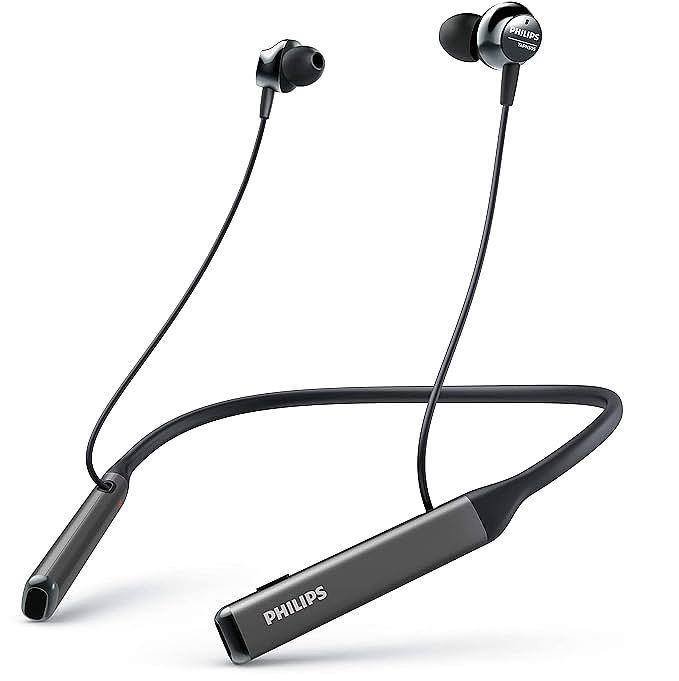
PHILIPS PN505 Wireless Neckband Headphones
In the world of precision engineering, there exists a profound paradox: the most powerful forces often work through the appearance of stillness. A skyscraper sways gently in the wind yet stands immovable. A ship displaces thousands of tons of water while remaining buoyant. And in the realm of audio reproduction, the most accurate sound emerges from a driver that moves almost not at all—at least, not in the way you might expect.
Consider the dynamic driver at the heart of every pair of quality headphones. When an electrical audio signal passes through its voice coil, electromagnetic forces cause the coil to move within a magnetic field. This movement, measured in fractions of a millimeter, pushes the attached diaphragm forward and backward, displacing air molecules that ultimately reach your eardrum as sound. The diaphragm's motion is violent at the microscopic scale—describing a complete oscillation for a 1kHz tone every millisecond—yet the driver itself remains stationary in space. The motion is contained, directed, tamed.
This paradox of controlled motion lies at the heart of why the wireless neckband headphone represents something remarkable in personal audio. While the market has seemingly consolidated around True Wireless Stereo (TWS) earbuds—those minuscule, independent pods that dangle from ears everywhere—the neckband persists and even thrives among discerning users. This is not nostalgia. This is engineering physics meeting genuine human need.
For users who demand all-day connectivity, uncompromised battery life, and more capable acoustic performance, the neckband represents a design philosophy that balances wireless freedom with the stability of a tethered system. This article explores why placing technology around your neck—rather than cramming it all into your ear canal—remains a more capable solution for fidelity, comfort, and enduring value.
The Ergonomics of Endurance: Why the Neckband Persists
To understand the neckband's enduring appeal, we must first confront the fundamental constraint that has always defined in-ear audio: the ear canal is an unforgiving environment.
The human ear canal is narrow, sensitive, and remarkably inconsistent across individuals. Research published in IEEE Transactions on Biomedical Engineering documents six key anthropometric dimensions affecting earphone fit, with ear canal diameter ranging from 5mm to 12mm at the narrowest point and length varying by 10-15mm between individuals. The outer ear's pinna offers limited load-bearing capacity—certainly nothing contrasted with the broad support of your shoulders and upper back.
TWS earbuds force a profound engineering compromise: they must house the battery, antenna, digital-to-analog converter (DAC), amplifier, and acoustic driver all within a capsule small enough to fit—and remain comfortable—in the ear canal. This is an impossible task executed admirably, but not without consequence. Increase battery life, and you increase mass and discomfort. Reduce mass, and you sacrifice longevity or audio quality. There is no elegant solution within these constraints—only trade-offs.
The neckband resolves this conflict by relocating the heavy lifting—specifically the battery and connectivity chipset—to a location better suited to support them. The human neck, reinforced by the trapezius muscles and supported by the clavicle, can comfortably bear substantially more mass than the ear canal without fatigue. Modern neckband designs achieve battery capacities of 14+ hours while the earbuds themselves remain light enough to disappear during extended wearing.
The result is a genuine sensation of weightlessness at the point of insertion. The earbuds need only house the acoustic drivers, making them smaller and less intrusive. This separation of concerns—ergonomics handled by the neckband, acoustics handled by the earpiece—allows for all-day wearability that bulkier TWS designs simply cannot achieve.
The Psychology of "Always-On" Connectivity
Beyond pure physics, the neckband addresses a behavioral reality that TWS earbuds handle awkwardly.
True wireless earbuds present users with a binary existence: they are either in your ears, blocking the world, or they are in their charging case, disconnected and inaccessible. Taking a brief conversation requires removing a bud, holding it, or risking loss or damage by pocketing it. The cognitive overhead of managing these small, easily misplaced objects accumulates throughout the day.
The neckband introduces what researchers in human-computer interaction might call a "third state"—a mode of readiness that neither demands full attention nor requires complete disengagement. When not in active use, the earbuds hang magnetically or naturally around the neck, instantly accessible yet completely out of the way. You need not decide whether to bring your earbuds or leave them. They are simply there, part of your body's perimeter.
This availability fundamentally changes the interaction pattern. Rather than managing small objects, you simply... forget about the headphones until needed. Vibrating neckbands enhance this further—you do not need the buds in your ears to know a call is incoming; the device notifies you through gentle vibration against your collarbone. This tactile feedback loop creates a seamless integration between you and your digital communications, a symbiosis that case-bound earbuds struggle to replicate.
Acoustic Authority: The Physics of Larger Drivers
In the physics of sound reproduction, size matters more than many realize.
When a driver produces sound, it works by displacing air molecules. The acoustic power radiated by a pistonic driver follows a striking relationship: radiated power increases with the fourth power of the radius (for spherical radiation) or the sixth power in certain configurations. This means a driver with twice the diameter has the potential to move sixteen to sixty-four times more air, given equivalent excursion. Physics is not negotiable here.
Most compact wireless earbuds employ micro-drivers typically ranging from 6mm to 9mm in diameter. These small drivers must work extraordinarily hard to reproduce low frequencies, which require significant air displacement. The result is often distortion at high volumes, a reliance on artificial bass boosting that clouds the midrange frequencies where vocals reside, or some combination of these compromises.
The neckband form factor removes these strict size constraints from the earpiece housing. Premium neckband designs utilize 12mm+ neodymium acoustic drivers—nearly double the diameter of many TWS competitors. This larger diaphragm can move more air with less excursion, producing cleaner, tighter bass and a more effortless dynamic range without the mechanical strain that limits smaller drivers.
The material of the magnet matters critically here. Neodymium magnets offer the highest energy product of any commercially available permanent magnet material—approximately 35-45 MGOe contrasted with 3-5 MGOe for ferrite alternatives. This enables stronger magnetic flux density in the voice coil gap, improving sensitivity and transient response. The voice coil responds to electrical signals with greater precision, starting and stopping its motion more instantly. This property, known as transient response, is what gives music its snap and clarity—the difference between hearing the sharp attack of a snare drum and a vague, smeared approximation.
Larger diaphragms in larger drivers also exhibit more controlled behavior at their resonant frequencies. PET (polyethylene terephthalate) diaphragm material typically has a first break-up mode around 20-30 kHz, which for a driver rated to 40 kHz means the audible range remains largely free of diaphragm-induced coloration.
The Hybrid Paradigm: Wireless Freedom Meets Hi-Res Fidelity
We exist in a transitional era of audio technology. While wireless convenience has become paramount, the audiophile community rightly points out that Bluetooth codecs—even advanced ones—involve compression that discards data. The "lossless wireless" ideal remains imperfect, constrained by the physics of what can be transmitted through the 2.4 GHz ISM band.
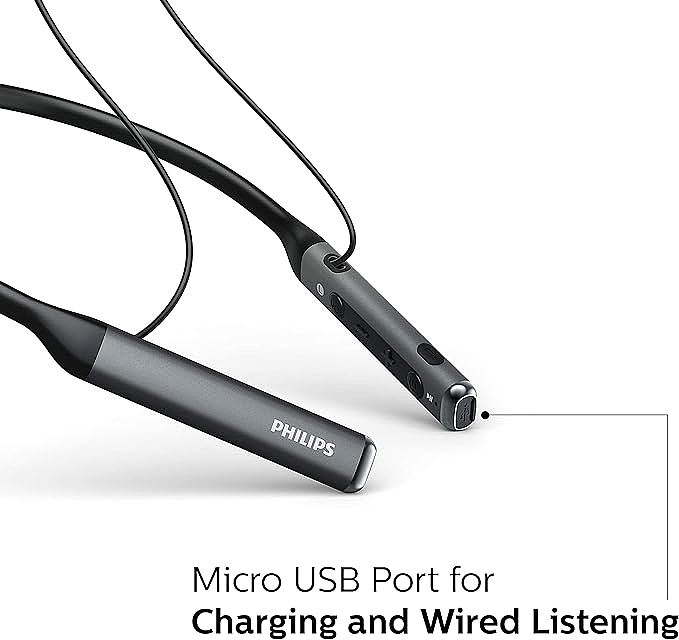
Some neckband designs address this through a hybrid philosophy that is increasingly rare in modern audio devices. They operate as sophisticated Bluetooth devices for daily tasks—commuting, calls, casual listening—while retaining the ability to connect via a 3.5mm cable, bypassing Bluetooth compression entirely.
This capability is significant. When connected to a high-quality DAC or a Hi-Res audio player, headphones can reproduce frequencies up to 40 kHz, extending well beyond the standard 20 Hz-20 kHz hearing range and exceeding what standard Bluetooth transmission can carry. While this "ultrasonic" extension cannot be heard as distinct tones—human hearing caps around 20 kHz and the actual limit varies with age—it contributes to the perception of "air," transient speed, and harmonic structure in instruments. The sound gains dimensionality that compressed Bluetooth audio cannot replicate.
This dual nature makes such devices versatile in ways that purely wireless designs cannot match. They serve as convenient wireless companions for travel and high-fidelity monitors for critical listening sessions. For users who refuse to compromise on either convenience or quality, this flexibility is invaluable.
The Science of Silence: Active Noise Cancellation Engineering
Active Noise Cancellation has evolved from luxury feature to health and productivity necessity in our increasingly noise-polluted world. Yet the effectiveness of ANC depends heavily on the stability of the platform it is built upon.
The core principle of ANC is destructive interference: the system generates a sound wave that is the exact inverse phase of the ambient noise. When these waves combine in the ear canal, they cancel according to the superposition principle. Perfect cancellation requires precise amplitude matching—within approximately 1 dB—and phase alignment—within approximately 10 degrees.
The challenge is that the human body moves throughout the day. Jaw motions, walking vibrations, and simple gravity cause earbuds to shift within the ear canal. These micro-movements break the acoustic seal, changing the noise field that the ANC system expects. The algorithm becomes confused, causing artifacts, sudden changes in noise level, or complete cancellation failure.
The neckband design provides a more stable anchor. The cable running from the neckband to the earpiece absorbs much of the mechanical shock from walking and movement, keeping the earbud seal more consistent than truly wireless designs allow. Furthermore, the larger battery capacity of the neckband enables more powerful ANC processing without the runtime penalties that plague TWS devices, where heavy ANC processing drains the limited battery capacity rapidly.
Effective ANC implementations address the low-frequency regime particularly well. Below approximately 500 Hz, where wavelengths are long relative to microphone-driver separation distances, meaningful attenuation is achievable. For higher frequencies, where phase delays in electronic processing become problematic, the combination of passive isolation from the ear tip seal and active electronic cancellation provides complementary benefits. The result is a more consistent "cone of silence" that effectively addresses the drone of train engines, air conditioning hum, and similar low-frequency distractions that dominate urban acoustic environments.
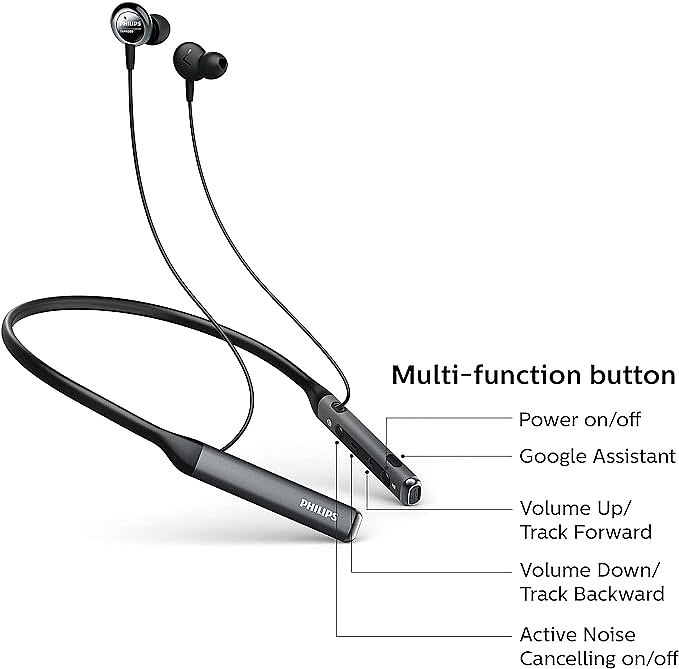
The inclusion of Awareness Mode acknowledges the reality that complete isolation is not always desirable. By inverting the microphone logic—amplifying external sound rather than canceling it—users can maintain situational awareness without removing the device. This toggle between isolation and connection represents thoughtful design for real-world use cases.
Connectivity and the Professional Reality
In professional contexts, reliability consistently trumps novelty. A dropped connection during an important conference call is not merely annoying—it can be professionally damaging.
The neckband form factor offers structural advantages for wireless connectivity. The larger chassis enables larger, more optimally positioned Bluetooth antennas contrasted with the constrained dimensions of truly wireless earbuds. Modern Bluetooth 5.0 implementations provide theoretical range and throughput improvements over previous generations, with smart pairing that automatically reconnects to the last paired device.
More significant for professional use is the microphone positioning. In TWS earbuds, the microphone must capture voice from a location at the ear—far from the mouth. To produce usable audio, the system must employ aggressive digital signal processing and beamforming algorithms that often result in robotic, processed voice quality. On a neckband design, the microphone controls often reside on the cable or collar, physically closer to the sound source and acoustically isolated from the ear. Combined with echo cancellation technology, this physical advantage translates to clearer, more natural voice transmission.
Rapid charging capability addresses another failure point of wireless devices: battery anxiety. The ability to gain hours of playback from just minutes of charging provides resilience against the inevitable moments when you forget to charge overnight. While the industry increasingly standardizes on USB-C, legacy connector choices reflect the transitional period of technology—reminding users that connector standardization takes time and that the utility of a feature often outweighs the convenience of the latest connector type.
The Renaissance Pattern: Why History Suggests the Neckband Will Endure
The the original neckband design, launched in 1997, represented the industry's first neckband headphone design. According to Sony's corporate history, the innovation positioned the headphone's electronic components in a band worn around the neck rather than clamping on the head, distributing weight across the shoulders and upper chest for improved comfort during extended wear.
In the decades since, the neckband has evolved through several distinct phases. Fitness-focused models targeted users who rejected TWS designs for workouts. Premium designs validated the category for audio applications requiring active noise cancellation and high-resolution audio support.
A 2025 Nature paper on health monitoring validated the neckband as an enabling architecture for biosensor integration that TWS designs cannot support. Researchers noted that the neckband "positions sensors at anatomically advantageous locations while maintaining music playback functionality." The cheek and neck positions used for pulse-wave monitoring are simply inaccessible to truly wireless earbuds.
This historical pattern suggests something important: the neckband is not a transitional technology on the way to TWS dominance. It is a parallel evolution that prioritizes different values—battery life, driver size, connection stability, sensor integration—over sheer minimalism.
Market data confirms this differentiation. Despite rapid TWS adoption, neckband sales have stabilized at approximately 8-12% of the wireless headphone market by unit volume, with higher share in regions where all-day wear patterns and audio quality expectations differ from Western markets. The persistent customer base prioritizes never losing an earbud, longer battery life per charge, easier handling and controls, lower replacement cost, and familiar ergonomic comfort.
Conclusion: The Timeless Utility of the Neckband Philosophy
Trends in consumer electronics are often cyclical. As the novelty of "truly wireless" begins to fade, users are rediscovering the pragmatic benefits of designs that prioritize function over form.
The neckband form factor represents a specific engineering philosophy: acknowledge the constraints of the human body, design around them rather than against them, and accept that "smaller" is not always "better." The electronics belong where they can be supported. The drivers belong where they can perform optimally. The battery belongs where its mass will not cause fatigue.
By combining active noise cancellation with authoritative large drivers and the versatility of Hi-Res wired listening, neckband headphones offer comprehensive audio solutions that acknowledge a simple truth: for many users, headphones are not fashion accessories but essential tools for navigating the sonic landscape of modern life.
Whether for the deep focus required in a busy office, the high-fidelity enjoyment of a symphony at home, or the professional reliability needed for important calls, the neckband stands as a testament to the engineering principle that sometimes, accepting a little more physical substance yields significantly more performance. The stillness within motion—the controlled, precise movement that produces accurate sound—finds its optimal housing not in the smallest possible package, but in the right possible one.
The renaissance of the neckband is not a regression. It is a maturation. And in the mathematics of physics and physiology, that maturation represents not a compromise, but an evolution worth celebrating.
PHILIPS PN505 Wireless Neckband Headphones
Related Essays

Why Your Headphones Lie to You: The Physics of Sound That...

Xiaomi Redmi Buds 4 Pro: Immersive Sound with Cutting-Edge Noise Cancellation

SoundPEATS Engine4: Hi-Res Audio with Coaxial Dual Drivers

Sony XBA-Z5: Three Drivers, One Mission in High-Resolution Audio

The Physics of Bone Conduction: Why Bass Is Hard and How...

Beyond the Eardrum: The Hidden Physics of Bone Conduction

Audio Science: How Sound Technology Transforms Workout...

Passive Noise Isolation: How a Silicone Seal Outsmarts Digital Noise Cancellation

The Bitrate Battlefield: Navigating the Era of High-Resolution Wireless Audio
