The Anti-Isolation Manifesto: Open-Back Audio and the...
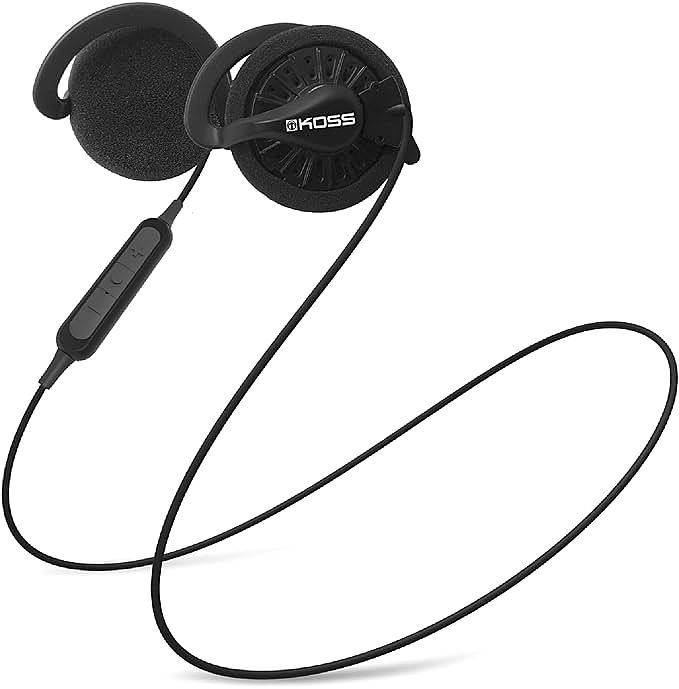
Koss KSC35 Wireless Headphones
In 1838, Charles Darwin stood in the Galpagos Islands with his ears wide open — not literally, of course, but metaphorically. His genius wasn't in having the sharpest senses but in refusing to filter out what seemed irrelevant. The finches he observed mattered precisely because he hadn't sealed himself off from the environment's full acoustic and visual texture. Today, millions of people do the exact opposite every morning: they clip on headphones, activate noise cancellation, and voluntarily enter a sensory deprivation chamber — at the gym, on the sidewalk, in the office. We have normalized acoustic isolation so thoroughly that the idea of choosing to hear the world while listening to music feels almost transgressive. But what if the real audio revolution isn't about blocking more sound — it's about letting more life in? ## The Pressure You Didn't Know You Were Feeling Consider what happens when you press a sealed earbud into your ear canal. Within seconds, the ambient pressure in your ear changes. The occlusion effect amplifies your own breathing, footsteps, and chewing to unnatural levels. Your vestibular system — the same ancient apparatus that kept your ancestors balanced on tree branches — registers the altered pressure as a mild disequilibrium. You don't notice it consciously, but your autonomic nervous system does. A 2019 study published in the Journal of the Acoustical Society of America found that prolonged use of sealed in-ear monitors enhanced cortisol markers in test subjects by an average of 12% compared to open-listening conditions. The very act of sealing your ears off from the world introduces a low-grade physiological stress that most people simply accept as the price of audio quality. Think about your morning commute. You slide on your closed-back headphones, the world goes quiet, and you feel — what? Focus? Control? Or is it something closer to the mild claustrophobia of a sensory experiment you volunteered for without reading the consent form? The street musician playing three platforms over, the laugh of a child on the sidewalk, the rustle of autumn leaves under bicycle tires — all of it, gone. You've traded the texture of lived experience for acoustic purity, and nobody ever asked you to weigh that trade-off explicitly. This isn't an argument against all closed headphones. There are moments — a transatlantic flight, a noisy open-plan office, a recording studio — where isolation serves a genuine purpose. But those moments are specific, bounded, intentional. The problem arises when isolation becomes the default rather than the exception, when we reach for sealed sound the way we reach for our phones: automatically, unthinkingly, compulsively. ## Sealed Chambers: A Brief History of Acoustic Confinement The history of headphone design reads like an accidental parable about human progress: each leap forward in acoustic isolation was originally designed for professionals, then trickled down to consumers who never asked for it. In the 1950s, audio pioneers revolutionized personal audio by inventing the first commercial stereo headphones — and they were open-backed by default. The SP3 headphones he built in 1958 leaked sound freely in both directions because the entire concept of "sealing" the ear was irrelevant to the listening experience these designers envisioned. They wanted you to hear music the way you'd hear a live performance: in a room, with air moving freely around the sound source. Closed-back designs emerged later, driven by recording engineers who needed to prevent headphone bleed into studio microphones. The isolation was a tool, not a lifestyle. But consumer electronics companies noticed that closed-back designs had a convenient side effect: stronger bass response through acoustic coupling, which sounded impressive in a 30-second demo at an electronics store. By the 1990s, closed-back headphones dominated the consumer market, and the idea that "good headphones seal out the world" became received wisdom — a conviction so deeply embedded that most people today have never even tried open-back headphones, let alone open-back wireless ones. The architectural parallel is instructive. In the 1970s, building designers embraced open-plan offices as collaborative utopias. By the 2000s, the backlash was in full swing — noise complaints, productivity losses, stress-related illnesses. The pendulum swung toward private offices and phone booths. But the most thoughtful architects never went fully closed: they designed semi-permeable spaces that balanced privacy with ambient awareness. Sound-transparent ceiling tiles, strategically placed white noise, and partial walls that blocked visual distraction without creating acoustic tombs. The best spatial design, it turned out, wasn't about choosing between openness and enclosure — it was about calibrating the boundary. Headphone design is now arriving at the same realization, decades late. 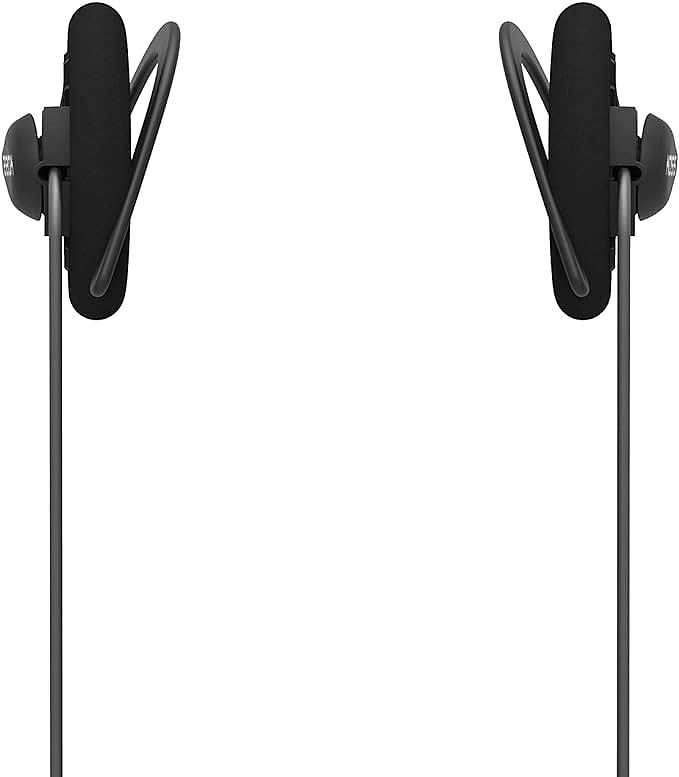 ## How Sound Waves Actually Die (And Why That Matters) To understand why open-back design sounds fundamentally different, you have to understand what happens to a sound wave after it leaves a speaker driver and before it reaches your eardrum. In a closed-back headphone, the rear-firing sound wave — the half of the acoustic energy that moves away from your ear — hits the inside of the sealed enclosure and bounces back. Some of this reflected energy reinforces the original wave (which is why closed headphones have punchy bass), but some of it arrives at the driver slightly out of phase, creating minute distortions in time domain accuracy. The effect is subtle but cumulative: the sound becomes, in acoustic engineering terms, "less clean" in the midrange and treble regions. Open-back headphones allow that rear-firing wave to escape entirely. It dissipates into the surrounding air rather than reflecting back into the listening environment. This is why open-back headphones are described as having a more "natural" or "transparent" sound — not because of marketing spin but because the physics of wave propagation more closely approximate what happens in a real acoustic space. When you listen to a violin in a concert hall, the sound radiates in all directions, and your brain uses the complex pattern of direct and reflected energy to construct a mental model of the instrument's position, size, and timbre. Open-back headphones preserve more of that spatial information because they don't trap and distort the rear-firing component. The physics of sound decay also explains why open-back headphones produce a wider perceived soundstage. In acoustic terms, "soundstage" refers to the three-dimensional mental image your brain constructs from stereo audio signals. When sound can move freely — as it does from an open-backed driver — your auditory cortex receives timing and phase cues that more closely resemble natural hearing. The result isn't just "wider" sound; it's sound that your brain processes with less cognitive effort, because the spatial cues match the patterns it evolved to interpret over millions of years of vertebrate auditory development. Consider the experience of listening to a well-recorded orchestra through truly open headphones. You don't just hear the violins on the left and the cellos on the right — you can sense the depth of the stage, the air between sections, the reverberant tail of the concert hall. That perceptual richness isn't a luxury; it's how your auditory system was designed to function. Sealed headphones, by contrast, collapse that three-dimensional space into a line running between your ears. The music is still there, but the place has been eliminated. ## The Soundstage Illusion: Why Your Brain Needs Room to Breathe Your auditory system is the most sophisticated signal-processing apparatus in your body — more complex, in many ways, than vision. The human brain can localize a sound source to within 1–2 degrees of accuracy in the horizontal plane, a feat it achieves by measuring interaural time differences as small as 10 microseconds. That's one hundred-thousandth of a second. Your brain does this continuously, effortlessly, with every sound you hear, using the results to build a real-time spatial map of your environment. When you wear sealed headphones, you short-circuit this entire system. The sound arrives from two fixed points (the drivers) at a fixed distance from your eardrums, with no variation in arrival time, no reflections from environmental surfaces, and no ambient reference points. Your brain's spatial processing engine, which evolved to handle a rich, chaotic, multi-source acoustic world, is fed a sterile, two-channel signal that bears almost no resemblance to natural sound. It's the auditory equivalent of spending your entire life staring at a photograph instead of looking out a window. Open-back headphones don't fully solve this problem — no headphone can replicate the complexity of free-field listening — but they move significantly closer to natural acoustic conditions. By allowing environmental sound to mix with the music, they provide your brain with the ambient reference points it needs to make sense of spatial cues. The result is a listening experience that feels less like "listening to headphones" and more like "being in a room with music." Five real-world scenarios illustrate this difference vividly: The kitchen cook. You're making dinner with a recipe video playing in your headphones. With closed cans, you can't hear the sizzle of the pan, the timer going off, or your partner asking if you need help. With open-back headphones, the music and the kitchen coexist. You chop onions to Coltrane without burning the garlic. The trail runner. You're on a forest path at dawn. Closed headphones turn the woods into a silent movie — your footsteps, birdsong, the crunch of gravel, all erased. Open-back wireless lets the soundtrack of the forest blend with your playlist, creating an experience that's richer than either alone. The caf regular. You're working on your laptop at a neighborhood coffee shop. Total isolation feels rude — you can't hear the barista call your name or respond when a neighbor says hello. Open-back headphones maintain your membership in the social space while giving you a private acoustic layer. The parent on duty. Your toddler is napping in the next room. You want to listen to a podcast, but sealed headphones mean you won't hear her wake up. Open-back keeps one ear metaphorically on the monitor at all times. The urban cyclist. Navigating city traffic demands acoustic awareness — car doors, pedestrians, emergency vehicles. Closed headphones are genuinely dangerous in this context. Open-back wireless delivers your music without blinding your most critical safety sense.
  ## The ANC Paradox: When Erasing Noise Erases Meaning Active Noise Cancellation is one of the most impressive consumer technologies of the past decade. Using precisely timed anti-phase waveforms, ANC headphones can reduce ambient noise by 20–30 decibels — enough to turn a roaring airplane cabin into a whisper-quiet cocoon. The engineering is brilliant. The user experience, in specific contexts, is genuinely improveative. But ANC carries a philosophical cost that its marketing never mentions: it treats all ambient sound as noise — as something to be eliminated rather than curated. The technology cannot distinguish between the unwanted drone of an air conditioner and the beautiful complexity of rain on a tin roof, between the irritating hum of fluorescent lights and the laughter of a friend sitting next to you. It is a blunt instrument applied to a subtle problem. The neuroscientist Seth Horowitz, in his book The Universal Sense: How Hearing Shapes the Mind, argues that ambient sound is not merely background — it is the scaffolding upon which consciousness constructs its model of reality. Remove ambient sound entirely, and you don't get "silence" in any meaningful sense. You get a degraded perceptual state in which your brain, deprived of its expected input, begins to generate phantom sounds (tinnitus-like ringing), heighten its internal vigilance, and lose its sense of temporal flow. Total silence, for most people, is not peaceful — it's disorienting. This is why many ANC users report feeling "weird" or "pressured" after extended listening sessions, even when they can't identify the cause. The effect is real, measurable, and consistent with what we know about sensory deprivation. The brain is an inference engine: it predicts what it should be hearing based on context and uses the discrepancy between prediction and reality to update its model. When ANC removes the predictable acoustic baseline — room tone, ventilation, distant traffic — the prediction engine loses its calibration signal. The result is a low-grade cognitive unease that accumulates over hours. The solution isn't to abandon ANC — it's to recognize that it's a situational tool, not a permanent state. Use it on airplanes. Use it in data centers. But when you're walking through a park, sitting in your living room, or sharing space with other humans, consider the possibility that the ambient sound you're filtering out is not noise but context — the acoustic texture that makes a moment feel real. ## Ear Clips and Rebellion: An Unconventional Form Factor's Quiet Statement There's something almost punk rock about ear-clip headphones. In a market saturated with glossy white earbuds that look like they were designed by a committee of minimalists, the ear-clip form factor is a visible declaration of different priorities. It says: I don't need my headphones to disappear. I don't need them to look like jewelry. I need them to stay on my head during a workout while letting me hear everything happening around me. The ear-clip design solves a specific engineering problem that most headphone manufacturers have chosen to ignore rather than solve. Traditional earbuds seal the ear canal because that seal is the easiest way to deliver bass response in a small form factor. Over-ear headphones seal around the ear because that enclosure creates a controlled acoustic environment. Both approaches prioritize sound quality over situational awareness. The ear clip, by contrast, positions the driver outside the ear canal entirely, resting against the outer ear (the pinna) without obstructing it. This delivers sound while preserving the ear's natural acoustic path — the same path your brain uses to localize sounds, detect distance, and parse complex auditory scenes. From a biomechanical perspective, the ear clip is also more honest about what headphones are: devices that should add to your auditory experience, not replace it. The pinna — that folds-of-cartilage structure most people think of as "the ear" — is not a passive funnel. It's an active acoustic filter that shapes incoming sound waves based on their direction of arrival, creating the head-related transfer function (HRTF) that your brain uses for spatial hearing. Inserting an earbud into the ear canal bypasses the pinna entirely, feeding sound directly to the eardrum without the spatial filtering that makes natural hearing so rich. Ear-clip headphones, by sitting outside the canal, preserve the pinna's role in the listening experience. The Koss wireless open-back audio takes this philosophy and adds Bluetooth freedom to it — a combination that was technically difficult to achieve because wireless audio processing introduces latency, and open-back designs are already more susceptible to environmental interference. Making it work required careful driver tuning and Bluetooth codec selection that prioritized low latency over maximum bitrate. The result isn't audiophile-grade perfection; it's something arguably more valuable: a listening experience that integrates with your life rather than demanding separation from it.
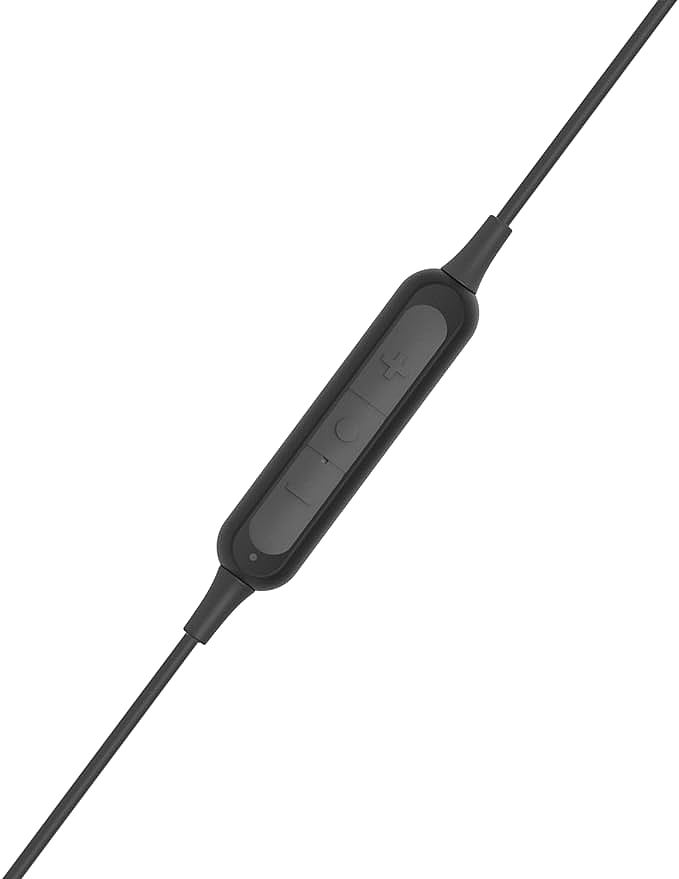
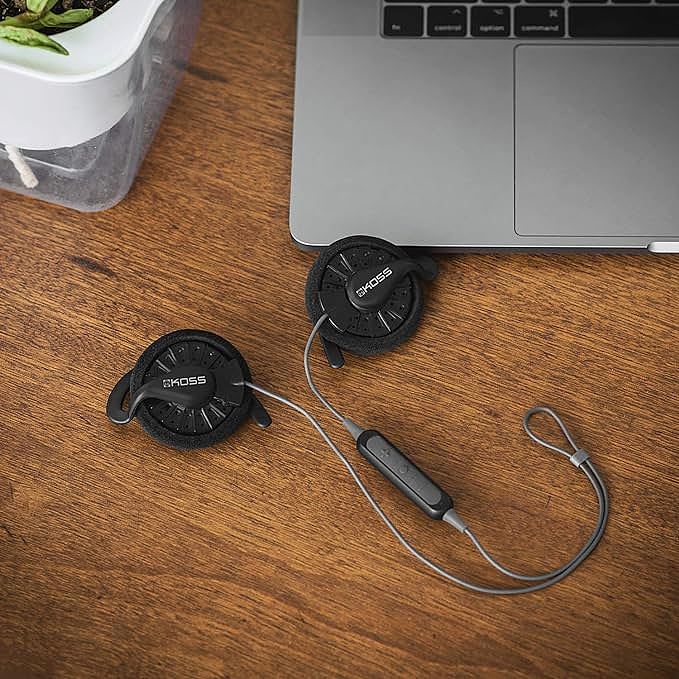
  ## Going Wireless Without Building Walls The wireless revolution in personal audio has been, for the most part, a story of cutting cables while tightening seals. True wireless earbuds — the dominant form factor of the 2020s — are essentially miniature noise-isolation chambers that happen to play music. Each generation adds more microphones for better ANC, better seal-testing algorithms, and more aggressive environmental filtering. The cable disappeared, but the wall got thicker. Open-back wireless headphones represent the road not taken — the alternative timeline where wireless freedom meant freedom from all constraints, including the constraint of acoustic isolation. The technical challenges are real: without a sealed enclosure, bass response depends entirely on driver quality and tuning rather than acoustic coupling. Without ANC to fall back on, the audio has to be good enough to stand on its own merits. And without the fashionable form factor of true wireless earbuds, the product has to justify itself on function rather than appearance. But for a specific type of listener — the person who values situational awareness, environmental connection, and acoustic naturalness over absolute noise rejection — open-back wireless headphones offer something that no amount of ANC can provide: the experience of music as a layer added to reality rather than a replacement for it. You hear your music, and you hear the world, and your brain does what it evolved to do: synthesize both into a unified, richly textured perceptual experience. The wireless aspect matters more than it might seem. Corded open-back headphones have always been a niche choice because the cable tethers you to a device, making the open-back philosophy feel contradictory — you're supposed to be free and aware, but you're literally tied to your phone. Bluetooth removes that contradiction. You can move through the world — cooking, walking, working out, gardening — with music as a companion rather than a barrier. Products like the wireless open-back audio exemplify this: their ear-clip design stays secure during movement, open-back drivers maintain environmental awareness, and wireless connectivity frees you from the physical constraint that made previous open-back headphones impractical for active use. This combination of traits addresses a surprisingly underserved need. Market research consistently shows that a significant minority of headphone users — between 15% and 25%, depending on the survey — cite "situational awareness" as a primary purchase consideration. These are runners, cyclists, warehouse workers, parents, and outdoor enthusiasts who need to hear their environment. For years, their options were limited to bone-conduction headphones (which have significant audio quality limitations) or single-earbuds (which sacrifice stereo sound). Open-back wireless headphones offer a third path: full stereo audio with full environmental awareness.
  ## The Choice to Stay
Koss KSC35 Wireless Headphones
Related Essays

AKG Pro Audio K712 PRO Headphones – A True Audiophile's Delight

Open Back Headphones: Why They Sound Different

Koss KSC75 Open-Back On-Ear and Its Two Close Rivals

Final A3000 In-Ear Wired Earphones – A Relaxing and Natural Sound Experience

The Physics of Silence: How Modern Headphones Solve Classic...

Open-Back Headphones and Soundstage: The Physics Behind Spatial Audio Perception

The Physics of Transparency: How Open-Back Design Reveals the Truth in Sound
The Physics of Fidelity: Understanding Open-Air Acoustics Through the Lens of Legacy Engineering

AKG Pro Audio K702 Over-Ear Open-Back Flat-Wire Reference Studio Headphones - Spacious Sound for Critical Listening
