Engineering Acoustic Camouflage: The Mathematics of...

Wireless Earbuds
The helicopter hovers motionless above a rescue scene in the Swiss Alps. Its rotors spin at 400 revolutions per minute, yet the aircraft itself remains perfectly still relative to the mountain face it monitors. Three thousand feet below, in a Manhattan penthouse, a different kind of machine faces the same paradox. To create silence, it must generate noise. To mask the chaos of modern life, it deploys calculated acoustic camouflage.
We inhabit an era defined by unrelenting acoustic intrusion. The modern urban environment presents itself as a chaotic superposition of sound pressure waves—diesel engines cycling through their combustion phases, HVAC systems humming their mechanical lullabies, sirens wailing their urgent narratives, and human vocalizations。 This environmental din frequently collides with the biological necessity of human sleep, creating what researchers call a severe physiological conflict. When the brain is denied an uninterrupted descent through the necessary stages of the sleep cycle—light sleep giving way to deep REM phases—cognitive function, metabolic regulation, and immune response degrade in measurable ways.
The counterintuitive solution to this problem lies not in physical soundproofing but in the strategic deployment of sound itself. By understanding the architecture of acoustic masking devices, we can deconstruct the complex interplay between psychoacoustics, algorithmic sound design, and the thermodynamic realities of portable power. This is an exploration of how engineers mathematically engineer silence by generating noise.
The Paradox of Silence Through Noise
Consider the commuter waiting for a delayed subway train at 7:43 AM. The platform fills with the overlapping sounds of conversations, footsteps echoing off tile walls, and the distant rumble of an approaching train. Yet when a sudden louder sound—a platform announcement—cuts through the ambient noise, attention immediately redirects. The brain has been performing a constant acoustic triage, sorting sounds by relevance and loudness.
The efficacy of a sound masking device does not rely on physical soundproofing. It cannot stop a sound wave from striking the tympanic membrane. Instead, it exploits a neurological phenomenon that neuroscientists call auditory masking. This perceptual trick forms the foundation of how we engineer acoustic environments.
To understand auditory masking, one must first comprehend how the human ear processes frequency information. The basilar membrane within the human cochlea operates as a biological spectrum analyzer. It is tonotopically organized, meaning different physical sections of the membrane vibrate in response to different frequencies. When a sudden, intrusive sound—like a dog barking at 1,000 Hz—strikes the ear, a specific section of the basilar membrane responds while neighboring sections remain relatively quiescent.
This spatial frequency mapping allows the auditory system to decompose complex acoustic environments into their spectral components. The brain receives a continuously updated map of the frequency content in the environment, and it uses this information to prioritize attention.
How the Human Ear Analyzes Sound
The process begins when sound waves enter the ear canal and cause the tympanic membrane to vibrate. These vibrations transmit through the ossicles—the smallest bones in the human body—to the cochlea, where they create traveling waves in the fluid-filled interior. The basilar membrane, running the length of the cochlear spiral, responds to these waves.
The selectivity of this response is extraordinary. Each location along the membrane exhibits a characteristic frequency to which it is most sensitive, known as its characteristic frequency. Low-frequency sounds cause peaks near the apex of the cochlea, while high-frequency sounds produce peaks near the base. This organization is preserved in the neural signals sent to the brain via the auditory nerve.
The ear's sensitivity varies dramatically across the frequency spectrum. Maximum sensitivity occurs in the 1-5 kHz range, corresponding to the frequencies most important for speech intelligibility. This is not coincidental—human evolution optimized hearing for the vocal frequencies of our ancestors.
When two sounds arrive simultaneously, the auditory system must decide which elements to process and which to ignore. This decision depends on relative loudness, frequency proximity, and temporal characteristics. A sound occurring at moderate intensity in a frequency band where no other sound is present will likely be perceived clearly. However, the same sound occurring simultaneously with a louder sound in the same frequency region may become imperceptible—a phenomenon called simultaneous masking.
Temporal relationships introduce additional complexity. A soft sound following a loud sound by a brief interval may be inaudible due to backward masking. Conversely, a soft sound preceding a loud sound may be rendered inaudible through forward masking. These temporal integration characteristics have profound implications for the design of sound masking systems.

The Mathematics of Auditory Masking
The quantitative relationship between masking sounds and masked sounds follows predictable mathematical principles. The masking threshold—the minimum level at which a masking sound must operate to render another sound inaudible—depends on the frequency relationship between the two sounds.
For broadband noise masking a tonal signal, the critical ratio approximates 15-20 dB across most of the audible spectrum. This means that if a tonal sound sits 15 dB below the level of surrounding broadband noise, it becomes imperceptible. The ear effectively treats the noise as a form of acoustic camouflage that conceals other sounds.
The mathematics becomes more interesting when we consider the spectral shape of the masking sound. A perfectly flat white noise spectrum—with equal energy per frequency band—masks all frequencies approximately equally. However, the ear's frequency selectivity means that a tonal sound at 2 kHz is most effectively masked by noise energy concentrated around 2 kHz.
This leads to an important design principle: the optimal spectrum for acoustic masking depends on the specific sounds one wishes to conceal. For general-purpose sleep enhancement, a spectrum that emphasizes the frequency ranges where human hearing is most sensitive—and where environmental noises most commonly occur—provides the most effective masking.
Pink noise—noise with equal energy per octave—offers a practical compromise. Its reduced energy at high frequencies produces a subjectively smoother sound while maintaining effective masking properties at the frequencies most relevant for speech and environmental noise. Brown noise, with additional bass emphasis, has gained popularity for sleep applications despite somewhat reduced masking effectiveness for higher-frequency sounds.
The masking threshold also depends on the duration and statistical properties of the masking sound. A consistent, unvarying noise provides more effective masking than one with significant amplitude or spectral variations. This is precisely why sound masking systems aim for long-term spectral consistency—the brain adapts to steady-state sounds, rendering them perceptually transparent.
White Noise: Engineering Perceptual Silence
White noise represents an idealization—theoretical noise with equal energy at all frequencies. In practice, true white noise proves both unnecessary and undesirable. The human ear cannot physically respond to frequencies approaching DC (0 Hz), and frequencies above 20 kHz are inaudible regardless of intensity. More importantly, the ear's sensitivity rolloff at frequency extremes means that extreme high-frequency content contributes little to perceived loudness while consuming amplifier power and driver excursion.
Real-world acoustic masking devices therefore employ shaped spectra optimized for human perception. The goal is not to reproduce the theoretical white noise spectrum but to create a perceptually uniform acoustic field that effectively masks intrusive sounds across the frequency ranges where they most commonly occur.
The night-shift worker returning home at 7 AM faces a different acoustic challenge than the apartment dweller in a noisy city. A parent soothing an infant needs to mask sudden crying sounds without disturbing the child's sleep. An open-office worker requires speech masking while maintaining awareness of urgent events. Each scenario demands a tailored acoustic signature.
Modern sound masking devices address these varied needs through sophisticated digital signal processing. Rather than generating simple random noise, they create multi-layered acoustic fields that combine broadband noise with carefully designed spectral shaping, slow amplitude modulation, and intermittent acoustic events that prevent auditory adaptation.
The challenge of preventing adaptation deserves special attention. Human auditory perception exhibits rapid habituation to constant stimuli. A truly unvarying sound would, after several minutes of exposure, become so familiar that the brain would treat it as acoustic silence. The perceptual system essentially subtracts the expected sound, rendering the listener hypersensitive to any acoustic deviation.
Skilled acoustic engineers therefore introduce subtle variations—slow spectral drift, gentle amplitude breathing, occasional harmonic enhancements—that prevent full adaptation while maintaining masking effectiveness. The goal is what researchers call perceptual opacity: an acoustic field that the brain cannot see through, cannot habituate to, and therefore cannot ignore.

Non-Looping Algorithms and Sound Design
One significant engineering challenge in sound masking design is preventing detectable periodicity. Digital white noise generators face a fundamental constraint: true random number generation requires either large memory buffers or algorithmic processes that, by definition, repeat after their cycle length.
Pseudo-random number generators (PRNGs) produce sequences that appear random but eventually repeat. Early implementations used linear congruential generators with periods as short as 2^32 samples—audible repetition occurring within minutes at CD-quality sample rates. Modern devices employ more sophisticated algorithms with astronomical periods.
The Mersenne Twister algorithm, widely used in scientific simulations and audio applications, produces sequences with a period of 2^19937-1 samples. At a 44.1 kHz sample rate, this period exceeds the age of the universe by orders of magnitude. However, even these generators can produce audible artifacts if poorly implemented, particularly when the output undergoes additional processing.
More relevant for consumer devices are techniques that achieve perceptual non-periodicity through architectural means. Multiple uncorrelated noise generators operating in parallel can be combined to create output that, while each component repeats, the overall mixture exhibits effective periods far exceeding any individual component.
Frequency-domain synthesis offers another approach. By generating noise directly in the frequency domain and applying an inverse Fourier improve, designers can create noise with precisely controlled spectral properties and effectively infinite apparent period. The computational requirements are modest for real-time implementation on modern digital signal processors.
The art of sound masking design lies in combining these technical approaches with careful attention to perceptual psychology. The resulting products must maintain masking effectiveness throughout extended use while avoiding any audible artifacts or patterns that would draw attention to themselves.
Speaker System Design for Acoustic Masking
Reproducing low-frequency sound presents fundamental physical challenges that constrain acoustic masking system design. The relationship between frequency, driver size, and output capability follows basic acoustic principles that cannot be circumvented through engineering cleverness alone.
To generate 20 Hz bass—frequencies felt as much as heard—a speaker driver must move substantial volumes of air. The displacement required increases inversely with the square of frequency. At 40 Hz, generating reference-level output requires approximately four times the driver displacement needed at 80 Hz. This physical reality explains why high-performance subwoofers require large drivers or long throw capability.
Acoustic masking devices typically employ dual driver configurations for several reasons. Two drivers can achieve higher maximum output than a single driver of equivalent size without exceeding linear excursion limits. Additionally, multiple drivers enable different frequency ranges to be reproduced by optimized transducers—perhaps a larger driver for bass reproduction and a smaller one for extended high-frequency response.
Passive radiator technology offers an elegant solution to the size-output tradeoff. A passive radiator resembles a speaker driver without a voice coil—it produces sound through the movement of a suspended diaphragm driven by cabinet air pressure changes. By tuning the passive radiator's resonance to extend bass response, designers can achieve meaningful low-frequency output from remarkably compact enclosures.
The electrical power required for acoustic masking varies significantly with output level. At moderate volumes suitable for bedroom use, a typical device might consume 2-5 watts. At maximum output for large spaces, consumption can exceed 20 watts. This power-variable nature has implications for battery-powered devices, where amplifier efficiency becomes critically important.
Battery Technology and Power Economics
Modern portable acoustic masking devices rely on lithium-ion battery technology that represents decades of evolution in electrochemistry and materials science. The energy density of lithium-ion cells—typically 150-250 watt-hours per kilogram—enables compact devices with meaningful runtime.
A 4400 mAh battery operating at 3.7 volts provides approximately 16 watt-hours of stored energy. At 340 milliwatts average consumption—the typical draw for moderate-volume acoustic masking—this translates to roughly 48 hours of continuous operation. The mathematics reveals why certain devices advertise runtime in days rather than hours.
The discharge characteristics of lithium-ion chemistry present both opportunities and constraints. The voltage remains relatively stable through most of the discharge cycle, then drops rapidly when the cell approaches full discharge. This behavior enables relatively consistent acoustic output throughout the battery life, with a sudden cutoff rather than gradual degradation.
Power management electronics play a crucial role in portable devices. Sophisticated circuits monitor battery state, control charging, manage thermal conditions, and implement sleep modes that minimize standby consumption. The transition between active playback and low-power standby—typically triggered after several minutes of inactivity—can extend effective battery life by orders of magnitude.
Thermal considerations affect both safety and performance. Lithium-ion batteries are sensitive to temperature extremes. Charging at low temperatures can cause permanent capacity loss; operation at high temperatures accelerates degradation. Quality devices incorporate temperature monitoring with charging and output limitations that protect battery health.
The Future of Acoustic Camouflage
As urban density increases and acoustic environments grow more complex, the demand for effective acoustic masking solutions will likely intensify. Several technological trends promise enhanced capabilities.
Adaptive algorithms that automatically adjust spectral content based on detected environmental noise represent an active research area. These systems would analyze the acoustic environment, identify dominant noise sources, and optimize masking spectra in real-time. The goal is effective masking with minimum acoustic intrusion—a more efficient form of acoustic camouflage.
Spatial audio techniques could enable directional masking that selectively covers noise sources while preserving awareness of other sounds. This approach might prove particularly valuable in settings where complete acoustic isolation is undesirable—such as hotel rooms where guests need to remain aware of emergency alerts.
Integration with smart home ecosystems presents additional possibilities. Acoustic masking devices might coordinate with other systems—lighting, climate control, voice assistants—to create holistic sensory environments optimized for rest, focus, or productivity.
The fundamental science underlying acoustic masking has remained stable for decades, but engineering implementations continue to evolve. The best devices of tomorrow will combine psychoacoustic insight with advanced signal processing, efficient electroacoustic transduction, and sophisticated power management to create acoustic environments that feel silent while containing no silence at all.
The paradox of noise quieting noise remains as relevant as ever. Understanding the mathematics of auditory masking reveals not just how engineers create acoustic camouflage, but why our perception of sound and silence is far more nuanced than simple loudness measurements suggest. In the spaces between sounds, in the careful engineering of what we do not hear, lies a fascinating intersection of physics, neuroscience, and human experience.
Wireless Earbuds
Related Essays
The Architecture of Silence: Managing Tinnitus Through Acoustic Engineering

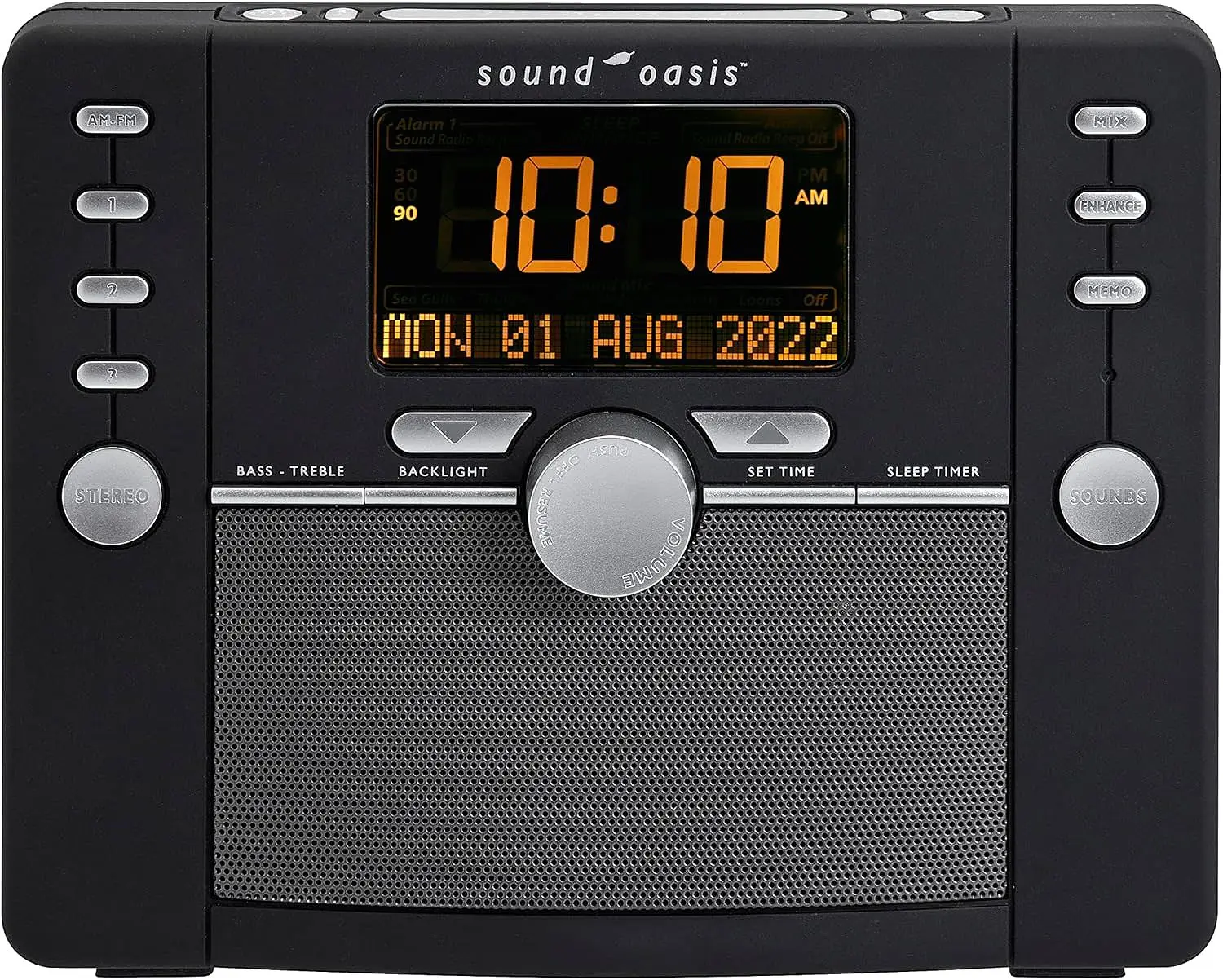
Sound Oasis Deluxe Bluetooth Sleep Tinnitus Sound Machine: Your Oasis of Tranquility in a Noisy World

Water Sounds for Sleep: The Science Behind Nature Sounds and Neural Relaxation

Portable Bluetooth Speaker with IP68 Rating and AI Sound for Outdoor Gatherings
Portable Bluetooth Speaker with IP68 Rating and AI Sound for Outdoor Gatherings

TREBLAB FX100 Extreme Bluetooth Speaker Z2 Over Ear Workout Headphones – Unmatched Sound and Performance
Portable Bluetooth Speaker with IP68 Rating and AI Sound for Outdoor Gatherings

Xmenha SJJ-AZZ-Y50 Invisible Sleep Earbuds

Xmenha Invisible Sleep Earbuds : When Size Matters
