The Algorithms of Clarity: How AI and Modularity Redefine the Work Headset
Update on Jan. 11, 2026, 11:14 a.m.
In the digital agora of the 21st century, our voice is often disembodied, transmitted as packets of data across fiber optic cables and wireless networks. In this realm, “presence” is defined not by physical proximity, but by audio fidelity. A crackly line, a distant echo, or the intrusion of background chaos does more than just annoy; it erodes credibility. In the era of remote work and hybrid connectivity, clarity is the new currency of professionalism.
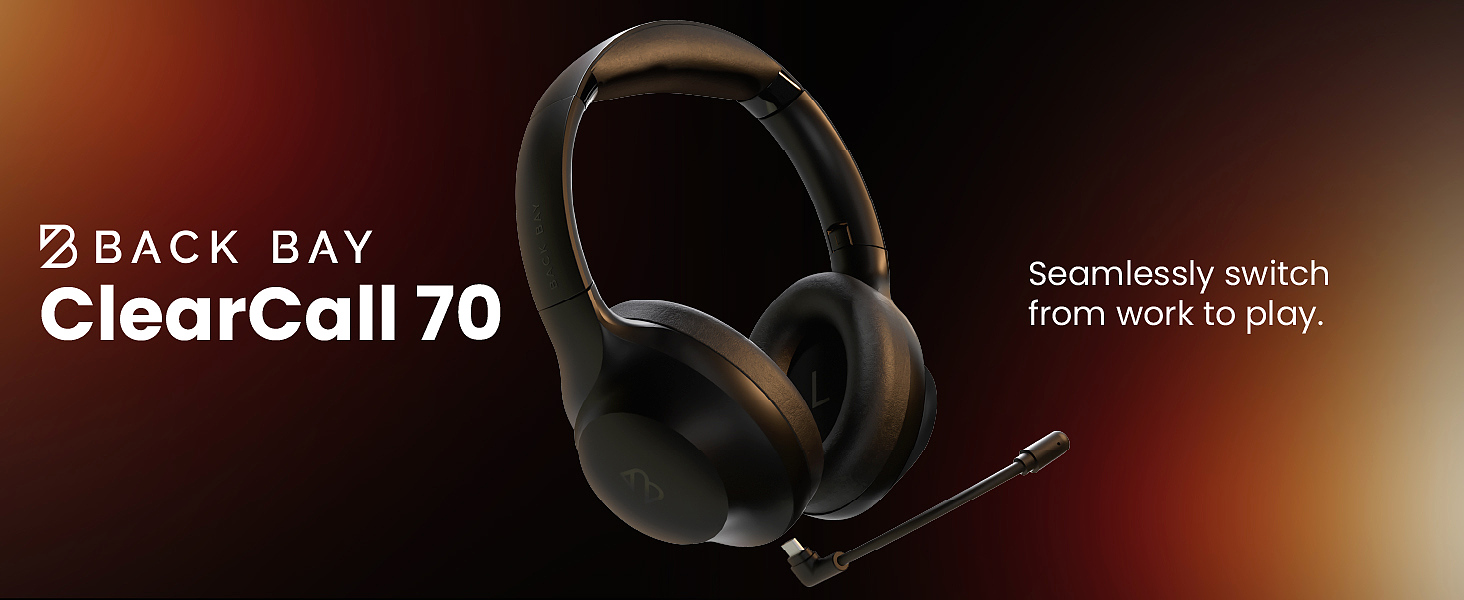
The Back Bay Audio ClearCall 70 Wireless Headphones represent a specific engineering response to this reality. They are not merely transducers converting electricity into sound; they are signal processors designed to curate the auditory environment. By integrating AI-driven noise cancellation on the input side and adopting a modular physical design, they address the two fundamental challenges of the modern communicator: the technical need for a high Signal-to-Noise Ratio (SNR) and the psychological need for boundary management. This article delves into the computational audio algorithms that scrub our voices clean and the ergonomics of hardware that adapts to our shifting identities.
The Mathematics of Silence: Inside the AI Microphone
When we speak of “Noise Cancellation” in consumer audio, we usually refer to Active Noise Cancellation (ANC), which protects the listener from engine drones and cabin noise. However, the ClearCall 70 emphasizes a different, arguably more altruistic technology: Environmental Noise Cancellation (ENC) or AI-driven uplink noise reduction. This protects the person you are talking to from your environment.
The Problem of the Cocktail Party
Human hearing has an innate ability known as the “Cocktail Party Effect”—we can mentally focus on one voice in a noisy room. Microphones, historically, could not. A standard microphone is “dumb”; it captures the barista’s coffee grinder with the same fidelity as your pitch to a client.
To solve this, modern headsets utilize Digital Signal Processing (DSP) algorithms powered by machine learning.
Spectral Subtraction and Neural Networks
The “AI noise-cancelling microphone” in the ClearCall 70 likely operates on a Deep Neural Network (DNN) trained on thousands of hours of audio data.
1. Training Phase: The algorithm is fed pairs of recordings: “noisy speech” (voice + dog barking) and “clean speech” (voice only). It “learns” the spectral characteristics that distinguish human vocal cords from other sound sources. Human speech has a specific harmonic structure and temporal cadence; a coffee grinder does not.
2. Inference Phase: When you speak, the onboard chip analyzes the audio stream in real-time (with latency measured in milliseconds). It performs a Spectral Analysis, breaking the sound wave into its component frequencies.
3. Masking: The AI identifies the frequency bands dominated by noise (e.g., the low rumble of a truck or the sharp click of a keyboard) and applies a digital filter or “mask” to attenuate them, while preserving the bands containing your voice.
This is not simple equalization. It is a dynamic, intelligent subtraction. It allows the ClearCall 70 to claim it “cuts out 99% of background noise,” ensuring that your voice remains the focal point, regardless of the chaos around you. This technology democratizes professional audio, allowing a kitchen table to sound like a sound-treated boardroom.
The Physics of the Boom: Proximity Effect and Signal Quality
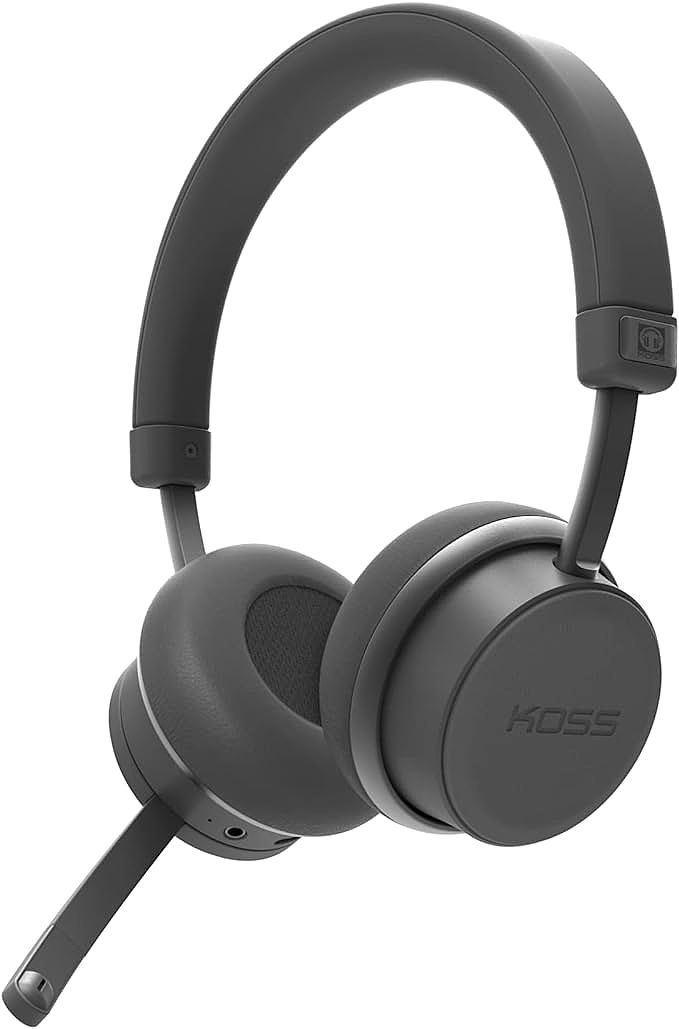
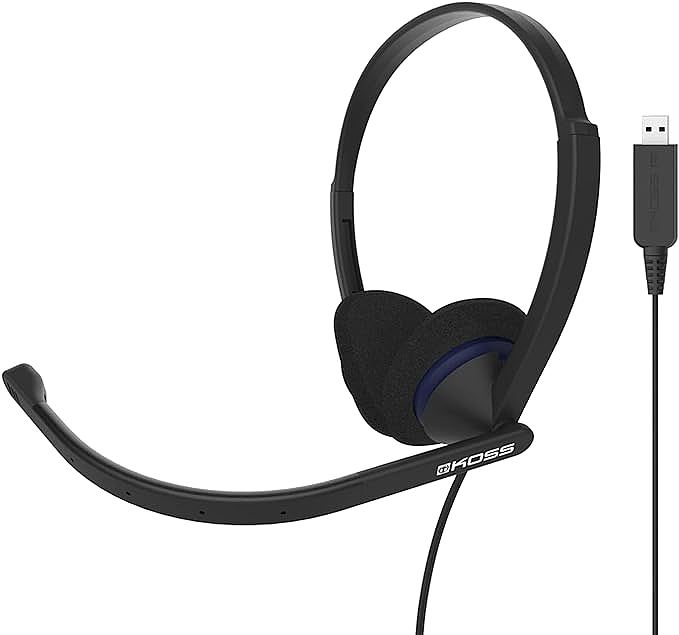
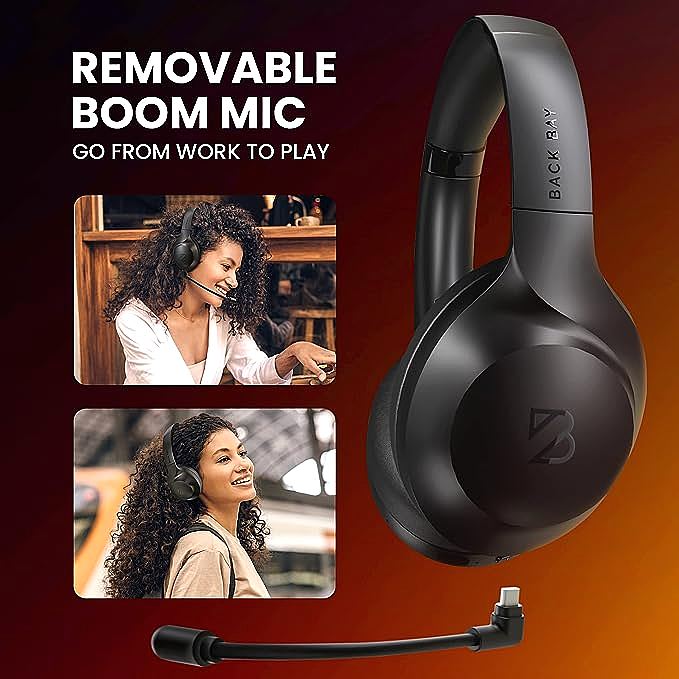
While AI is powerful, it is bound by the laws of physics. The best way to improve signal quality is still to capture a better signal at the source. This is the function of the Removable Boom Mic.
The Inverse Square Law
Sound intensity follows the Inverse Square Law: intensity is inversely proportional to the square of the distance from the source. * Integrated Mics: A microphone built into the ear cup is roughly 10-15cm away from the mouth. It captures a significant amount of “room sound” (reverberation) and ambient noise relative to the user’s voice. * Boom Mics: By placing the microphone capsule on a boom arm, mere centimeters from the lips, the Direct-to-Reverberant Ratio is drastically improved. The voice signal hits the microphone with much higher pressure (SPL) than the background noise.
This physical advantage gives the AI algorithm a “cleaner” raw signal to work with, resulting in fewer digital artifacts and a more natural, full-bodied voice tone. The ClearCall 70’s decision to make this boom removable is an acknowledgement that while physics dictates the need for a boom during work, social norms dictate a cleaner look for leisure.
Modular Identity: Designing for the Hybrid Self
We live in an era of context collapse, where our homes are also our offices, gyms, and theaters. Hardware that is rigid in its function becomes a burden. Hardware that is modular becomes an enabler of transitions.
The Psychology of “Mode Switching”
The act of plugging in the boom mic on the ClearCall 70 serves a psychological function as well as a technical one. It is a ritual. It signals to the user (and those around them): “I am now in Work Mode.” * Cognitive Partitioning: Just as we might put on a blazer for a Zoom call to get into the right mindset, modifying the hardware configures our brain for communication. * Decompression: Conversely, unplugging the mic is a physical act of “signing off.” It transforms the device from a tool of labor into a vessel for leisure (music, movies). This physical delineation helps combat burnout by re-establishing boundaries that digital life often erases.
The design of the ClearCall 70—switching from a call center headset to a sleek pair of over-ear headphones—respects the multifaceted nature of the modern user. It validates the idea that we are not just workers or consumers; we are both, often within the same hour.

Immersive Audio: The “Relaxed Midrange” and Tuning
Beyond the microphone, a headset must also be a playback device. The product description notes a specific tuning: “deep, refined bass, a relaxed midrange, and crisp highs.” * Relaxed Midrange: This is a critical tuning choice for a device used for both work and music. The human voice lives in the midrange (300Hz - 3kHz). A “forward” midrange is good for intelligibility but can be fatiguing over hours of calls (a phenomenon known as “listener fatigue”). A “relaxed” midrange implies a slight recession or smoothing in these frequencies, making long meetings less harsh on the ears without sacrificing clarity. * Bass and Immersion: For the “Play” mode, deep bass is essential for immersion in movies and modern music genres. The dynamic drivers in the ClearCall 70 are tuned to provide this impact, ensuring that the device doesn’t feel “anemic” or strictly utilitarian when the workday ends.
Conclusion: The Tool for the Signal Age
The Back Bay Audio ClearCall 70 is more than just a headset; it is a signal processor for the hybrid age. Through AI algorithms, it scrubs the digital noise from our communications. Through boom mic physics, it prioritizes the human voice. Through modular design, it respects the fluidity of our daily lives.
In a world that is increasingly noisy—both acoustically and cognitively—tools that offer clarity and adaptability are essential. The ClearCall 70 demonstrates that professional-grade communication does not require being tethered to a desk; it only requires the right combination of silicon, software, and thoughtful engineering.