The Software-Defined Earbud: How Algorithms Are Reshaping Budget Audio


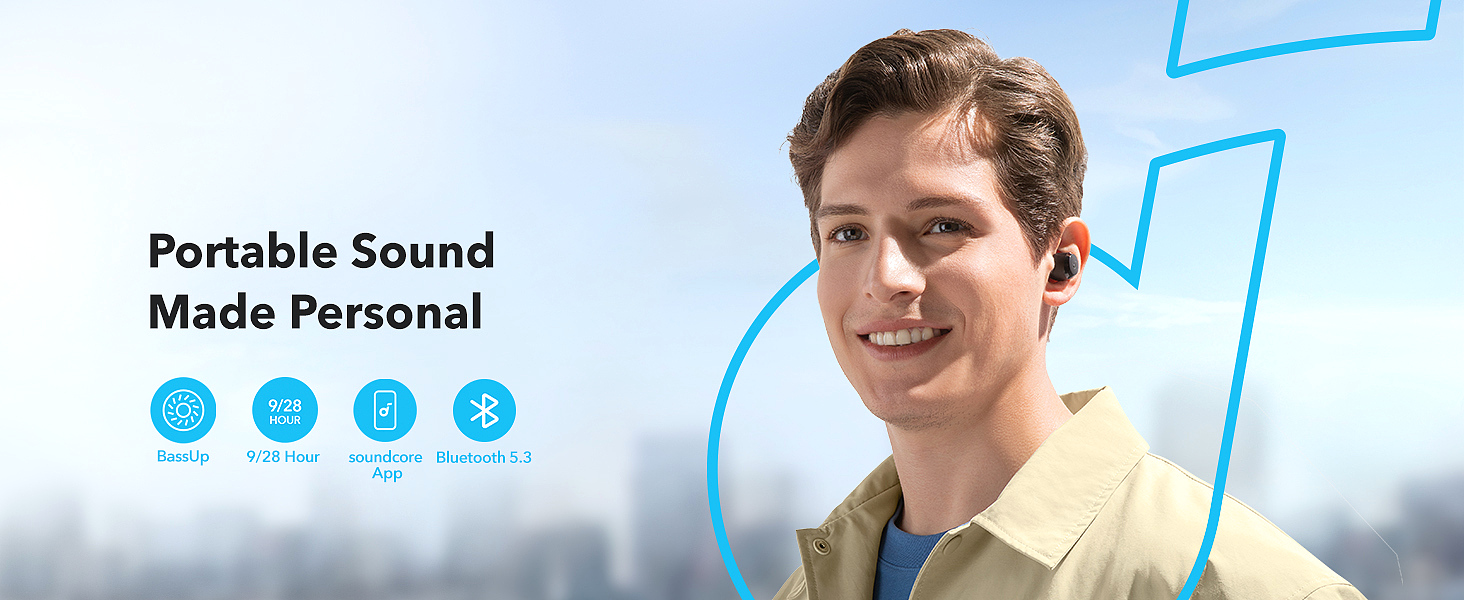
Soundcore A20i True Wireless Earbuds
The narrative of consumer audio has historically been written in hardware: the size of the driver, the material of the diaphragm, and the conductivity of the cables. For decades, the barrier to entry for high-fidelity sound was physical and financial. To hear more, you had to pay more for better materials.
However, a paradigm shift is quietly occurring in the portable audio sector. As manufacturing processes for miniature drivers hit a point of diminishing returns, the frontier of innovation has migrated from the physical to the digital. We are entering the era of the "Software-Defined Earbud," where the quality of the experience is dictated less by the plastic in the housing and more by the code in the chipset.
Devices like the Soundcore A20i serve as a pertinent case study for this industry-wide transition. They demonstrate that when hardware constraints are met with intelligent Digital Signal Processing (DSP) and user-centric software, the traditional hierarchy of "budget" versus "premium" begins to blur.
The Digital Luthier: Customization as the New Standard
In traditional acoustics, a "flat" frequency response—where no range of sound overpowers another—is often the gold standard. However, human hearing is subjective, and the physical shape of one's ear canal drastically alters sound perception. This is where the rigidity of budget hardware used to fail; if the tuning wasn't perfect out of the box, the user was stuck with it.
The modern approach democratizes the role of the sound engineer. By integrating companion applications with entry-level hardware, manufacturers are essentially handing the mixing console to the user. The Soundcore A20i utilizes this approach through its integration with the Soundcore app, offering 22 preset EQs.
This is not merely a gimmick of adding "more bass" or "more treble." It is a fundamental calibration tool. * Compensation: It allows users to compensate for the physical limitations of a 6mm driver, boosting frequencies that might naturally roll off. * Correction: It addresses the user's unique hearing curve. A user with slight high-frequency hearing loss can select a "Treble Booster" profile to restore detail that would otherwise be lost.
This software layer acts as a "digital luthier," constantly adjusting the instrument to suit the player, proving that software flexibility can often outweigh raw hardware specifications.

The Invisible Umbilical: Bluetooth 5.3 and Signal Integrity
For the commuter or the urban dweller, the fidelity of the audio driver is irrelevant if the connection is unstable. The 2.4 GHz radio frequency spectrum—home to Wi-Fi, microwaves, and Bluetooth—is a chaotic battlefield of electromagnetic noise.
The stability of modern wireless earbuds relies on a technology known as Frequency-Hopping Spread Spectrum (FHSS). This technique, rooted in radio communications theory, involves the transmitter and receiver changing frequencies hundreds of times per second in a synchronized pattern.
The Bluetooth 5.3 standard implemented in the A20i represents the latest refinement of this protocol. It improves the efficiency of these "handshakes" between devices.
1. Latency Reduction: By optimizing the duty cycle, the delay between visual data (a video on your phone) and auditory data (the sound in your ear) is imperceptible.
2. Power Efficiency: It allows the device to sleep and wake more effectively during data transmission gaps, directly contributing to the extended 9-hour playtime (28 hours with the case) often seen in modern compact earbuds.
This invisible negotiation ensures that the "bubble" of personal audio remains unbroken, regardless of the RF interference in a crowded subway station.

Computational Isolation: The Artificial Brain
Perhaps the most significant leap in budget audio is the application of Artificial Intelligence to microphone arrays. In the past, call quality on wireless earbuds was notoriously poor because simple microphones amplify all sound equally—your voice and the passing bus were given equal weight.
Solving this requires computational audio, specifically the simulation of the "Cocktail Party Effect"—the human brain's ability to focus on a single voice in a noisy room.
The A20i utilizes a dual-microphone setup feeding into an AI algorithm trained on vast datasets of human speech and environmental noise. This is not Active Noise Cancellation (ANC) for the wearer, but rather Voice Isolation for the listener on the other end. The processor analyzes the incoming sound waves in real-time, identifying the unique spectral signature of the human voice and suppressing frequencies that match the profile of wind, traffic, or static.
This creates an artificial silence, a digitally constructed studio environment that exists only within the call signal, allowing clear communication in acoustically hostile environments.

The Democratization of Fidelity
The trajectory of consumer technology often moves from exclusive hardware to accessible software. What was once achieved with massive capacitors and gold-plated cables is now achieved with silicon and code.
The Soundcore A20i illustrates that the modern definition of "quality" in the portable audio space is no longer solely defined by price. By leveraging efficient Bluetooth protocols, customizable DSP, and AI-driven signal processing, manufacturers can deliver an acoustic experience that defies the physical limitations of the device's footprint.
For the consumer, this is a victory. It means that high-fidelity, personalized, and reliable audio is no longer a luxury, but a standard accessible to all, driven not by the weight of the magnet, but by the intelligence of the algorithm.
Soundcore A20i True Wireless Earbuds
Related Essays

The Anatomy of Affordable Hi-Fi: Decoding Drivers, Diaphragms, and Connectivity

How SDR Makes the Invisible Radio World Visible

Wireless Audio Physics: How Frequency Hopping and Electroacoustics Work Together
How SDR Makes the Invisible Radio World Visible

How SDR Technology Reveals the Hidden Radio Spectrum
Stainless Steel Paradox: Why a $29 Headphone Built to Outlast Everything Else

The Engineering Zero-Sum Game Behind Marathon Battery Claims

Acoustic Democratization: Engineering High-Fidelity Audio on a Micro-Budget

Chasing the Fletcher-Munson Curve: The Acoustic Architecture of V-Shaped Audio

