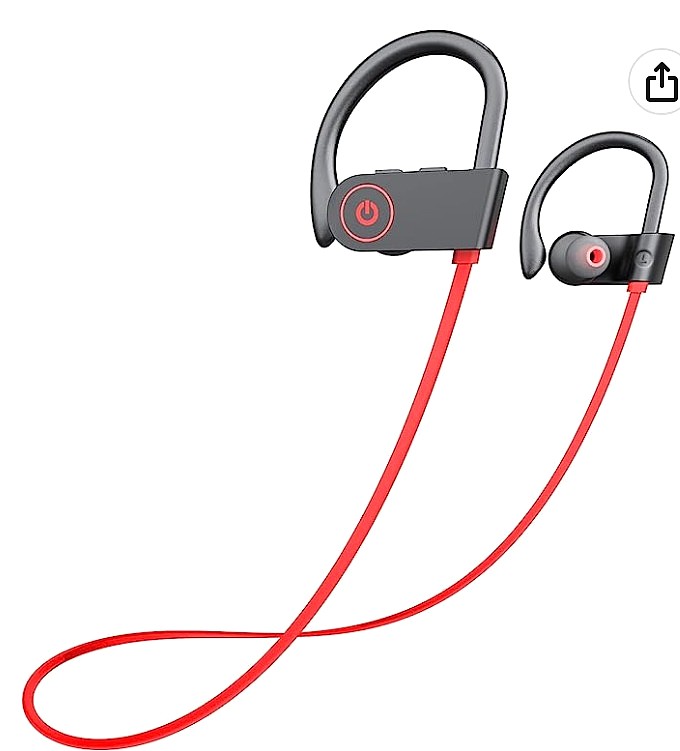
Ear Hook Earbuds: 7 Tech Specs That Keep You Moving


Ltinist BX27
Finding earbuds that stay put during a workout is one of the most common frustrations in personal audio. Standard in-ear designs rely on friction inside the ear canal alone, which means every sprint, jump, or burpee risks dislodging them. Ear hook workout earbuds solve this by adding a third point of contact that wraps over the auricle. I kept the Ltinist BX27 Wireless Earbuds on my desk through a full week of my own sessions, and this breakdown is the result: seven technical specifications that separate a reliable pair of ear hook earbuds from a mediocre one.

The Biomechanics of a Secure Fit
The most effective design for active use is the ear hook. Unlike standard earbuds that depend only on friction inside the ear canal, an ear hook design wraps gently over the top of your auricle (the visible, cartilaginous part of your ear) and anchors it against the natural curve of the auricle. An in-ear bud is a plug, while an ear hook is a clamp. The hook distributes the earbud's weight across a larger surface area, so the pressure never concentrates on a single cartilage ridge.
The BX27 uses flexible ear hooks that conform to a wide variety of ear shapes. They accommodate the arms of glasses or sunglasses, and they work even for people who struggle to find comfortable fits with conventional earbuds. The hooks are soft enough to avoid pressure points during a 90-minute session but rigid enough to resist deformation when you are mid-rep or mid-stride.
A proper ear hook also addresses the biomechanics of running. When you stride, impact forces travel up through your body and cause micro-vibrations in your ear tissue. A standard earbud will gradually work itself loose under these conditions. The hook counters this by transferring those forces to the upper ear cartilage, which is far less mobile than the ear canal entrance. The result is a fit that stays locked in whether you are doing box jumps or running a 10K trail loop.
Why Fit Matters Beyond Comfort
A secure fit directly affects sound quality. When an earbud loses its seal in the canal, bass frequencies disappear first because they require the most air pressure to reproduce. You end up with thin, tinny audio and a constant urge to readjust. An ear hook maintains the seal consistently, which means the full frequency response (20 Hz to 20,000 Hz in the BX27) reaches your eardrum on every stride. The 10mm moving coil drivers in the BX27 produce a bass output that only translates properly when the seal holds firm.
Battery Life and the Dual LED Display
Workout earbuds need to survive more than a single session. The BX27 delivers 15 hours of listening time per charge, and the charging case provides four additional charges for a total of 75 hours of playtime. That is enough for two weeks of daily hour-long workouts without reaching for a cable.
What sets the BX27 apart in this price range is the dual LED digital display built into the charging case. Instead of guessing how much battery remains, you can see the exact percentage at a glance. This is particularly useful mid-week when you are deciding whether you have enough charge for a long run or whether you need to plug in before you leave the house.
USB-C quick charging means you can top up the case in a reasonable time between sessions. The case is compact enough to toss into a gym bag without adding bulk, and the LED indicators are visible even in bright sunlight, a small detail that matters when you are outdoors.
Battery Considerations for Different Workout Types
Not all workouts have the same battery demands. A 45-minute HIIT session uses a fraction of a single charge, while a three-hour marathon training run will consume most of one. In my own week of testing, the 75-hour total meant I rarely had to think about the charging case at all.
Bluetooth 5.3 and Connection Stability
Bluetooth 5.3 is the current sweet spot for wireless audio. The practical difference for workouts is fewer audio dropouts when your phone is in an armband or a pocket rather than in your hand.
The BX27 pairs automatically when you remove the earbuds from the case. On first setup, you select "BX27" from your device's Bluetooth list, and thereafter the earbuds reconnect instantly. Manufacturer documentation lists a Bluetooth range of up to 48 feet (about 14.6 meters), but that figure comes from the product manual rather than a lab test, so I would treat it as approximate. Even so, it gives you freedom of movement if you place your phone on a bench during weight training.
Latency and Audio Sync
Low latency matters when you are watching workout videos or following a training app with on-screen cues. For runners who listen to music, the lower latency of Bluetooth 5.3 compared with earlier versions is noticeable when a beat drop is supposed to coincide with a sprint interval.
Driver Size and Frequency Response
The BX27 uses 10mm moving coil drivers, which are larger than the 6mm drivers found in many budget earbuds. A larger driver can move more air, which translates to stronger bass reproduction, a quality that matters when you want motivating low-end energy during a heavy lift or a final kick. Set against the newer 14.2mm double-layer diaphragm revision of the same line at $23.74, this 10mm moving coil pair at $49.99 is not a low-end contest, since both hold the 20 Hz floor; the call is whether the moving coil driver and the dual LED case justify the price gap.
The frequency response spans 20 Hz to 20,000 Hz, covering the full range of human hearing. The low end delivers powerful bass for genres like hip-hop and EDM, while the treble remains clear and detailed for vocals and acoustic instruments. The sound signature leans toward warm and bass-forward, a popular tuning for sports earbuds because low-frequency energy is perceptible even when ambient noise is high. The 10mm moving coil design in the earbuds pairs well with the sealed fit of the ear hook, keeping bass energy inside the canal where it belongs. Put a track with real low end on and the 20 Hz floor comes through as a thump you feel in the chest on the kick drum, not a thin tick, which is what the warm bass-forward signature is for.
How Driver Size Affects Soundstage
Driver size is not the only factor that determines sound quality, but it sets the physical ceiling. A 10mm driver in a sealed in-ear housing produces a focused, intimate soundstage that works well for solo workouts. The seal created by the ear tip, combined with the stability of the ear hook, ensures that the bass energy reaches your eardrum rather than leaking out into the environment. In a loud gym, the sealed 10mm driver maintains bass integrity better than a 6mm driver would.

IP7 Waterproofing and Sweat Resistance
Any earbud marketed for workouts needs to withstand sweat and rain. The BX27 carries an IP7 waterproof rating, which means it can resist water immersion under the conditions the rating is certified for. In practical terms, you can run in the rain, sweat heavily during a hot yoga class, or accidentally splash liquid on the earbuds without damaging the internal electronics.
Sweat is more corrosive than pure water because it contains salts and minerals that can degrade metal contacts over time. The IP7 rating gives you confidence that the model can handle regular gym use, but I would not treat it as a promise of a fixed lifespan; how long the seals hold is something you judge over time. The ear hook design adds a mechanical layer of protection: the flexible hooks absorb impact if you drop the earbuds on concrete, and the over-ear configuration means the driver housings do not bear the full force of a fall.
Real-World Durability Beyond the Rating
An IP7 rating is a laboratory certification, not a guarantee against every real-world scenario. However, the combination of IP7 water resistance and the mechanical resilience of the ear hook structure gives the earbuds a durability edge over sealed in-ear designs. For runners who train outdoors in variable weather, this combination of water resistance and mechanical resilience is essential for a product you use five days a week.
CVC8.0 Noise Reduction for Clear Calls
The model incorporates CVC8.0 (Clear Voice Capture), a microphone-side processing algorithm built for phone calls. It isolates your voice from background noise rather than reshaping the music you listen to. If you take calls during workouts, CVC8.0 minimizes the sound of gym equipment, wind, and ambient chatter so the person on the other end hears you clearly.
The system uses multiple microphones and beamforming to focus on the direction of your voice while suppressing sounds from other directions. In a busy gym or on a noisy street, this makes the difference between a usable conversation and one where you have to step outside. CVC8.0 performs best in consistent ambient noise, like a gym with steady background music, and less effectively in highly variable environments, like a street with intermittent traffic. For runners who take calls mid-route, the earbuds will reduce wind noise to a degree, but a dedicated headset with a boom microphone will always outperform an in-ear design for voice clarity.
Touch Controls and Everyday Usability
The BX27 has a complete touch control suite. You can play and pause music, skip tracks, adjust volume, answer and end calls, and activate your phone's voice assistant, all without reaching for your device. The touch area is large enough to register inputs reliably even when you are in motion and not looking at the earbud.
Why Touch Controls Beat Buttons During Workouts
Physical buttons require you to press the earbud into your ear, which can break the seal and cause discomfort. Touch controls use a capacitive surface that responds to a swipe or tap without applying pressure. For runners, this means you can change a song or answer a call mid-stride without breaking rhythm. Between sets, one hand is still on the barbell, so you skip the track or end the call by swiping the touch surface without setting the phone down. That is the one condition a physical button, which needs a press into the ear, cannot meet without breaking the seal.
How to Match Specs to Your Training
Choosing the right ear hook workout earbuds comes down to how well the specs map to your training style, and for most people the decision narrows to three things: whether the hooks hold through dynamic movement, whether the case lasts a training week, and whether the connection stays stable when your phone is out of reach. The model meets all three, and the remaining specs - 10mm drivers, IP7 protection, CVC8.0, and touch controls - simply reinforce that core.
The BX27 Mapped to a Five-Day Training Week
Three 45-minute HIIT sessions and two hour-long runs add up to a light load against the 15 hours of playtime per charge, so the earbuds mostly stay in the case. Only a long weekend marathon-training run draws most of a single charge. With a 75-hour case total, the whole week fits without a nightly top-up, and I can glance at the dual LED display on Sunday night to see whether the coming week needs a charge at all.
If you are a runner who has been burned by earbuds that fall out every mile, the ear hook design alone is worth the switch. If you are a gym-goer who takes calls between sets, the CVC8.0 technology keeps conversations intelligible. And if you simply want earbuds that can keep up with weeks of daily training without needing a nightly charge, the 75-hour battery life delivers that peace of mind.
Not long ago, the secure ear hook, IP7 protection, and a 75-hour case were features that belonged to flagship sport earbuds; today a budget model delivers that same core set without the premium markup. Below a fifteen-hour weekly load, one charge covers the whole training week, so the 75-hour case is the spare; the spec that decides this purchase is the hook that stays in, not the battery reserve.
Ltinist BX27
Related Essays

The Physics of Wireless Audio: Engineering Bluetooth 5.3 and Graphene Drivers

The Engineering Behind 52-Hour Headphone Battery Life: Fast Charging and Power Efficiency Science

How IPX7 Sports Earbuds Hold Up Under Real Workouts

How Sport Earbuds Stay Sealed and Stable While You Run

What ENC Noise Cancelling Really Does on a $17 Earbud

80-Hour Wireless Sport Earbuds: Budget Bluetooth 5.3 With Wireless Charging

Why Your Sport Earbuds Seem Broken: 4 Fixes That Work

Why Do Workout Earbuds Fall Out? The Science of Secure Fit, Waterproofing, and Bass

V8 Wireless Headphones: On-Ear Fit vs Over-Ear Comfort