The Walkman Effect and the Open-Ear Response

SHOKZ OpenRun Pro
The sealed-ear default that never got reset
Walk through a subway car at rush hour and what you notice most is the silence. Riders sit with silicone tips deep in the ear canal or over-ear cups clamped tight, each one sealed into a private room. The habit is so ordinary that people forget it had a start date. Before 1979, carrying your own soundtrack through shared space was not a product category. Playback gear lived in living rooms and studios, not on the body. Sony's TPS-L2 Walkman, launched in July 1979, broke that boundary in a single release. The first production run was 30,000 units. Sony sold another 27,000 in the first month alone, then 50,000 in the first two months on top of the original batch, and the line went on to ship more than 400 million units across every variant before it wound down in the 2010s. The device did more than move music. It set a default. The assumption took hold that listening is a sealed, solo, isolated act, and a whole industry spent the next forty-five years perfecting exactly that.
How the in-ear tip sealed the bubble
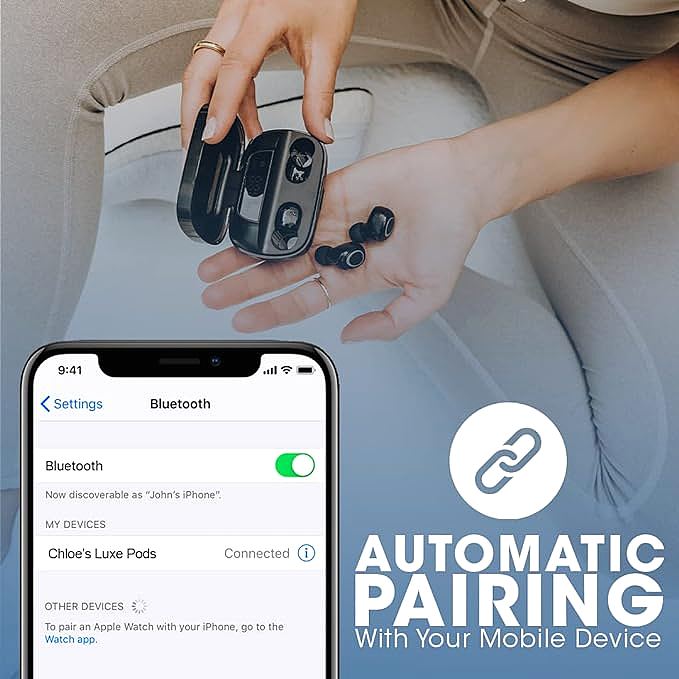
The modern sealed earbud is the walkman default carried to its logical edge. A silicone tip seats deep in the canal and blocks the outside world; active noise cancelling then samples the ambient noise through a microphone and plays back an inverted copy, so the two cancel and the room goes quiet. Sealed isolation is, in the literal sense, the open ear audio isolation problem solved in the wrong direction. The benefit is real. At 30% volume you can hold a conversation at the edge of a loud office without shouting, and on a flight the cabin hum drops to a near silence. The cost is the environment. A doorbell, a train announcement, a partner calling your name, the screech of a car on the road. None of it reaches you until you pull a bud out. Engineers call this the safety trade, and it is the single reason a whole category of open-ear hardware exists to answer it. The trade is the same one a runner faces on a road: the very cancellation that makes a song feel bigger is what keeps the traffic behind a wall. Cancelling itself takes a fraction of a millisecond. A feedforward microphone watches the room through the bud while a feedback microphone watches the driver, and the two together compute the inverted signal that has to arrive at exactly the same instant the noise does. Get that timing wrong by even a few thousandths of a second and the cancellation becomes its own noise, which is why the latency number on any true wireless set matters more than the decibels it claims.
The perception math that makes isolation feel complete
The sealed earbud feels total because of a quirk in how the cochlea measures loudness. Fletcher and Munson mapped the iso-loudness curves in 1933 and found that the human ear is least sensitive to the low and high ends at moderate listening levels. Between roughly 20 Hz and 20 kHz, the mid tones around 1,000 Hz ring brightest and the bass sits in the band where the ear is weakest, so a 100 Hz tone has to be pushed much louder before it sounds the same as the mids. That gap is why the low end never feels right on a sealed bud at half volume: the driver must push the bass harder just to reach the ear's sensitivity floor. The ISO 226 revision of the equal-loudness standard encodes the same finding, and the 1947 version of the standard is still the reference in a great many driver tuning sheets. Noise cancelling products lean on it on purpose. They keep the mids clean and add bass, which the ear reads as full and sealed. Pull the tip out and that trick stops working, which is exactly the moment the open-ear design has to earn its place.
Bone conduction: the signal that skips the eardrum
The open-ear counter-movement keeps the canal open and routes the sound a different way. A bone conduction transducer presses against the cheekbone or the mastoid behind the ear and drives the skull as a vibrating rod. The cochlea, sitting inside that rod, picks the vibration up directly, so the outside air can still reach the eardrum at the same time. Because the skull damps the low end more than the air does, most bone conduction drivers pair a wide mid band with a dedicated low frequency boost; the SHOKZ line calls its ninth generation driver TurboPitch for exactly that reason. The SHOKZ OpenRun Pro is the clearest modern example of the approach. It runs on a wraparound titanium frame that weighs 26 grams, stays charged for 10 hours of continuous playback, and buys back 1.5 hours from a 5 minute quick charge. The case is rated IP55 against dust and water, and the link runs on 15 millisecond low latency Bluetooth with eight built in microphones for calls. All of that happens while the ear canal stays open and the world stays audible, which is the whole point. The idea is far older than any of it. In the nineteenth century, surgeons pressed tuning forks to a patient's skull to test whether the inner ear could still pick up vibration, and a famous anecdote has a deaf composer holding his piano to his jaw with a wooden rod to feel the notes his own ears no longer delivered. That same route, from the bone straight to the cochlea, is what a modern transducer now does on purpose, only with a driver instead of a fork.
Where the open-ear response wins
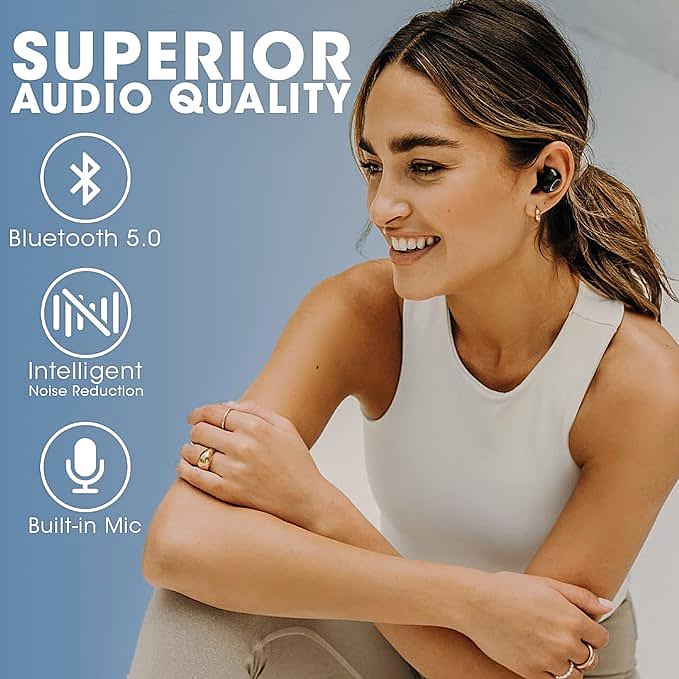
The flagship answer in 2026 is the SHOKZ OpenRun Pro 2, priced at $179.95 and in stock. It pairs a bone conduction driver with a small air conduction driver so the two split the work. The bone unit carries the mids and the open speaker adds the deep end the ear otherwise misses, and the battery stretches to 12 hours with a 96.5% noise reduction on calls from the dual microphone array. The frame uses a Ni Ti alloy memory wire and ergonomic ear hooks for the secure fit. If you want the concept at a lower price, the PSIER bone conduction running model lists at $59.99, weighs 23 grams, and pushes Bluetooth 6.0 with a 60 millisecond latency and an IPX5 rating, good for roughly 10 hours of music at 50% volume. On the earbud side of the split, the Soundcore V20i by Anker puts the open speaker just outside the canal instead of around the ear, and the MJOFFIN 2026 budget unit lands at $29.98 with a 22 gram titanium frame and Bluetooth 5.4. The water rating matters more than the marketing suggests. Under the IEC 60529 scheme an IPX4 splash body survives sweat and light rain, an IPX5 body stands up to a low pressure jet, and an IPX7 body is rated for one meter of submersion for 30 minutes. That last step is the line between a run in the rain and a pool, so read the number before you commit to open water. Put the battery and charge figures next to each other and the trade becomes concrete: 10 hours on the OpenRun Pro, 12 hours on the Pro 2, 10 hours on the PSIER, a 5 minute charge worth 1.5 hours, and 30 minutes of submersion at the IPX7 step.
Which one fits how you listen
The choice comes down to what you need the silence for. If the point is to block a train or a call center, the sealed tip with active cancellation still wins, and the open ear stays out. If the point is to keep music moving while staying aware of traffic, a runner, or a coworker, the open ear design is the right tool because it never asks you to pay for the awareness back. If you run in the rain or pool, the IP rating decides the answer, not the driver. If you take calls outside, the microphone count and the noise reduction percentage matter more than the bass. If you just want music at the gym without a wire around your neck, the weight in grams is the number to compare, because a 22 gram unit disappears on a run while a heavier over-ear cup asks for a break every twenty minutes. The habit is not the problem; it is one tool among two. The sealed set wins in the loud, the long, and the private, where the world is the thing you want gone. The open ear wins on the road, in the park, and anywhere the answer to 'are you still with me?' has to be yes. None of this replaces the walkman habit for the hours when you do want the world gone. It is the counter weight to it. A category that exists only because the sealed default reached the end of its range and the ear canal had to be opened again.
SHOKZ OpenRun Pro
Related Essays

Waterproof Bone Conduction Headphones for Swimmers

Bone Conduction vs Noise Cancelling: Can a Headset Really Do Both?

Why Bone Conduction Swimming Headphones Work Underwater

How Bone Conduction Swim Headphones Work Underwater

Swimming With Bone Conduction Headphones: How They Work

Bypassing the Eardrum: The Mechanics of Cranial Audio

The Unsealed Ear: A History and Science of Open-Ear Audio

The Skull as a Speaker: Decoding the Biomechanics of Bone Conduction (Case Study: Kaibo Flex)

Loluka Wireless Ear Clip Earbuds: Hear It All with Open-Ear Freedom
