The Economics of Budget Audio: How $20 Earbuds Achieve High Fidelity

Renimer i50 Wireless Earbuds
The $20 Spec Sheet That Reads Like a Flagship
Bluetooth 5.3. IP7 waterproofing. 48-hour battery. Four noise-canceling microphones. 14.2mm drivers. Read that list again, then look at the price: twenty dollars. Something does not add up, or so it seems. The instinct is suspicion, and the instinct is correct, but not in the way most people assume. The specs are not fabricated. They are real, measurable, and technically verifiable. What they omit is the gap between a spec met and a spec mastered. Understanding that gap, and the supply chain economics that make it possible to hit those numbers at this price, reveals more about audio engineering than any flagship product launch ever will. Understanding budget earbud value engineering at this price point requires looking past the spec sheet to the supply chain mechanics that make it possible.
Commodity Silicon: Why Bluetooth 5.3 Costs Less Than a Cup of Coffee
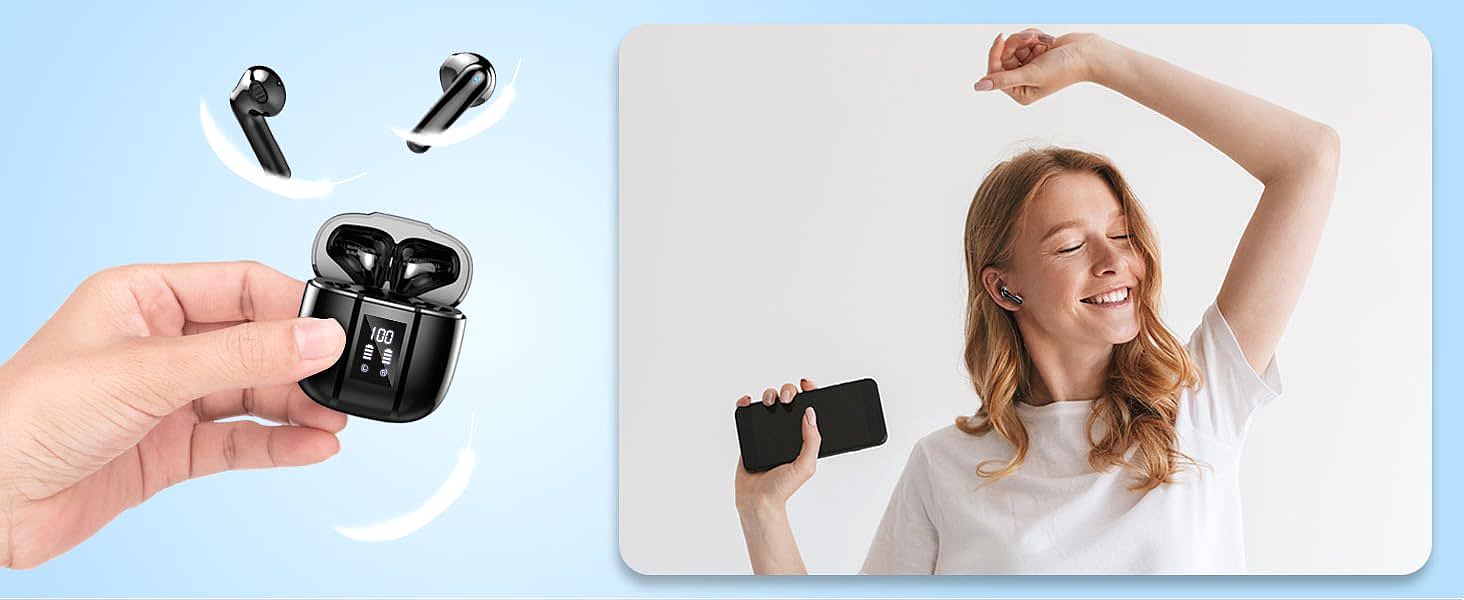
A Bluetooth 5.3 system-on-chip from Realtek, MediaTek, or Actions Semi costs under two dollars at volume. Not per feature. For the entire wireless stack. Protocol implementation, audio decoding, power management, and basic noise cancellation algorithms all live on that single die. The reason is cumulative scale. Billions of Bluetooth SoCs ship annually into products ranging from earbuds to toothbrushes. Each generation of chip amortizes its research and development cost across an ever-wider customer base. By the time a Bluetooth 5.3 design reaches the budget TWS market, the silicon is essentially a commodity, indistinguishable in function from batch to batch, sold on price alone.
This is not corner-cutting. It is the natural trajectory of any mature technology. The first Bluetooth headset in 1999 cost hundreds of dollars and delivered voice-quality audio over Bluetooth 1.0. Twenty-five years later, the protocol has been refined, the silicon has shrunk, and the manufacturing has concentrated in the Pearl River Delta, where a factory can produce a million SoCs before lunch. Understanding budget earbud value engineering, the design does not use a worse version of Bluetooth 5.3. It uses the same protocol specification. What it sacrifices is the supporting infrastructure around that chip: antenna tuning, RF shielding, and the kind of rigorous device-side testing that prevents the occasional connection drop at ten meters instead of fifteen.
The Driver Equation: 14.2 Millimeters of Moving Air
Moving-coil drivers are among the simplest electroacoustic devices ever invented. A magnet, a voice coil, a diaphragm. The 14.2mm moving-coil driver found in a twenty-dollar earbud costs between fifty and eighty cents at million-unit scale. The raw materials, ferrite magnet, copper wire, PET film, are abundant and cheap. The assembly process is highly automated. A factory in Dongguan can produce tens of thousands of these drivers per day with consistent quality, because the tolerances for a budget driver are wide enough that mechanical variation stays within acceptable limits.
Larger driver diameter does correlate with better bass response at a given excursion, which is why budget manufacturers advertise the measurement prominently. But diameter tells only part of the story. Diaphragm material, coil winding precision, magnet grade, and enclosure tuning all affect the final frequency response. A well-tuned 10mm driver in a sealed enclosure can outperform a poorly tuned 14.2mm driver in a leaky one. Budget earbuds using semi-in-ear designs lose the acoustic seal entirely, which means bass frequencies escape before reaching the ear canal. The 14.2mm spec is real. The bass authority it implies is not.
This is the central tension of budget audio: the specifications describe the hardware accurately, but the acoustic environment that hardware sits in determines what you actually hear. A semi-in-ear earbud with a 14.2mm driver delivers approximately the same bass energy as an in-ear earbud with a 10mm driver, because the lost seal negates the size advantage. The engineering tradeoff is deliberate, comfort over isolation, and the spec sheet does not disclose it.
IP7 Waterproofing: Self-Certification and the Trust Problem
IP7 means immersion in one meter of water for thirty minutes. At twenty dollars, that claim warrants scrutiny, not because the physical seals are expensive, but because independent IP certification costs money. Many budget brands self-certify, which means they test to the standard internally without paying a third-party lab. The seals themselves, silicone gaskets, conformal coating on circuit boards, hydrophobic mesh over microphone ports, cost pennies per unit. The manufacturing process to apply them adds minimal overhead in a facility already producing IP-rated products for other clients.
The practical reality is nuanced. Self-certified IP7 earbuds generally survive sweat, rain, and brief submersion. They may not survive repeated pool use or extended showers, where water pressure and soap degrade the seals faster than the rating anticipates. The specification is not dishonest. It is optimistic. Independent certification would likely confirm IP5 or IP6 under rigorous conditions, which still covers the use cases most users actually need: running in rain, gym sessions, accidental splashes. The gap between claimed and confirmed IP rating is one of the quietest compromises in budget electronics, because it rarely matters until it does.

Battery Life: The Mathematics of 48 Hours
Forty-eight hours of total playback sounds impressive. The arithmetic is straightforward: each earbud holds a 35mAh lithium-polymer cell delivering five to eight hours of playback, and the charging case stores enough additional charge for three to four full recharges. Five hours times four cycles plus the initial charge equals roughly forty-eight hours before the case needs wall power. The math checks out on paper.
Lithium-polymer cells at this capacity cost well under a dollar each. The charging case battery adds another fifty cents. The charging circuitry, a basic constant-current/constant-voltage design, adds minimal cost. Total battery system cost: under two dollars. The cells are standard, mass-produced, and sourced from the same suppliers that feed mid-tier brands.
What degrades is longevity, not capacity on day one. Budget LiPo cells typically use thinner separators and less stable electrolyte formulations than premium cells. After six to twelve months of daily charging cycles, real-world capacity drops noticeably. A user who gets seven hours per charge in month one may see five hours by month eight. This degradation pattern is part of budget earbud value engineering: all lithium cells degrade. But the rate of degradation correlates with cell quality, which correlates with cost. The 48-hour spec is accurate for new units and quietly aspirational for aged ones.
The Latency Lie: 30 Milliseconds vs. 350 Milliseconds
This is where spec sheet honesty breaks down most visibly. The claimed 30ms low-latency mode is technically achievable under laboratory conditions, with a dedicated transmitter, at close range, with a specific codec configuration. Real-world latency measured by independent users on standard consumer devices ranges from 350 to 600 milliseconds. That is an order of magnitude higher than the advertised figure.
The discrepancy exists because Bluetooth audio latency depends on the entire signal chain: source device, codec negotiation, Bluetooth stack implementation, and buffer size on the receiving end. A budget SoC typically uses larger buffers to maintain connection stability at the cost of latency. The 30ms figure likely represents the codec processing time alone, stripped of the Bluetooth transmission overhead and the audio output pipeline. It is a real measurement of one component, presented as the total system performance.
For music listening, latency is irrelevant. The brain does not perceive a 500ms delay when there is no visual reference. For phone calls, 350ms introduces a slight awkwardness but remains tolerable. For gaming and video, 350 to 600ms is a dealbreaker. Lips move, and the sound arrives half a second late. Gunshots fire after the trigger pull. This is the one specification where the gap between claim and reality directly impacts a specific use case, and the spec sheet provides no warning.
Four Microphones: Hardware Count vs. Algorithmic Sophistication
Four microphones, two per earbud, each with a dedicated noise cancellation input, is a genuine hardware specification. The microphones exist. They capture ambient sound and feed it to the SoC's noise cancellation algorithm. But effective environmental noise cancellation depends far more on algorithmic quality than on microphone count.
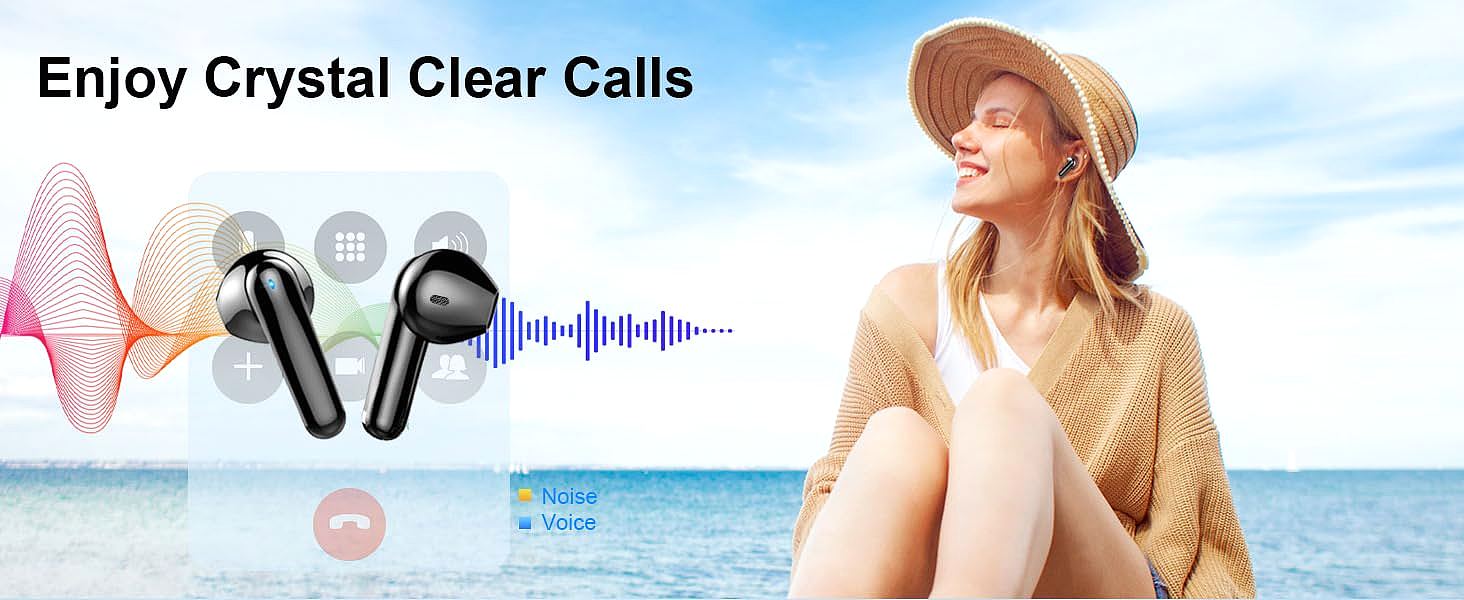
Premium brands invest heavily in adaptive filtering: algorithms that adjust noise cancellation profiles in real time based on the spectral content of ambient noise, the user's voice characteristics, and the acoustic coupling of the earbud in the ear. Budget implementations typically use fixed-filter ANC with minimal adaptation. The four microphones provide the raw data, but the software decides what to do with it. Call quality reflects the core challenge of budget earbud value engineering: adequate for quiet environments and noticeably struggles in wind, traffic, or crowded spaces where adaptive filtering would make the difference between intelligible speech and noise.
The hardware count is not misleading. The implication, that four mics equals premium call quality, is. This pattern repeats across budget audio: the tangible, countable specifications are honest, while the performance assumptions they invite go uncorrected.
Semi-In-Ear Design: The Comfort Calculus
The most honest engineering decision in a twenty-dollar earbud is the form factor. Semi-in-ear designs sit in the concha of the ear without entering the ear canal. No silicone tip creates a seal. No pressure builds against the canal wall. No suction effect causes that distinctive pop when removing in-ear monitors. The result is comfort scores that consistently outprice their cost. Users report wearing semi-in-ear earbuds for hours without fatigue, a metric where many premium in-ear models fail.
The tradeoff is acoustic. Without a seal, low-frequency energy escapes. Noise isolation drops to near zero; ambient sound pours in. Bass response depends entirely on the driver's ability to move enough air at the ear opening rather than pressurizing a sealed canal. For users who prioritize comfort over isolation, and user sentiment data suggests that is a majority of the budget segment, the tradeoff is not a compromise at all. It is a feature.
Semi-in-ear designs also reduce manufacturing complexity. No silicone ear tips to source, inventory, or include in multiple sizes. No compliance testing for tip retention. Fewer customer complaints about tip fit. The cost savings are modest but real, and they align with user preference rather than fighting against it. This is engineering tradeoff done right: the cheaper path also happens to be the one users prefer.
The Bill of Materials: Where Twenty Dollars Actually Goes
A budget TWS earbud has an estimated bill of materials between eight and ten dollars. The Bluetooth SoC accounts for roughly two dollars. The driver adds another dollar. The battery system, cells plus charging circuitry, contributes two dollars. Microphones, touch sensors, LED indicators, and the USB-C port add another dollar. The plastic housing, case, and packaging account for the remaining two to three dollars. Import costs including shipping and customs bring the landed cost to approximately eight to ten dollars per unit.
At a retail price of twenty dollars, the brand captures a gross margin of fifty to sixty percent before marketing, distribution, and platform fees. That margin is thinner than it appears. Online retailer's referral fee for electronics is eight to fifteen percent. Fulfillment costs add another layer. Paid advertising to acquire customers in a crowded category eats margin quickly. The net profit per unit is likely two to four dollars, a volume business that only works at scale.
This transparency is not charity. It is the economics of commodity electronics. Every component in a twenty-dollar earbud is available off-the-shelf from suppliers who compete on price and delivery speed. There is no proprietary technology, no custom silicon, no secret sauce. The brand's role is integration: selecting compatible components, writing firmware that makes them work together, and packaging the result in a way that appeals to a specific market segment. The value added is curation, not invention.
Supply Chain Gravity: Why Shenzhen Makes This Possible
Every budget TWS earbud traces its manufacturing origin to the Pearl River Delta, specifically Shenzhen and Dongguan. This region concentrates the entire electronics supply chain within a fifty-kilometer radius. Chip designers, PCB fabricators, driver manufacturers, battery suppliers, mold makers, and assembly lines exist in the same industrial cluster, connected by same-day logistics. A product concept on Monday can become a production-ready prototype by Friday and a shipping container by the end of the month.
This geographic concentration creates feedback loops that drive cost down at every iteration. When a Bluetooth SoC vendor releases a new design, the earbud factory can test it the same week. When a driver supplier finds a cheaper diaphragm material, the integration happens within days. The speed of iteration is itself a competitive advantage. Budget brands can adopt new components faster than premium brands, who must validate changes through longer quality assurance processes. The budget earbud on the shelf today may contain silicon that was taped out six months ago. The premium alternative might still be qualifying a chip from eighteen months prior.
The implication is counterintuitive: budget earbud value engineering explains why some models ship with newer technology than premium ones. Bluetooth 5.3 appeared in sub-thirty-dollar earbuds before it reached many hundred-dollar models, because the budget supply chain moves faster. The implementation may lack the refinement of a premium design, but the protocol version is identical.
What Twenty Dollars Actually Buys
Functional adequacy. That is the honest description, and it is the central insight of budget earbud value engineering: you get what the supply chain allows you to get at this price point. A twenty-dollar earbud delivers Bluetooth audio reliably, survives daily sweat and rain, plays for hours per charge, and sits comfortably in the ear without fatigue. It does not deliver audiophile sound, gaming-grade latency, or multi-year battery longevity. The specifications on the box are not lies. They are facts presented without the context that would make them meaningful.
The economics are transparent once you look. Commodity silicon, commodity drivers, commodity batteries, assembled by commodity labor in commodity factories. No magic, no deception, no miracle. Just the accumulated weight of industrial scale pressing down on component prices until a functional wireless earbud costs less than a restaurant lunch. The spec sheet does not need to exaggerate. The components genuinely achieve those numbers. What the spec sheet omits, the difference between meeting a specification and mastering it, is the space where the twenty-dollar price tag lives.
Good engineering at any price point is about choosing which tradeoffs to make explicitly rather than accidentally. Budget earbud value engineering follows this principle: the specs are honest, but the story behind them is what separates a thoughtful purchase from a spec-sheet gamble. The practice of budget earbud value engineering makes those tradeoffs visible to anyone willing to read between the lines of the spec sheet. The next time you see Bluetooth 5.3 and IP7 on a twenty-dollar product, you will know that the specifications are real, and that the story behind them is more interesting than the numbers themselves.
Renimer i50 Wireless Earbuds
Related Essays

Realme TechLife Buds T100: AI Calls, Long Battery & The Science Behind Your Sound

OMFG BB13 Wireless Earbuds - Advanced Features and Comfortable Design

Keklle2 Wireless Earbuds – Crystal Clear Sound and Waterproof Design

HITY A4 Wireless Earbuds Bluetooth 5.3 Headphones Touch Control – Top Choice for Music Enthusiasts

PloutoRich Wireless Earbuds with LED Display Charging Case – A Stylish and Versatile Choice

Zonyee Wireless Bluetooth Earbuds - Immersive Sound Experience

DGLighting Wireless Earbuds – Recommended for Comfort and Sound Quality

RICOO I14 Wireless Earbud AIR 2 Pro – A Premium Audio Experience
FOYCOY A11 68 Hour Battery: How It Works | 2026
