Dascert Q38 Wireless Earbuds: Technical Deep-Dive into Bluetooth 5.1 Engineering

Dascert Q38 Wireless Earbuds
Introduction
Modern consumers face a confusing dilemma when selecting wireless earbuds: specification sheets bulge with technical jargon—from Bluetooth versions to codec support—yet the actual performance implications remain opaque. The Dascert Q38 wireless earbuds represent an interesting point in this technological trajectory. audio environment has undergone remarkable transformation over the past decade. From the early days of Bluetooth 2.0 with compressed audio and inconsistent connectivity, the industry has evolved toward solutions that rival wired counterparts in both fidelity and reliability. At the center of this evolution lies Bluetooth 5.1, a specification that introduced directional finding capabilities and enhanced connection management features previously unavailable in consumer audio products.
The Dascert Q38 wireless earbuds represent an interesting point in this technological trajectory. Rather than competing solely on aesthetic design or brand recognition, this product positions itself as an engineering-focused solution that prioritizes technical specifications and practical functionality. The implementation of Bluetooth 5.1 technology, combined with IPX7 waterproofing and CVC 8.0 noise reduction for voice applications, suggests a design philosophy oriented toward real-world usability rather than specification sheet marketing.
This analysis examines the Dascert Q38 from an engineering perspective, evaluating how each technical component contributes to the overall user experience and where the design decisions reflect genuine innovation against incremental improvement.
Bluetooth 5.1 Technology Analysis
Evolution from Bluetooth 1.0 to 5.1
Understanding the significance of Bluetooth 5.1 requires examining the progression of the Bluetooth standard over its twenty-plus year history. Bluetooth 1.0 and 1.1, introduced in 1998 and 2002 respectively, offered theoretical maximum data rates of 723 kbps with significant latency and range limitations typically limited to approximately 10 meters in practical deployments.
The transition through Bluetooth 2.0 (Enhanced Data Rate) in 2004 doubled theoretical throughput to 2.1 Mbps, while Bluetooth 4.0 in 2010 introduced Low Energy functionality that would eventually enable the explosion of wireless audio products by addressing power consumption concerns.
Bluetooth 5.0, arriving in 2016, doubled the broadcast message capacity and improved range to four times that of Bluetooth 4.0.
Bluetooth 5.1, ratified in January 2019, brought three primary enhancements relevant to audio applications. First, the specification formalized Direction Finding capability using Angle of Arrival (AoA) and Angle of Departure (AoD) methods. While primarily designed for location services, this technology enables more precise spatial awareness that can translate to improved audio staging and potentially better synchronization in multi-device scenarios.
Technical Improvements in Practice
The practical implications of Bluetooth 5.1 for wireless earbuds extend beyond the directional finding feature. The specification maintains the 2 Mbps maximum physical layer data rate introduced in Bluetooth 5.0, which represents approximately twice the throughput available under Bluetooth 4.x LE. This increased bandwidth provides additional headroom for audio codec transmission and can reduce compression artifacts in certain implementations.
Range specifications under Bluetooth 5.1 theoretically extend to 240 meters in optimal conditions, though practical implementation in earbuds typically achieves more modest figures due to power consumption constraints and antenna form factor limitations. The the product, like most true wireless earbuds, prioritizes power efficiency for the compact earbud form factor rather than maximum range extension.
Connection stability benefits from several Bluetooth 5.1 enhancements including periodic advertising synchronization and improved scanning efficiency. These features help maintain the Bluetooth link in challenging RF environments where interference from Wi-Fi networks, microwaves, and other wireless devices might otherwise cause audio interruptions.
For the everyday user, these technical improvements manifest primarily as fewer audio dropouts during daily commutes, more reliable operation in crowded wireless environments, and reduced latency during video playback. The implementation quality varies between products, making detailed technical reviews increasingly valuable for consumers seeking optimal performance.
Audio Quality and Driver Technology
10mm Driver Architecture
The this model employs 10mm drivers, a size specification that places it in the mid-to-large range for true wireless earbuds. drivers operate on electromagnetic principles, using a voice coil attached to a diaphragm that moves within a magnetic field to generate sound waves. The size of the driver directly influences several acoustic characteristics.
Larger drivers generally produce more powerful bass response due to increased air displacement capability. The 10mm diameter represents a balance between the compact form factor required for earbud comfort and the acoustic performance desired for full-spectrum audio reproduction. Comparison with competing products reveals driver sizes ranging from 6mm in ultra-compact designs to 12mm or larger in audiophile-oriented models.
The relationship between driver size and bass response follows physical principles rather than marketing claims. The moving mass of the driver assembly, including the diaphragm, voice coil, and any compliance elements, determines the low-frequency resonance point and efficiency. Larger drivers can move more air with less excursion, potentially reducing distortion at high bass levels as seen in smaller drivers pushed to equivalent output levels.
Audio Codec Implementation
The the earbuds supports SBC and AAC codecs, representing standard implementations that prioritize universal compatibility over maximum audio quality. SBC (Sub-band Coding) serves as the baseline codec mandated by the Bluetooth specification, ensuring interoperability across all Bluetooth audio devices regardless of manufacturer.
AAC (Advanced Audio Coding) offers improved efficiency as seen in SBC at equivalent bitrates, maintaining better audio quality particularly at lower transmission rates. The codec choice ultimately depends on the source device and user priorities, with AAC generally preferred by users of Apple devices where the implementation is well-optimized.
The absence of higher-resolution codecs such as aptX, LDAC, or LHDC suggests positioning toward the mainstream consumer market rather than audiophile enthusiasts. This trade-off reflects reasonable engineering decisions: implementing advanced codecs requires licensing fees, additional processing power, and may not provide perceptible improvements for most users consuming compressed streaming audio.
Sound Signature Considerations
Characterizing sound signature requires understanding that audio preferences remain fundamentally subjective. However, certain technical factors influence typical driver behavior. Larger drivers often produce a warmer, more bass-leaning presentation as seen in balanced armature designs that can offer greater high-frequency detail and faster transient response.
The these earbuds's 10mm drivers likely deliver a sound profile emphasizing low-frequency impact suitable for workout playlists and casual listening. The actual implementation quality—including driver materials, enclosure design, and acoustic damping—ultimately determines whether the hardware potential translates to satisfying performance across the frequency spectrum.
IPX7 Waterproof Engineering
Understanding IEC 60529 Standards
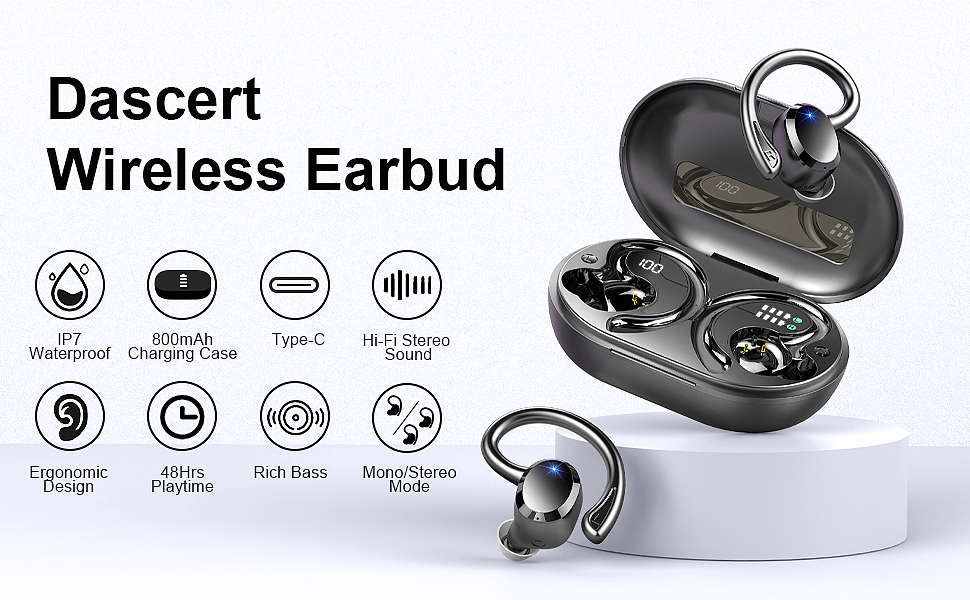
The Ingress Protection (IP) rating system defined by IEC 60529 provides standardized terminology for electrical equipment resistance to solids and liquids. The this model carries an IPX7 rating, where the "X" indicates that solid particle protection was not tested or rated, and "7" specifies liquid protection.
An IPX7 rating confirms that the device can withstand immersion in water at depths of 1 meter for 30 minutes under controlled laboratory conditions. This specification exceeds the requirements for most consumer use cases, including accidental drops in sinks, rain exposure during outdoor activities, and sweat infiltration during intensive workouts.
Practical Implications for Users
The IPX7 classification provides meaningful protection for real-world scenarios that wireless earbud users commonly encounter. Exercise enthusiasts benefit from sweat-resistant construction that prevents moisture damage during extended gym sessions or outdoor running in variable weather conditions. The specification also addresses concerns about earbuds falling into water during poolside use or bathroom activities.
It is important to note that IP ratings describe laboratory test conditions rather than indefinite protection. Factors including temperature variations, physical impacts, chemical exposure (such as saltwater or chlorinated pools), and natural degradation of sealing materials over time can compromise initial protection levels. Users seeking maximum longevity should treat IPX7 classification as a safety margin rather than absolute guarantee.
Nano-Coating and Manufacturing Techniques
Achieving IPX7 ratings in compact true wireless earbuds requires careful attention to manufacturing processes and materials. Nano-coating technology applies a microscopic protective layer over internal components, creating a hydrophobic barrier that repels moisture at the molecular level. This approach adds minimal thickness while providing effective protection throughout the device interior.
Mechanical sealing of the charging contacts, microphone openings, and driver grilles presents particular engineering challenges. The the earbuds implements silicone gaskets and precisely engineered housing seams to maintain enclosure integrity. Speaker membranes require specialized hydrophobic treatments that preserve acoustic performance while preventing moisture absorption that could degrade sound quality over time.
CVC 8.0 Voice Processing Technology
Distinguishing CVC from ANC
Consumers frequently encounter terminology around noise reduction that can create confusion. Active Noise Cancellation (ANC) and Clear Voice Capture (CVC) serve fundamentally different purposes despite both involving signal processing.
ANC technology aims to reduce ambient noise heard by the listener, generating anti-phase sound waves to cancel environmental noise before it reaches the ear. This processing primarily benefits the listener's audio experience during music playback or media consumption.
CVC technology focuses on improving voice transmission quality during phone calls. The processing targets the outgoing audio signal captured by the earbud microphones, removing environmental noise and enhancing speech clarity for the person on the other end of the call. CVC 8.0 represents the eighth generation of this technology, with each iteration bringing incremental improvements in noise detection algorithms and voice enhancement processing.
Technical Implementation
CVC 8.0 employs digital signal processing techniques including spectral subtraction for noise estimation and adaptive filtering for echo cancellation. The algorithm continuously analyzes incoming microphone signals to distinguish between human speech patterns and environmental noise, applying targeted processing that preserves voice frequencies while attenuating interfering sounds.
Dual microphone beamforming represents a common implementation approach, using two microphones positioned to capture sound from different angles. By comparing the signals and applying phase-based filtering, the system can attenuate sounds arriving from directions other than the user's mouth. This spatial filtering proves particularly effective against consistent background noise sources such as traffic, HVAC systems, or office ambiance.
Real-World Performance Expectations
CVC technology effectiveness varies significantly based on environmental conditions. The these earbuds performs well against moderate ambient noise such as office environments or light traffic, maintaining clear voice reproduction for the call recipient. Challenging conditions including strong wind, extremely loud environments, or multiple competing speakers may still result in degraded voice quality despite processing.
Users should maintain realistic expectations regarding any noise reduction technology. CVC 8.0 enhances voice clarity in typical conditions but cannot perform miracles against extreme interference. The technology represents meaningful improvement over unprocessed microphone capture while falling short of the performance achievable through professional broadcast equipment or dedicated voice recording setups.
Battery Architecture and Power Management
Total Capacity Breakdown
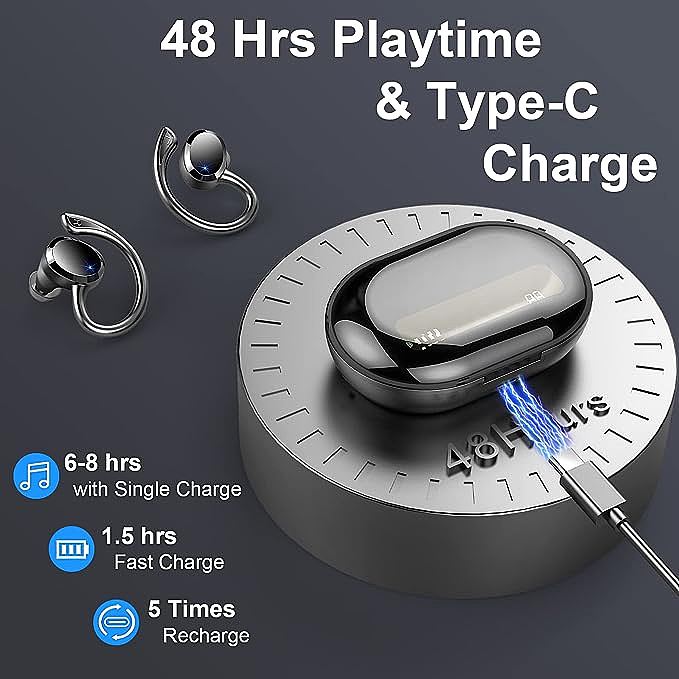
The this model specification claims 48 hours of total battery life, distributed as 6 hours in the earbuds themselves plus 42 hours available through the charging case. This calculation assumes standard usage conditions, and actual performance varies based on volume levels, audio content type, and feature activation.
The 6-hour earbud runtime represents competitive performance for true wireless earbuds in this price category. Larger drivers and features such as CVC processing consume additional power as seen in more basic implementations, making this runtime figure a reasonable compromise between performance and endurance.
The 42-hour case capacity translates to approximately seven full earbud recharges, providing multiple days of use before requiring case charging. Users who primarily use earbuds for commuting and occasional exercise will likely achieve several days of operation between charging sessions.
Power Management Strategies
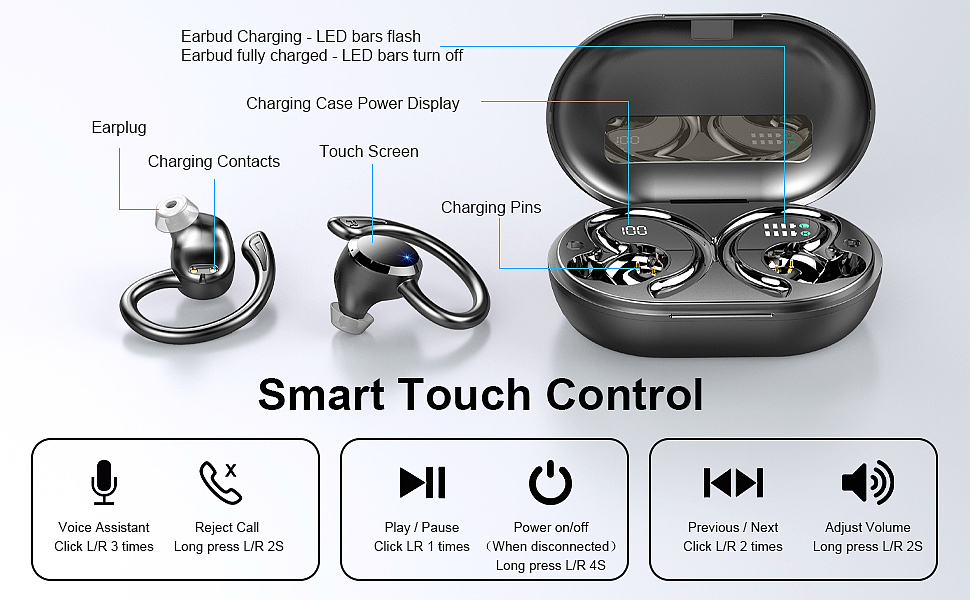
Modern true wireless earbuds implement sophisticated power management to maximize battery life within compact form factors. The the earbuds employs automatic power-on and power-off when removing or returning earbuds from the charging case, eliminating wasteful standby consumption during storage.
Bluetooth 5.1's improved power efficiency contributes to extended battery life as seen in earlier specifications. The enhanced connection management reduces the processing overhead required for maintaining the wireless link, translating to lower average power consumption during playback.
LED digital display on the charging case provides accurate battery level indication, addressing a common user complaint regarding approximate battery status common to many wireless earbud products. This display shows case charge level directly and may indicate individual earbud status, enabling users to better plan charging cycles.
USB-C charging represents the current standard for mobile device charging, offering reversible connectors and charging speeds as seen in legacy micro-USB implementations. The universal adoption of USB-C in smartphones and other devices means users can often share charging cables across their devices, reducing cable clutter while ensuring compatibility.
Ergonomic Design Analysis
Stabilization Architecture
The these earbuds incorporates ear hooks designed to maintain secure positioning during vigorous physical activity. This design choice prioritizes stability over minimal visual footprint, addressing a specific use case rather than attempting universal appeal.
Ear hook designs distribute retention forces across the outer ear structure, reducing pressure points that can cause discomfort during extended wear. For users engaging in running, weight training, or other activities involving significant head movement, these hooks provide mechanical reassurance that earbuds will remain properly positioned.
The trade-off involves slightly increased visual presence and potential interference with glasses or certain hairstyles. Users prioritizing minimalist aesthetics may prefer true wireless designs without hooks, accepting potentially reduced stability during active use.
Fit Customization
The inclusion of multiple ear tip sizes enables users to optimize the acoustic seal between earbuds and ear canals. Proper seal achieves several benefits: improved bass response through reduced sound leakage, passive noise isolation reducing external sound intrusion, and more consistent audio quality across different ear canal geometries.
Achieving the correct fit requires experimentation with supplied tip sizes and potentially different insertion depths. A proper seal should provide comfortable pressure without pain, maintain position during jaw movements, and enable the earbuds to produce full, rich sound quality.
Weight distribution significantly impacts long-term wearing comfort. The the product's lightweight construction reduces fatigue during extended listening sessions, while the ear hook design helps offset some earbud weight to the outer ear structure rather than concentrating pressure at the ear canal entry point.
Competitive Positioning
The wireless earbud market spans diverse design philosophies from minimal true wireless designs to feature-heavy sports-oriented products. The this model occupies the sports and fitness segment, competing against products offering similar combinations of waterproofing, secure fit systems, and voice enhancement technology.
Design decisions reflect deliberate trade-offs rather than inherent superiority. The ear hook design suits active users prioritizing security while potentially alienating those seeking streamlined aesthetics. Similarly, the emphasis on call quality through CVC technology serves users who frequently take phone calls during exercise or commuting.
Conclusion
The the earbuds wireless earbuds represent a technically-grounded approach to true wireless audio design. The implementation of Bluetooth 5.1 technology provides meaningful improvements in connection stability and power efficiency, while the IPX7 waterproofing addresses practical concerns for users incorporating earbuds into active lifestyles.
Audio quality depends on the 10mm driver implementation, with larger drivers generally favoring bass response suitable for workout-focused use cases. The CVC 8.0 noise reduction technology enhances voice call quality in typical environments, addressing a legitimate user need often overlooked in specification-focused product descriptions.
Battery life of 48 hours total positions the product competitively within its segment, while the ergonomic design with ear hooks prioritizes secure fit for physical activity over aesthetic minimalism. These choices reflect a coherent product philosophy targeting users who value practical functionality and reliable performance over specification maximization.
For consumers seeking wireless earbuds that deliver documented technical capabilities without excessive marketing embellishment, the these earbuds merits consideration as an engineering-focused option in the crowded true wireless market.
Tags: Bluetooth 5.1 wireless earbuds review, IPX7 waterproof sports earbuds, CVC 8.0 noise cancelling earbuds, True wireless stereo TWS earbuds, 48H battery wireless earbuds
Dascert Q38 Wireless Earbuds
Related Essays

Peakfun Air180 Wireless Earbuds – A Blend of Style and Functionality

How True Wireless Stereo Technology Rewired the Way We...

The Hidden Evolution of Bluetooth Audio: Why Your Earbuds Sound Nothing Like They Did Five Years Ago

The 3500mAh Anomaly: Analyzing the Kinganda HBQ-Q82 as a Power Bank Hybrid

Generic MX-Q26 Wireless Earbuds – A Budget-Friendly Choice for Active Users
Eumspo S2 Wireless Earbuds: Long Battery Life and Excellent Sound

Padmate S17 Neckband Headphones: The Science Behind CVC 8.0 Call Clarity, IPX5 Protection, and All-Day Wireless Audio

Monster Clarity 101 Plus AirLinks: 6mm Driver, CVC 8.0 and Fit Explained

The Science Behind Wireless Audio: From Bluetooth Origins...
