Acoustic Engineering for Amphibious Environments and Cranial Transmission
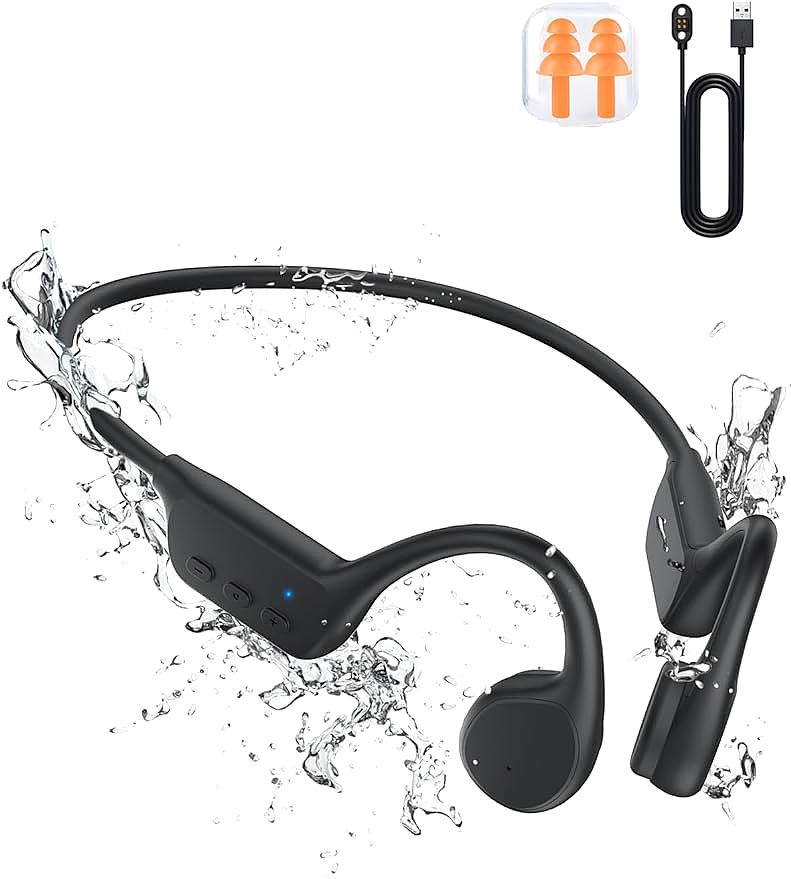
Rumatas X7 PLUS Bone Conduction Headphones
The human ear is a masterpiece of evolutionary biology, finely tuned to process minute fluctuations in atmospheric pressure. For millions of years, our survival depended on that aerodynamic sensitivity - the ability to hear the snap of a twig or the rush of a river through the funneling architecture of the outer ear. Modern consumer technology is quietly challenging that biological monopoly. By leveraging an alternative sensory pathway - the dense, mineralized infrastructure of the human skull - engineers are now bypassing the tympanic membrane entirely. When that same mechanism has to survive total aquatic submersion, the result is a collision between human anatomy, fluid dynamics, and electromagnetic physics. Devices in this space are not miniature speakers; they are highly specialized mechanical actuators. Dissecting their engineering requirements - cranial transmission plus amphibious operation - unveils the scientific principles that allow continuous audio playback in environments hostile to conventional acoustics.
From Beethoven's Wooden Rod to Submersible Titanium Arrays
The realization that acoustic data could be transmitted without the utilization of the outer or middle ear is not a product of the digital age. The underlying principle has been documented for centuries, most famously in the apocryphal, yet scientifically sound, anecdotes surrounding the composer Ludwig van Beethoven. As Beethoven suffered from progressive conductive hearing loss-a condition where the mechanical linkage of the middle ear ossicles calcifies and fails-he famously gripped a wooden rod in his teeth and pressed the opposite end against the soundboard of his piano.
When he struck a chord, the kinetic energy of the vibrating wood was transferred directly into his jawbone (mandible), traveling through his skull to the fluid-filled cochlea. The cochlea, the sensory organ responsible for translating mechanical waves into electrical nerve impulses, functions independently of the eardrum. As long as mechanical vibrations reach the cochlear fluid, the brain will perceive sound.
The translation of this analog survival mechanism into modern consumer electronics required significant advancements in both transducer miniaturization and metallurgy. Early bone conduction devices, primarily utilized in audiometric testing and military tactical communications, were heavy, uncomfortable, and required immense clamping force to maintain the necessary acoustic coupling with the skull.
The contemporary leap forward relies heavily on the integration of shape-memory alloys, particularly Nickel-Titanium (Nitinol) or specialized titanium formulations. A device like the Rumatas X7 PLUS utilizes a titanium chassis to achieve a total structural weight of merely 30 grams. Titanium possesses an extraordinarily high modulus of elasticity and extreme fatigue resistance. This allows the structural band to be bent, twisted, and stretched to accommodate varying cranial circumferences, yet immediately snap back to its original geometric tension. This continuous, precisely calculated tension is a strict mechanical requirement; if the transducer loses physical contact with the temporal bone or the zygomatic arch by even a fraction of a millimeter, the transfer of kinetic energy halts, and the audio signal collapses instantly.
Why Sealing Your Ears Amplifies Internal Bass
One of the most fascinating aspects of utilizing cranial transmission hardware is encountering a severe acoustic paradox. When a user first acquires an open-ear device, they often notice that the low-frequency response (the bass) feels relatively weak compared to traditional in-ear monitors. Bizarrely, the solution provided in the box is often a pair of cheap, dense sponge earplugs. Instructing a user to plug their ears while using "open-ear" headphones seems fundamentally contradictory, yet it triggers a profound shift in the psychoacoustic experience.
This phenomenon is governed by the physics of the "Occlusion Effect." To understand it, we must map the trajectory of low-frequency vibrations. When a heavy electromagnetic transducer vibrates against your cheekbone, it sends waves propagating through the dense tissue and bone of your head. While much of this energy reaches the cochlea, a significant portion of the low-frequency acoustic energy bleeds outward, entering the cartilaginous structure of the ear canal.
In an open-ear state, this low-frequency acoustic energy simply escapes out of the open ear canal and dissipates into the surrounding atmosphere. The bass literally leaks out of your head.
When a user inserts a dense sponge earplug, they forcefully blockade this escape route. The ear canal is instantaneously transformed into a sealed, resonant acoustic chamber. The low-frequency vibrations traveling through the jaw and skull enter the ear canal, strike the dense foam plug, and are violently reflected backward directly onto the tympanic membrane. Because low-frequency waves possess immense kinetic energy, this trapped resonance artificially amplifies the bass response, sometimes by as much as 20 decibels.
If a user is attempting to listen to a highly dynamic orchestral piece or a bass-heavy electronic track on a noisy airplane, the open-ear configuration will sound anemic due to engine noise masking and low-frequency dissipation. By deploying the earplugs, they temporarily isolate the airborne noise and harness the occlusion effect, radically boosting the perceived volume and depth of the transducer. It is a brilliant exploitation of biological resonance chambers to compensate for the inherent mechanical limitations of vibrating human bone.

The Physical Impossibility of Radio Waves Underwater
While making an acoustic transducer waterproof is a matter of mechanical sealing, transmitting the audio data to that transducer in an aquatic environment introduces an insurmountable barrier dictated by electromagnetic physics. The consumer market is saturated with "waterproof open-ear headphones," leading to a widespread misunderstanding of how radio frequencies (RF) interact with liquid mediums.
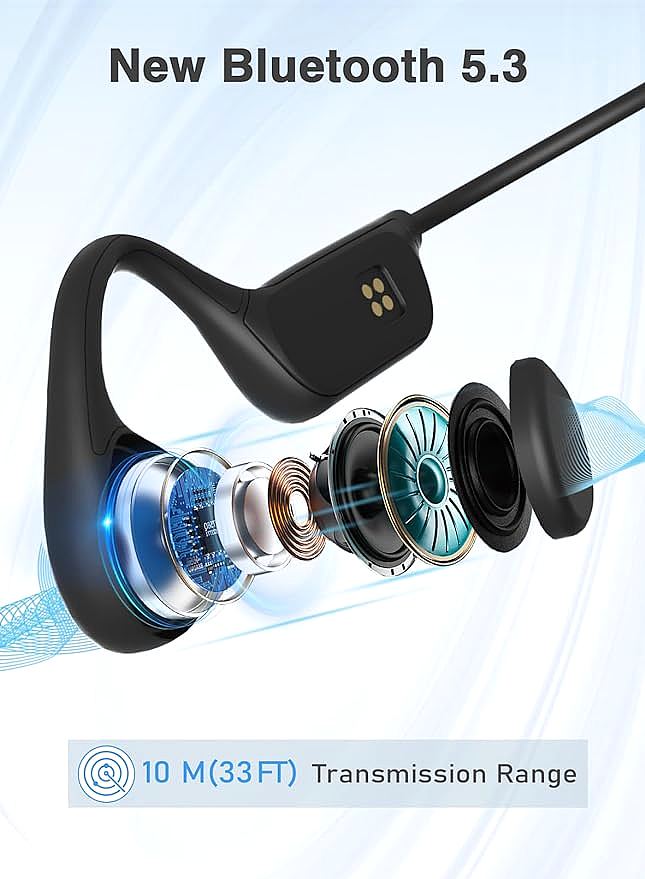
Bluetooth protocols, including the advanced Bluetooth 5.3 standard, operate within the 2.4 GHz ISM (Industrial, Scientific, and Medical) frequency band. This specific wavelength-approximately 12.5 centimeters-is incredibly efficient for transmitting data through the atmospheric composition of nitrogen and oxygen. However, water ($\text{H}_2\text{O}$) is a highly polar molecule.
When electromagnetic waves at 2.4 GHz enter a body of water, the rapidly alternating electric field forces the polar water molecules to rapidly align and realign themselves with the field. This constant molecular rotation generates friction, which converts the electromagnetic energy into thermal energy (heat). This is the exact physical principle behind a microwave oven, which also operates at 2.45 GHz specifically to agitate water molecules in food.
Because the water absorbs the electromagnetic energy so aggressively, the attenuation (signal loss) is catastrophic. A Bluetooth signal that can easily travel 10 meters through the air will degrade to absolute zero within millimeters of penetrating the surface of a swimming pool. Therefore, a swimmer attempting to stream music from a smartphone resting on the pool deck to a submerged headset will experience an immediate and permanent audio dropout the second their head breaches the water's surface.
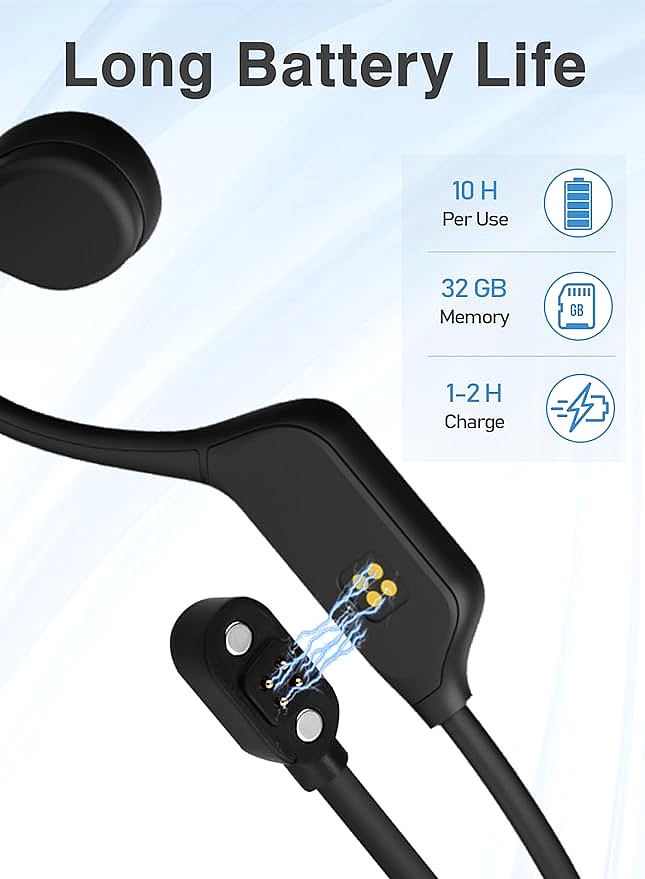
To engineer an amphibious device, the reliance on external radio telemetry must be severed. The architectural solution is to bring the digital source file inside the waterproof chassis. This necessitates a localized System-on-Chip (SoC) architecture featuring built-in NAND flash memory. In systems like this one, the inclusion of 32GB of internal storage is not merely a convenience feature for leaving a phone at home; it is an absolute physical necessity for aquatic operation. The device must function as a standalone, localized digital-to-analog converter (DAC) and MP3 player, entirely bypassing the 2.4 GHz spectrum while submerged, and only relying on the Bluetooth 5.3 module when operating back in an atmospheric environment.
The Cognitive Load of the Urban Marathoner
The push toward open-ear acoustics is heavily driven by the biomechanical and cognitive demands of high-risk kinetic environments. When a human is engaged in endurance sports, particularly running or cycling in urban environments, their brain is engaged in a massive computational workload. It is regulating autonomic functions, mapping spatial terrain, and continuously monitoring for external threats.
Traditional, acoustically isolating earbuds severely handicap this threat-detection protocol. The human brain relies heavily on auditory data to track objects outside of its immediate field of vision. By processing Interaural Time Differences (ITD) and calculating the Doppler shift (the change in frequency of a sound wave relative to an observer), a runner can instinctively know that a vehicle is approaching from the rear-left quadrant, and they can estimate its velocity, all without turning their head.
Inserting a silicone tip into the ear canal essentially blinds the brain's 360-degree radar system. This sensory deprivation forces the visual cortex to overcompensate, increasing cognitive fatigue and creating severe safety vulnerabilities.
Cranial transmission architectures resolve this by utilizing the brain's capacity for parallel processing. The external ear canal remains entirely unobstructed, allowing ambient pressure waves (traffic, sirens, voices) to strike the eardrum and process naturally. Simultaneously, the digital audio stream is injected mechanically into the cochlea via the cheekbones.
This creates a split-layer auditory experience. The brain successfully decodes both streams concurrently. However, this engineering approach introduces a new psychoacoustic challenge: Auditory Masking. If the environmental noise floor is too high (e.g., running alongside a busy interstate highway), the chaotic airborne noise will physically overwhelm the basilar membrane inside the cochlea, entirely masking the mechanical vibrations of the digital audio. Therefore, cranial acoustic arrays perform optimally in environments with moderate noise floors, acting as a supplementary layer of digital telemetry (pacing cues, podcasts, music) overlaid onto the physical world, rather than attempting to replace the physical world entirely.
Building an Acoustic Submarine in Miniature
Achieving true amphibious capability requires overcoming hostile fluid dynamics and the highly corrosive nature of the environments in which athletes operate. The International Electrotechnical Commission (IEC) defines the IP (Ingress Protection) rating system to standardize these environmental tolerances. A rating of IPX8-the standard required for continuous swimming-dictates that the device can survive continuous immersion in water beyond a depth of 1 meter for extended periods.
Standard consumer electronics fail in water due to short circuits across internal components. Designing a waterproof acoustic device is particularly complex because traditional dynamic speakers must move air to create sound; they require physical ports and grilles. Because bone conduction transducers do not need to move external air-they only need to vibrate a solid internal mass against the device's housing-the entire chassis can be hermetically sealed.
However, the primary vector for fluid ingress and hardware death is the charging port. A standard USB-C port contains deep cavities with exposed metallic pins. If a device is subjected to human sweat (which contains highly corrosive sodium and chloride ions) or pool water (which contains oxidizing chlorine), and electrical current is subsequently introduced across those wet pins during charging, galvanic corrosion occurs instantly. The metal is rapidly eaten away, rendering the port dead.
To construct a true "miniature submarine," engineers must eliminate physical insertion ports entirely. The mechanical solution is a magnetic pogo-pin interface. By utilizing flat, gold-plated external contact pads and a proprietary charging cable containing neodymium magnets, the device achieves a flush exterior surface. There are no cavities for water to pool in, and the gold plating resists chemical oxidation. This architectural shift from physical insertion to magnetic surface contact is what ultimately allows a device to survive the transition from the highly corrosive environment of a sweaty marathon to the total liquid immersion of a lap pool without catastrophic hardware failure.
Dynamic Air Displacement Versus Cranial Vibration
To fully appreciate the limitations and strengths of cranial transmission, one must analyze the stark mechanical differences between conventional audio drivers and bone conduction transducers.
A traditional dynamic driver is an exercise in aerodynamic efficiency. It consists of a permanent magnet, a copper voice coil, and an ultra-lightweight diaphragm (often made of mylar, paper, or beryllium). When an alternating electrical current passes through the voice coil, electromagnetic forces push and pull the microscopic diaphragm, displacing the air in front of it. Because air is incredibly light, this process requires very little electrical power. A standard pair of earbuds can run for hours on a battery the size of a coin.
A bone conduction transducer operates on a much more brutal mechanical scale. It must vibrate the mass of the device itself, the user's skin, a layer of subcutaneous fat, and the dense temporal bone. To overcome this immense mechanical impedance, the transducer must utilize heavy, solid magnetic masses and highly rigid suspension springs.
This mechanical reality creates two distinct engineering challenges. First, it requires exponentially more electrical current to move a solid metal mass than a paper cone. To achieve a 10-hour battery life under these high-draw conditions, engineers must pack larger, higher-capacity lithium-ion cells (such as the 230mAh cells found in modern arrays) into the chassis while fiercely managing weight distribution to prevent the device from bouncing during athletic movement.
Second, it fundamentally limits the frequency response profile. High frequencies (treble) consist of rapid, microscopic vibrations that transfer efficiently through bone. Low frequencies (bass) require massive, sweeping physical excursions. When a cranial transducer attempts to reproduce heavy sub-bass, it must generate so much kinetic force that the physical housing violently bounces against the user's skin. This tactile feedback-often described as an intense "tickle" or buzzing sensation on the cheekbones-can become highly uncomfortable at high volumes. Consequently, audio engineers must implement aggressive digital signal processing (DSP) high-pass filters, deliberately cutting off the lowest bass frequencies before they reach the transducer to maintain physical comfort, inherently resulting in a sound profile that leans toward the mid-range and treble.
Pushing Toward Continuous Ambient Computing
The current iteration of amphibious, non-isolating acoustic hardware represents a transitional phase in wearable technology. By shifting the paradigm from "audio as an isolating escape" to "audio as a supplementary data layer," we are laying the biological and hardware foundations for the future of continuous ambient computing.
As augmented reality (AR) visual overlays become increasingly integrated into daily life, the demand for accompanying spatial audio will soar. The human brain cannot safely process an AR environment if its auditory radar is compromised by sealed ear canals. The integration of highly efficient 5.3 telemetry, onboard solid-state memory, and hermetically sealed titanium architectures proves that complex digital streams can be reliably delivered without severing the user's connection to the physical world.
The long-term trajectory of this engineering discipline points toward a state of sensory synthesis. Future arrays will likely incorporate advanced machine learning algorithms capable of analyzing the acoustic environment via external microphones and dynamically equalizing the cranial transmission to punch through specific frequencies of traffic noise, or instantly lowering the digital volume when human speech is detected nearby.
The goal is no longer just to play a music file; it is to engineer a smooth, frictionless interface between the vast digital networks of the modern world and the ancient, analog neurology of the human brain. Whether executing a long-distance swim or navigating a congested urban intersection, the ability to safely digest continuous data streams through alternative biological pathways will become an indispensable component of human-computer interaction.

Rumatas X7 PLUS Bone Conduction Headphones
Related Essays

Bone Conduction Headphones for Swimming: 2026 Two-Mode Guide

The Science of Sound Beneath the Waves

Sayrelances B10: The Science of Bone Conduction Audio

Hamuti X7 Bone Conduction Headphones: Experience Sound in a Whole New Way

Aftershokz Aeropex (Rebranded as Shokz OpenRun) - Open-Ear Bluetooth Bone Conduction Sport Headphones

Loluka Swimming Bone Conduction Headphones - Recommended for Active Lifestyles

Loluka Real Swimming Headphone - Recommended for Bone Conduction Technology
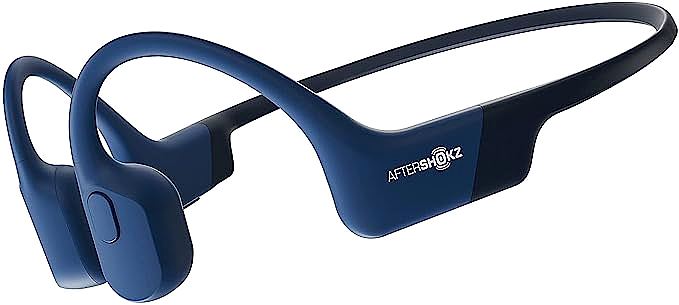
Shokz OpenRun (Aeropex) - Open-Ear Headphones for Safe and Comfortable Workouts

Bypassing the Eardrum: The Biomechanics of Cranial Audio Transmission
