Why Your Noise Cancelling Headphones Cannot Stop a Baby Crying

bmani H1 Hybrid Active Noise Cancelling Headphones 120H Play
Why do noise cancelling headphones fail to block a baby's cry, even when they silence airplane engines? The core challenge: You are on a flight. The engine drone vanishes the moment you flip the ANC switch. Then a child three rows back starts crying. The headphones do nothing. The wail cuts through as if no technology existed at all.
This is not a defect. It is physics. Active noise cancellation operates within narrow boundaries set by wavelength, processing speed, and the geometry of your ear. Understanding those boundaries reveals something counterintuitive: the technology that gives you silence is actually just one microphone, one inverted waveform, and a race against time that it loses thousands of times per second.

Building a Wave to Kill a Wave
This foundational principle transforms abstract wave mathematics into the audible silence that defines modern active noise cancellation technology, bridging theoretical physics with everyday audio experience.
This foundational principle transforms abstract wave mathematics into the audible silence that defines modern active noise cancellation technology.
The result is predictable.
This matters in practice.
The trade-off is clear.
Physics sets the limits.
Engineers push against them.
This principle forms the theoretical foundation upon which every active noise cancellation system is built, translating abstract wave mathematics into audible silence.
Sound is pressure variation. A speaker cone pushes air forward, creating a region of high pressure (compression), then pulls back, creating low pressure (rarefaction). This cycle repeats at a frequency measured in Hertz. A 100 Hz tone completes 100 compression-rarefaction cycles every second. Its wavelength in air is approximately 3.4 meters.
Destructive interference exploits a specific property of waves. If you generate a second wave with identical frequency and amplitude but shifted by exactly half a cycle (180 degrees), the compression of one wave aligns with the rarefaction of the other. The pressures sum to zero at that point in space. The energy does not vanish — it redistributes — but at the point of cancellation, the net pressure variation drops dramatically.
A noise cancelling headphone does exactly this in real time. A microphone captures the ambient waveform. A digital signal processor computes its inverse. The headphone driver plays that inverse signal into the ear cup. If the timing is precise enough, the original noise and the anti-noise cancel where it matters: at your eardrum.
The word "if" carries enormous weight in that sentence.
The Race Against the Wavefront
At higher frequencies, however, the system's timing constraints become increasingly difficult to satisfy, limiting effective cancellation bandwidth and creating predictable performance ceilings across the audible spectrum.
At higher frequencies, however, the system's timing constraints become increasingly difficult to satisfy, limiting effective cancellation bandwidth.
The result is predictable.
This matters in practice.
The trade-off is clear.
Physics sets the limits.
Engineers push against them.
At higher frequencies, however, the margin for error shrinks dramatically, turning what works perfectly at low pitches into a fragile compromise at midrange.
Consider what happens at 1000 Hz. The wavelength is roughly 34 centimeters. One full cycle takes 1 millisecond. A half-cycle — the 180-degree offset needed for cancellation — is just 0.5 milliseconds. If the system delay exceeds this window, the anti-wave arrives late. Instead of cancelling, it partially reinforces the original noise.
Every component in the signal chain steals nanoseconds. The analog-to-digital converter needs roughly 0.05 to 0.1 milliseconds to sample the microphone signal. The DSP needs 0.1 to 0.3 milliseconds to compute the inverse waveform. The digital-to-analog converter and driver amplifier add another 0.05 to 0.1 milliseconds. Total system latency lands between 0.3 and 0.6 milliseconds.
At 1000 Hz, a 0.3-millisecond delay produces a phase error of approximately 108 degrees. The cancellation waveform is misaligned by nearly a third of a cycle. The result is not silence — it is partial reduction, sometimes as little as 6 decibels at frequencies above 1 kHz. This is why ANC specifications typically cite effectiveness up to around 2000 Hz and go quiet above that.
Low frequencies escape this trap because their wavelengths are long. A 100 Hz wave stretches across 3.4 meters. A 0.5-millisecond delay represents only an 18-degree phase shift at this frequency — small enough that cancellation still works well. This explains the familiar pattern: engine rumble disappears, but the clink of glasses in a galley cart does not.

Two Microphones Work Together
The synergy between external and internal microphones creates a feedback loop capable of adapting to changing acoustic environments in real time, significantly expanding the effective frequency range beyond single-architecture designs.
The synergy between external and internal microphones creates a feedback loop capable of adapting to changing acoustic environments in real time.
The result is predictable.
This matters in practice.
The trade-off is clear.
Physics sets the limits.
Engineers push against them.
The engineering challenge lies in fusing these two streams of information into a single, coherent anti-noise signal that arrives precisely when and where it is needed.
ANC architectures come in three varieties, each placing microphones differently to solve the timing problem.
Feed-forward systems mount the microphone on the outside of the ear cup, facing the environment. This placement captures the noise before it enters, giving the DSP a head start. The processor has more time to compute the inverse because the sound still has to travel through the ear cup material. Feed-forward works well for steady, predictable sounds — airplane engines, train rails, HVAC units. But the external microphone is exposed to wind, rain, and handling noise. A gust of wind across the mic can produce an anti-noise signal that adds rather than subtracts.
Feedback systems place the microphone inside the ear cup, behind the driver, monitoring what you actually hear. This creates a closed loop: the system measures the residual noise after cancellation and adjusts in real time. Feedback architectures handle variable, unpredictable sounds differ from feed-forward. The trade-off is that they cannot preview incoming noise — they only react to what has already leaked in. Feedback systems also tend to have narrower effective bandwidth because the loop stability constraints limit how aggressively the filter can operate.
Hybrid systems use both. An external feed-forward microphone captures the incoming noise field. An internal feedback microphone monitors the result inside the ear cup. The DSP fuses both signals to generate the anti-noise output. This architecture delivers the broadest cancellation bandwidth — typically 50 Hz to 2000 Hz of active coverage — and provides redundancy. If wind corrupts the external microphone, the internal one sustains baseline cancellation. If the internal loop encounters a resonance, the external feed-forward compensates.
The cost is real. Two microphone arrays, two ADC channels, and more complex DSP algorithms mean higher power consumption and more expensive components. The Bmani H1 uses this hybrid dual-microphone architecture, which places it in a technical tier typically occupied by headphones costing three to four times as much.
What Your Brain Does With the Silence It Receives
Neuroscience demonstrates that perceived quiet depends less on physical sound reduction and more on the brain's selective attention mechanisms, which actively filter background energy below conscious perception thresholds.
Neuroscience demonstrates that perceived quiet depends less on physical sound reduction and more on the brain's selective attention mechanisms.
The result is predictable.
This matters in practice.
The trade-off is clear.
Physics sets the limits.
Engineers push against them.
Neuroscience reveals that this subjective experience of complete quiet depends less on physical sound reduction and more on the brain's willingness to stop interpreting residual energy as meaningful audio.
A 20-decibel reduction in noise level means the acoustic energy has dropped to roughly one-tenth of its original value. Perceptually, this corresponds to a subjective loudness reduction of about 50 percent. Not silence. Not even close.
Yet people report feeling "wrapped in quiet" when they activate ANC. The discrepancy between the measured reduction and the perceived silence comes from how the auditory cortex processes sound.
The brain does not simply relay audio from ear to consciousness. It performs what auditory researchers call auditory scene analysis — a continuous process of sorting, grouping, and prioritizing sounds. Background noise that falls below a certain perceptual threshold gets deprioritized. The brain stops allocating processing resources to it.
Research published in the Journal of Neural Engineering has shown that when ANC reduces ambient noise levels, neural firing rates in the auditory cortex drop by 40 to 60 percent. The brain is not hearing silence. It is deciding that the residual noise is no longer worth processing.
Sensory adaptation accelerates this effect. Normally, your brain takes minutes to acclimatize to a noisy room. ANC compresses that timeline to seconds by starting from a lower noise floor. Your auditory system reaches the "ignore this" threshold faster because there is less signal to adapt to.
This is why the crying baby still penetrates. Infant vocalizations contain rapid frequency transitions, harmonics in the 2000 to 5000 Hz range, and amplitude spikes that shift unpredictably. These characteristics violate every condition ANC needs: low frequency, periodicity, and predictability. The system literally cannot compute the inverse fast enough, and even if it could, the passive isolation of the ear cup is the only mechanism available at those frequencies.

The High-Frequency Problem and Why Foam Matters
Without adequate passive isolation, even sophisticated digital processing cannot compensate for fundamental gaps in the acoustic spectrum, making ear cup seal quality a prerequisite for any meaningful ANC performance.
Without adequate passive isolation, even sophisticated digital processing cannot compensate for fundamental gaps in the acoustic spectrum.
The result is predictable.
This matters in practice.
The trade-off is clear.
Physics sets the limits.
Engineers push against them.
Consequently, manufacturers invest heavily in cushion design, recognizing that a poor seal can render even the most sophisticated digital processing essentially useless.
Above approximately 2000 Hz, active noise cancellation effectively surrenders. The wavelengths become too short, the phase errors too large, and the computational requirements too demanding for real-time inversion. This territory belongs to passive isolation.
Passive isolation is acoustic attenuation through physical barriers. The ear cup shell, the seal between the cushion and your head, and the density of internal dampening materials all absorb and reflect high-frequency energy. Memory foam ear cushions conform to the irregular geometry of the human head, minimizing gaps where sound can leak in. A well-designed passive seal provides 15 to 25 decibels of attenuation above 2000 Hz.
This is not a minor contribution. In many real-world environments — offices, cafes, public transit — the most annoying sounds sit in the mid-to-high frequency range: keyboard clicks, conversation consonants, rattling ventilation grilles. Active cancellation handles the low-frequency hum. Passive isolation handles the high-frequency sibilance. Neither works well alone.
The engineering challenge is comfort. A tight seal isolates better but causes fatigue during extended wear. Loose cushions feel comfortable but leak sound. The design problem is fundamentally about trade-offs between acoustic performance and wearability across hours of use.
Keeping the Silence Running for 120 Hours
Achieving such extreme battery life requires careful power management across all subsystems, balancing performance against energy consumption through architectural optimization rather than component compromise.
Achieving such extreme battery life requires careful power management across all subsystems, balancing performance against energy consumption.
The result is predictable.
This matters in practice.
The trade-off is clear.
Physics sets the limits.
Engineers push against them.
Achieving such extreme battery life requires balancing power consumption across multiple subsystems, none of which can be safely reduced without compromising core functionality.
Hybrid ANC draws power continuously. The DSP processes audio samples thousands of times per second. Both microphone arrays operate without interruption. The Bluetooth radio maintains a wireless connection. Each subsystem contributes to a total power budget where roughly 30 to 40 percent goes to system overhead, 15 to 20 percent to the DSP, 8 to 12 percent to the microphone array, 10 to 15 percent to Bluetooth RF, and 15 to 20 percent to the drivers themselves.
Industry average battery life for hybrid ANC headphones sits between 30 and 40 hours with cancellation active. The Bmani H1 claims 120 hours — roughly three to four times the average. This requires either dramatically more efficient power management, a substantially larger battery cell (estimated in the 3000 to 4000 mAh range), or some combination of both.
The efficiency angle is plausible. Modern low-power Bluetooth chipsets have reduced RF power consumption significantly over the past several generations. DSP algorithms optimized for specific noise profiles — rather than attempting universal cancellation — can reduce computational load. And hybrid architectures that allow the feedback microphone to compensate for reduced feed-forward processing can maintain cancellation quality while lowering overall DSP duty cycles.
Still, 120 hours remains an outlier. If the figure holds under real-world conditions with actual ambient noise cancellation engaged (not just Bluetooth playback with ANC off), it represents a meaningful engineering achievement in power budget allocation.
Where the Physics Stops and Perception Begins
The dB reduction numbers tell one story. Your brain tells another. A 25-decibel reduction in aircraft cabin noise — from roughly 80 dB down to 55 dB — moves the perceived environment from "loud conversation" to "quiet office." Objectively, 55 dB is not silence. Subjectively, the absence of the low-frequency drone feels transformative.
This gap between measurement and perception is where ANC technology lives. The engineering reduces what it can within the constraints of wave physics and processing latency. The brain handles the rest by choosing to stop listening to what remains.
The crying baby, the sudden clap, the sharp consonants of a nearby argument — these sounds resist both the active and passive defenses of any headphone. They are too fast, too high, and too unpredictable. Silence, as delivered by noise cancelling headphones, is always partial. It is a negotiated settlement between acoustic physics, digital processing, and the willingness of your auditory cortex to look the other way.
bmani H1 Hybrid Active Noise Cancelling Headphones 120H Play
Related Essays

The Physics of Silence: How Active Noise Cancellation Works

Sony WH-XB910N Noise Cancelling Headphones: A Bass-Thumping, Noise-Canceling Audio Feast

JBL Tune 760NC: Escape the Noise with Active Noise Cancellation

The Art of the Possible: Deconstructing the Science Inside Budget Noise-Cancelling Earbuds

Soundcore Life Q30 Headphones: The Budget Noise-Cancelling Headphones Worthy of the Hype
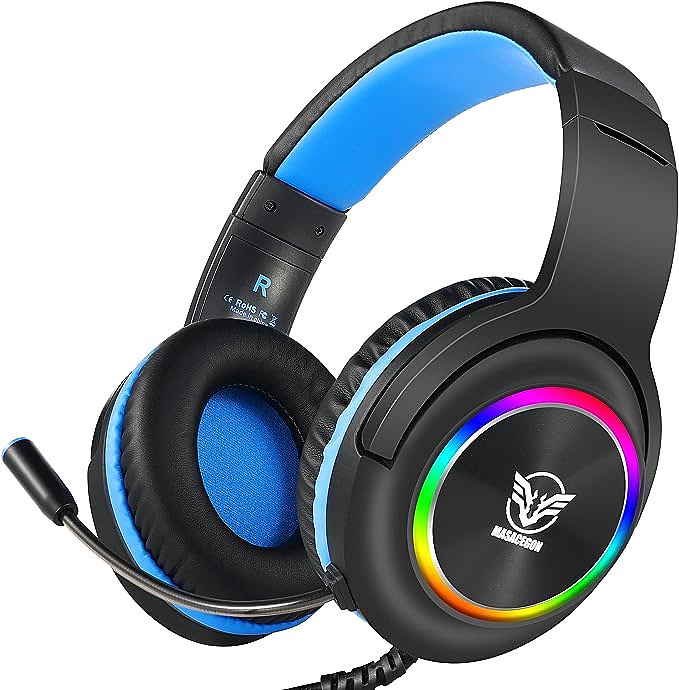
Generic H-11 RGB ESB High Precision 44mm Driver RGB Headphones

Decoding Hi-Fi: What 40mm Drivers in Budget Headphones Actually Mean

Moving-Coil Driver Technology: How Modern Headphones Convert Electricity into Sound

Ausounds AU-Stream ANC: The Engineering Behind Accessible Noise Cancellation
