Why Your Wireless Earbuds Keep Cutting Out -- The Physics of Bluetooth Stability
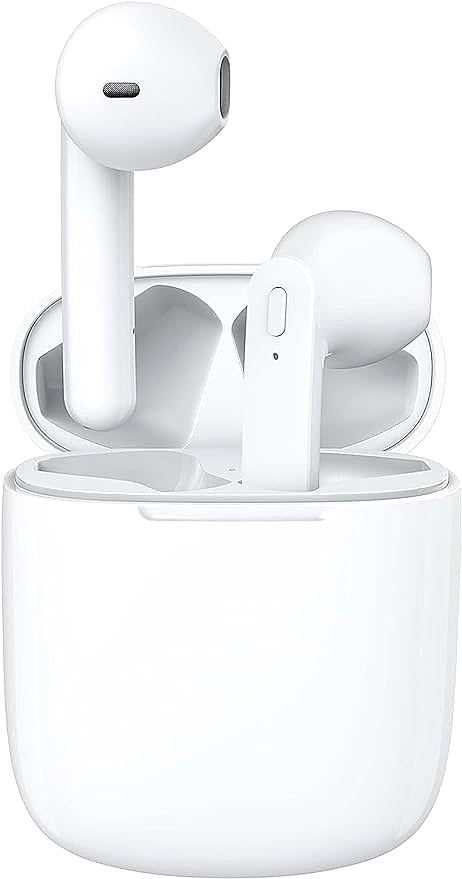
BEBEN T19 NEW Wireless Earbuds
Your music drops. Not once. Not twice. Three times during a single commute. You tap the earbud, check your phone, confirm the battery is full -- and still, the audio stutters. If you have ever fought this battle with budget wireless earbuds, you are not alone. Connection instability remains the single most common frustration among wireless audio users, and the culprit is almost never the earbuds themselves.
The real enemy is physics. Specifically, the chaotic, invisible war being fought in the 2.4 GHz radio frequency band -- the same slice of the electromagnetic spectrum shared by your Wi-Fi router, your microwave oven, your neighbor's baby monitor, and every other Bluetooth device within a thirty-foot radius.
The 2.4 GHz Battlefield Nobody Told You About
Bluetooth operates in the ISM band -- Industrial, Scientific, and Medical -- centered around 2.4 GHz. This band is unlicensed, meaning any device can use it without paying regulatory fees. The trade-off is congestion. When your earbuds lose connection in a crowded gym, it is not because they are cheap. It is because dozens of devices are simultaneously shouting into the same narrow corridor of frequencies.
The International Electrotechnical Commission (IEC) and the Bluetooth Special Interest Group (SIG) have spent over two decades refining protocols to manage this chaos. Each Bluetooth iteration -- from version 1.0 in 1999 through the current 5.x generation -- has introduced smarter ways to dodge interference. Understanding how these improvements work requires looking at two key mechanisms: adaptive frequency hopping and channel classification.
Frequency Hopping: A Military Idea Gone Civilian
The foundational trick Bluetooth uses to survive in crowded airspace is frequency-hopping spread spectrum (FHSS). The concept predates Bluetooth by decades. During World War II, actress and inventor Hedy Lamarr co-patented a frequency-hopping radio guidance system for torpedoes, making jamming by enemy forces extremely difficult.
Bluetooth divides the 2.4 GHz band into 79 channels, each 1 MHz wide. Instead of transmitting on a single frequency, a connection hops between channels 1,600 times per second. If channel 23 is noisy because your Wi-Fi router occupies it, Bluetooth skips it and moves to channel 47. Even if interference destroys one packet, the next arrives on a different frequency a fraction of a millisecond later.
Your brain's auditory processing smooths over gaps shorter than about 20 milliseconds, so moderate interference goes unnoticed. But a crowded subway car with fifty phones and someone's laptop downloading a large file can overwhelm even aggressive hopping.
What Bluetooth 5.3 Actually Improves
The Bluetooth 5.3 specification, adopted by the SIG in 2021, introduced refinements that directly address congestion. The most relevant is enhanced channel classification.
Previously, devices classified channels as "good" or "bad" based on coarse measurements. A channel might be marked bad only after repeated failures. Bluetooth 5.3 allows more granular classification, enabling the connection to avoid borderline channels proactively rather than reactively. Think of it as the difference between navigating traffic with a static map versus a real-time GPS that reroutes you before you hit the jam.
Earbuds implementing Bluetooth 5.3, including the BEBEN T19 NEW, benefit from these refinements -- though the extent of improvement depends heavily on antenna design and firmware. The protocol provides better tools, but the manufacturer still needs to use them well.
Water Resistance: The IP Code Decoded
The Ingress Protection rating system, defined by IEC standard 60529, uses a two-digit code to describe how well a device's enclosure resists particles and liquids.
An IPX6 rating breaks down simply. The "IP" stands for Ingress Protection. The "X" means the device has not been formally tested for dust ingress. The "6" means the device can withstand powerful water jets from any direction.
IPX6 does not mean waterproof. You cannot swim or shower with these earbuds. Submersion is a different test entirely (IPX7 and above). What IPX6 guarantees is that rain, heavy sweat, and accidental splashes will not damage the electronics. The test projects water at 100 liters per minute at 100 kPa -- substantially more aggressive than any rainstorm.
The engineering is straightforward but demanding. Internal circuit boards receive a conformal coating -- a thin polymer film that repels moisture. Every opening -- charging contacts, speaker grille, microphone port -- is a potential failure point that must be sealed.
Battery Chemistry and the 40-Hour Claim
Wireless earbud batteries are almost universally lithium-ion cells. The energy density of this chemistry -- roughly 250 to 270 watt-hours per kilogram -- is what makes it possible to fit meaningful capacity into something the size of a jellybean. A typical earbud contains a cell rated between 30 and 50 mAh at 3.7 volts.
The math behind a 40-hour combined playtime claim works like this: each earbud draws roughly 15 to 20 milliamps during playback, so a 40 mAh cell provides approximately 2 to 2.5 hours of continuous use. To reach 8 hours per charge, manufacturers combine larger cells (closer to 50 mAh), power-efficient Bluetooth chips, and aggressive power management -- entering low-power states during silence or pauses. The charging case holds a 300 to 500 mAh cell that recharges the earbuds three to four full times, accounting for charging efficiency losses of roughly 20 to 30 percent.
USB-C charging, now standard even at budget price points, replaced the Micro-USB and proprietary connectors of earlier generations. The reversible design and universal compatibility mean one cable handles your phone, earbuds, and increasingly your laptop. The standard also supports higher current delivery, enabling the 1.5-hour charge times commonly quoted for modern cases.
The Semi-In-Ear Compromise
Earbud design involves a fundamental acoustic trade-off most consumers never consciously consider. In-ear monitors use silicone tips to create an airtight seal in the ear canal, providing passive noise isolation and strong bass response -- the sealed cavity reinforces low frequencies.
Semi-in-ear designs forgo this seal. The earbuds rest in the outer ear without penetrating the canal. The benefit is comfort: many people find deep-insertion tips fatiguing after extended wear, experiencing pressure or occlusion -- that muffled sensation where your own voice sounds hollow inside your head, a phenomenon audiologists call the occlusion effect. The cost is acoustic: bass escapes rather than building pressure against the eardrum, external noise enters freely, and sound leakage increases measurably.
This trade-off is calibrated for casual listening where situational awareness matters more than audiophile isolation. Runners needing to hear traffic, commuters catching station announcements -- these users benefit from the semi-in-ear approach.
The Real Measure of Progress
Wireless earbuds at the sub-twenty-dollar price point represent something specific about the trajectory of consumer electronics: not that technology gets cheaper, but that engineering solutions propagate downward with remarkable consistency. Frequency hopping was a classified military technique in 1942. Adaptive channel classification was a premium feature in 2018. Independent earbud architecture was exclusive to devices costing hundreds of dollars just five years ago. Today, all of these exist in products that cost less than a decent dinner.
The remaining differences between a twenty-dollar earbud and a two-hundred-dollar one are real but narrowing. Better codecs, more sophisticated noise cancellation, premium driver materials, superior touch algorithms -- these gaps persist. But the baseline of acceptable performance -- stable connection, reasonable battery life, basic water resistance, usable sound -- has shifted dramatically. Understanding the physics behind that shift gives you a clearer lens for evaluating any wireless audio product, regardless of its price tag.
Technical Specifications Deep Dive
The BEBEN T19 NEW represents an interesting proposition in the budget wireless earbuds market. At its core, the device utilizes Bluetooth 5.3 technology, which offers several advantages over its predecessors. The most significant improvement is channel classification - the ability for the earbuds to actively identify congested frequencies before they cause problems.
In terms of physical specifications, the earbuds themselves provide approximately 8 hours of continuous playback, with the charging case extending total battery life to around 40 hours. This places the T19 firmly in the competitive range for budget earbuds, where battery life is often a primary selling point.
The IPX6 waterproof rating means the earbuds can withstand exposure to water jets from any direction, making them suitable for workouts and outdoor activities where sweat or rain might be a concern. This specification goes beyond basic splash resistance and approaches the level needed for serious athletic use.
When examining the competitive landscape, products like the TOZO T10 and Anker Soundcore Life U1 offer similar specifications at comparable price points. Each has its strengths - some excel in sound quality customization through companion apps, while others prioritize connection stability or call quality.
The decision ultimately depends on specific use cases. For users prioritizing pure battery life and waterproofing in a budget package, the BEBEN T19 NEW presents a valid option worth considering against more established competitors.
For users seeking a no-frills audio companion that handles everyday tasks reliably, the T19 delivers solid performance in a package that won't break the bank. The Bluetooth 5.3 implementation ensures compatibility with modern source devices, while the extended battery life addresses one of the most common pain points in wireless audio.
BEBEN T19 NEW Wireless Earbuds
Related Essays

Why Do My Bluetooth Earbuds Keep Disconnecting? 6 Real Causes and Fixes

Why Your Wireless Earbuds Sound Flat: The Physics of Tiny Speakers
