The Physics of Hybrid ANC: Why Budget Earphones Are Catching Up

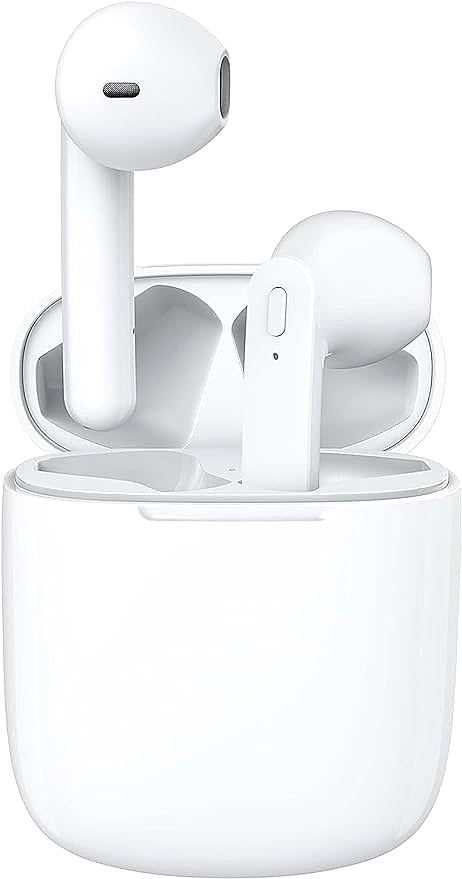
KNZ AS3W PUREFECT True Wireless Stereo Earbuds
When you pop in budget earbuds expecting the world to vanish, only to hear the muffled drone of background noise bleeding through—that's the momentANC becomes a broken promise. Millions of listeners face this daily: the marketed "active noise cancellation" either works marginally or fails entirely against the frequencies that matter most—human voices, traffic, the mid-range chaos of everyday life.
For years, premium brands convinced us that effective ANC required premium prices. The engineering was simply too complex, the components too expensive. But a quiet revolution is underway in the $30-$50 earbud segment, where Hybrid ANC—a technology once reserved for $200+ flagship headphones—is appearing in devices that fit in your pocket and your budget.
The KNZ AS3W PUREFECT sits at the center of this paradox. It claims Hybrid ANC at a price point that would have been impossible five years ago. But is this genuine engineering or marketing sleight of hand? To answer that, we need to examine the actual physics of noise cancellation—and explain why this matters for anyone who's ever been disappointed by "budget ANC" claims.ure at your eardrum stays flat. You hear nothing.
This sounds simple. In practice, it is fiendishly difficult.
The anti-noise wave must match the incoming noise with microsecond precision across the entire audible frequency range (20 Hz to 20,000 Hz). A delay of just 0.05 milliseconds is enough to shift the phase by a full cycle at 20 kHz, turning cancellation into amplification. The system is fighting a clock measured in samples per second, not seconds per beat.
Feedforward ANC: Listening to the Outside
Most budget earbuds labeled "ANC" use a feedforward architecture. An external microphone sits on the outside of the earbud, sampling ambient noise before it reaches your ear canal. A digital signal processor (DSP) calculates the inverse waveform and plays it through the speaker driver.
The advantage is simplicity. The external mic picks up the clean noise signal without contamination from the music you are playing. The DSP has a relatively straightforward job: invert the waveform and push it out.
But feedforward has a fundamental weakness. It cannot hear what actually reaches your eardrum. The earbud seal, the shape of your ear canal, even the fit of the silicone tip -- all of these alter the noise spectrum between the external mic and your eardrum. The system is making an educated approximation about what you hear, and that approximation degrades at higher frequencies where wavelengths are short and small physical variations cause large phase errors.
This is why early budget ANC earbuds reduced airplane engine drone (low frequency, long wavelength) but did almost nothing about coffee shop chatter (mid frequency, shorter wavelength). The physics of the feedforward loop imposed a hard ceiling on performance.

Hybrid ANC: Adding the Second Microphone
Hybrid ANC places a second microphone inside the earbud, positioned between the speaker driver and your eardrum. This creates a closed feedback loop. The internal mic measures what you actually hear -- including any noise that leaked past the earbud seal, any distortion from the driver itself, and any error from the feedforward correction.
The DSP now has two signals to work with. The external mic provides a prediction (feedforward path). The internal mic provides a measurement (feedback path). By combining both, the system can correct errors in real time. If the feedforward path under-corrects at 800 Hz because of a loose ear tip seal, the feedback mic detects the residual noise and the DSP adjusts the anti-noise output accordingly.
This dual-mic architecture is why Hybrid ANC covers a wider frequency band than feedforward alone. A typical feedforward system might reduce noise effectively up to roughly 1,000 Hz. A well-tuned hybrid system can extend useful cancellation to approximately 2,000-3,000 Hz, pulling in the mid-range frequencies where human speech sits.
The trade-off is cost and complexity. Two microphones per earbud, plus the DSP algorithms to blend their signals without introducing instability, add both hardware expense and engineering effort. The feedback loop can oscillate if the internal mic picks up the correction signal itself -- a problem engineers call "feedback howl," familiar to anyone who has heard a microphone too close to a speaker.
The Mathematics of Correction
Underneath the hardware, Hybrid ANC runs on a mathematical operation called an adaptive filter. The DSP maintains a model of how sound travels from the external environment to your eardrum -- a transfer function expressed as a set of coefficients. As conditions change (you move your head, the ear tip shifts), the filter adjusts its coefficients to minimize the residual noise measured by the internal microphone.
This is a form of optimization running in real time, typically updated every few milliseconds. The algorithm -- often a variant of the Least Mean Squares (LMS) method -- continuously nudges the filter coefficients toward the values that produce the lowest error signal at the internal mic.
The precision of this adaptive process determines the quality of the ANC. Premium earbuds often dedicate more DSP cycles and use higher-order filters (more coefficients), allowing finer-grained correction across the frequency spectrum. Budget earbuds running Hybrid ANC use the same principle but with fewer coefficients and less processing headroom.
The gap is narrowing. The DSP chips that execute these calculations have followed the same cost curve as other silicon components. A dedicated ANC processor that cost $15 to manufacture in 2019 might cost under $3 today. This is the engine behind the democratization trend.

Driver Architecture and Sound Reproduction
The speaker driver must reproduce both your music and the anti-noise signal simultaneously. If the driver distorts one, the cancellation math breaks down. Driver quality matters more in an ANC system than in a passive earbud, because the driver is now serving double duty.
Larger driver diaphragms can move more air with less excursion for a given bass frequency. Less excursion means less non-linear distortion. This is the physical reason why driver size correlates with cleaner low-frequency reproduction, even though the relationship is not linear -- a 12mm driver does not sound "twice as good" as a 6mm one, but it does have roughly 4 times the surface area, which reduces the excursion needed for the same bass output.
The dual-driver approach, where one driver handles low frequencies and another handles mid-high frequencies, offers another path. By splitting the frequency workload, each driver operates in a range where its mechanical properties are optimized. The bass driver can be tuned for excursion and damping without worrying about high-frequency detail. The mid-high driver can prioritize clarity and transient response.
Bluetooth 5.2 and the Latency Budget
ANC is sensitive to latency. Every microsecond of delay between the microphone sampling the noise and the speaker producing the anti-noise shifts the phase of the correction signal. Bluetooth adds its own latency to the chain, which is why wireless ANC earbuds must manage their timing budget carefully.
Bluetooth 5.2 introduced Isochronous Channels, which allow the source device to transmit audio to both earbuds simultaneously. Previous versions sent data to one earbud, which then relayed it to the other -- adding latency and reducing reliability. Simultaneous transmission tightens the synchronization between left and right channels and reduces the total latency of the wireless link.
For ANC, this matters because the correction signal timing depends on the entire signal chain: microphone to DSP to speaker to eardrum. Reducing Bluetooth latency frees up timing budget for the DSP to do its adaptive filter calculations. It is not that Bluetooth 5.2 makes ANC "better" directly -- it removes one bottleneck so the ANC system has more room to operate.
Why the Gap Is Closing
Look at the bill of materials for a true wireless earbud from 2018 and one from today. The ANC chip, the Bluetooth radio, the MEMS microphones -- each component has ridden the same manufacturing curve that governs all semiconductor products. Volume drives yield. Yield drives cost reduction. Cost reduction opens new market segments.
The components required for Hybrid ANC -- dual microphones, dedicated DSP cores, Bluetooth 5.2 radio chips -- have followed the standard technology commoditization curve. As production volumes scale, per-unit costs drop. As costs drop, previously premium features appear in lower price brackets.
This is not unique to audio. The same curve drove GPS from military hardware to a chip in every phone, and MEMS accelerometers from aerospace guidance systems to a $0.50 component in a fitness tracker.
The remaining gap between a $30 earbud and a $300 one is narrowing to software and tuning. Premium brands invest in custom DSP tuning for specific acoustic environments, proprietary app features, and multi-device connectivity layers. The underlying physics -- destructive interference, adaptive filtering, driver mechanics -- is the same at every price point.
The air does not care what you paid. A pressure wave cancelled by destructive interference is silenced regardless of the logo on the earbud. The question for the next decade of audio engineering is not whether budget earbuds can do ANC. It is whether the premium tier can find enough software-driven differentiation to justify the price gap that silicon commoditization keeps eroding.
KNZ AS3W PUREFECT True Wireless Stereo Earbuds
Related Essays

Why Do My Bluetooth Earbuds Keep Disconnecting? 6 Real Causes and Fixes