The Missing Manual: How to Pair, Control, and Master Your Wireless Earbuds
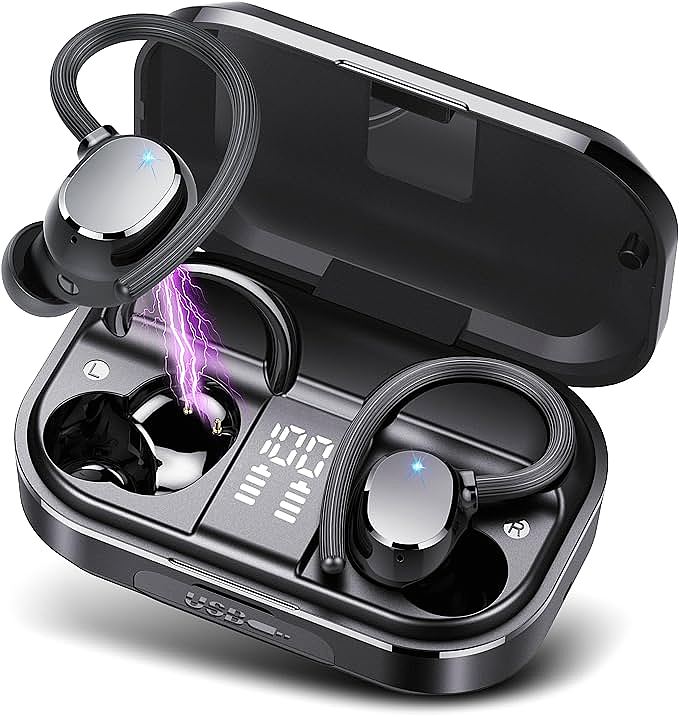
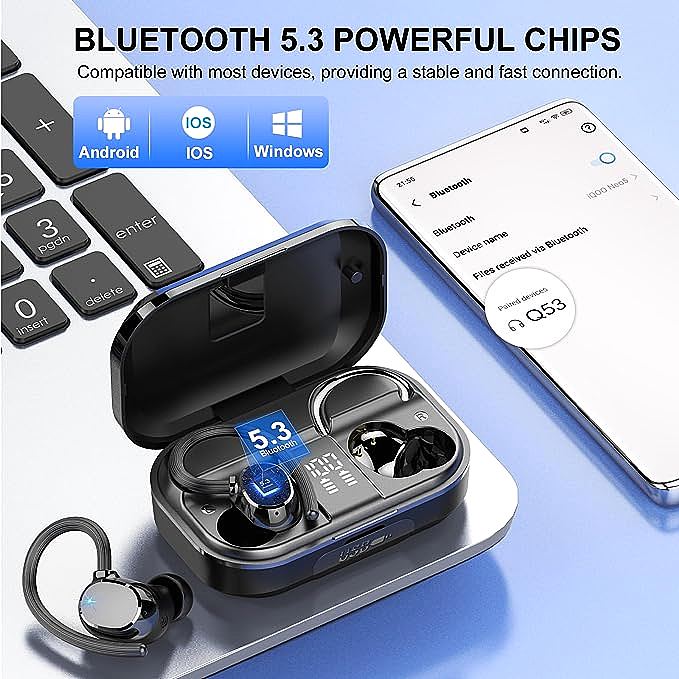
POMUIC Q53 Wireless Earbuds
You just brought home a new pair of wireless earbuds. You open the case, pop them in your ears... and nothing. Or perhaps only one earbud connects. You tap your phone's Bluetooth menu, and it's a confusing list of devices. You're tapping the earbuds, but you just accidentally paused a song you weren't even listening to.
If this sounds familiar, you are not alone. This is the single most common point of frustration with modern wireless audio, and the little paper manual that came in the box often isn't much help.
Welcome. Think of this as the practical guide you wish you had. We're going to walk through every step, from that first frustrating pairing attempt to mastering the tap controls, so you can finally just enjoy your audio.
While these steps apply to most modern wireless earbuds, we'll use the POMUIC Q53 as our example. It follows the pattern most pairing guides cover: Bluetooth 5.3, an earhook design, and sensitive touch controls.
How Should Pairing Work, and What If It Fails?
This is it. The first hurdle. The goal is to create a secure, invisible "handshake" between the wireless earbuds and your phone (or laptop). This pairing guide walks through that handshake end to end.
The "It Just Works" Scenario: Auto-Pairing
For most modern earbuds, the process is supposed to be simple. This is what designers call "auto-pairing."
- Activate Bluetooth: Go into your phone or computer's settings and make sure Bluetooth is turned On.
- Open the Case: Keep the earbuds inside their charging case. Simply open the lid. This action sends a signal from the case, waking the earbuds up and putting them into pairing mode.
- Find the Device: Look at your phone's Bluetooth menu. After a few seconds, you should see the earbuds' name appear - typically the brand followed by a model number.
- Tap to Connect: Tap the name. You might get a pop-up asking to confirm. Accept it.
That's it. From now on, simply opening the case near your phone should automatically reconnect them. But... what happens when it doesn't work?
The Manual Reset, Step by Step
This is the solution 90% of users are looking for when they search for a "manual." If you only get sound from one earbud, or if the earbuds won't connect at all, it's time for a manual reset.
- Forget the Device: Go to your phone's Bluetooth settings. Find the earbuds on the list (the model name, or similar) and tap the "i" or gear icon. Select "Forget This Device" or "Unpair." This is critical.
- Clear the Earbuds' Memory: This is the step everyone misses. You need to make the earbuds "forget" your phone, too.
- Place both earbuds back into the charging case.
- Keep the lid open.
- Press and hold the small button on the charging case (if it has one) for 10-15 seconds until the LED lights flash in a specific pattern (often red and white).
- If there is no case button: A common alternative is to take the earbuds out and tap-and-hold the touch-sensitive area on both earbuds simultaneously for 10-15 seconds until their internal LEDs flash.
- Start Over: Close the case lid for 5 seconds to power everything down. Now, open the lid and start the "Auto-Pairing" process from scratch.
This reset procedure solves the vast majority of "pairing" and "connecting" issues. The key is to clear the connection from both the phone and the earbuds.
What Does the 120-Hour Battery Claim Really Mean?
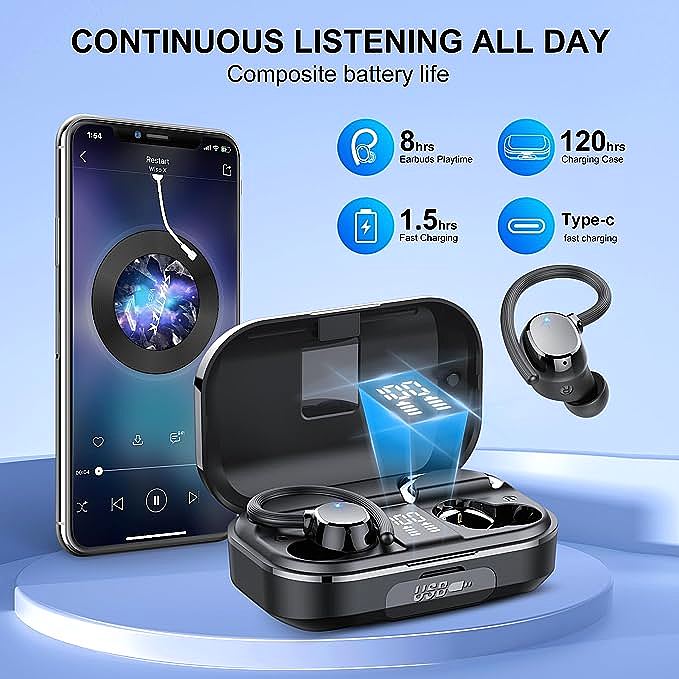
You'll often see staggering battery claims, like the 120-hour figure advertised for this model. Let's be clear: this doesn't mean the earbuds will play for 120 hours straight. This is where the charging case becomes the star of the show.
- Earbud Battery: This is the power for continuous listening. For our example, this is about 8 hours. When you're done, you put them back in the case.
- Case Battery: This is the real powerhouse. The case itself is a portable power bank. The "120-hour" number means the case holds enough power to recharge your earbuds (which last 8 hours) multiple times.
That LED display on the front is your best friend. It stops you from guessing.
- The Percentage: This (e.g., "92%") is the battery remaining in the case.
- The Bar Graphs: These show the charging status of the individual left and right earbuds.
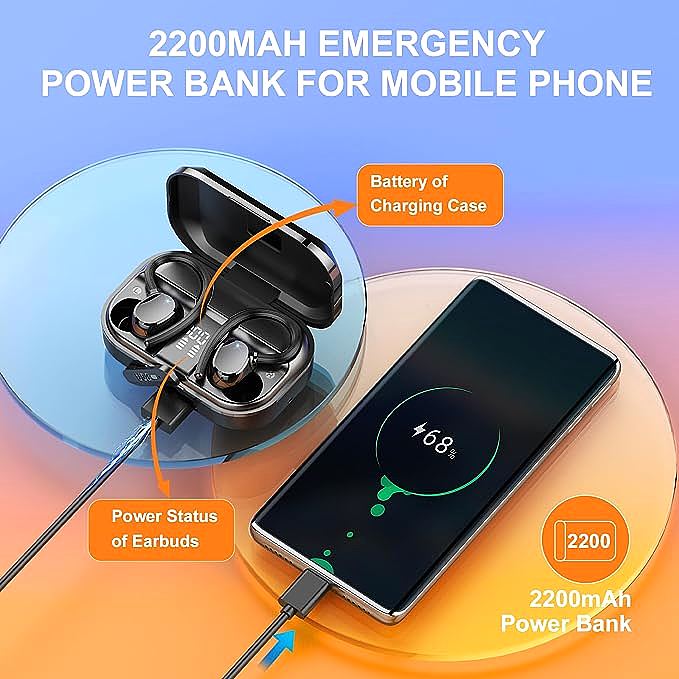
Pro-Tip: Some cases also have a standard USB port, allowing them to function as an emergency power bank for your phone. It won't give you a full charge, but it can be a lifesaver.
What Do All Those Taps and Presses Actually Do?
No buttons? No problem... until you accidentally hang up on your boss. Earbuds now use capacitive touch sensors, which detect the tiny electrical charge in your fingertip.
The challenge is that every brand uses slightly different tap combinations. Since you're likely here looking for a manual, here is a very common control scheme that matches many models.
- Play / Pause: Single tap on either earbud.
- Answer / Hang Up Call: Single tap on either earbud.
- Reject Call: Long press (hold for 2 seconds) on either earbud.
- Next Song: Double tap on the right earbud.
- Previous Song: Double tap on the left earbud.
- Volume Up: Triple tap on the right earbud.
- Volume Down: Triple tap on the left earbud.
- Activate Voice Assistant (Siri/Google): Long press (hold for 2 seconds) when not in a call.
The trick is to be deliberate. A "tap" should be firm and quick. A "long press" requires you to hold your finger in place until you hear a small confirmation beep.

Which Technologies Actually Solve Everyday Problems?
The features list on the box reads like marketing, so let's reframe it as "helpful technology you already paid for."
Bluetooth 5.3: The "Unbreakable Connection" Myth
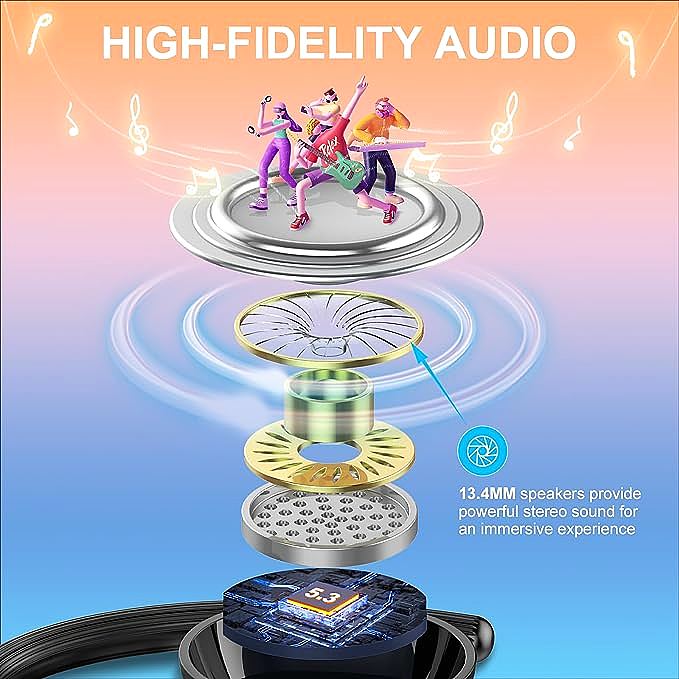
This is the "messenger" between your phone and earbuds. Bluetooth 5.3 is fantastic because it's more efficient (better for battery) and more stable (better at avoiding interference). This means fewer random dropouts when you put your phone in your back pocket. It's the reason your pairing (once it works!) is fast and reliable.
CVC 8.0 & HD Mics: "Can You Hear Me Now?"
The earbuds in this example have multiple microphones. This isn't just for stereo. CVC (Clear Voice Capture) is a technology that uses those mics to find your voice. It actively filters out background noise - wind, traffic, or a coffee shop din - so the person on the other end of your call hears you, not the chaos around you.
IPX7 Waterproofing: The "Sweat-Proof" Guarantee
What does IPX7 really mean? * IP: Ingress Protection (a standard rating). * X: Not rated for dust. * 7: Rated for water.
An IPX7 rating means the device can be submerged in up to 1 meter of fresh water for 30 minutes. This is not a license to go swimming. This is your peace of mind. It means you can sweat heavily at the gym or get caught in a rainstorm without destroying your earbuds. That's why earhook designs are so popular for running and sports.
Which Two Final Tips Are Worth Keeping?
You've mastered pairing, power, and controls. Here are two last pieces of practical advice that address common user complaints.
1. "Is There an App for My Earbuds?"
You may be searching for a brand app or model-specific app to control settings or an equalizer (EQ). For most earbuds in this category, the answer is no, there is no dedicated app.
And honestly? This is often a good thing. It means the earbuds are designed to work universally with your phone's built-in controls. Want to change the EQ? Use the settings in your music app (like Spotify) or your phone's main audio settings. The lack of a proprietary app means fewer updates, less battery drain, and less complexity.
2. "Why Does My Audio Sound Muffled or Tinny?"
This is the most important tip of all. One user (Jason B.) in the customer reviews discovered this, and it proves the point.
When you unbox your earbuds, look very closely at the speaker nozzle - the part that goes into your ear. Many manufacturers place a tiny, almost invisible piece of protective plastic film over the speaker mesh. If you don't remove this, the sound will be terribly muffled.
Before you decide the audio is bad, take a pair of tweezers and gently check for this film. Peeling it off can, as one user put it, make them "sound pretty freaking awesome."
You are now more knowledgeable than 99% of wireless earbud owners. You've gone from the frustration of pairing to understanding how the core technology works to serve you. Enjoy the music.
POMUIC Q53 Wireless Earbuds
Related Essays

Why Your $35 Earbuds Survived the Washing Machine: The Physics of Waterproof Bluetooth Engineering

Why Your Earbuds Stop Working After Six Months: The Specs That Actually Matter

Wireless Earbuds: How Premium Technology Became Universally Accessible

Acoustic Democratization: Engineering High-Fidelity Audio on a Micro-Budget
The Physics of Silence and Stamina: Decoding ANC and Battery Engineering in Wireless Audio

The "2023" Paradox: Decoding the Dzstorm Wireless Architecture

Protocol vs. Physics: Decoding Bluetooth 5.3's RF Challenge in TWS Earbuds

The Science in Your Pocket: Deconstructing the Tech Inside a $20 Pair of IPX8 Wireless Earbuds

ANINUALE S18 Wireless Earbuds: Experience the Seamless World of Bluetooth 5.3
