Why Your Fitness Microphone Keeps Failing: The Physics of Movement and Sound Capture

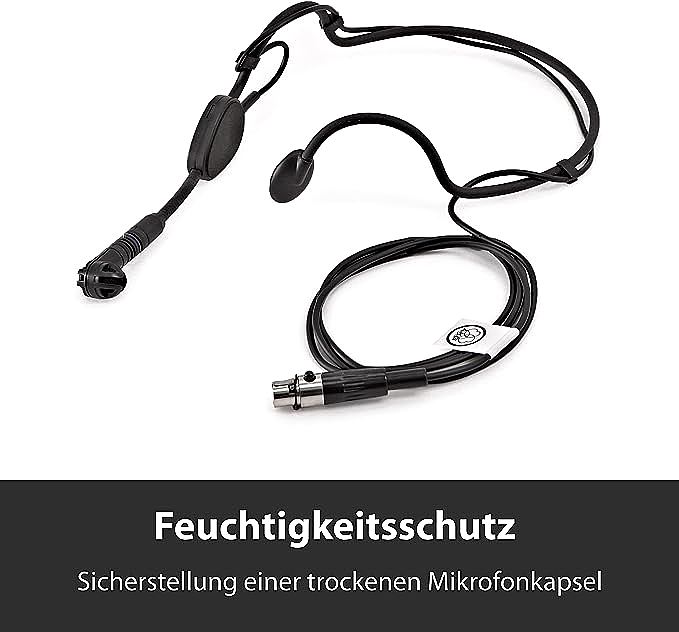
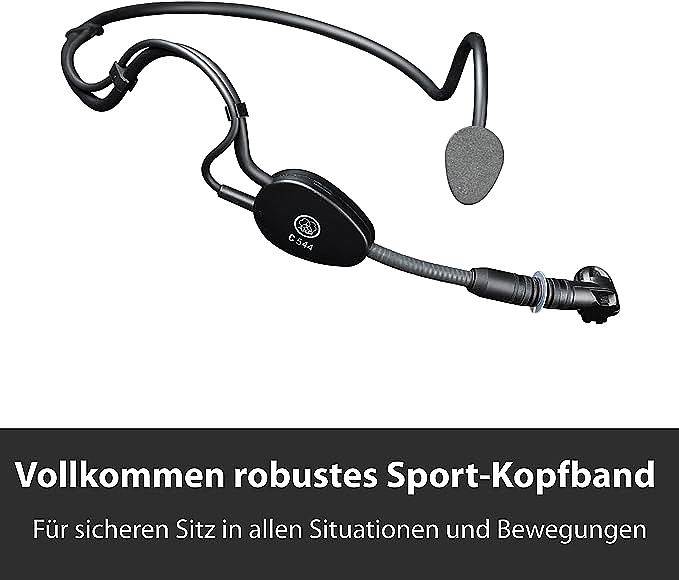
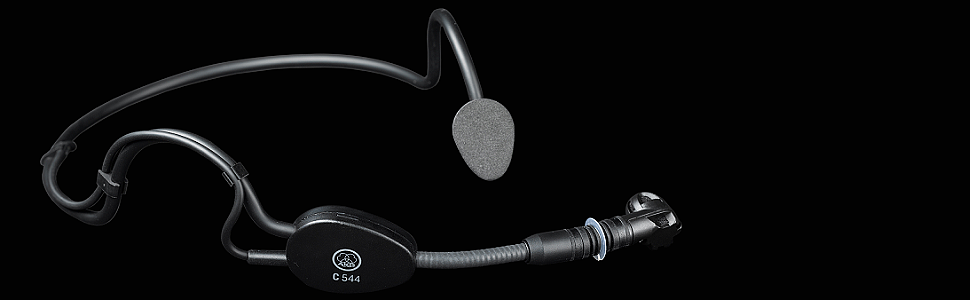
AKG Pro Audio C544 L High-Performance Sports Head-Worn Condenser Microphone
Your instructor's voice cuts out mid-session. The wireless pack works fine. The problem is the microphone on their head, slipping two inches left during a jumping jack. In a loud gym, that two-inch shift can mean the difference between clear instruction and complete audio dropout.
This is not a quality issue. It is a physics problem.
The Mechanics of Proximity
Sound pressure follows the inverse square law. When a sound source doubles its distance from a microphone, the captured signal loses 6 decibels. A cardioid microphone positioned two centimeters from the lips delivers fundamentally different loudness than the same microphone positioned four centimeters away. That two-centimeter difference represents a halving of signal level.
During high-intensity exercise, the human head moves in three dimensions. Vertical displacement occurs during jumping movements. Horizontal rotation happens during lateral stretches. Forward lean appears during mountain climber exercises. Each movement type creates different acoustic consequences. A microphone that sits perfectly during standing still becomes a liability during burpees.
The cardioid polar pattern helps. It rejects sound arriving from behind the capsule and provides roughly 10 to 15 decibels of rear rejection compared to omnidirectional designs. But polar patterns describe performance under controlled conditions in anechoic chambers. The real world involves fabric, sweat, and constant motion.
When fabric covers the microphone grille, the frequency response changes. High-frequency content above 6 kHz drops by 3 to 6 decibels. The effect is subtle during normal speech but becomes significant when instructors raise their voices to be heard over music. The sound becomes muffled precisely when clarity matters most.
Moisture and Conductors
Condenser microphones require electrical power. The electret design eliminates external bias in most contemporary models, but moisture remains an enemy regardless of architecture. Sweat contains sodium chloride and trace minerals that bridge electrical contacts. A small amount of conductive residue between capsule terminals increases self-noise. Multiple sessions without proper drying allow corrosion to build, gradually degrading signal quality.
The physics of corrosion involve galvanic action. When dissimilar metals contact an electrolyte solution, electrons flow from one material to another. Over time, the anodic material erodes. In microphone construction, gold-plated contacts resist this process better than nickel, but no metal survives sustained exposure to sweat without maintenance.
Understanding this helps explain why head-worn microphones in fitness applications require different design considerations than stage or studio microphones. A studio condenser might sit in a humidity-controlled room for years. A fitness microphone encounters human perspiration within its first use.
The Aerospace Parallel
In the 1960s, helicopter manufacturers faced a vibration problem. Engine rotation created oscillation that transferred through the airframe into the cockpit. Pilots experienced degraded situational awareness. Engineers could not simply dampen the vibration at its source because power requirements made complete elimination impractical.
The solution involved active control systems. Sensors detected vibration characteristics. Actuators generated counter-phase signals. The system did not eliminate vibration—it introduced a second vibration pattern that partially cancelled the first through destructive interference.
This same principle appears in professional audio. Electronic feedback suppressors listen for problem frequencies and apply narrow-band notch filters. Acoustic echo cancellers sample the acoustic environment and generate inverse waveforms. The mathematics differ between applications, but the philosophy remains constant: when you cannot eliminate a problem at its source, introduce a controlled counter-pattern.
For head-worn microphones, the counter-pattern approach manifests in shock mounting systems. Elastic materials decouple the capsule from physical vibrations transferred through the headband. The microphone does not float in a vacuum—elasticity allows controlled relative motion that absorbs energy before it reaches the diaphragm.
Helmholtz Resonance in Small Spaces
The human ear canal measures approximately 2.5 centimeters in length with a diameter around 0.7 centimeters. This geometry creates resonant peaks near 4 kHz and 8 kHz. Microphone designers working on in-ear monitors must account for this acoustic environment. Head-worn microphones positioned outside this space encounter a different acoustic boundary.
When a microphone sits three to four centimeters from the mouth, the cavity between lips and capsule behaves as a resonant chamber. The resonant frequency depends on volume and aperture size. A larger protective grille increases the effective cavity volume, shifting resonance downward. This coloring effect varies between microphone designs based on grille geometry and housing depth.
The implications for fitness applications involve sound quality consistency. A microphone that delivers flat frequency response during standing still may exhibit a resonant peak during forward-leaning exercises when the effective cavity size decreases. The same physics that makes a whisper sound different in a small room versus a large room applies to this situation.
Designing for the Moving User
Professional head-worn microphones intended for fitness applications typically weigh between 25 and 45 grams. The distribution of this mass matters more than the absolute number. A heavier microphone with balanced weight distribution may feel more stable than a lighter microphone with front-heavy positioning. Users perceive comfort through pressure distribution, not just mass.
Contact pressure follows Hooke's law for elastic deformation. The headband applies force to maintain microphone position. Too little force allows slippage during movement. Too much force creates discomfort during extended use. The optimal range for most users falls between 150 and 300 grams of total clamping force, though individual variation exists based on head geometry and sensitivity.
Frame materials influence both durability and comfort. Stainless steel offers corrosion resistance and dimensional stability across temperature ranges. Memory polymers can return to original shape after deformation. Some manufacturers use hybrid constructions that combine metal structural elements with polymer padding zones.
The cable entry point represents a critical stress concentration. Repeated flexing at a fixed bend radius eventually causes conductor fatigue. Professional designs often include strain relief features that distribute bending forces over a longer section of cable, reducing the effective curvature radius at any single point.
Choosing and Maintaining Your System
Before purchasing, examine the connection interface. Mini-XLR and proprietary connectors appear in various products. Verify that the connector matches existing wireless transmitter inputs. Adapter cables exist but introduce additional points of potential failure.
After each use, allow the microphone to dry completely before storage. Condensation forms when warm, moist air contacts cooler surfaces. A microphone worn during exercise carries residual warmth and humidity into cooler environments. Placing the unit in a breathable pouch rather than an airtight container allows moisture to evaporate rather than condense on the capsule.
Periodically inspect the grille for debris accumulation. Lint and skin cells collect in acoustic openings over time. Compressed air can remove loose particles. For persistent contamination, a soft brush applied carefully prevents damage to the protective mesh.
Consider the physical environment of your primary use case. High-intensity group fitness classes involve more movement and perspiration than yoga instruction. The same microphone design may perform differently across these applications
The Quiet Problem
One dimension receives insufficient attention in microphone discussions: self-noise. Every electronic circuit generates thermal noise. Condenser microphones require power to operate their active electronics. The power source—whether phantom power from a mixer or battery in a wireless transmitter—influences the noise floor.
Professional microphones specify equivalent noise ratings, typically expressed in decibels relative to 1 pascal of sound pressure (dBA). A difference of 10 dBA between two microphones represents a tenfold improvement in noise performance. For fitness applications where instructors speak loudly to be heard, this specification may seem irrelevant. However, quiet passages during demonstration periods reveal the difference. When an instructor transitions from high-energy instruction to detailed technical explanation, the microphone must capture soft detail without audible hiss.
The trade-off involves power consumption. Lower self-noise designs typically draw more current from the power supply. Wireless systems have finite battery capacity. Understanding this relationship helps users make informed decisions about acceptable performance trade-offs for their specific situation.
Engineering as Constraint Satisfaction
Every design represents a collection of compromises. Reducing mass often requires thinner structural elements that sacrifice durability. Improving moisture resistance may involve materials that attract lint. Increasing shock isolation can reduce the sensitivity of the system to minor adjustments.
No product satisfies all requirements simultaneously. The skill lies in identifying which constraints matter most for a given application and selecting products that optimize within those priorities. A product that fails in one context may excel in another. The fitness microphone that struggles during high-impact interval training may perform beautifully for low-impact yoga instruction.
Understanding the underlying physics helps users move beyond marketing language and specifications toward genuine evaluation of fit. The question is not whether a microphone is good or bad—those terms require context. The question is whether the specific trade-offs encoded in a particular design align with the specific requirements of a particular user.
The next time you hear an instructor's voice cut out during a workout, listen for the underlying pattern. Is the problem related to movement positioning? Moisture interference? Cable stress? Each failure mode points to a different aspect of the engineering challenge. The physics does not change. The solutions vary based on which constraints receive priority during design. Understanding this framework transforms purchasing decisions from guesswork into informed analysis based on actual requirements rather than perceived quality or brand reputation.
Movement and sound capture remain fundamentally in tension. The human body generates force through motion. Microphones translate air pressure variations into electrical signals. These processes do not naturally cooperate. Engineering creates the conditions for their collaboration. The better you understand the underlying principles, the more effectively you can participate in that collaboration.
AKG Pro Audio C544 L High-Performance Sports Head-Worn Condenser Microphone
Related Essays

Why Won't My Earbuds Pair? Bluetooth Handshakes, Sensors, and a Fix Sequence

Bluetooth Headphone Setup Explained: Pairing, EQ Modes, and TV Audio in 2026

Wireless Earbuds Noise Cancelling Explained: The Physics of Quiet and the Sensor
