The Physics of Minimalist Audio: Decoding Open-Back Dynamics and Impedance Efficiency


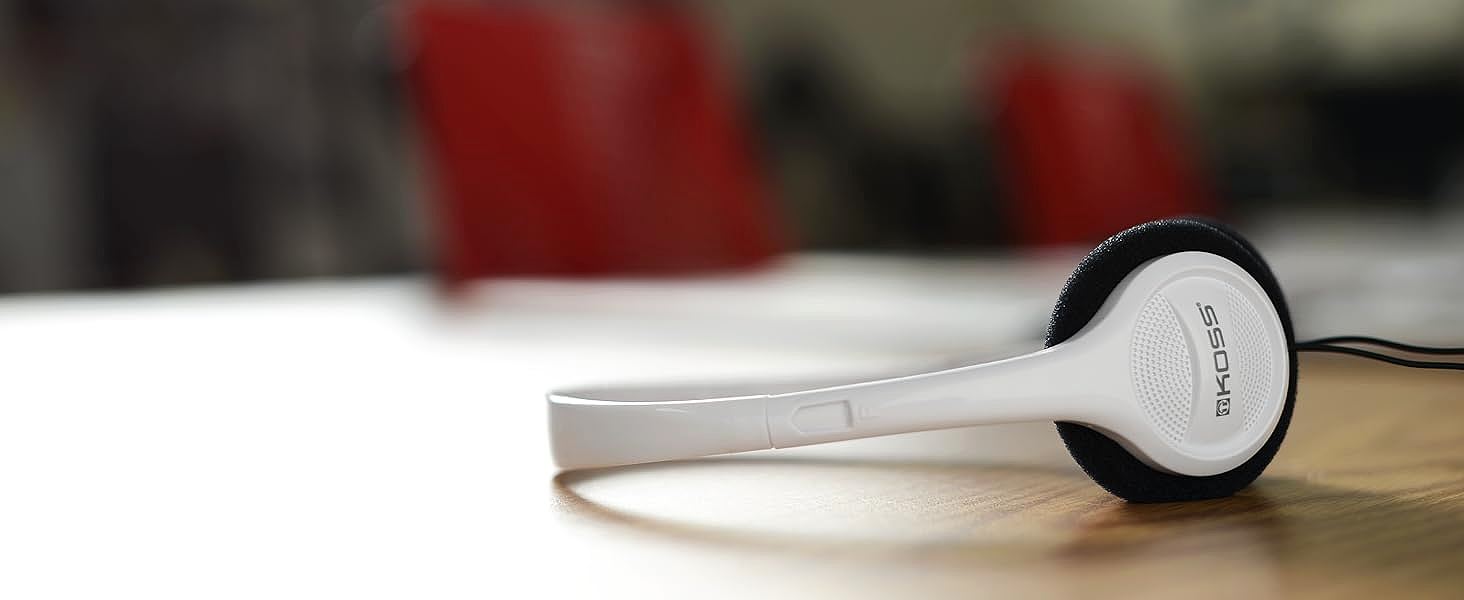
Koss KPH7 Lightweight Portable Headphone
In the contemporary landscape of high-fidelity audio, there is a pervasive trend toward complexity. Multi-driver arrays, active noise cancellation circuits, and heavy shielding materials often dominate the market. However, a counter-discipline exists within acoustical engineering that prioritizes minimalism and physical efficiency. This approach relies not on digital correction, but on the fundamental behaviors of air and electricity. By stripping away isolation chambers and batteries, engineers can exploit the natural properties of dynamic drivers in an open-air environment.
To understand the mechanics of this design philosophy, one must examine the interaction between the transducer and the acoustic chamber. Devices that adhere to this minimalist architecture—such as the Koss KPH7—serve as effective case studies for understanding two critical concepts in audio physics: the acoustic implications of open-back chassis designs and the electrical efficiency governed by impedance and sensitivity.

The Aerodynamics of Open-Back Transducers
The classification of headphones into "open-back" and "closed-back" refers to the treatment of the rear wave generated by the driver. A dynamic driver creates sound by moving a diaphragm back and forth. This movement generates a pressure wave in front of the driver (towards the ear) and an equal but opposite pressure wave behind the driver.
In a closed-back system, this rear wave is trapped within the ear cup. Engineers must then manage these reflections using damping materials to prevent them from bouncing back and interfering with the diaphragm's movement, which can cause distortion. Conversely, an open-back architecture allows this rear wave to escape into the surrounding environment.
The Koss KPH7 utilizes this open-back configuration. The immediate physical consequence is a reduction in standing waves within the housing. Without air pressure building up behind the driver, the diaphragm encounters less resistance (acoustic impedance) during its excursion. This freedom of movement typically results in a more natural transient response—the driver's ability to start and stop moving quickly in response to a signal. The soundstage, or the perceived spatial location of sound, expands because the brain does not detect the immediate localized reflections associated with a sealed enclosure. However, this design relies on a quiet environment, as the lack of a seal provides zero attenuation of external noise.
Impedance Matching and Signal Sensitivity
Beyond acoustics, the electrical characteristics of the voice coil determine how the headphone interacts with the source device. Two parameters define this relationship: impedance (measured in Ohms) and sensitivity (measured in decibels of Sound Pressure Level, dB SPL).
Impedance represents the resistance the headphone presents to the electrical current. The KPH7 operates at 32 Ohms. In the realm of audio electronics, this is considered low impedance. High-impedance headphones (e.g., 250 Ohms or higher) require higher voltage to drive, necessitating specialized amplifiers. A 32 Ohm load is engineered to be driven efficiently by the low-voltage output rails found in standard mobile devices, laptops, and institutional audio equipment.
Sensitivity complements impedance by defining how loud the device gets for a given power input. With a rating of 91 dB SPL, the system is designed to reach standard listening volumes without pushing the amplifier of the source device into clipping distortion. This balance of low impedance and moderate sensitivity creates a "universally drivable" load, ensuring consistent performance across a wide variance of source equipment without the need for external amplification.
The Role of Permeable Damping Materials
In supra-aural (on-ear) designs, the ear cushion plays a functional role in the acoustic circuit. Unlike the leather or pleather pads of circumaural (over-ear) headphones which aim to create a hermetic seal, the foam cushions employed in minimalist designs act as a porous acoustic filter.
This foam material provides controlled leakage. Low-frequency wavelengths are long and can easily pass through the foam or leak out around the edges if the seal is not perfect. This physical phenomenon explains the frequency response characteristic of 80-18,000 Hz often seen in this class of device. The roll-off below 80 Hz is a direct result of the lack of a pressurized air chamber required to sustain deep sub-bass frequencies. However, the foam also serves to absorb high-frequency reflections between the driver grille and the outer ear (pinna), preventing harshness and sibilance in the 2kHz to 5kHz range.

The Persistence of Analog Fidelity
While digital signal processing (DSP) continues to advance, the raw physics of the analog transducer remains the foundation of audio reproduction. The minimalist engineering approach demonstrates that audio fidelity does not always require complex electronic intervention. By understanding the relationship between airflow, electrical resistance, and mechanical damping, engineers can create systems that offer high clarity and spatial accuracy. The widespread use of 32 Ohm open-back architectures in educational and professional settings underscores the enduring efficiency of these fundamental physical principles.
Koss KPH7 Lightweight Portable Headphone
Related Essays

Koss KSC75 Open-Back On-Ear and Its Two Close Rivals

Open Back Headphones: Why They Sound Different

The Physics of Silence: How Modern Headphones Solve Classic...

The Anti-Isolation Manifesto: Open-Back Audio and the...

The Anatomy of a Modern Miracle: Excavating the Technology Inside Budget Audio

HIFIMAN SUNDARA: Unveiling the Magic of Planar Magnetic Headphones
Stainless Steel Paradox: Why a $29 Headphone Built to Outlast Everything Else

The Physics of Transparency: How Open-Back Design Reveals the Truth in Sound
Anchored Audio: The Physics of Sound in Motion

