The Science of Safe Listening: How Bone Conduction Headphones Keep You Aware


Wireless Earbuds
The Runner's Dilemma: When Music Meets Danger
It is 6:47 AM on a Tuesday morning in Austin, Texas. Sarah Chen is three miles into her daily run along the Lady Bird Lake trail, her cadence locked at 170 steps per minute, synchronized to the tempo of her playlist. The path ahead is clear, bathed in early morning light. Behind her, a delivery van approaches at 25 miles per hour. It is electric. It is nearly silent. And Sarah cannot hear it.
This scene plays out millions of times every day across the world. Runners, cyclists, commuters, and pedestrians navigate shared spaces while encased in what audiologists call a "sonic bubble" — a self-imposed isolation chamber created by in-ear headphones that seal the ear canal and block up to 35 decibels of ambient sound. The trade-off is seductive: immersive audio in exchange for environmental awareness. But the mathematics of this bargain are becoming harder to justify.
The rise of electric vehicles has fundamentally altered the urban soundscape. A 2024 National Highway Traffic Safety Administration study found that pedestrian fatalities involving hybrid and electric vehicles were 20 percent higher than those involving internal combustion engines during low-speed maneuvers — precisely the scenarios where headphone-wearing pedestrians are most vulnerable. The question is no longer whether music enhances athletic performance (it does, measurably, by up to 15 percent in endurance activities). The question is whether bone conduction technology can deliver a reasonable audio experience while preserving the situational awareness that evolution spent millions of years fine-tuning.
The answer lies not in marketing claims, but in the physics of how sound travels through the human skull.

The Two Highways to the Cochlea
To understand bone conduction, you must first understand what it is not. It is not a new invention, a gadget trick, or a compromise. It is one of two natural pathways through which every human being has always perceived sound.
Air Conduction: The Primary Route
When a guitar string vibrates, it displaces air molecules, creating pressure waves that propagate outward at approximately 343 meters per second (at room temperature). These waves enter your ear canal and strike the tympanic membrane — the eardrum — causing it to vibrate. This vibration is transmitted through three tiny bones called the ossicles (the malleus, incus, and stapes, collectively the smallest bones in the human body) to the oval window of the cochlea. Inside this fluid-filled, snail-shaped structure, thousands of hair cells convert mechanical vibration into electrical signals that travel along the auditory nerve to the brain.
This is air conduction. It is the primary hearing pathway, responsible for the vast majority of your auditory experience.
Bone Conduction: The Secondary Route
But there is a second pathway, one that operates in parallel and always has. When the same guitar string vibrates, it also causes the bones of your skull to vibrate. These vibrations travel directly to the cochlea, bypassing the eardrum and ossicles entirely. The cochlea cannot distinguish between vibrations that arrived via air and vibrations that arrived via bone. Both produce identical neural impulses. Both are processed by the same auditory cortex.
The physics of this pathway are remarkable. Sound vibrations travel through cortical bone at speeds of 800 to 3,000 meters per second — roughly two to nine times faster than through air. The petrous portion of the temporal bone, one of the densest regions of the human skull, serves as an especially efficient conduit to the cochlea.
Bone conduction headphones exploit this secondary pathway by placing vibrating transducers against the cheekbones, just in front of the ears. These transducers — either electromagnetic or piezoelectric — convert electrical audio signals into microscopic vibrations measuring 0.1 to 1 micrometer in amplitude. The vibrations travel through the zygomatic arch (the cheekbone), which acts as a natural amplifier, before reaching the cochlea.
The result: you hear the music, the podcast, the phone call — but your ear canal remains completely unobstructed.
A Discovery Older Than the Telescope
The concept is not new. In the 1500s, Italian physician Girolamo Cardano documented the phenomenon of hearing through bone vibration by clenching a rod between his teeth and touching it to a vibrating object. Nearly three centuries later, Ludwig van Beethoven, increasingly deaf from what modern medicine suspects was otosclerosis, reportedly attached a wooden rod to his piano and clenched it between his teeth. The vibrations traveled through his jawbone to his cochlea, allowing him to perceive his own compositions even as his air conduction pathway failed.
What took 500 years was miniaturization — the engineering required to make Cardano's rod into a device that weighs 25 grams and pairs with your phone over Bluetooth 5.0.
The Physics of Skull-Based Sound
Understanding why bone conduction sounds different from air conduction requires diving into the acoustics of the human skull itself.
Compressional vs. Inertial Mechanisms
Bone conduction operates through two distinct physical mechanisms, each affecting different frequency ranges:
Compressional bone conduction dominates at higher frequencies. Individual segments of the skull vibrate independently, compressing the bony casing of the inner ear directly. This stimulates the sensory hair cells in a manner similar to — but not identical to — air conduction.
Inertial bone conduction dominates at lower frequencies. The entire skull moves as a unit, while the sensory structures within the inner ear, suspended in fluid, tend to remain stationary due to inertia. The relative motion between the skull and the sensory apparatus produces the perception of sound — as if airborne compressional waves were moving those sensory parts while the skull remained still.
Frequency Response and the Bass Question
The most common observation about bone conduction headphones is that they lack deep bass. This is not a manufacturing defect. It is physics. The skull conducts low frequencies more efficiently than air at the transmission stage, but the open-ear design means there is no sealed acoustic chamber to reinforce bass frequencies. In traditional headphones, the sealed ear canal creates a resonance chamber that amplifies low-frequency content. Without this chamber, bass frequencies dissipate into the surrounding air rather than being directed into the ear.
The practical frequency response of bone conduction transducers typically spans 300 Hz to 15 kHz, with enhanced models reaching 20 kHz at the high end. The high-frequency roll-off above 15 kHz occurs due to the impedance characteristics of bone tissue, which attenuates very high frequencies more aggressively than air does.
This trade-off — reduced bass and treble extension in exchange for complete environmental awareness — is the fundamental design compromise of bone conduction technology.
Safe Listening: The Numbers That Matter
The World Health Organization estimates that 1.1 billion young people worldwide are at risk of hearing loss due to unsafe listening practices. The primary culprit is not loud concerts or industrial noise. It is personal audio devices.
The WHO-ITU H.870 Standard
In response, the WHO and the International Telecommunication Union established the H.870 standard for safe listening devices. The guidelines define two modes:
- Mode 1 (Adults): Maximum output of 80 dB for up to 40 hours per week
- Mode 2 (Children): Maximum output of 75 dB for up to 40 hours per week
These numbers are not arbitrary. The National Institute for Occupational Safety and Health (NIOSH) has established that exposure to 85 dBA averaged over an 8-hour workday constitutes the threshold for potential noise-induced hearing loss. The critical concept is the 3 dB exchange rate: for every 3 decibel increase in sound intensity, the safe exposure duration is halved.
At 80 dB, you can listen safely for 40 hours per week. At 85 dB, only 8 hours. At 90 dB, just 4 hours. At 100 dB, a mere 15 minutes. At 105 dB — the maximum output of many consumer headphones — you have approximately 4 minutes before cumulative damage begins.
Why Open-Ear Design Is Inherently Safer
Bone conduction headphones cannot physically produce the sound pressure levels that in-ear monitors can. Because the ear canal remains open, there is no sealed cavity to create the high-pressure environment that drives sound levels to dangerous thresholds. Users are also less tempted to increase volume to overcome ambient noise — because they can still hear the ambient noise.
This is not a small distinction. Personal audio devices can produce output levels ranging from 75 dB to as high as 136 dB. The combination of sealed ear canals and high maximum output creates a genuinely hazardous situation that open-ear designs structurally prevent.
The Cocktail Party Effect: Your Brain on Open Ears
The safety benefits of bone conduction extend beyond volume levels. They touch on a fundamental aspect of how the human brain processes auditory information.
In 1953, cognitive scientist Colin Cherry coined the term "cocktail party effect" to describe the brain's remarkable ability to focus on a single conversation in a room filled with competing voices. This selective attention mechanism is a survival skill, refined over millions of years of evolution. Your auditory cortex continuously monitors the full acoustic environment while allowing conscious attention to focus on a single stream.
When traditional headphones seal your ear canal, they create what neuroscientists call auditory masking — external sounds are physically blocked before they can reach the cochlea. The cocktail party effect is not merely diminished. It is disabled. Your brain loses access to the ambient sound streams it uses to maintain spatial awareness, detect threats, and orient you within your environment.
Open-ear bone conduction headphones preserve this capability entirely. The ear canal remains unobstructed, allowing the full spectrum of environmental sound to reach the cochlea through normal air conduction. Your brain can simultaneously process the bone-conducted audio stream (your music, your podcast) and the air-conducted environmental stream (traffic, voices, emergency sirens).
This dual-stream processing is not a compromise. It is how human hearing was designed to work.
Electric Vehicles and the New Urban Soundscape
The safety case for open-ear headphones has strengthened dramatically in recent years, driven by a technological shift unrelated to audio: the electrification of transportation.
Electric vehicles produce virtually no engine noise at low speeds. The European Union mandated Acoustic Vehicle Alerting Systems (AVAS) in 2019, requiring EVs to emit artificial sounds below 20 km/h, but these sounds are subtle by design — typically 50-56 dB, roughly equivalent to normal conversation. A pedestrian wearing sealed in-ear headphones at moderate volume (75-85 dB) will effectively mask these already-quiet alerts.
For runners, cyclists, and urban pedestrians, the calculus has shifted. The environmental sounds that open-ear headphones preserve are no longer supplemental. They are critical safety information in an environment that has grown systematically quieter — and therefore more dangerous for those who choose not to listen.
Making Informed Choices About Your Hearing
Understanding the science of bone conduction is not an academic exercise. It is practical knowledge that can protect one of your most valuable senses.
Volume Awareness
Use the 80/40 rule as your baseline: 80 dB for no more than 40 hours per week. If you find yourself increasing volume in noisy environments, that is a signal that you should consider open-ear designs rather than sealing the ear canal further.
Duration Management
The NIOSH 3 dB exchange rate means that small increases in volume have large effects on safe listening time. An hour at 90 dB consumes the same weekly "budget" as four hours at 85 dB. Track your total exposure, not just peak levels.
Environmental Context
In urban environments with electric vehicles, construction, and mixed traffic, situational awareness is not optional. Open-ear designs — whether bone conduction or air conduction with directional speakers — allow you to maintain the auditory connection to your surroundings that your brain expects and requires.
Signs of Overexposure
If you experience ringing in the ears (tinnitus) after listening, muffled hearing, or a sensation of fullness in the ear canal, you have exceeded safe exposure limits. These symptoms indicate that the hair cells in your cochlea are under stress. While temporary threshold shift often recovers, repeated exposure leads to permanent noise-induced hearing loss — the only entirely preventable form of hearing damage.
The technology in bone conduction headphones is not magic. It is applied physics — the same physics that Cardano documented in the 1500s and Beethoven relied on in the 1790s, now miniaturized into a device that weighs less than an ounce. The choice between immersive isolation and environmental awareness is yours. But it should be an informed choice, made with an understanding of the decibel math, the neuroscience of selective attention, and the changing soundscape of the world around you.
Your cochlea cannot tell the difference between bone-conducted and air-conducted sound. But it can tell the difference between safe exposure and cumulative damage. Choose accordingly.
Wireless Earbuds
Related Essays

The Physics of Bone Conduction: Why Bass Is Hard and How...

Beyond the Eardrum: The Hidden Physics of Bone Conduction

Why Bone Conduction + Noise Cancelling Is a Physical Contradiction
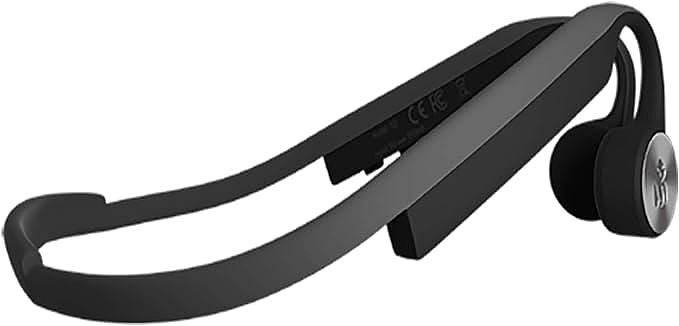
Osteophony and Acoustics Engineering Open-Ear Transducers
The Physics of Bone Conduction: Why Bass Is Hard and How Engineers Solved It
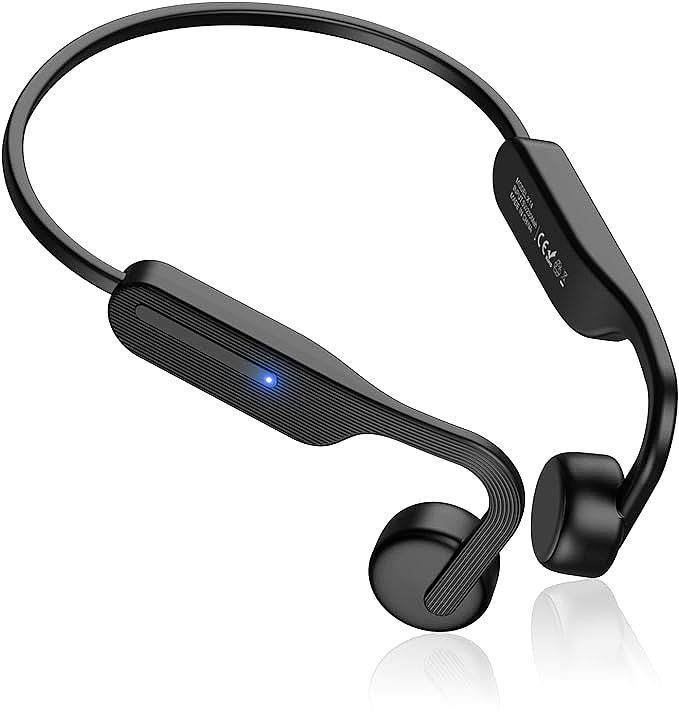
The Ultimate Guide to Open-Ear Bone Conduction Headphones: Safety, Stability, and Why Weight Matters

IUHAND OPENEAR Duo Lightweight Open-Ear Bone Conduction Headphones for Sports

MONODEAL ES-968 pro Bone Conduction Headphones: A Top Choice for Active Lifestyles

Mosonnytee JP2S Bone Conduction Headphones: Crisp Sound Through Your Bones

