Your Earbuds Survived the Rain but Died in the Pool

Warehouse 151 Pro Wireless Earbuds
Your Earbuds Died in the Rain. The Box Said IPX7.
It happens more often than anyone admits. Someone buys a pair of wireless earbuds stamped with "IPX7 waterproof" on the packaging, wears them through a heavy run, maybe gets caught in a downpour, and three weeks later the left earbud goes silent. The immediate reaction is frustration toward the manufacturer. But the disconnect usually lies elsewhere: a fundamental misunderstanding of what IPX7 actually means.
The IPX7 designation does not mean waterproof in the way most people assume. It is a specific, narrow, and carefully controlled test condition defined by an international engineering standard, one that specifies exact water depth, duration, temperature, and movement parameters that rarely match what happens outside the laboratory. Understanding that standard, and where it diverges from everyday life, makes the difference between earbuds that last years and earbuds that die in months.
The IEC 60529 Standard: Engineering Precision, Not Marketing Promise
The "IP" in IPX7 stands for "Ingress Protection," governed by IEC 60529, a standard published by the International Electrotechnical Commission. This document defines a two-digit classification system. The first digit represents protection against solid objects, dust, and debris on a scale from 0 to 6. The second digit represents protection against water on a scale from 0 to 9.
The "X" in IPX7 is not a placeholder or a wildcard. It means the device was not evaluated for dust protection at all. Manufacturers can choose to test only the water resistance classification, leaving the dust component unassessed. This is common for earbuds, where the small form factor makes dust testing less relevant than water exposure during exercise and where manufacturing costs favor focusing on the water protection that consumers care about most.
The second digit, 7, is where the specifics matter. According to IEC 60529, a device rated IPX7 must withstand immersion in water up to one meter deep for 30 continuous minutes. The test is conducted in still, fresh water at room temperature. The device sits motionless in still, fresh water at room temperature, subjected to no movement, no pressure, no soap, and no salt for the entire duration.
This is where consumer expectations diverge sharply from engineering reality. People read "IPX7" and mentally map it to "I can wear these swimming" or "these will survive my shower." The standard makes no such promise.
Still Water and Moving Water: A Physics Problem
Water exerts pressure. At one meter of depth, the hydrostatic pressure is approximately 9.8 kilopascals, or about 1.4 PSI. That is the pressure against the earbud housing during the IPX7 test. It is uniform, gentle, and predictable.
Now consider what happens during a swim. A freestyle stroke moves the arm through water at roughly 1.5 to 2 meters per second. The motion-generated pressure from that movement, calculated using Bernoulli's principle, far exceeds the static pressure in the test tank. Add the turbulence of kicking, turning, and water splashing, and the forces acting on the earbud housing increase by an order of magnitude.
The same principle applies to showering. A standard showerhead delivers water at approximately 2 to 4 bar of pressure, roughly 15 to 20 times the pressure in the IPX7 test. The water is also warm, which softens the rubber seals and adhesive compounds that provide the waterproof barrier. Shampoo and soap introduce surfactants that reduce the surface tension of water, allowing it to penetrate microscopic gaps that fresh water alone could not cross.
This is not a design flaw in the earbuds but rather a straightforward physics problem: the test conditions simply do not account for the real forces encountered in actual water exposure. The IPX7 test measures one specific condition: still, fresh, room-temperature water at one meter for 30 minutes. Anything outside those parameters falls outside the standard's guarantee.
The Nanocoating Layer: Invisible Armor That Fades
Most wireless earbuds achieve their water resistance through a combination of mechanical sealing and nanocoating. The nanocoating is a thin hydrophobic layer applied to the internal circuitry, typically measuring between 1 and 10 micrometers thick. Its effectiveness is measured by contact angle, the angle between a water droplet's surface and the coated material beneath it.
A surface is considered superhydrophobic when the contact angle exceeds 150 degrees. At this threshold, water droplets bead up into nearly perfect spheres and roll off rather than spreading. The lotus leaf, nature's most famous hydrophobic surface, achieves a contact angle of approximately 170 degrees. Commercial nanocoatings on earbuds typically target the 150 to 160 degree range.
But nanocoatings degrade. Human sweat has a pH between 4.0 and 6.0, making it mildly acidic. Repeated exposure to this acidity slowly erodes the coating's molecular structure. Saltwater is worse; the dissolved sodium chloride ions physically break down the coating's surface at a nanoscale. Soap and detergent are the most destructive because surfactant molecules are specifically designed to bond with both water and oil, which is precisely what hydrophobic coatings are engineered to resist.
Studies on nanocoating longevity in wearable electronics suggest that the effective contact angle decreases by approximately 5 to 10 degrees per year under normal use conditions. After 18 to 24 months, a coating that started at 155 degrees may have degraded to 135 degrees, which no longer qualifies as superhydrophobic. Water no longer beads and rolls off; instead, it begins to spread, seep through microscopic gaps in the coating, and eventually reach the sensitive circuitry underneath, where even trace moisture can cause corrosion and electrical failure.
This is why the IPX7 certification on a brand-new device does not guarantee the same protection two years later. The certification is a snapshot taken at the moment of testing, not a lifetime warranty against water damage.
What IPX7 Actually Handles Well
Despite its limitations, the IPX7 specification provides meaningful protection for specific, common scenarios.
Running in rain: Yes. Rainfall, even heavy rain, involves relatively low water pressure and no submersion. The earbuds encounter moving water, but the velocity remains far lower than what a shower or a swimming pool produces. IPX7 earbuds handle rain comfortably because the actual water exposure stays well within the specification's tested boundaries.
Intense gym workouts: Yes. Heavy sweating during exercise produces approximately 0.5 to 2 liters of sweat per hour, depending on intensity and ambient temperature. Sweat volume is manageable for IPX7 seals. The acidity is a long-term concern, but a single workout does not compromise the coating. The critical habit, and one that extends the effective lifespan of the nanocoating by months or even years, is wiping the earbuds dry after each session to prevent prolonged acidic exposure.
Accidental drops in water: Yes, within limits. Dropping an earbud into a puddle, a sink, or even a shallow pool and retrieving it within a few minutes is well within the IPX7 specification. The water is still, the depth is shallow, and the duration is short. This is precisely the scenario the standard was designed and calibrated to cover, which is why most people never experience problems in these situations.
Where IPX7 Falls Short
Swimming: No. The mechanical forces of swimming strokes, combined with chlorine or salt in the water, exceed what IPX7 is designed to handle. Independent testing of multiple IPX7-rated earbuds found that water ingress rates increased significantly after just 5 minutes of active swimming, even in freshwater pools.
Showering: No. The combination of high-pressure water, elevated temperature, and soap surfactants creates the worst possible conditions for earbud seals. One major manufacturer, whose flagship earbuds carry an IPX4 designation, explicitly states in their support documentation that devices should not be immersed in water and that chemicals in soap and shampoo accelerate seal degradation. The same principle applies to IPX7 devices.
Hot environments: No. Saunas, steam rooms, and hot yoga studios expose earbuds to water vapor rather than liquid water. The IPX7 designation addresses liquid immersion, not vapor penetration. Water vapor molecules are small enough to pass through seals that block liquid water entirely. Repeated thermal cycling, from the heat of a sauna to room temperature, also accelerates the aging of rubber seals and adhesives.
IPX4 Through IPX8: Different Tests, Not Different Grades
The IP classification system is not a linear progression where higher numbers always mean better protection. Each level tests a fundamentally different type of water exposure.
IPX4 tests against splashing water from any direction for 10 minutes. This covers rain and sweat but nothing more. Most premium earbuds from major brands carry IPX4.
IPX5 tests against low-pressure water jets, approximately 30 kPa, from any direction for 3 minutes. This covers heavy rain and direct water spray but not immersion.
IPX6 tests against powerful water jets, approximately 100 kPa, from any direction for 3 minutes. This is a high-pressure test designed for industrial equipment. Few consumer earbuds carry this certification because the test is extreme relative to normal use.
IPX7, as discussed, tests still-water immersion at one meter for 30 minutes.
IPX8 is where confusion peaks. Unlike IPX7, which has a fixed, universally defined test, IPX8 allows manufacturers to define their own immersion depth and duration. One manufacturer might test at 2 meters for 60 minutes. Another might test at 1.5 meters for 30 minutes. The consumer has no way to compare two IPX8 products without reading the manufacturer's specific test documentation, which is rarely provided.
This creates a paradox: an IPX8 device from one brand might actually provide less water protection than an IPX7 device from another brand. The number suggests superiority, but the lack of standardization makes direct comparison impossible.
Maintaining Water Resistance Over Time
Since nanocoatings degrade and rubber seals age, users can take specific steps to extend the effective water resistance of their earbuds.
After every workout, wipe the earbuds with a dry cloth. This removes sweat residue before the acidic compounds have time to interact with the coating. Leaving sweat on the surface for hours accelerates degradation.
Store earbuds with the charging port facing downward. This allows any moisture that entered during use to drain out naturally rather than pooling against sensitive contacts.
Avoid charging immediately after exposure to moisture. Water around the charging pins can cause short circuits when electrical current is applied. Wait at least two hours for any residual moisture to evaporate.
Never use a hair dryer or heat gun to accelerate drying. The concentrated heat can warp plastic housings, soften adhesives, and damage the battery. Room-temperature air drying is slower but far safer, preserving the integrity of both the housing materials and the internal seals that water resistance depends on.
Periodically inspect the rubber seals around the charging case and earbud housing. If the seals appear cracked, flattened, or discolored, the water resistance has likely already begun to decline.
The Engineering Honesty Gap
There is a tension in consumer electronics between marketing clarity and engineering honesty. The IP classification system was designed by engineers for engineers. It is precise, technical, and narrowly scoped. But when it appears on product packaging, it is consumed by people without engineering backgrounds who interpret "IPX7" as a blanket assurance of water immunity.
Some companies are more transparent than others. One major manufacturer explicitly warns against immersion despite their devices carrying water resistance certifications. Another, whose flagship sports earbuds carry IPX7, describes them as suitable for workouts but does not explain the static test conditions. Smaller brands often use "IPX7" as a marketing bullet point with no additional context.
The Warehouse 151 Pro, like other IPX7-certified earbuds, benefits from this classification for its intended purpose: protecting against sweat and rain during exercise. But the designation alone does not tell the full story. The full story requires understanding the test behind the number.
A Practical Selection Guide
Rather than memorizing IP classifications, consider your actual use patterns. If you primarily run, cycle, or lift weights indoors, IPX4 is sufficient. Your earbuds will encounter sweat and occasional splashes, nothing more. IPX7 provides additional peace of mind for accidental submersion, like dropping an earbud into a puddle.
If you swim, look for earbuds specifically designed for swimming, not just rated IPX7 or IPX8. Swimming-specific earbuds use different sealing mechanisms, often including screw-on ear tips and reinforced housings, that address the mechanical forces of swimming strokes.
If you want earbuds for the shower, reconsider. No consumer wireless earbuds are designed for prolonged hot shower exposure. The combination of pressure, temperature, and chemicals makes this scenario incompatible with the sealing technologies used in small form-factor devices.
The IP classification system gives engineers a shared language. But shared language only works when both sides understand the definitions. The gap between "one meter still water for 30 minutes" and "I wore them in the pool" is not a product failure. It is a communication failure, one that starts on the packaging and ends with a pair of silent earbuds at the bottom of a swimming bag.
Understanding the science behind the label does not make earbuds more waterproof. But it does make you a more informed user, one who knows when to trust the label and when to trust physics instead.
Warehouse 151 Pro Wireless Earbuds
Related Essays
Boean U8 Wireless Headphones: Your Ultimate Workout Companion with Bluetooth 5.3

The Athlete's Guide to Earbud Tech: Decoding Sound, Sweat, and Stability

Boytond YYK580 Wireless Earbuds: Unleash Your Sound with Unrivaled Comfort and Performance

What Does IPX7 Protect Against? The Engineering Truth

MTYBBYH S12 Waterproof Headphones: Enjoy Music Underwater with MP3 Mode
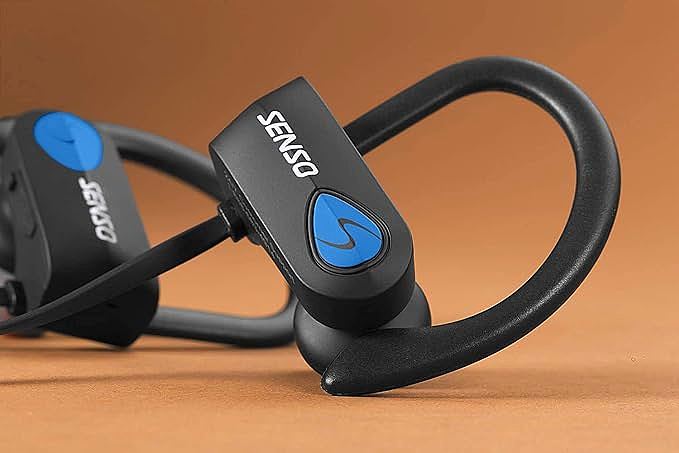
Senso ActivBuds S255B: Budget Sports Earbuds with Killer Battery

How Budget Earbuds Deliver Sound and Survive the Elements

RUMIXI H01: Engineering the Future of Affordable Audio

The Science of Staying in the Zone: How Sports Earbuds Protect Your Flow State
