The Renaissance of the Jack: Engineering Longevity in a Disposable World


BUTIAO QC15 Bluetooth Adapter
In the world of classic automobiles, there is a subculture known as "Restomodding." It involves taking a vintage chassis—say, a 1967 Mustang or a Porsche 911—and carefully retrofitting it with modern brakes, suspension, and engine management systems. The goal is to preserve the soul of the classic design while injecting the reliability and performance of the modern era. It is a labor of love, a rejection of the idea that "new" always means "better."
In the realm of consumer electronics, we rarely see this kind of reverence. The cycle of technology is typically brutal and linear: buy, use, obsolete, discard, repeat. However, there is one device that has inspired a similar "Restomod" movement among audiophiles and frequent travelers: the Bose QuietComfort 15 (QC15). Launched in 2009, these headphones set the gold standard for Active Noise Cancellation (ANC). They were the sanctuary of the frequent flyer, the shield of the commuter, and the best friend of the student.
But time—and Apple—moved on. The headphone jack was systematically murdered, leaving these perfectly functional acoustic marvels tethered to a world that no longer had a place to plug them in. This created a unique engineering challenge: how do you bring a wired legend into the wireless age without compromising its integrity? The answer lies in devices like the BUTIAO QC15 Bluetooth Adapter, a small piece of hardware that represents a much larger philosophy: the refusal to let good technology die.
Stratum I: The Silence that Started It All (A History of ANC)
To understand why anyone would bother upgrading a pair of headphones from 2009, we must first appreciate what made them special. The QC15 was not just a product; it was the culmination of a 30-year scientific odyssey embarked upon by Dr. Amar Bose.
The 1978 Epiphany
The story goes that in 1978, Dr. Bose was on a flight from Zurich to Boston. He was excited to try a new set of electronic headphones provided by the airline, hoping to enjoy the in-flight audio. However, the roar of the jet engines completely drowned out the music. Instead of giving up, Dr. Bose pulled out a notepad and began sketching the mathematical equations for a system that could electronically cancel out ambient noise.
It took more than a decade of research and millions of dollars before the first commercial headset (for pilots) was released, and another decade before the technology was perfected for consumers in the QC line.
The Physics of Phase Cancellation
The magic inside the QC15—and indeed, inside the BUTIAO adapter that revitalizes it—relies on a principle of physics called Destructive Interference. Sound travels in waves, consisting of peaks (high pressure) and troughs (low pressure).
The QC15 has microphones inside and outside the ear cup that "listen" to the environment. When the microphone detects a sound wave (like the hum of a jet engine), the internal circuitry instantly generates a "mirror image" of that wave. Where the noise wave peaks, the headphone generates a trough. When these two waves collide, they mathematically sum to zero. The pressure is neutralized. The noise vanishes.
This analog noise cancellation circuitry in the QC15 is legendary for a reason. Unlike modern digital ANC, which can sometimes feel artificial or create a "pressure" sensation on the eardrum, the QC15's analog tuning is warm, organic, and incredibly effective at silencing the lower frequencies of engines and rails. This is the "soul" of the device that users are so desperate to preserve.
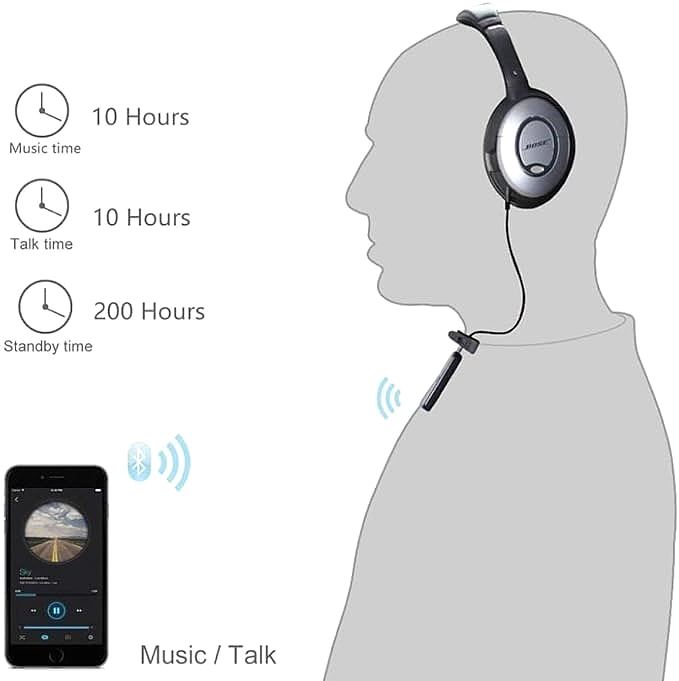
Stratum II: The Wireless Chasm and the Dongle Life
If the QC15 was the peak of the wired era, 2016 marked its violent end. When smartphone manufacturers decided to remove the 3.5mm auxiliary jack, they didn't just save space inside the phone; they rendered billions of dollars' worth of high-quality audio equipment "obsolete" overnight.
The Friction of Connectivity
For owners of the QC15, this transition was painful. To use their beloved headphones with a new iPhone or Android device, they were forced into "Dongle Hell"—a life of fragile white adapters that dangled precariously from their phones, breaking after a few months of use. The elegance of the QC15 was ruined. The "QuietComfort" became "QuietFrustration."
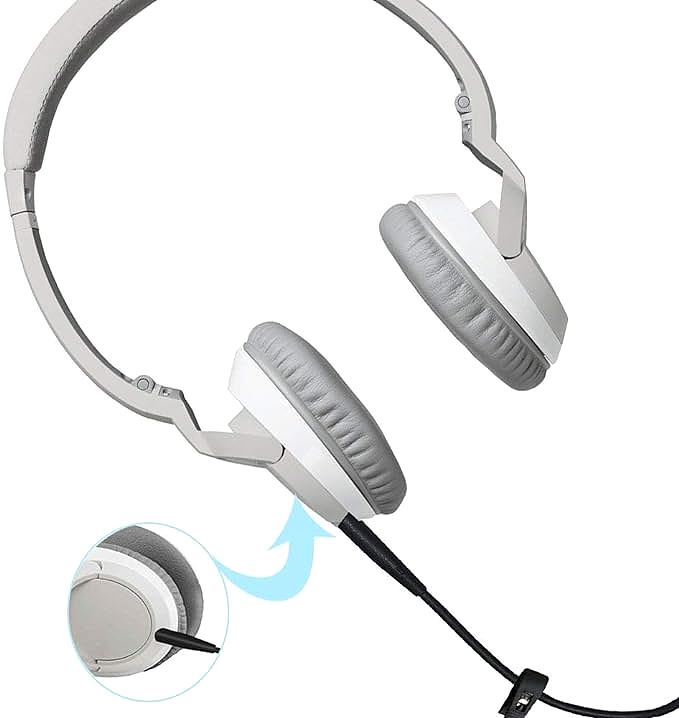
This is where the concept of the form-fitting Bluetooth adapter emerged. Unlike a generic dongle that hangs from the cable, the BUTIAO adapter is designed to contour perfectly to the shape of the QC15's ear cup. It plugs directly into the proprietary audio port, replacing the cable entirely.
This engineering choice is significant. It acknowledges the industrial design of the original product. By matching the curve and color of the QC15, the adapter attempts to make itself invisible, creating the illusion that the headphones were wireless all along. It is a respectful upgrade, not a clumsy patch.
Stratum III: The Anatomy of a Bridge (Deconstructing the Adapter)
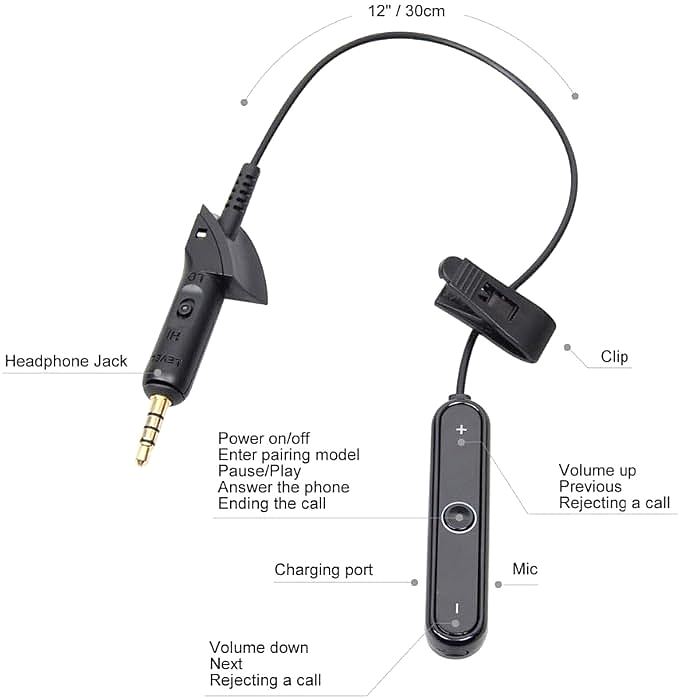
So, what actually happens inside this small plastic shell? How does it turn a wired analog device into a wireless digital one? The BUTIAO QC15 Bluetooth Adapter is essentially a miniaturized audio receiver system. It contains three critical subsystems that work in harmony to bridge the gap between the smartphone and the headphone drivers.
1. The RF Receiver (The Bluetooth Radio)
At the front end is the Bluetooth chipset. This adapter utilizes Bluetooth 5.0, a standard that brought significant improvements over its predecessors. * Energy Efficiency: Bluetooth 5.0 Low Energy (LE) protocols allow the adapter to maintain a connection while consuming very little power, enabling reasonable battery life despite the tiny size of the internal battery. * Bandwidth: It supports higher data throughput, which is essential for transmitting high-quality audio without stuttering. * Stability: Using Frequency-Hopping Spread Spectrum (FHSS), the radio hops between 79 different channels within the 2.4 GHz band thousands of times per second. This ensures that even in a crowded airport terminal filled with Wi-Fi signals, the music keeps playing.
2. The DAC (Digital-to-Analog Converter)
This is the heart of the operation. Your smartphone transmits music as a stream of digital data (0s and 1s). The drivers in the QC15, however, are analog devices—they need a fluctuating electrical voltage to move the air.
The adapter contains a dedicated DAC chip. This chip takes the digital packets received by the Bluetooth radio and reconstructs them into a continuous analog waveform. The quality of this chip determines the fidelity of the sound. While it may not rival the massive, power-hungry DACs found in audiophile home stereos, modern miniaturized DACs have become incredibly efficient and accurate, delivering a sound floor that is virtually indistinguishable from a wired connection for casual listening.
3. The Amplifier
The signal coming out of the DAC is very weak. It needs to be boosted to drive the voice coils in the headphone speakers. The adapter includes a tiny amplifier stage. This amp must be carefully tuned to match the impedance of the QC15. If the impedance mismatch is too high, the volume will be too low or the bass will be muddy. The BUTIAO adapter is tuned specifically for the Bose architecture, ensuring the volume levels mimic the original wired experience.
Stratum IV: The Sustainability Algorithm
Beyond the technical convenience, there is an ethical argument for upgrading over replacing. We are living through an electronic waste crisis. According to the Global E-waste Monitor, humanity generates over 50 million metric tons of e-waste every year. A significant portion of this consists of "obsolete" accessories and audio gear.
The Carbon Cost of Replacement
Manufacturing a pair of high-end noise-cancelling headphones is resource-intensive. It requires mining rare earth metals (neodymium for magnets), processing petroleum into plastics, and shipping components globally. When a user discards a perfectly functional QC15 simply because it lacks Bluetooth, they are discarding all the embodied energy and resources locked in that device.
By purchasing an adapter like the BUTIAO, the user extends the lifecycle of the primary hardware. The carbon footprint of manufacturing a small 16-ounce adapter is infinitesimal compared to manufacturing a brand-new set of Bose QC45s or Sony WH-1000XM5s.
This is the essence of Modular Longevity. Instead of integrating the battery and Bluetooth chip directly into the headphone (which limits the headphone's lifespan to the lifespan of the battery), keeping them separate allows for upgradeability. If the adapter's battery dies in three years, you replace the $30 adapter, not the $300 headphones. It is a more sustainable model of consumption that aligns with the growing "Right to Repair" movement.
Stratum V: The Audiophile's Compromise
We must address the elephant in the room: Audio Quality. Does adding a Bluetooth adapter degrade the sound?
The honest answer is: technically, yes. But practically, maybe not.
The QC15 was designed for wired, analog input. Bluetooth involves compression. The standard codec used is SBC (Subband Coding), though many modern adapters also support AAC (Advanced Audio Coding), which is preferred by Apple devices.
Compression removes data from the audio file to make it small enough to transmit wirelessly. In critical listening environments, an audiophile might notice a slight loss of "air" in the treble or a narrowing of the soundstage. However, the QC15 is an active noise-cancelling headphone. Its primary purpose is to block out the world. The internal ANC circuitry already processes the sound.
For the vast majority of use cases—commuting on a train, flying on a plane, working in a coffee shop—the noise floor of the environment is far higher than the noise floor of the Bluetooth connection. The benefits of being untethered far outweigh the microscopic loss in fidelity. The BUTIAO adapter allows the QC15 to do what it does best: silence the world, now with the added freedom of movement.
Conclusion: The Persistence of Good Design
The BUTIAO QC15 Bluetooth Adapter is more than a gadget; it is a statement. It says that good design is timeless. It says that we do not have to accept the forced obsolescence imposed by tech giants.
The Bose QC15 remains one of the most comfortable headphones ever made. Its ear cushions are legendary. Its noise cancellation is still competitive today. By adding this simple bridge, we honor the engineering of Dr. Amar Bose and prove that with a little ingenuity, the past can live comfortably alongside the future.
In a world that constantly screams "Newer! Faster! Better!", there is a quiet dignity in maintaining the things that already work perfectly well. The Renaissance of the Jack is not about going backwards; it is about carrying the best parts of the past forward with us.
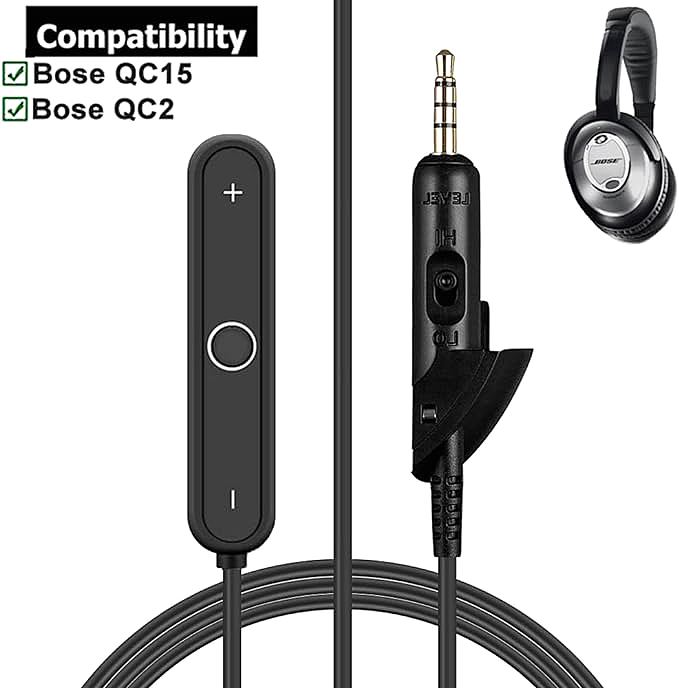
BUTIAO QC15 Bluetooth Adapter
Related Essays

Anatomy of Endurance: The Engineering Behind High-Capacity Wireless Audio Architectures
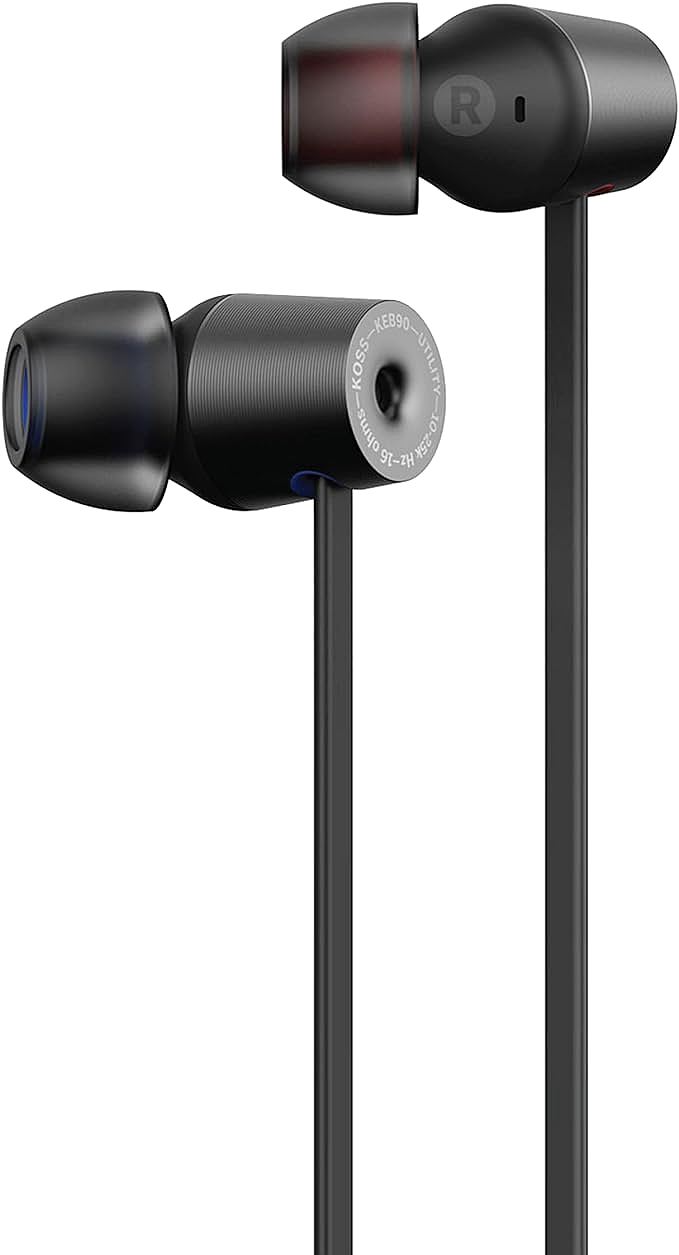
The Modular Future: Why Detachable Audio Systems Survive the Wireless Age

The Silence Revolution: From Aviation Labs to Daily Commutes

Specs Decoded: Bluetooth 5.4, IP7, and the Rise of Sustainable Audio in the Donerton I66

iqua L19 Sport Earbuds - Decent Value Wireless Workout Headphones

