How Bone Conduction Works: The Physics of Hearing Through Your Skull

YouthWhisper Bone Conduction Headphones
Your ears feel full after an hour of running. That familiar pressure builds behind the silicone tips, growing more uncomfortable with every stride you take. You pull out your earbuds, and the silence hits almost as hard as the music did. Somewhere during that workout, you stopped noticing your surroundings entirely. A car horn. A cyclist passing on the left. A dog pulling its owner toward you. All of it disappeared the moment you sealed your ear canals.
This frustrating problem repeats daily for millions of people who use personal audio during physical activity, and the convenience of portable sound comes bundled with a tradeoff that most consumers accept without ever questioning the underlying physics.
The solution to this problem existed before electricity, before amplifiers, and before any electronic device could produce sound at all.

The Iron Rod That Changed Music Forever
Ludwig van Beethoven composed some of humanity's most profound music while progressively losing his hearing. By his late thirties, the composer could no longer hear the piano at normal volumes. Conventional wisdom suggested his career had ended.
Beethoven devised a crude but effective workaround that demonstrated a principle physicists had been documenting for decades. He attached one end of an iron rod to the piano's soundboard and clamped the other end between his teeth, creating a direct mechanical pathway for vibrations to travel from the instrument through his jaw and into his skull. When keys depressed, the soundboard vibrated. Those vibrations traveled through the rod, through his jaw, through his skull, and reached his inner ear directly, bypassing the damaged structures that had failed him.
This was not an innovation. It was a rediscovery of principles physicians had documented since the eighteenth century. The Italian physicist Giovanni Venturi demonstrated that sound could travel through solid materials in the 1790s. Beethoven simply applied this knowledge to preserve his creative output during a period when medicine offered him no other recourse.
The bone in the human skull conducts sound efficiently enough that the eardrum becomes optional for perceiving the world around us. This fact remained a curiosity for over a century before anyone transformed it into consumer technology. The military recognized the value first. During World War II, researchers developed bone conduction devices for tank crews who needed to communicate while maintaining helmet protection and situational awareness under conditions where traditional headsets proved impractical. Pilots received similar equipment for aircraft with extreme ambient noise levels that made conventional audio transmission unreliable.
Medical applications followed naturally from the military's pioneering work. Patients with conductive hearing loss, where the outer or middle ear cannot transmit sound normally due to structural damage or congenital malformation, often retain full function of the inner ear itself. Bone conduction hearing aids bypass the damaged pathway entirely, delivering vibrations directly to a cochlea that still works. The technology helped children born with malformed ear structures hear spoken language for the first time, fundamentally altering their developmental trajectory.
Consumer audio arrived decades later, once miniaturization and wireless capabilities reached practical thresholds that made the technology affordable and comfortable enough for everyday use.
The Mechanics of Skeletal Sound Transmission
Sound propagation through bone differs fundamentally from air-based transmission in ways that reveal how much we take the physics of hearing for granted. In air, molecules must compress and rarefy in sequence, creating pressure waves that travel at approximately 343 meters per second at sea level. This process requires energy, and each transfer from speaker cone to air to eardrum loses fidelity along the way.
Bone presents a different medium entirely. The crystalline matrix of human bone contains densely packed mineral crystals surrounding collagen fibers that form a lattice capable of transmitting mechanical energy with remarkable efficiency. When a transducer vibrates against the skull, those vibrations transmit with minimal loss because the particles in solids are already positioned close together and require less energy to excite their neighbors. The speed of sound through bone exceeds 3,000 meters per second, roughly nine times faster than through air, which means less dispersion and greater preservation of the original waveform.
The critical structure is the cochlea, a spiral-shaped organ in the inner ear containing fluid and thousands of hair cells arranged along a membrane that responds to different frequencies at different positions along its length. When these hair cells bend, they trigger electrical signals that the brain interprets as sound. In normal hearing, sound enters through the ear canal, vibrates the eardrum, transfers through three small bones called ossicles, and reaches the cochlea's oval window. In bone conduction, vibrations reach the cochlea directly through the skull's bony walls, causing the same fluid movement and hair cell stimulation through an entirely different mechanical pathway that converges on the same neural output.
Anatomical studies identify several primary pathways through which skull-conducted vibrations reach the inner ear. The most efficient routes run through the temporal bone, which houses the cochlea itself and provides the shortest distance for vibrations to travel before reaching the sensory organs. Vibration applied to the cheekbones, temple, or the mastoid process behind the ear travels through the temporal bone to the inner ear. Each pathway produces slightly different acoustic results depending on frequency and amplitude.
The frequency response of bone conduction differs from air conduction in ways that directly shape user expectations and product design. The skull's resonant properties emphasize certain frequencies and attenuate others, creating a natural equalizer effect that cannot be fully corrected through digital signal processing alone. Low frequencies transmit more efficiently through bone, which explains why bone conduction audio often sounds bass-heavy relative to its treble content. This characteristic is neither a flaw nor a feature but simply a physical property that engineers must account for when designing transducers intended for skeletal sound delivery.

Why Open-Ear Design Changes the Hearing Equation
The human ear evolved for specific functions beyond sound reception that become apparent the moment you block the ear canal and observe what stops working. The outer ear's funnel shape localizes sounds arriving from different directions, allowing the brain to construct a three-dimensional map of the acoustic environment. The eardrum protects delicate inner structures from sudden pressure changes. Earwax traps particles and prevents infection. When users insert earbuds, they compromise all of these functions simultaneously.
Extended earbud use creates several documented concerns that have prompted audiologists to reconsider the long-term health implications of sealing the ear canal for hours each day. The warm, moist environment beneath silicone tips promotes bacterial growth at rates significantly higher than the open ear canal maintains naturally. Studies link prolonged earbud wear to increased rates of external ear infections, particularly in users who exercise while listening, since sweat amplifies the conditions that favor microbial colonization. The pressure against the ear canal can also impact cerumen movement, potentially causing accumulation that reduces hearing acuity and increases infection risk.
From an auditory perspective, blocking the ear canal eliminates the ear's natural protection mechanisms and disrupts the feedback loop that normally governs safe listening behavior. The brain normally uses environmental sound to calibrate perceived volume, raising or lowering the threshold based on ambient noise floor. When external sounds cannot enter, users often increase playback volume to compensate for the missing contextual information, sometimes exceeding safe thresholds without realizing the danger. The World Health Organization estimates that 1.1 billion young people worldwide risk hearing damage from unsafe listening practices, and sealed earbuds contribute significantly to this statistic.
Open-ear designs using bone conduction technology preserve the ear canal's natural state while still delivering audio content through an alternative pathway that the human body has supported since birth. Air flows freely. Environmental sounds reach the eardrum normally. The brain maintains its volume calibration through ambient awareness. Listeners can hear approaching vehicles, colleague questions, or warning signals without removing their audio source, which means the technology integrates into daily life rather than demanding that daily life accommodate the technology.
This matters significantly in active environments where situational awareness directly correlates with personal safety and social functionality. Cyclists navigating traffic benefit from hearing engine sounds and tire noise that indicate vehicle position and speed. Runners on shared paths remain aware of other runners approaching from behind. Workers in offices can listen to music while maintaining conversation capability without the awkward dance of removing an earbud every time someone speaks to them.
The physiological benefits extend to hearing preservation itself, since users who can hear their environment tend to maintain lower playback volumes than those isolated from ambient sound, thereby reducing cumulative exposure to potentially damaging sound pressure levels over the course of years.
Cross-Domain Connections: Vibration Science Beyond Audio
Understanding bone conduction requires moving across multiple scientific disciplines, since the principles involved appear throughout physics, biology, and engineering in forms that share fundamental mathematical descriptions despite their vastly different scales.
Vibration transmission through solids has fascinated physicists since the nineteenth century, and the equations governing wave propagation through elastic media apply equally to earthquake analysis, musical instrument design, and structural engineering. A violinist's choice of wood affects tone through the same material properties that determine how efficiently a skull conducts audio. The density, grain orientation, and moisture content of the tonewood influence which frequencies pass through easily and which get absorbed, exactly as the mineral composition and porosity of cranial bones shape the frequency response perceived by a bone conduction listener.
Helicopter design provides an instructive parallel that illustrates how vibration management determines whether a system functions or fails. Modern helicopters use vibration dampening systems originally developed for other applications, and engineers discovered that rotor blade vibrations could transmit through the fuselage and cause pilot fatigue severe enough to compromise flight safety. The solution involved understanding how vibrations propagate through composite materials and designing isolation points that interrupt transmission pathways before they reach the cockpit. Similar principles apply to bone conduction transducer design, where unwanted vibrations must travel only to the skull and not radiate through the surrounding air as audible sound leakage that would disturb nearby listeners.
The aerospace industry faced analogous challenges during the jet age, when cockpit noise levels during supersonic flight exceeded safe limits yet pilots needed reliable communication systems that could function under conditions that rendered conventional headsets useless. Bone conduction microphones and earpieces allowed transmission without requiring sealed helmets or exposed ear canals, enabling clear communication in environments where the noise floor overwhelmed any air-coupled speaker technology available at the time. Military investment accelerated development cycles for components now appearing in consumer products priced for casual listeners.
Medical imaging reveals additional dimensions of bone conduction's versatility that most audio consumers never encounter. Magnetic resonance imaging machines generate intense magnetic fields that preclude traditional electronics from operating inside the bore, which means patients undergoing MRI scans cannot use conventional headphones due to interference and safety concerns. Bone conduction devices work inside the bore because they contain minimal conductive materials and do not require air-coupled sound transmission, allowing patients to listen to music or communicate with technicians during procedures that can last over an hour.
The cochlea itself represents remarkable biological engineering that continues to inform artificial signal processing design. Its frequency analysis capabilities exceed any manufactured device of comparable size, and the basilar membrane's tuned response, where different regions respond to different frequencies, inspired early sound analysis techniques that evolved into modern spectral processing algorithms. Understanding how the cochlea extracts spectral information helps explain why bone conduction produces subjectively different timbre when using air conduction, even when measuring identical frequency content through both pathways.

Practical Considerations for Real-World Use
No technology solves every problem simultaneously, and bone conduction headphones offer genuine advantages in specific scenarios while presenting tradeoffs that matter for certain users and use cases.
The frequency response limitation deserves honest acknowledgment from anyone evaluating these devices against traditional alternatives. Bone conduction devices typically cannot reproduce extended high frequencies with the clarity of properly sealed air-conduction earbuds, because the skull acts as a low-pass filter that progressively attenuates signals above a certain threshold. Cymbals sound less crisp. Sibilant consonants in speech carry less definition. For genres emphasizing treble detail or applications requiring maximum intelligibility, these limitations matter and no amount of engineering can fully overcome the physics involved.
Bass reproduction, conversely, often exceeds expectations because the direct mechanical connection to the cochlea bypasses some of the acoustic resonances that color bass perception in traditional headphones. The skull's natural tendency to emphasize low frequencies means that bone conduction devices can deliver satisfying bass response without the sealed air volume that conventional designs require. Users accustomed to heavy low-end may find bone conduction bass surprisingly satisfying, particularly during physical activity where the added body resonance from movement amplifies the low-frequency content.
Volume levels present another consideration that stems directly from the physics of skeletal vibration. Bone conduction requires direct physical contact with bony skull structures, and maximum output levels often feel constrained when using air-conduction alternatives because the transducer must vibrate a relatively massive object rather than a thin membrane. In environments with high ambient noise, users may find insufficient volume before reaching uncomfortable vibration levels on the cheekbones, which represents a hard physical limit rather than an engineering shortcoming.
Fit and comfort vary significantly across designs and individual anatomy in ways that make universal recommendations impossible. The pressure required to maintain consistent contact can cause discomfort during extended wear, particularly for users with prominent cheekbones or sensitive temporal regions. Some users report tension headaches from sustained use. Others adapt completely and experience no issues even during multi-hour sessions. Individual anatomy determines much of this variability, and the only reliable way to assess comfort is through direct experience.
Swimming remains problematic for most bone conduction headphones despite marketing materials that sometimes blur the distinction between splash resistance and submersion capability. The IP54 rating common in this category provides protection against sweat and rain splashing but cannot withstand sustained submersion that swimming requires. Users seeking aquatic audio should look for IPX8-rated alternatives specifically designed for underwater use, which employ different sealing techniques and materials to survive the pressure and chemical exposure involved in pool and open water environments.
Battery life and wireless performance have reached practical thresholds for most users, with eight-hour continuous playback handling typical workout durations and commute times without requiring mid-day charging. Bluetooth 5.2 connectivity provides stable transmission and multipoint pairing for switching between devices, which means the wireless experience has reached parity with conventional earbuds in terms of reliability and convenience.
When evaluating these devices, the deciding factors usually involve intended use case and personal tolerance for the specific tradeoffs that bone conduction physics imposes, since a cyclist prioritizing safety and environmental awareness will weigh these benefits differently than someone seeking private audio in a quiet apartment.
The Paradox of Sound Without Ears
Every audio technology represents compromise, and understanding those compromises is more useful than pretending any single approach achieves perfection across all dimensions simultaneously. Studio monitor headphones sacrifice portability for accuracy. Noise-canceling designs sacrifice some environmental awareness for acoustic isolation. Bone conduction sacrifices some frequency range and maximum volume for open-ear comfort and situational awareness.
The choice reveals assumptions we rarely examine about how audio should reach our brains and what we are willing to sacrifice in exchange for convenience. We accept that audio must enter through the ear canal because that is how most humans hear most of the time, but this assumption reflects habit rather than biological necessity. We rarely consider alternatives until circumstances force reconsideration, whether those circumstances involve hearing loss, safety concerns, or simply the discomfort of wearing sealed earbuds for the thousandth time.
Beethoven faced that forced reconsideration and found a workaround that relied on principles dating to the physics of his era, proving that the human drive to experience sound can overcome significant biological obstacles when the underlying science is understood clearly enough. Modern engineers face similar challenges: how to deliver audio experiences that match human needs rather than human habits, and how to design systems that complement our biology instead of requiring us to adapt our bodies to accommodate the technology.
The ears remain open by design. We merely forgot this during the decades when sealing them seemed like the most convenient path to personal audio, and now that alternative pathways exist, we have the opportunity to reconsider what we gave up in exchange for that convenience. The skull hears. The body receives vibration as naturally as it receives light through the eyes. Perhaps the future of personal audio lies not in creating more immersive isolation but in designing systems that work with human biology rather than around it.
When you next reach for earbuds, consider what you might be blocking out and whether the isolation they provide truly serves your needs or merely reflects a habit you never thought to question. The best audio technology is the one that disappears into your life rather than demanding you disappear from your surroundings.
YouthWhisper Bone Conduction Headphones
Related Essays
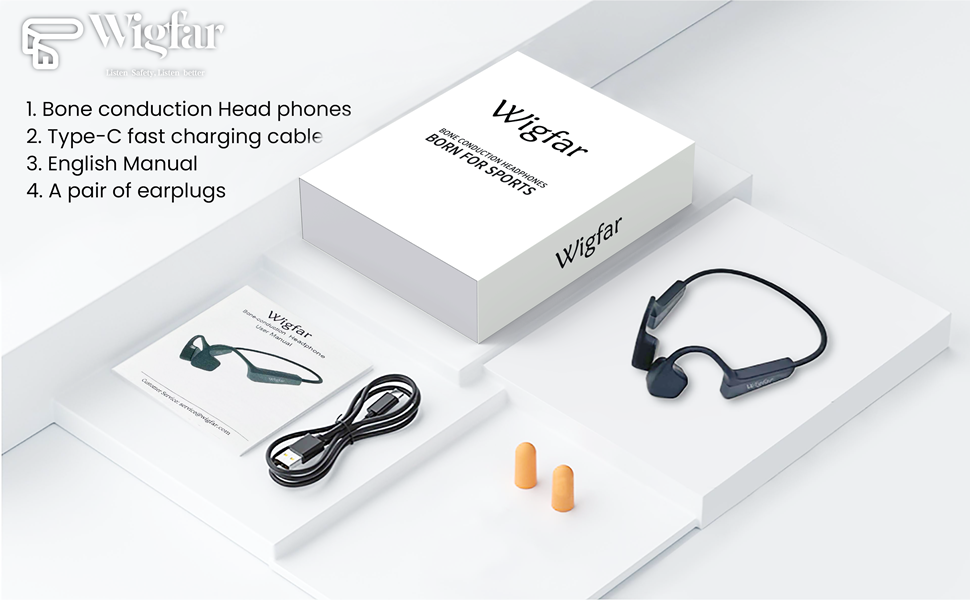
Bone Conduction Technology Explained: How Sound Bypasses Your Eardrum

Hearing Through Your Skull: The Remarkable Physics Behind Bone Conduction and the Shokz OpenMove

Bypassing the Eardrum: The Mechanics of Cranial Audio

Loluka Wireless Ear Clip Earbuds: Hear It All with Open-Ear Freedom
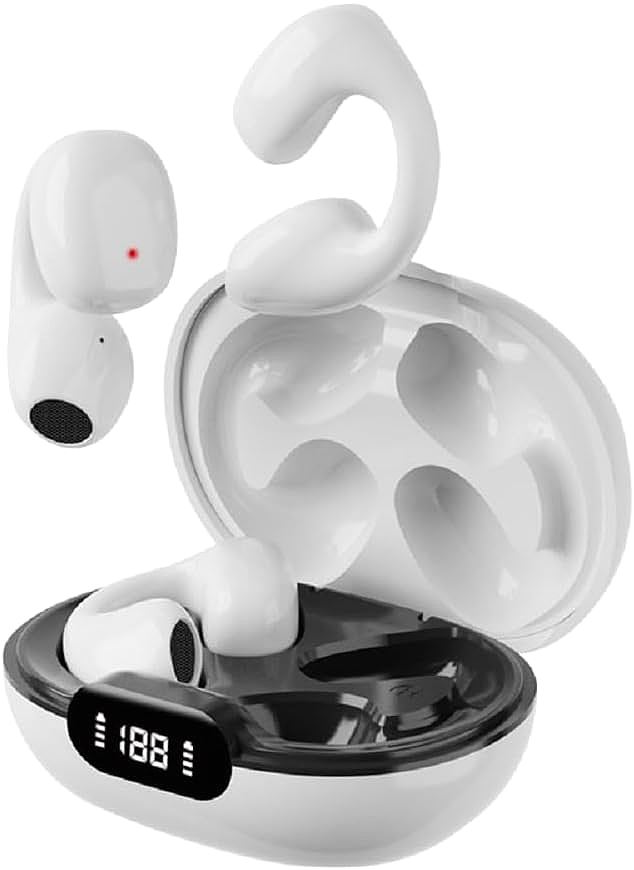
CSL-Computer D101 Wireless Earbuds: Experience Sound in a Whole New Way with Bone Conduction

The Sound You Feel: How Bone Conduction Headphones Let You Hear Through Your Skull

TEDATATA AIR52 Bone Conduction Headphones: A Mini Open Earbud Providing an Immersive Music Experience

Hamuti X7 Bone Conduction Headphones: Experience Sound in a Whole New Way

The Physics of Bone Conduction: Why Bass Is Hard and How...
