The Engineering of Wired Reliability: Why Simple Connections Outlast Complex Ones

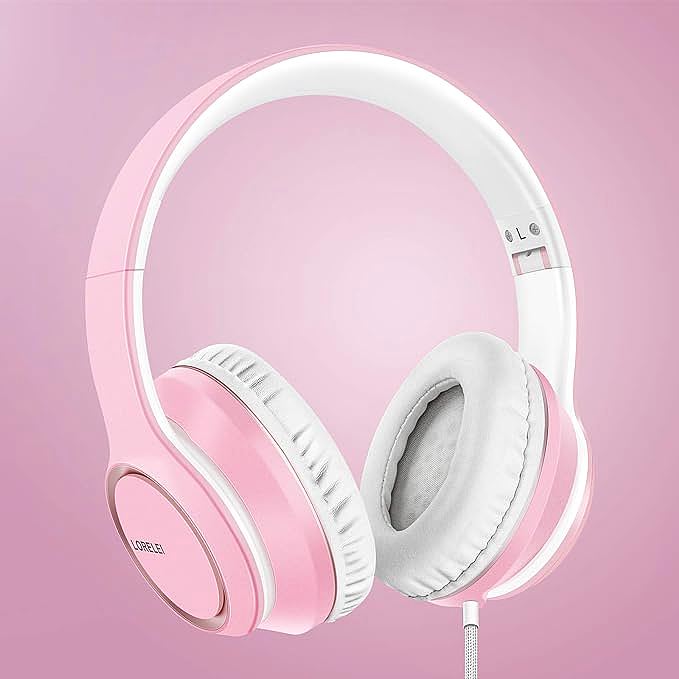
LORELEI X8 Over-Ear Wired Headphones
You open your laptop for a late-night work session and put on your wireless earbuds. Three hours later, the low-battery notification blinks red. You take them out, plug them in to charge, and the cycle repeats the next day. This is the invisible architecture of modern wireless audio: an ongoing negotiation between convenience and reliability.
The wired headphone exists on the other side of that negotiation. It is a device whose fundamental operating principle has not changed in forty years, and that is precisely its advantage. When you plug a 3.5mm cable into a device, you are not making a purchase decision about audio quality. You are making an engineering decision about signal delivery.
The Signal Path
A wired headphone connects to your device through a chain of electrical components that begins with your device's digital-to-analog converter (DAC) and ends with a coil of copper wire moving through a magnetic field. Every component in that chain introduces a small, predictable amount of resistance, capacitance, or inductance. These are physics problems with known solutions.
A wireless headphone introduces three additional conversion stages: digital compression at the source, radio-frequency transmission, and digital decompression at the receiver. Each stage adds latency, potential data loss, and a point of failure. The Bluetooth protocol stack contains over a thousand individual layers, each one representing a software dependency that could malfunction.
The LORELEI X8, like most wired headphones in its price range, removes all of those variables. The signal travels from your phone's DAC, through the cable's conductive core, to the headphone's 40mm driver. There is no compression. There is no pairing sequence. There is no battery management circuit board to degrade over time.
The Mechanics of a 40mm Driver
The driver is the heart of every headphone. It is a circular assembly consisting of a voice coil attached to a diaphragm, suspended in a magnetic gap. When an electrical signal passes through the voice coil, it creates a magnetic field that interacts with the permanent magnet, pushing and pulling the diaphragm. This movement displaces air, creating sound waves.
Driver size matters because low-frequency sound requires moving large volumes of air. A 40mm diaphragm has roughly 50% more surface area than a 30mm driver. More surface area means more air displacement for the same amount of mechanical excursion. This is basic fluid dynamics: bass is physics.
The X8's 40mm driver delivers a wide dynamic range. Dynamic range describes the ratio between the quietest sound a driver can produce without distortion and the loudest sound before mechanical limits are reached. A larger driver achieves higher maximum displacement before reaching its mechanical limits, giving it more headroom before clipping.
The diaphragm material in budget wired headphones is typically a composite of polyester and paper fibers. These materials are chosen for their stiffness-to-weight ratio, which determines how efficiently vibrational energy transfers from the voice coil to the surrounding air. The LORELEI X8's diaphragm follows this well-established design pattern, refined across decades of headphone manufacturing.

The Cable: An Engineering Afterthought That Is Not
The cable connecting a wired headphone to your device is perhaps the most misunderstood component in consumer audio. It is not a passive conduit. It is a structured electrical assembly that must preserve signal integrity while resisting the mechanical stresses of daily use.
Standard headphone cables use PVC rubber as their outer insulation. PVC becomes brittle over time through work hardening: repeated flexing causes the polymer chains in the PVC to align in a way that reduces flexibility. The cable does not just age; it structurally changes. After two years of daily use, a PVC cable may snap under stress that a brand-new cable would survive.
The X8 addresses this with a nylon-braided cable. Nylon is a polyamide polymer known for high tensile strength and abrasion resistance. The braided construction wraps the conductive copper core in a woven exoskeleton that absorbs tensile stress before it reaches the copper wire. This is the same principle used in climbing ropes: the outer sheath takes the wear, the inner core provides the strength.
Braided cables also resist tangling through surface friction physics. A smooth PVC cable has low surface roughness, allowing cable loops to slide past each other easily and tighten into knots. A braided nylon surface has higher micro-roughness, reducing the contact area between cable segments and making it mechanically harder for the cable to knot itself during storage.
The Geometry of Zero Latency
Latency is the time between an electrical signal reaching a device and the corresponding sound wave arriving at the listener's ear. In wired headphones, latency is measured in microseconds. The electrical signal travels through copper at roughly two-thirds the speed of light, and the driver response time adds another millisecond or so. This is imperceptible to human hearing.
In wireless headphones, latency is measured in tens to hundreds of milliseconds. Bluetooth audio compression alone adds 30-60ms of processing delay. Radio transmission adds another 5-15ms. Digital decompression adds another 30-60ms. The total latency of a typical Bluetooth connection ranges from 100ms to 300ms.
For casual music listening, this delay is irrelevant. For video editing, gaming, or online classes, it is a persistent source of frustration. When watching a film, the human brain tolerates audio-video sync offsets up to approximately 40ms before they become noticeable. A wireless headphone with 150ms of latency exceeds this threshold by nearly four times.
The wired connection eliminates this problem entirely. There is no compression. There is no radio protocol. The analog signal from your device's DAC reaches the driver in a single, uninterrupted electrical pathway.
Passive Isolation and the Over-Ear Design
The X8 uses a circumaural design, meaning the ear cups fully enclose the outer ear. This creates a physical seal between the headphone and the listener's head that blocks sound transmission through the air. This is called passive noise isolation, and it is a purely mechanical process that requires zero power.
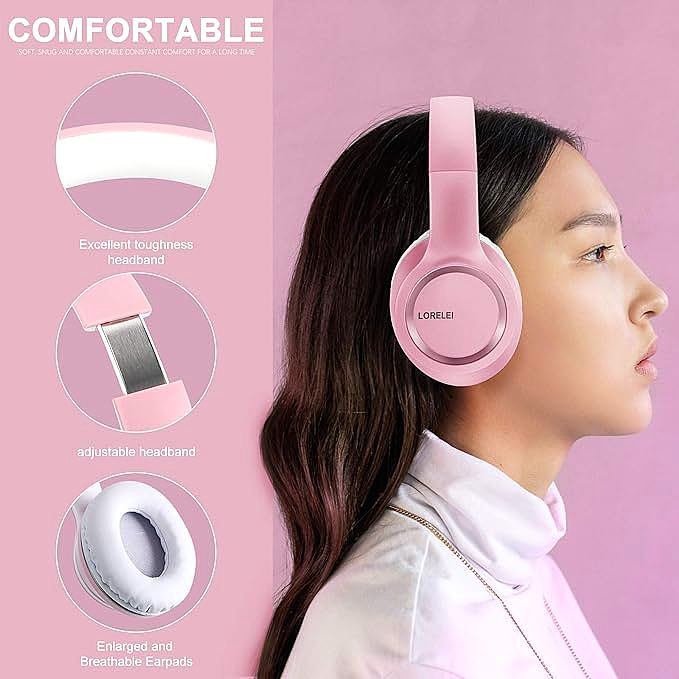
The effectiveness of passive isolation depends on the quality of the seal between the ear cup and the head. This seal is maintained by cushioning material, typically memory foam wrapped in protein leather or fabric, that conforms to the contours of the listener's head. The softer and more conformable the cushion, the better the seal, and the more environmental noise is blocked before it reaches the ear.
Unlike active noise cancellation (ANC), passive isolation works equally well across all frequencies. ANC systems are most effective at low frequencies (below 500Hz) and become progressively less effective at higher frequencies. Passive isolation, by contrast, attenuates all frequencies proportionally to the quality of the acoustic seal.
The Foldable Hinge
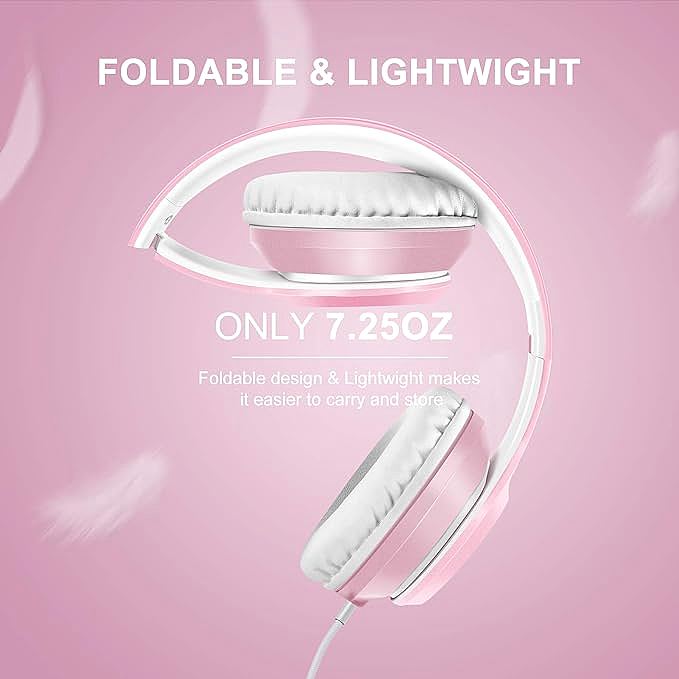
Portability is a secondary consideration in wired headphone design, but the X8 addresses it with a foldable hinge mechanism. The ear cups rotate inward and collapse against the headband, reducing the headphone's volume by approximately 50%. This is a kinematic solution to a spatial problem: making a device that performs optimally in a fixed configuration usable in a constrained one.
The hinge mechanism introduces a new failure point, the most common point of mechanical failure in foldable headphones being the plastic joint where the ear cup pivots. Budget hinge designs use thin plastic arms that fatigue after repeated folding cycles. Higher-end designs use metal-reinforced hinges with defined detent positions.
The X8's hinge follows a budget-optimized design: a plastic slider mechanism that folds the ear cup into the headband with a friction fit. It is designed to fold when needed and stay folded during transport, not for constant folding and unfolding.
The Economics of Simplicity
The LORELEI X8 costs approximately $20. At this price point, every component choice is driven by a calculation of cost versus functional adequacy. The 40mm driver is a commodity component available from multiple manufacturers in the Asia Pacific region. The nylon braided cable is a standard design used across dozens of budget headphone brands. The plastic housing is injection-molded in a single material.
What makes the X8 functionally distinct is not any single component but the architecture decision to remove wireless technology entirely. Every dollar spent on a Bluetooth chip, a battery, a charging circuit, or an ANC processor is a dollar not spent on the driver, the cable, or the ear cushions. By eliminating wireless technology, the X8 redirects that budget toward the components that directly affect what the listener hears.
This is the fundamental value proposition of the wired headphone: simplicity as a performance feature. When you remove a battery, you remove a failure point. When you remove a radio, you remove latency. When you remove software, you remove firmware bugs.
The Reliability Argument
A wireless headphone requires: a functional battery, a working Bluetooth chip, firmware that has not crashed, a charging cable, and a charging port that has not become loose. It also requires periodic battery replacement every two to three years, as lithium-ion cells degrade regardless of use.
A wired headphone requires: a functional 3.5mm jack, an intact cable, and a driver that has not been damaged by physical impact. The cable is replaceable. The jack is replaceable. The driver, if damaged, indicates a catastrophic event that would likely destroy a wireless headphone as well.
The X8 occupies a category that exists at the intersection of utility and inevitability. It will work on any device with a 3.5mm jack, including devices that do not exist yet. It will not require a software update to function on a phone released in five years. It will not become obsolete when a new wireless standard is announced.
Conclusion
The wired headphone is not a retro product. It is not a nostalgic compromise. It is a device that has been optimized along a different axis than its wireless counterpart: reliability over convenience, signal integrity over feature count, predictability over adaptability.
The LORELEI X8 demonstrates that optimization. Its 40mm driver, nylon braided cable, foldable hinge, and circumaural design are all well-understood engineering solutions deployed in a system with no unknown failure modes. It is a headphone you can plug in, adjust the volume, and stop thinking about.
In a market increasingly defined by the anxiety of battery indicators and firmware notifications, that indifference is itself a form of engineering excellence. The best connection may not be the smartest one. It may simply be the one that works.
LORELEI X8 Over-Ear Wired Headphones
Related Essays
The Engineering of Wired Reliability: Why Simple...

Marshall Mode EQ Specifications, Setup, and the Analog Circuit Behind Two Sound Profiles

The Case for Analog: Why Wired Headphones Are Making a Quiet Comeback (Case Study: AILIHEN C8)

The Analog Advantage: Zero Latency and the Physics of Passive Isolation

Beats EP Wired On-Ear Headphones - Battery Free for Unlimited Listening, Built-in Mic and Controls

Open Back Headphones: Why They Sound Different

Balanced Armature vs Dynamic Driver: 2026 IEM Engineering Truths

Coaxial Audio and the Point Source Paradox: Why Perfect...

The Studio Vocal Chain: What Every Singer Needs to Know
