Why Your IPX7 Rating Doesn't Mean What You Think

Bonweise U-Air Wireless Earbuds
You finish a long run in heavy rain, struggling to hear over the downpour. Your earbuds survived. You think they are waterproof. They are not. That IPX7 classification printed on the box means something very specific, and it has almost nothing to do with the rain soaking through your shirt. The gap between what consumers assume and what the engineering standard actually guarantees is wider than most people realize.
The Letter Code That Governs Your Electronics' Survival
The "IP" in IPX7 stands for Ingress Protection, a classification system defined by IEC 60529, an international standard maintained by the International Electrotechnical Commission. The system uses two digits. The first digit rates protection against solid objects like dust and fingers, ranging from 0 to 6, where 6 means dust-tight. The second digit rates protection against liquids, ranging from 0 to 8.
That "X" in IPX7 is not a placeholder or a wildcard. It means the device was not formally evaluated for solid particle ingress. The manufacturer chose to certify only the liquid protection side. This is common in wireless earbuds, where the rubber seals and tight construction that provide waterproofing also tend to block dust by default, even without formal dust certification.
The number 7 is where things get interesting. It represents a specific, narrow test condition: immersion in still freshwater at a depth of one meter for thirty minutes. The water temperature must be between 15 and 35 degrees Celsius. The device must be powered off during testing. There can be no water movement, no soap, no salt, no chlorine. Just still, clean water.
Every other scenario you encounter in real life is, strictly speaking, outside the scope of what IPX7 certifies.
How a Small Plastic Shell Defeats Water
Waterproofing a wireless earbud is a systems engineering problem. Each earbud contains a battery, a circuit board, a speaker driver, a microphone, charging contacts, and a Bluetooth antenna. Every one of these components introduces a potential entry point for water. The engineering challenge is not to make one perfect seal. It is to make six or seven seals that all hold simultaneously, under stress, for the life of the product.
The primary defense is mechanical: silicone O-rings seated in grooves around the seams of the plastic shell, which compress when the two halves of the earbud housing are joined under significant pressure, creating an elastic barrier that must withstand both the initial assembly force and the gradual degradation that occurs over months of repeated use. The material matters. Silicone maintains its elasticity across a wide temperature range and resists degradation from UV exposure and skin oils. Hardness is typically rated at 50 to 70 on the Shore A scale, which balances flexibility with enough rigidity to maintain a seal under pressure.
The shell halves themselves are joined using ultrasonic welding, a precision process where a tool vibrates at frequencies above 20 kHz, producing friction heat at the joint line where plastic bonds together without requiring any additional adhesives or fasteners.
The weld line is typically 0.5 to 1.5 millimeters wide and needs to achieve a bond strength above 5 megapascals. Done correctly, the seam becomes as strong as the parent material. Done incorrectly, it becomes the first place water enters.
Secondary defense
Secondary defense comes from internal coatings, which are applied after assembly in a controlled vacuum environment where a hydrophobic nanocoating is applied to the circuit board and internal components to provide an additional layer of protection against any moisture that might bypass the primary mechanical seals. Parylene, a polymer deposited in a vacuum chamber, is one common choice. The coating is between one and three micrometers thick, roughly one-fiftieth the width of a human hair. At that scale, water beads up and rolls off rather than spreading across the surface. It functions as a last line of defense if the mechanical seals are compromised.
Then there are the holes. Every earbud has them. Speaker ports, microphone openings, and pressure equalization vents all puncture the waterproof envelope.
These openings are protected by membranes made from expanded polytetrafluoroethylene, or ePTFE, the same material used in waterproof outdoor jackets.
The pores in these membranes are between 0.1 and 0.5 micrometers wide. Water molecules in liquid form cannot pass through because surface tension holds them together. Air molecules, which are much smaller and move freely as gas, pass through without resistance. This is how the speaker can produce sound while keeping water out.
The catch is that these membranes must balance two competing demands: water resistance and acoustic transparency.
A thicker membrane blocks water more reliably but muffles sound, while a thinner membrane preserves audio fidelity but is more vulnerable to degradation over time, especially when exposed to repeated physical stress and chemical exposure from skin oils and cleaning agents.
When the Standard Fails to Meet Reality
Here is the part that most marketing materials omit: IEC 60529 was originally written for industrial equipment such as junction boxes on factory floors and electrical enclosures in outdoor installations, and its test conditions reflect that industrial origin rather than the demanding conditions of personal athletic activity. Junction boxes on factory floors. Electrical enclosures in outdoor installations. The standard was adapted for consumer electronics later, and the test conditions reflect that industrial origin.
The IPX7 test uses still, room-temperature freshwater, a controlled environment that bears little resemblance to the chaotic conditions of actual athletic activity where sweat, impact, temperature fluctuations, and variable water exposure all combine to create a far more demanding test of waterproof integrity. Sweat contains sodium chloride and lactic acid, both of which are more corrosive than pure water. Saltwater from ocean spray is worse still. Hot water from a shower causes thermal expansion in the silicone seals, potentially opening micro-gaps. Cold water causes contraction with the same risk.
More critically, the test is static. The device sits motionless at the bottom of a tank. During exercise, your earbuds experience vibration, impact from accidental drops, and constant micro-movement against your skin. All of these stresses work against the seals over time. A seal rated for thirty minutes of static immersion might fail after ten minutes of active movement.
There is also the question of pressure. The IPX7 test subjects the device to the hydrostatic pressure of one meter of water, approximately 0.1 atmospheres above ambient. If you dive into a pool, even from a modest height, the impact generates a brief pressure spike well above that threshold. If you swim laps and turn your head rapidly, the water rushing past the microphone ports creates hydrodynamic pressure that the standard does not account for.
This is why IPX7 does not mean you can swim with your earbuds. For swimming, you need IPX8, which certifies continuous submersion at depths and durations specified by the manufacturer. The specific conditions vary by product, and the manufacturer is required to state them in the documentation.
The charging port is another weak point that the IPX7 test does not adequately address. Most wireless earbuds use a USB-C port or exposed metal contacts on the charging case. These contacts are typically gold-plated to resist corrosion and covered by a rubber flap when not in use. But the flap must be opened to charge the device. If any moisture remains on the contacts when the charging cable is connected, you risk short-circuiting the battery management IC. This is the single most common failure mode reported in user reports for waterproof earbuds.
The Chemistry of Slow Failure
Even when the seals hold perfectly, waterproof performance degrades over time as the silicone O-rings undergo compression set, a phenomenon where the material gradually loses its ability to spring back after being compressed for extended periods under constant pressure, especially when exposed to elevated temperatures and repeated mechanical stress. This is accelerated by heat, UV exposure, and contact with skin oils and sunscreen. A seal that performed flawlessly on day one may start weeping moisture at the seams after twelve to eighteen months of regular use.
The ePTFE membranes face their own slow degradation. Skin oils, earwax, and soap residue can clog the microscopic pores. When enough pores are blocked, the membrane's ability to equalize pressure is compromised. This can cause the earbud to develop a slight vacuum inside the shell during temperature changes, which in turn pulls harder against the seals, increasing stress on the materials.
The nanocoating inside the shell is a single-use defense. Unlike the O-rings, it cannot be replaced or renewed. Physical abrasion from internal components shifting during drops, or chemical attack from trapped moisture that bypassed the seals, gradually wears through the coating. Once it is gone, any water that penetrates the mechanical seals reaches bare circuitry.
Manufacturers test for this degradation using accelerated aging protocols. Devices are cycled through temperature extremes, exposed to UV light, and subjected to repeated mechanical shock before being retested for water ingress. But these tests represent statistical averages, not guarantees for any individual unit. Two earbuds from the same production batch may have very different lifespans depending on how they are used and stored.
What Knowledge Changes in Practice
Understanding these limitations changes how you interact with waterproof electronics. After exercise, rinse earbuds with fresh water to remove sweat residue, then dry them completely before placing them in the charging case. Never charge a device that is visibly wet or has been recently submerged. The charging case itself is often not rated for water resistance at all, even when the earbuds are.
Store earbuds at room temperature, away from direct sunlight. Heat accelerates the compression set in O-rings and the breakdown of nanocoatings. A car dashboard in summer can reach temperatures above 70 degrees Celsius, far beyond the safe range for both the seals and the lithium battery.
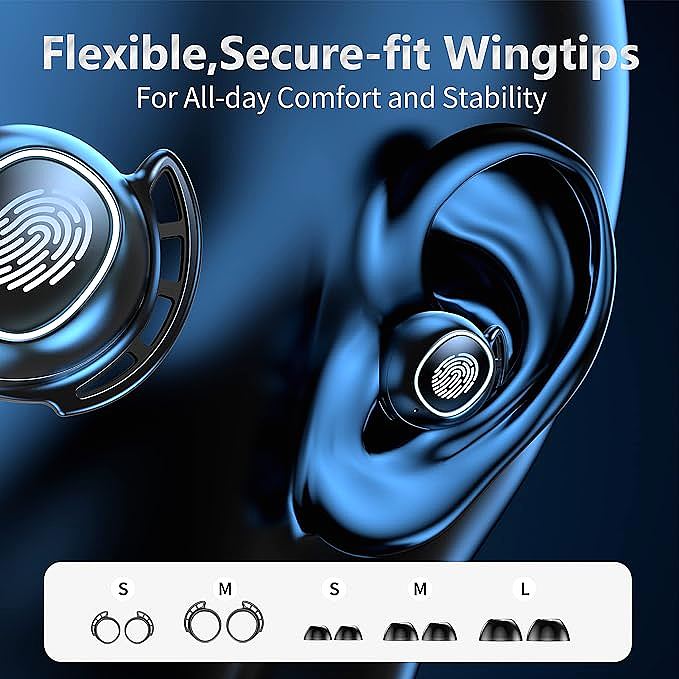
Replace silicone ear tips every three to six months. The tips form part of the acoustic seal that keeps water away from the speaker membrane. When they lose elasticity, water can pool between the tip and the earbud body, finding its way to the speaker port membrane.
When evaluating a waterproof claim, look beyond the IP classification. Manufacturers who are confident in their engineering will specify the test conditions, list any limitations, and explain what this standard does not cover. A product page that says simply "IPX7 waterproof" without further context is technically truthful but incomplete. The absence of detail is not a red flag by itself, but the presence of detail is a positive signal.
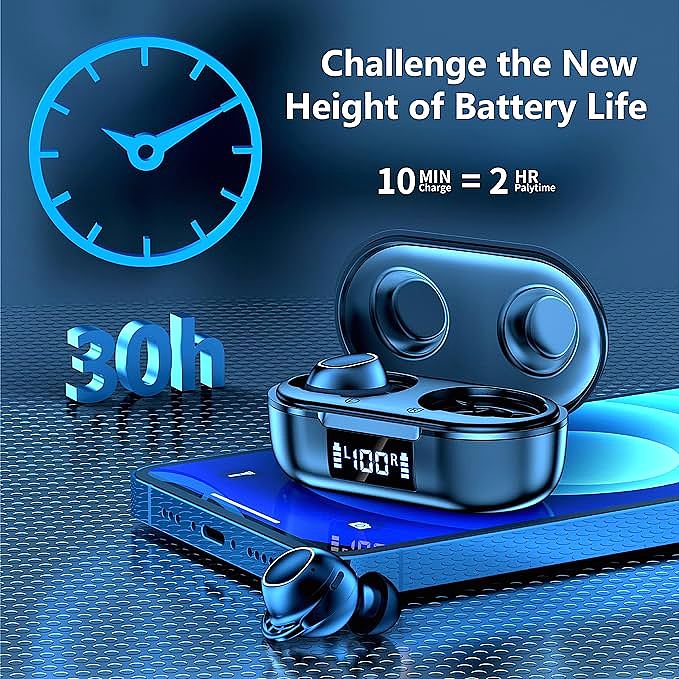
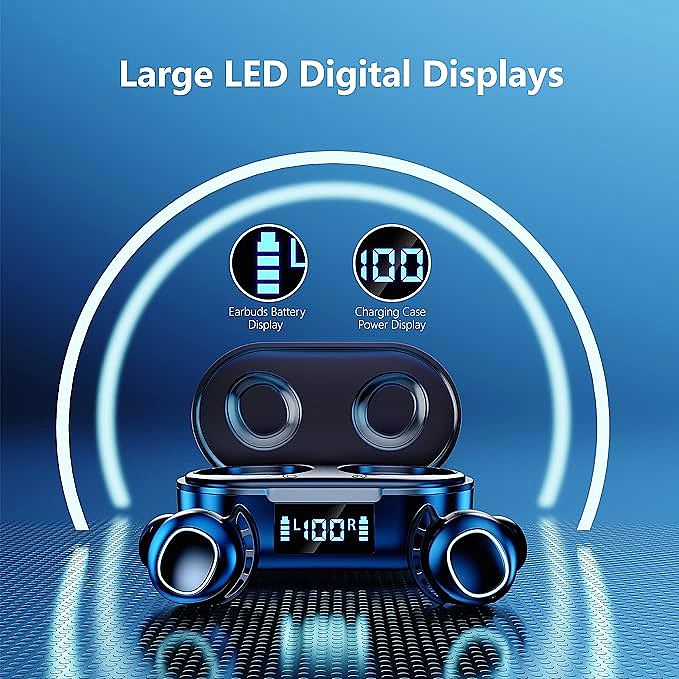
Devices with the IPX7 classification alongside Bluetooth 5.3 and a 30-hour battery with fast charging. This standard covers the earbuds for exercise sweat and rain exposure. The charging case, the USB-C port, and any scenario involving soap, hot water, or pool chemicals remain outside the scope of that certification. These are not flaws in the product. They are the boundaries of the standard.
The Engineering Paradox of Waterproofing
There is a quiet paradox in the way we certify water resistance. The IP system defines protection as a binary pass-or-fail test under a fixed set of laboratory conditions. But the real world does not deliver challenges in neat, standardized packages. A trail runner in humid summer heat, a commuter caught in a downpour, and a gym member finishing a HIIT session all subject their earbuds to fundamentally different stresses. The same IPX7 classification must cover all of them, even though the failure modes are different in each case.
The engineers who designed the IEC 60529 standard knew this. The standard was built for reproducibility and comparability, not for exhaustive simulation of every possible environment. It gives manufacturers a common language and gives consumers a baseline expectation. What it cannot give is certainty.
Perhaps the most useful way to read an IP classification is not as a promise but as a constraint. IPX7 tells you exactly where the boundary lies: one meter of still freshwater for thirty minutes with the device off. Everything beyond that boundary is your judgment call. The engineers gave you the line. They cannot cross it for you.
Bonweise U-Air Wireless Earbuds
Related Essays
Why Your IPX7 Rating Doesn't Mean What You Think

AMAFACE V Tiny Bluetooth Earbuds – A Little Devil: A Fun and Functional Choice

KLUD Air3-PRO Wireless Bluetooth Earbuds – A Sound Investment

Coolwin i14 Wireless Earbuds – Crystal Clear Sound and Convenience

LHBHT EJ-JB41 Bluetooth Wireless Earbuds – Recommendation

HKBTCH Wireless Earbuds – Recommended for Wireless Audio Experience

Loluka HD-SWL-JAD-ANCpro Wireless Headphones

Xmenha TWS SJJ-LLSM-LE-702 Wireless Earbuds

Xmenha Invisible Sleep Earbuds : When Size Matters
