True Wireless Earbuds: Seven Technical Factors Behind the Marketing Claims

Alpha Digital Q32 Wireless EarBuds
The box says "HD Sound." The website promises "crystal clear calls." Your friend swears by a brand you have never heard of, enthusiastically recommending it based on their positive personal experience with that particular model. Three weeks later, the left earbud will not charge properly when placed in its case, the wireless connection drops unexpectedly every time you walk past a running microwave oven, and the "20 hours of battery life" advertised on the packaging somehow translates to only six hours of actual use under normal listening conditions. The marketing language on product pages and retail websites rarely explains why these common problems occur or how to predict them accurately before spending money on audio equipment that may ultimately leave you disappointed.
Understanding the engineering behind wireless earbuds reveals which specifications matter and which are decorative. The Alpha Digital Q32 Wireless EarBuds, a mid-range option at $31.95, provides a useful reference point for examining how technical choices translate to real-world performance.
Driver Size: The Physics of Sound Reproduction
The driver unit converts electrical signals into sound waves through a diaphragm that vibrates in response to electromagnetic forces. In true wireless earbuds, severe space constraints inside the casing limit driver diameter to typically between 6mm and 10mm or occasionally larger, depending on the specific design philosophy and target form factor. This physical dimension affects frequency response in ways that marketing materials and product descriptions rarely explain in sufficient detail for consumers to make informed decisions.
A 6mm driver, common in ultra-compact designs, excels at reproducing mid and high frequencies but struggles with low-end extension. The smaller diaphragm cannot move enough air to generate substantial bass energy. Users often describe these earbuds as "thin" or "lacking punch." The trade-off inherent in this design philosophy is that smaller drivers enable the production of smaller earbuds that can fit a wider variety of ear canal shapes and sizes, which represents a deliberate engineering compromise rather than a performance limitation.
An 8mm driver, the size found in many mid-range competitors, represents a middle ground. The diaphragm area allows reasonable bass response while maintaining treble clarity. This diameter has become an industry standard for balanced performance across genres. The physics here is straightforward: larger diaphragms move more air, producing stronger low frequencies, but require more power and physical space.
Drivers exceeding 10mm prioritize bass reproduction. These designs appeal to listeners who prefer electronic, hip-hop, or rock genres where low-frequency impact matters. The compromise appears in the upper registers, where larger diaphragms may exhibit slower transient response, making cymbals and high-pitched vocals sound less crisp.
The human ear perceives frequencies from approximately 20Hz to 20kHz. A driver that emphasizes one region often sacrifices another. No single size excels across the entire spectrum. The question becomes what trade-offs align with listening preferences, not which specification is objectively superior.
Bluetooth Codecs: The Invisible Quality Variable
Wireless audio transmission requires encoding and decoding. The codec determines how much data flows between source device and earbuds, directly affecting sound quality and latency. This factor rarely appears in consumer-facing marketing but explains why identical earbuds sound different when paired with different phones.
SBC (Subband Codec) is the mandatory baseline. Every Bluetooth audio device supports it. The codec operates at approximately 345kbps, introducing latency between 150 and 200 milliseconds. For casual music listening, SBC is adequate. For video content, the audio delay becomes noticeable, with lips moving before sound emerges.
AAC (Advanced Audio Coding) improves efficiency at similar bitrates, around 250kbps, while reducing latency to 100-150 milliseconds. Apple devices encode audio in AAC by default, making this codec particularly relevant for iPhone users. Mid-range earbuds typically support AAC alongside SBC, matching the capabilities of most competitors in this tier.
aptX and LDAC represent higher tiers. Qualcomm's aptX transmits at 352kbps with latency between 80 and 120 milliseconds, approaching CD-quality perception. Sony's LDAC reaches 990kbps, certified as Hi-Res Audio capable. These codecs require compatible source devices, typically Android phones running version 8.0 or later, and earbuds with corresponding decoder chips.
The practical implication for consumers is that earbuds supporting only SBC and AAC codecs cannot exceed a certain quality ceiling regardless of how excellent their drivers may be, because the transmission bottleneck limits the data that reaches those drivers, not because of any limitation in the driver's ability to reproduce sound accurately.
Battery Capacity: The Mathematics of Playtime
Battery specifications contain two numbers: capacity per earbud and capacity of the charging case. Marketing materials emphasize total playtime, but this figure derives from a calculation that assumes ideal conditions.
A typical mid-range earbud contains a 40-60mAh battery, providing approximately 5-8 hours per charge depending on volume level. Higher volumes demand more power. Active noise cancellation, when present, reduces playtime by 20-40 percent.
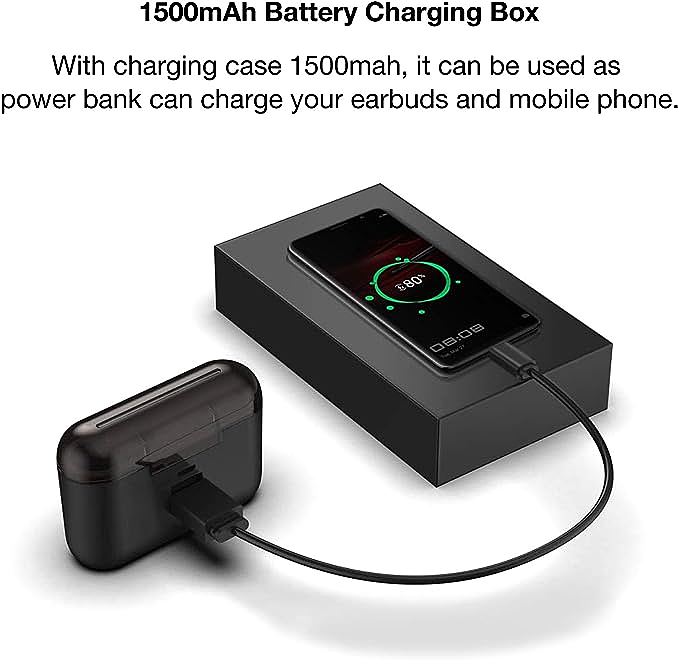
The charging case capacity determines how many full recharges are possible. A 1500mAh case can theoretically recharge 50mAh earbuds approximately 24 times. In practice, charging efficiency losses of around 20 percent reduce this to 19-20 cycles. Multiplying single-charge duration by case cycle count yields total playtime: roughly 100-160 hours before the case itself needs recharging.
Entry-level earbuds often use 30-40mAh batteries with 300-500mAh cases, providing 3-5 hours per charge and 15-25 total hours. Premium models may exceed 60mAh per earbud with cases approaching 2000mAh, enabling 8-12 hours per charge and 200+ total hours.
The degradation pattern matters for long-term ownership because lithium-polymer batteries, which are the standard battery type used in wireless earbuds, typically lose approximately 20 percent of their original capacity after 500 complete charge cycles, meaning that daily users will likely notice a meaningful reduction in available playtime after 18-24 months of regular use, at which point replacement becomes rarely economical and the earbuds effectively become disposable electronics rather than long-term audio investments.
Noise Isolation: Passive Versus Active Approaches
Blocking external sound occurs through two mechanisms: physical barriers and electronic cancellation. Marketing often conflates these, but the engineering and effectiveness differ substantially.
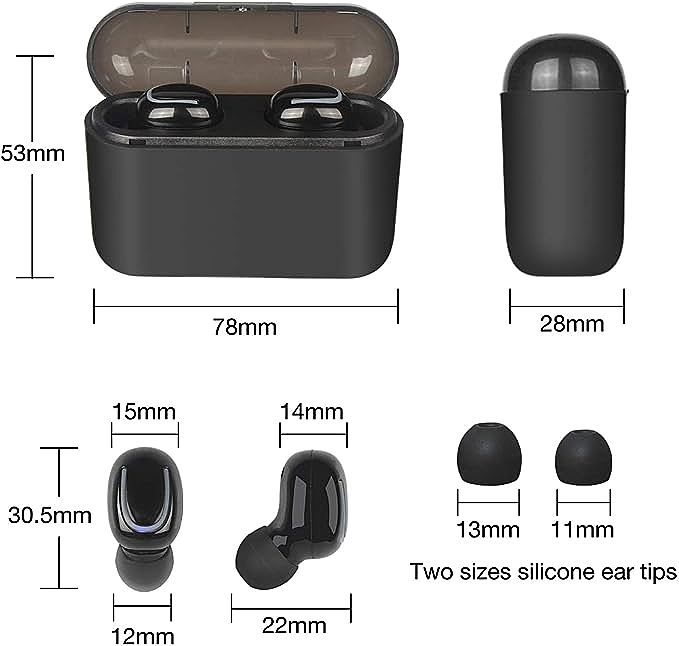
Passive noise isolation relies on the seal between earbud and ear canal. Silicone ear tips, available in small, medium, and large sizes, create an acoustic barrier. A proper fit can attenuate external noise by 25-30dB, primarily in higher frequencies. This approach costs nothing in battery life or component expense. Earbuds without ANC rely on passive isolation exclusively, with three ear tip sizes to accommodate different ear canal dimensions.
The limitation of passive isolation is fit dependency. Approximately 20 percent of users have ear canals smaller or larger than standard sizes. For these individuals, standard earbuds may not seal properly, reducing isolation effectiveness to near zero. Specialized designs with extra-small tips or custom-molded options address this, but at higher cost.
Active noise cancellation (ANC) uses microphones to detect external sound, then generates inverse waveforms to cancel it. This technology targets low frequencies, typically 100Hz to 1kHz, where passive isolation is least effective. Airplane engine rumble, subway noise, and air conditioning hum fall into this range. ANC requires additional microphones, processing chips, and battery power, increasing cost and complexity.
The choice between passive and active approaches depends on use context. For quiet environments or brief outdoor use, passive isolation suffices. For frequent travel or noisy offices, ANC provides meaningful benefit. The technology cannot eliminate all sound; higher frequencies and sudden noises still penetrate.
Water Resistance: The IP Rating System
Marketing terms like "sweat-proof" or "water-resistant" lack standardized meaning. The IP (Ingress Protection) rating system provides specific definitions, though not all manufacturers disclose these numbers.
IPX4 indicates splash resistance from any direction. Sweat during exercise qualifies as splashing. Rain, if not heavy, falls within this rating. A "sweat-proof" description on a product page typically corresponds to IPX4 or IPX5, suitable for gym use but not submersion.
IPX5 withstands water jets, offering more protection than IPX4. This rating suits outdoor runners who may encounter heavier rain.
IPX7 allows 30-minute immersion in one meter of water. Showering with IPX7 earbuds is possible, though not recommended due to soap and shampoo potentially degrading seals over time. Swimming requires IPX8 or higher.
The "X" in these ratings indicates no dust protection rating assigned. For earbuds, dust ingress is less concerning than for outdoor electronics. Full ratings like IP54 (dust-protected, splash-resistant) or IP67 (dust-tight, immersion-resistant) appear on some premium models.
Water resistance degrades over time. The seals and coatings that provide protection wear with use, exposure to sweat, and temperature cycling. A two-year-old IPX7 earbud may no longer meet its original specification.
Ergonomics: The Fit Problem
Ear canal geometry varies significantly across individuals. The diameter ranges from under 5mm to over 7mm, with shape variations that standard ear tips cannot address. This biological reality explains why the same earbuds fit one person perfectly and fall out repeatedly for another.
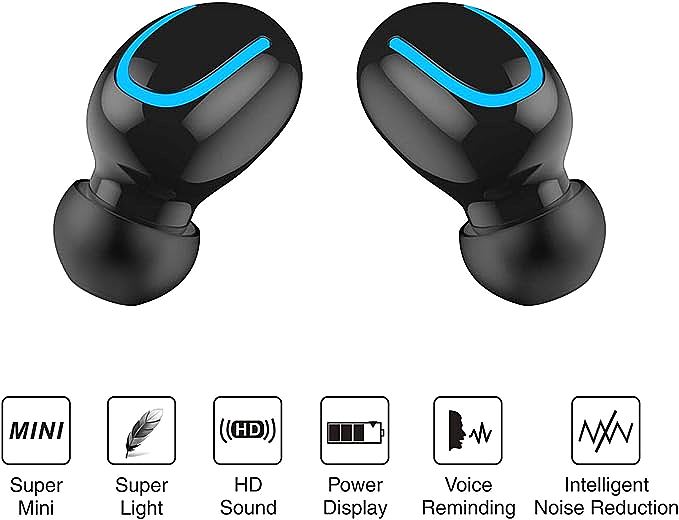
Weight distribution affects long-term comfort. Earbuds exceeding 6 grams per side often cause fatigue during extended sessions. Mid-range designs typically weigh approximately 4-5 grams per earbud, within the comfortable range for most users. Heavier designs may require wing fins or ear hooks to maintain position, adding bulk.
The seal quality determines both isolation and bass response. An incomplete seal allows sound to escape, reducing perceived bass and admitting external noise. Users experiencing "thin" sound from well-regarded earbuds often have fit issues rather than product defects.
For the approximately 20 percent of users who have ear canal dimensions that fall outside the standard range, either smaller or larger than typical measurements, standard earbud designs may be physically uncomfortable to wear for extended periods or even impossible to insert properly, which represents a significant market gap that some manufacturers have begun addressing through specialized compact versions designed specifically for this demographic.
Price Segments: Expectation Calibration
The wireless earbud market divides into recognizable price tiers, each with characteristic feature sets and compromises.
The $20-50 segment provides functional wireless audio without premium features. Expect SBC and possibly AAC codecs, passive noise isolation, 4-6 hours per charge, and basic water resistance. Build quality varies. Sound quality is adequate for casual listening but unlikely to satisfy critical listeners.
The $50-100 range adds consistency and refinement. Better drivers, more reliable connectivity, improved microphone quality for calls, and longer battery life appear. Some models in this tier include ANC, though implementation quality varies. This segment suits users prioritizing reliability over audiophile performance.
The $100-200 tier introduces aptX or LDAC support, effective ANC, premium build materials, and manufacturer app support for customization. Sound quality approaches wired earbuds in the same price range. Battery life and charging speed improve.
Above $200, features saturate. Premium pricing reflects brand positioning, advanced ANC algorithms, spatial audio processing, and system integration rather than fundamental capability improvements.
The Engineering Perspective
Wireless earbuds embody a series of engineering compromises. Smaller size reduces battery capacity and driver area. Lower cost limits codec support and build quality. Universal fit cannot accommodate all ear geometries. No product escapes these constraints.
The specifications that matter for a specific user depend on use context. A commuter prioritizes noise cancellation. A runner needs secure fit and water resistance. An audiophile seeks codec support and driver quality. A budget-conscious consumer weighs price against acceptable compromises.
Marketing language obscures these trade-offs, presenting every feature as an unambiguous benefit. The technical reality is more nuanced. Understanding the engineering behind the specifications enables informed decisions based on personal priorities rather than promotional claims.
The next time a product description promises "significant sound" or "unmatched battery life," the relevant question is not whether the claim is true, but what compromises enabled that particular emphasis. Every specification represents a choice. The task is identifying which choices align with actual needs.
Alpha Digital Q32 Wireless EarBuds
Related Essays

The Physics Behind Why Your $25 Earbuds Die in Six Months

Kingstar Waterproof Earbuds: Your New Adventure Buddy

SoundPEATS TrueFree2 Wireless Earbuds: The Budget Kings of True Wireless
The Invisible Symphony: How Driver Size Shapes Your Audio Experience

GOALSEN J-Series J03 Exquisite Bluetooth Headphones – Dual Bluetooth Wireless Earbuds Pressure-Touch Control

Galaxy Buds2 Pro: Immerse Yourself in the Science of Sound

AirPods (3rd Gen): Immersive Sound, Personalized for Your Ears

How RIZIZI Built 40-Hour Wireless Earbuds for Under 20 Dollars

Why Your Noise-Cancelling Earbuds Still Let Sound In
