Defying Gravity: The Biomechanics of Earhooks and Large-Driver Acoustics
Update on Jan. 10, 2026, 6:23 p.m.
In the realm of physics, every object in motion wants to stay in motion. For a runner, this presents a unique problem: when your body moves up and down, your earbuds want to do the same. But because they are not bolted to your skull, they experience Inertia. Every time your foot strikes the pavement, gravity and G-forces conspire to dislodge the tiny speakers from your ears.
The industry has tried many solutions: friction-fit silicone tips, wing-fins that tuck into the concha, and memory foam. But for high-impact activities like sprinting, CrossFit, or trail running, one design remains the undisputed champion of stability: the Over-Ear Hook.
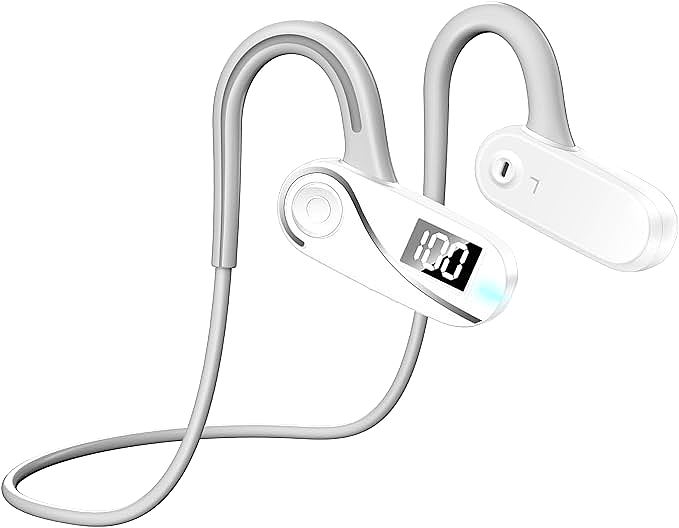
The Kuizil Q76-BY Wireless Earbuds are a prime example of this “form follows function” philosophy. They don’t just rely on friction; they rely on leverage. Combined with massive 13mm dynamic drivers, they represent a brute-force engineering solution to the twin problems of stability and sound pressure. This article explores the biomechanics of the earhook and the acoustic physics of large-diameter transducers.
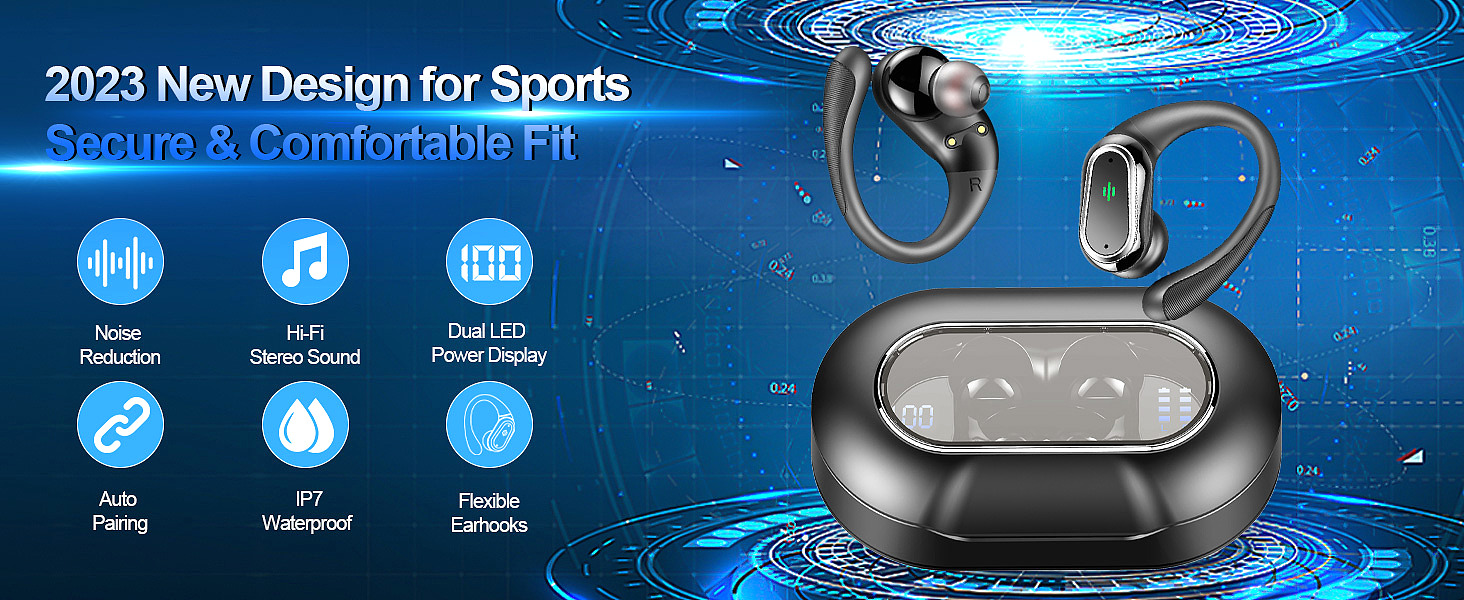
The Physics of the Cantilever: Why Hooks Don’t Fall
To understand why the earhook is superior for sports, we must look at it as a simple machine. The earhook acts as a Cantilever Beam. It uses the root of the ear (the junction where the ear meets the skull) as a fulcrum.
Counteracting Vertical Oscillation
When a runner lands, the head decelerates rapidly. A standard earbud, held in only by the friction of the eartip, has a center of mass that hangs outside the ear canal. This creates a moment arm that twists the bud downwards.
The Kuizil Q76-BY’s hook extends over and behind the ear. This shifts the center of gravity and creates a counter-torque. When the earbud tries to fall down, the hook presses against the top of the ear root. The cartilage of the ear creates an opposing normal force, locking the device in place. It effectively transfers the load from the sensitive ear canal to the robust structure of the outer ear. This allows the Q76-BY to remain stable even during the violent head-shakes of a burpee or a box jump.
Furthermore, the material matters. The Q76-BY uses a flexible, soft material for the hook. This compliance allows it to absorb some of the shock energy, rather than transmitting it all to the ear, preventing the “bruised cartilage” feeling common with rigid plastic hooks.
13mm Drivers: The Science of Air Displacement
Stability is useless if the sound is anemic. In the world of earbuds, drivers are typically 6mm to 8mm in diameter. The Kuizil Q76-BY breaks this mold with 13mm Dynamic Drivers. This is nearly double the surface area of a standard driver.
The Bass Equation ($F=ma$)
Sound is the movement of air. To produce low frequencies (bass), you need to move a large volume of air. A small driver has to move back and forth a long distance (high excursion) to move the same amount of air as a large driver moving a short distance.
A 13mm driver has a significant advantage in Surface Area.
* Area = πr²: A 13mm driver has roughly 2.8 times the surface area of an 8mm driver.
This allows it to push almost three times as much air with the same excursion. The result is a “Deep, Rich Bass” that is effortless. The driver doesn’t have to work as hard, reducing distortion at high volumes. For workout music, which relies heavily on the rhythm section (kick drums, bass synth), this physical ability to pressurize the ear canal is what creates the “immersive” sensation that motivates an athlete.
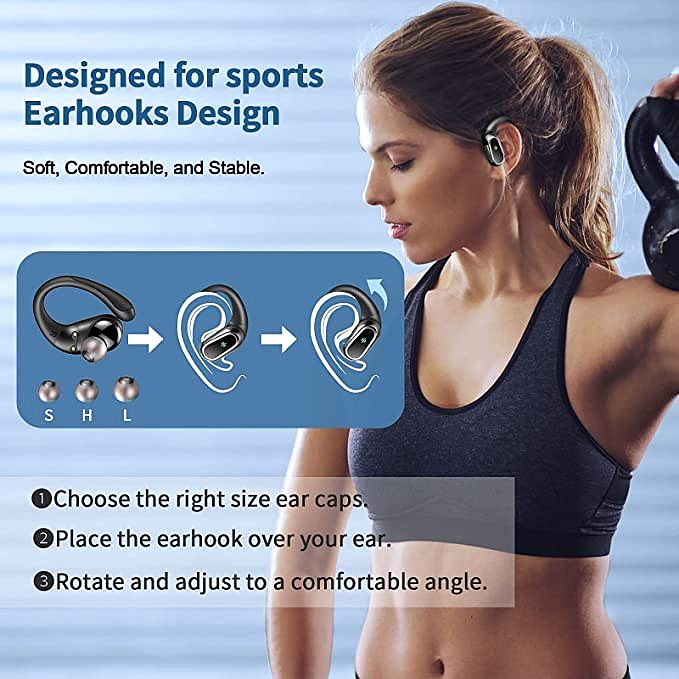
The Acoustic Chamber: In-Ear Structure
The Q76-BY combines this large driver with an In-Ear Acoustic Structure. While the hook holds the weight, the silicone tip seals the canal. This seal is critical for the 13mm driver to perform.
If the seal is broken, the low-frequency pressure wave escapes (bass roll-off). The stability provided by the earhook ensures that the seal remains consistent, even when the jaw moves or the head turns. This synergy between the External Suspension (the hook) and the Internal Seal (the tip) is what allows the 13mm driver to deliver its full potential.
Bluetooth 5.3: The Low-Latency Link
Connecting this acoustic system to the source is Bluetooth 5.3. In a sports context, the primary benefit of 5.3 is Robustness. Gyms are RF (Radio Frequency) nightmares, filled with dozens of other Bluetooth devices, Wi-Fi routers, and metal equipment that reflects signals.
Bluetooth 5.3 improves the “Channel Classification” feature, allowing the earbuds to hop to clearer frequencies more aggressively to avoid interference. This prevents the music from cutting out mid-set. Additionally, the lower latency ensures that if you are watching a workout video on a treadmill screen, the voice of the instructor is perfectly lip-synced with the audio.
Conclusion: The Heavy Lifter
The Kuizil Q76-BY is not designed to be the smallest or the most discreet earbud. It is designed to be a heavy lifter. It acknowledges that physics cannot be cheated. To get big bass, you need a big driver. To get absolute stability during chaos, you need a physical hook.
By embracing these physical realities rather than fighting them, it offers a solution for the athlete who prioritizes performance over aesthetics. It is a piece of gear that locks in and pumps out energy, using the fundamental laws of leverage and acoustics to fuel the human engine.