The Battery Physics That Keeps Neckband Earbuds Alive

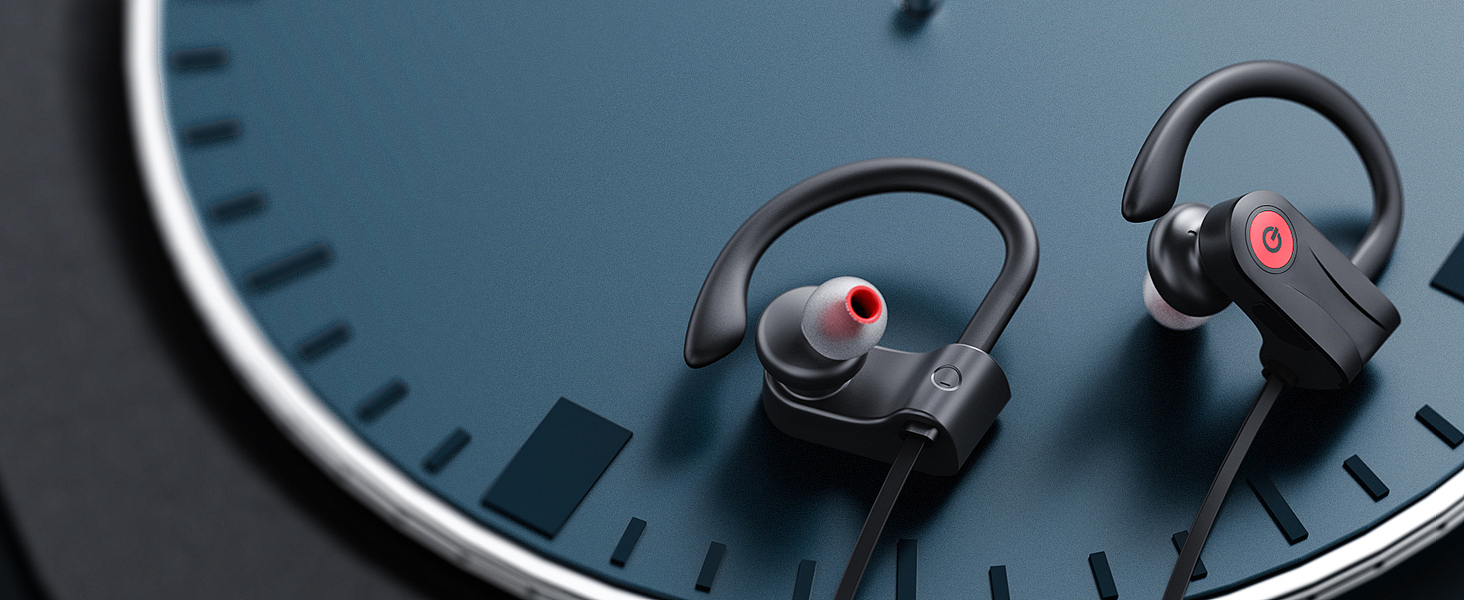
Otium U18 Bluetooth Earbuds
In 2016, a major tech company pulled the headphone jack from the iPhone and introduced true wireless earbuds to the world. Within months, "true wireless" became synonymous with "modern." Billboards, influencers, and tech reviewers all agreed: the cable between your earbuds was a relic. What nobody mentioned was that the cable was also carrying about ten extra hours of battery life.
A decade later, the neckband earbud — that humble, collar-worn design with a wire connecting two earpieces — quietly refuses to die. Not because of nostalgia, but because of physics. Specifically, the physics of lithium-ion energy density, and the fact that no amount of clever engineering can make a battery the size of a kidney bean hold as much charge as one the size of a AA.
This is the story of why form factor dictates endurance, why your wireless earbuds still die halfway through a transatlantic flight, and why a $20 pair of neckband earbuds can outlast a $250 pair of true wireless ones on a single charge.
The Volume Problem Nobody Solved
Every battery is a volume game. Lithium-ion chemistry stores energy at roughly 150 to 260 watt-hours per kilogram, depending on the exact formulation. Lithium-polymer, the variant used in almost all wireless earbuds, clocks in at 130 to 240 Wh/kg. These numbers have improved by only 8 to 10 percent annually for the past decade — incremental gains, not the kind of leap that rewrites the rules of product design.
A true wireless stereo (TWS) earbud — consider any popular true wireless model — must fit inside the human ear canal. The ear canal averages about 6 to 8 millimeters in diameter. Within that housing, engineers must pack a speaker driver, a Bluetooth radio, a microphone, touch sensors, an antenna, and a battery. The result: each earbud typically holds a battery between 30 and 60 milliamp-hours (mAh). That is roughly enough for 4 to 8 hours of playback at moderate volume before the earbud dies and must return to its charging case.
Now consider the neckband form factor. The flexible collar that rests on your shoulders — the trapezius muscles, specifically — has orders of magnitude more volume to work with. A typical neckband battery ranges from 150 to 300 mAh. Some models push past 400 mAh. One recent neckband model packs an estimated 1,000 mAh battery into its collar, achieving a staggering 150 hours of continuous playback.
The math is brutally simple. More volume means more battery. More battery means more runtime. And no amount of software optimization or AI-driven power management can overcome a fundamental geometric constraint.
Why Energy Density Plateaus Matter
In a 2022 paper published in the National Science Review, researcher Lu Yin examined the theoretical limits and practical limitations of wearable energy systems. The findings were sobering. While lithium-ion batteries can reach volumetric energy densities of up to 538 Wh/L in rigid formats, flexible batteries used in wearables typically deliver below 100 milliwatt-hours of total energy — insufficient to power most consumer electronics for extended periods.
The theoretical ceiling for next-generation battery chemistries is higher. Lithium-air batteries could theoretically achieve about 5 watt-hours per gram, and zinc-air about 1 Wh/g. But these remain laboratory curiosities. Commercial earbuds in 2026 still rely on the same lithium-polymer chemistry that powered the first wireless headphones a decade ago.
As Dr. Lena Park, an IEEE member, noted in a recent analysis: "Battery density hasn't improved dramatically in the past five years. So design constraints mean smaller devices will always sacrifice runtime."
This is the crucial insight. The bottleneck is not engineering ambition — it is chemistry itself. Until someone commercializes a fundamentally new battery chemistry, the relationship between physical volume and runtime is essentially fixed.

The Hidden Cost of Daily Charging
Battery degradation follows a predictable pattern. Lithium-polymer cells typically endure 300 to 500 full charge cycles before their capacity drops below 80 percent of the original rating. After that threshold, runtime declines noticeably and continues to erode.
Here is where form factor creates a compounding advantage. TWS earbuds, with their 4-to-8-hour runtime, are typically charged once or even twice per day. Over a year, that translates to roughly 365 to 730 charge cycles. Within 12 to 18 months, most TWS earbuds show significant capacity loss.
Neckband earbuds, by contrast, often deliver 15 to 30 hours per charge. A user who listens for 8 hours a day might charge the neckband only once every two to four days. That is roughly 90 to 180 charge cycles per year. The same lithium-polymer chemistry, subjected to far fewer cycles, retains its capacity for three to four years — sometimes longer.
The asymmetry is stark. Two devices using identical battery chemistry, but one degrades three to four times faster simply because its form factor forces more frequent charging. This is not a marketing claim. It is electrochemistry.
There is another, subtler degradation mechanism at work. TWS earbuds spend most of their idle time sitting in a charging case at or near 100 percent charge. Lithium-ion batteries degrade fastest when held at full charge for extended periods — the voltage stress accelerates chemical breakdown in the electrolyte. Neckband earbuds, which are typically charged to full and then removed from the charger, avoid this constant high-voltage stress.
The Power Topology Advantage
Battery capacity is only half the story. The other half is how power is distributed and consumed, and here too the neckband holds an inherent advantage.
TWS earbuds require two fully independent wireless devices to synchronize with each other and with the phone. This demands a complex "sniffing" or forwarding protocol, where one earbud (the primary) receives the Bluetooth signal from the phone and re-transmits it to the other earbud (the secondary). This dual-radio dance consumes processing power and extends the duty cycle of the Bluetooth chipset — both of which drain battery.
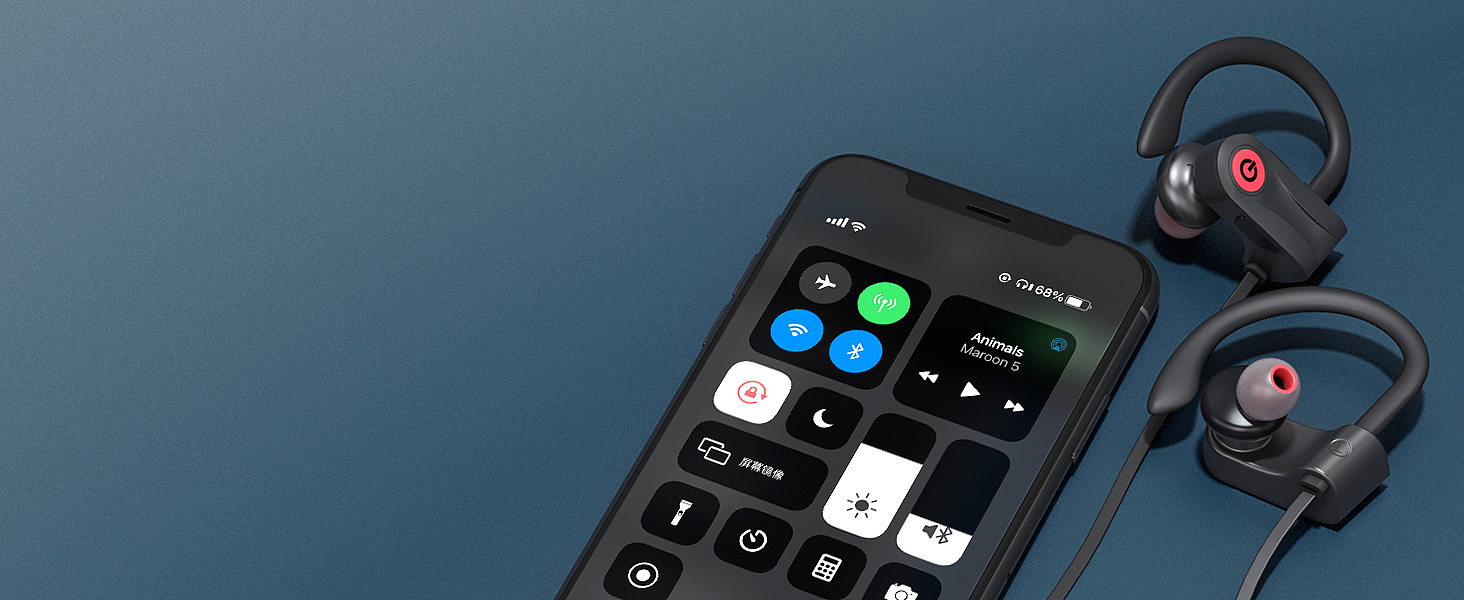
A neckband earbud, by contrast, uses a wired connection between the left and right earpieces. The Bluetooth chipset maintains a single stable link to the phone. No re-transmission. No synchronization protocol. No secondary radio. The result is lower processing overhead, a shorter radio duty cycle, and consequently, longer battery life per milliamp-hour.
This architectural difference also affects audio quality. The wired inter-ear connection eliminates the phase synchronization latency inherent in TWS designs. Stereo imaging is tighter because the left and right channels arrive at the eardrums simultaneously, without the microsecond-level jitter that wireless sync introduces.
Thermal Economics: Why Size Enables Speed
Fast charging generates heat. Heat degrades batteries. This creates a vicious cycle for TWS earbuds: the tiny battery needs frequent charging, but fast charging in a sealed, ear-adjacent enclosure produces heat that accelerates degradation.
Neckband designs break this cycle through simple thermodynamics. The larger battery has more thermal mass, absorbing heat more evenly during charging. The neck collar has significantly more surface area than an earbud, allowing passive heat dissipation into the surrounding air. Some neckband models can deliver 15 hours of playback from a 10-minute charge — a feat that would thermally stress a TWS earbud to the point of damage.
This is not a minor engineering detail. It means that neckband users can realistically top up their device during a coffee break and get through an entire workday, while TWS users must plan their charging cycles around the limitations of a small, heat-sensitive cell.
The Economic Paradox
Here is where the physics translates directly into consumer economics. A budget neckband earbud — something in the $15 to $25 range — typically delivers 12 to 20 hours of continuous playback. A comparably priced TWS pair often manages 3 to 5 hours per charge, with a charging case that extends total runtime to perhaps 15 to 20 hours.
The neckband achieves this without a charging case. The TWS requires one. The case itself contains a battery that degrades over time. When the case battery degrades, the total system runtime collapses — even if the earbuds themselves are still functional. Many TWS users discover this after 18 to 24 months, when their "24-hour total" system suddenly delivers only 10 hours.
Neckband earbuds avoid this dual-degradation problem entirely. There is one battery, one charging cycle, one degradation curve. Simplicity, in this case, is a feature.
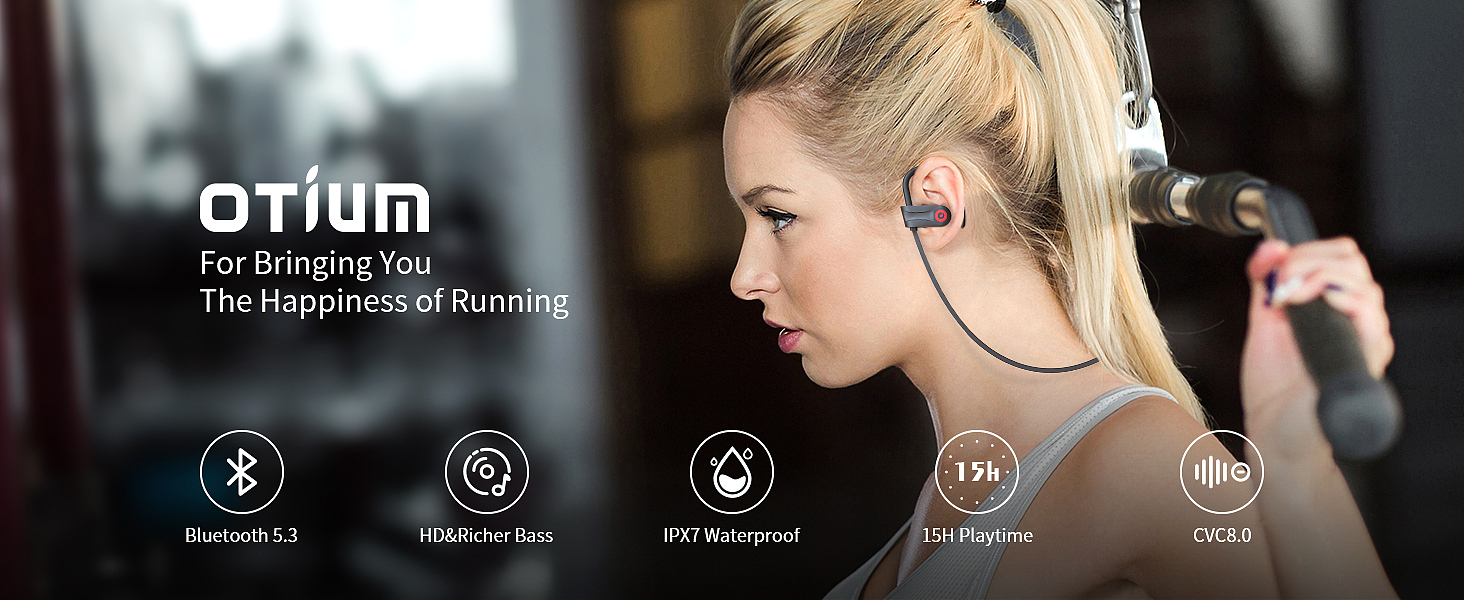
The Otium U18, a neckband earbud priced around $20, exemplifies this economics. It delivers 16 hours of continuous playback on a single 1.5-hour charge, with a standby time of 240 hours. There is no case to lose, no secondary battery to degrade, and no daily charging ritual.
When Physics Meets the Human Body
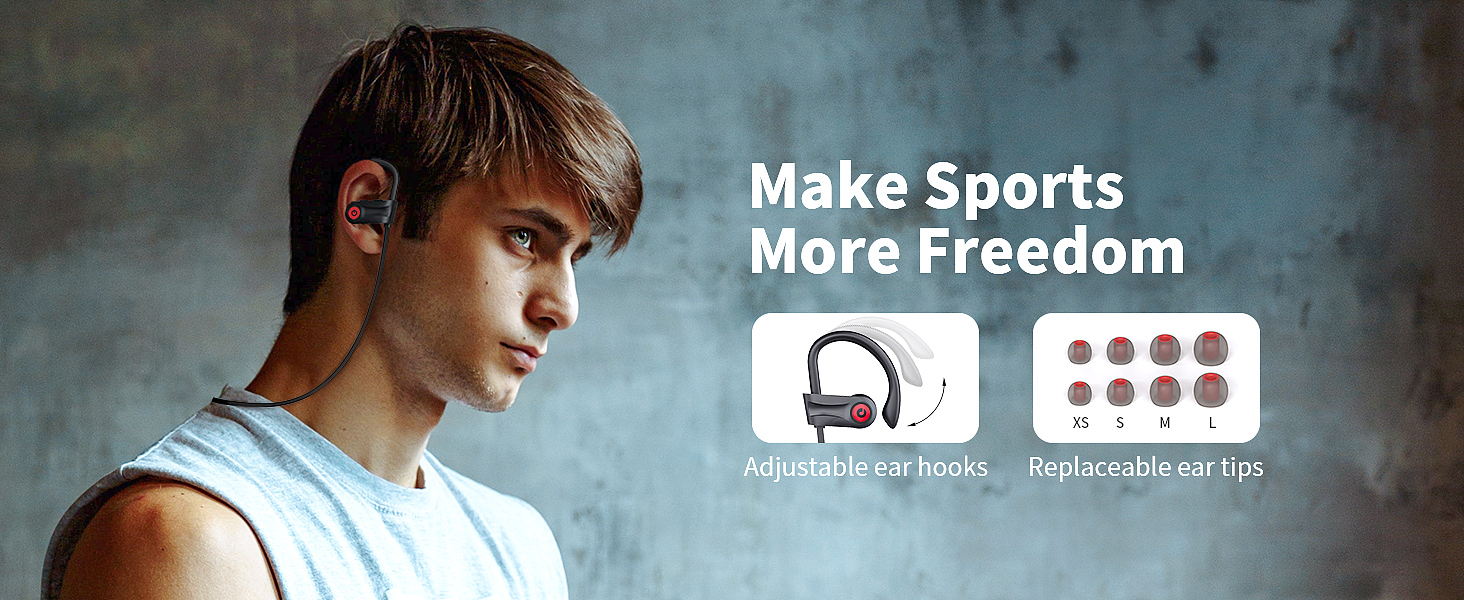
The biomechanics of wearing earbuds further reinforces the neckband advantage. Your external ear — the pinna and concha — is composed of elastic cartilage. It can support a few grams of weight comfortably, which is why TWS earbuds must be as light as possible (typically 4 to 6 grams each). Add more weight for a bigger battery, and the earbud becomes uncomfortable or falls out during movement.
Your neck, specifically the trapezius and sternocleidomastoid muscles, can support hundreds of grams without fatigue. A neckband earbud typically weighs 25 to 40 grams total — well within the comfort threshold of the cervical region. This weight budget allows engineers to include larger batteries, larger drivers, and more robust construction without compromising wearability.
For athletes and active users, this biomechanical advantage is compounded by physical security. A neckband earbud cannot fall into a storm drain or get lost under a weight bench. The tether between earpieces means that even if one earbud dislodges during a run, it simply hangs from the collar — not gone forever.
The Sustainability Argument Nobody Makes
Lithium-polymer batteries contain cobalt, lithium, nickel, and other materials with significant environmental footprints. A product that lasts three to four years generates substantially less e-waste than one that becomes unusable after 18 months — which is the typical lifespan of heavily cycled TWS earbuds.
Research from the TWS battery market indicates that mainstream lithium-polymer cells cost $1.50 to $2 per unit, while premium silicon-anode cells cost $4 to $5. These costs are amortized over the product's useful life. A neckband that lasts three years delivers a far better cost-per-hour-of-use ratio than a TWS pair replaced every 18 months.
This is not an argument against technological progress. Silicon-anode batteries are indeed pushing TWS runtime toward 9 to 10 hours per charge in premium 2026 models. But the physics remains: for the same battery chemistry and the same price point, the larger form factor will always deliver more runtime. Always.
The Pragmatist's Form Factor
The neckband is not glamorous. It will not appear in a minimalist tech commercial. It will not elicit compliments at a coffee shop. But it solves a real problem — the problem of running out of power — with an elegance rooted not in marketing, but in physics.
Volume determines capacity. Capacity determines runtime. Runtime determines reliability. And reliability, for anyone who has fished dead earbuds out of a pocket during a 12-hour shift, a long-haul flight, or a marathon training run, is the feature that matters most.
The next time you see someone wearing a neckband earbud, do not assume they are behind the times. They may simply understand something that the industry's marketing apparatus would prefer you not think about: the cable between the earbuds was never the problem. The battery inside them was.
Otium U18 Bluetooth Earbuds
Related Essays

The Case for the Neckband: Why Wired-Wireless Still Beats True Wireless

Neckband Audio: Spatial Separation Enables aptX-HD at Budget Prices

Anatomy of Endurance: The Engineering Behind High-Capacity Wireless Audio Architectures

The Anatomy of a White Label: Decoding the Supply Chain and Component Physics of Budget Earbuds

LIUHE HX 801 Neckband Bluetooth Headphones: A Budget-Friendly Wireless Choice
