The Lost Philosophy of Open-Back Headphones: When "Less Control" Meant More Connection


Sony MDR-G52LP Street Style Headphones
You're running. You can hear your footsteps, your breathing, traffic approaching from behind—and underneath it all, your music. Not replacing your environment, but layering on top of it.
This experience isn't accidental. It's the result of a design philosophy that no longer exists: open-back headphones.
Today, this category is extinct in sports audio. The default assumption has flipped: instead of connecting to your environment, modern headphones promise to control it. But understanding what was lost—not just technically, but philosophically—changes how you evaluate every "transparency mode" claim.

The Core Trade-Off: Isolation vs. Awareness
Every headphone makes a binary choice about your relationship to the environment:
Closed-back seals the earcup. Sound pressure is contained. You hear your music; the world hears nothing. This is now so dominant that most consumers don't realize an alternative exists.
Open-back leaves the earcup vented—typically covered by mesh or grille. Air moves freely. The back wave from the driver escapes instead of building pressure inside the chamber.
The consequences are physical, not subjective:
| Characteristic | Closed-Back | Open-Back |
|---|---|---|
| Environmental isolation | High | None |
| Sound leakage (outbound) | Minimal | Moderate |
| Soundstage perception | Confined | Spacious, speaker-like |
| Listening fatigue (extended wear) | Higher | Lower |
| Bass extension | Enhanced by enclosure | Limited by physics |
| Passive awareness | None | Complete |
The last row matters most for sports use. Modern sports earbuds solve awareness with electronics: microphones pick up outside sound, process it, and mix it into your audio. "Transparency mode." It works—but it's batteries, latency, and complexity.
Open-back achieves the same result with physics alone: don't block sound in the first place.
Why Open-Back Reduces Listening Fatigue (The Pressure Mechanism)
Listening fatigue isn't just "your ears get tired." It's a physical response to pressure buildup.
When a driver moves, it produces sound on both sides of the diaphragm. In a sealed enclosure:
Closed-Back Pressure Flow:
Driver forward → Compression in front (to ear)
Driver backward → Compression behind (trapped)
The trapped back wave reflects off the inner walls. Some frequencies reinforce; others cancel. This creates standing waves—areas of high and low pressure that your ear must constantly compensate for. Over hours, this compensation causes fatigue.
Open-back eliminates the trap:
Open-Back Pressure Flow:
Driver forward → Compression in front (to ear)
Driver backward → Compression exits through vents (no buildup)
The result is measurable:
- Reduced standing waves = cleaner frequency response
- No pressure accumulation = less physiological stress
- Natural treble decay = no harsh reflections
This is why audiophile reference headphones—Sennheiser HD 600, Grado SR series, Hifiman planars—remain stubbornly open-back. The physics hasn't changed. The market has segmented.
For sports use, this means: if you run for 90+ minutes, open-back reduces the "pressure headache" that some runners report with sealed in-ear monitors.
The Safety Question: When Awareness Is Non-Negotiable
For runners and cyclists, environmental awareness isn't a feature—it's a safety requirement. You need to hear:
- Approaching vehicles
- Other trail users
- Verbal warnings
- Surface changes (gravel, glass, water)
Open-back provides this passively. No processing delay. No battery dependency. No button to toggle.
The trade-off is equally clear: open-back is unusable in loud environments. Airplanes, crowded gyms, busy streets—the external sound enters unfiltered. This isn't a flaw. It's the mechanism.
Modern ANC headphones frame this as a problem to solve: "We'll give you isolation and awareness via transparency mode." But transparency mode is an approximation. It has latency (typically 10-30ms). It has frequency response limitations. It requires power.
Passive awareness has none of these costs. The price is accepting that you can't use open-back everywhere.

Why Open-Back Sports Headphones Disappeared
Open-back sports headphones are extinct. The last mass-market designs appeared around 2005-2007. What happened?
The ANC Inflection Point (2008-2010)
Noise cancellation went from niche (aviation headsets) to mainstream (consumer headphones). The marketing shift followed:
- Before: "Enhance your run" (accompaniment)
- After: "Shut out the world" (escape)
The linguistic difference reveals the assumption change. One frames the environment as context; the other as problem.
ANC offered something open-back couldn't: control. You choose when to isolate. This is genuinely empowering for commuters, office workers, parents of young children.
But it also reframed the default: isolation became the baseline, awareness the "mode."
True Wireless Dominance (2016+)
Apple AirPods eliminated the headband entirely. Behind-the-neck designs couldn't compete with the convenience of no wire. Awareness became an electronic feature ("transparency mode"), not a passive property.
The Result
Open-back survives in audiophile headphones—where isolation isn't needed and sound quality is paramount. Sennheiser HD 600 series (1997-present), Grado SR series, Hifiman planar magnetics: all open, all $400-$4,500.
But for sports use, the category is gone. The question isn't whether this is "better" or "worse." It's whether the trade-off—passive awareness, reduced fatigue, simpler design—is worth seeking out in a world that has standardized elsewhere.
Choosing Intentionally: A Framework
When evaluating headphones, ask:
1. Do I need isolation, or do I need awareness?
- Commuting, office, travel → isolation
- Running, cycling, walking → awareness
2. How long will I wear them?
- <1 hour → fatigue less critical
- 2+ hours → open-back advantage grows
3. What's my listening environment?
- Loud (gym, transit) → closed-back or ANC required
- Quiet (trails, neighborhood) → open-back viable
4. What music do I listen to?
- Bass-heavy (hip-hop, EDM) → open-back may sound thin
- Vocal/acoustic → open-back excels
5. Does my anatomy fit the design?
- If possible: try before buying
- If not: understand return policies
These questions don't have universal answers. But asking them moves you from default choices ("ANC is best") to intentional ones ("I need awareness, so open-back makes sense").
The Uncomfortable Truth: Trade-Offs Are Inevitable
Every design choice sacrifices something:
- Open-back sacrifices isolation for awareness
- Closed-back sacrifices soundstage for privacy
- ANC sacrifices battery simplicity for control
The marketing tells you "you can have it all." The physics says otherwise.
Understanding the actual trade-offs—the pressure mechanism behind fatigue, the bass reflex principle, the anatomical variation problem—lets you choose based on what matters to you.
Not based on what's default. Based on what you need.
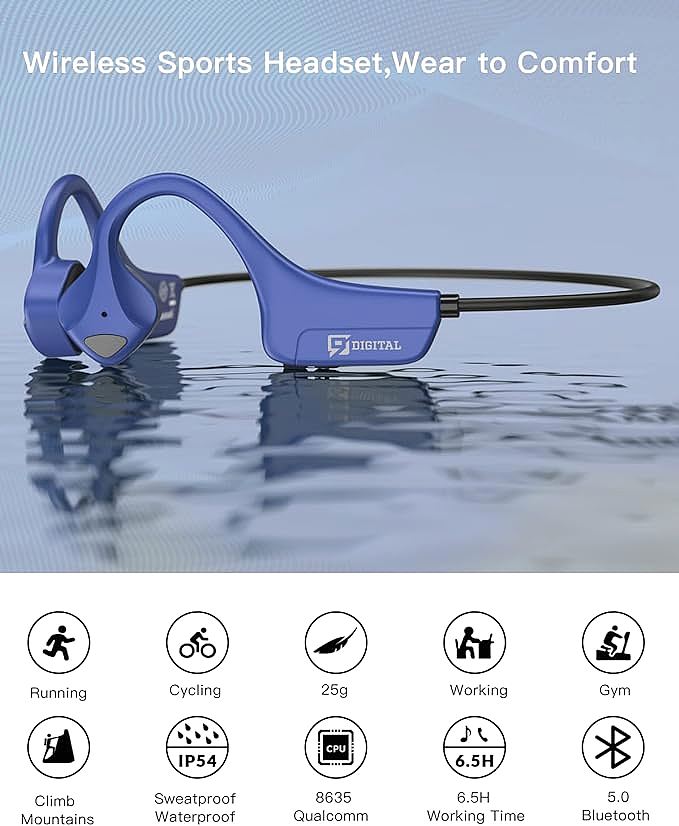
Sony MDR-G52LP Street Style Headphones
Related Essays

Sony MDR-770LP Headphones: Comfort and Quality Sound on the Go

Sony MDR-ZX110 Headphones: Clear Sound, Comfortable Fit, and Affordable Price
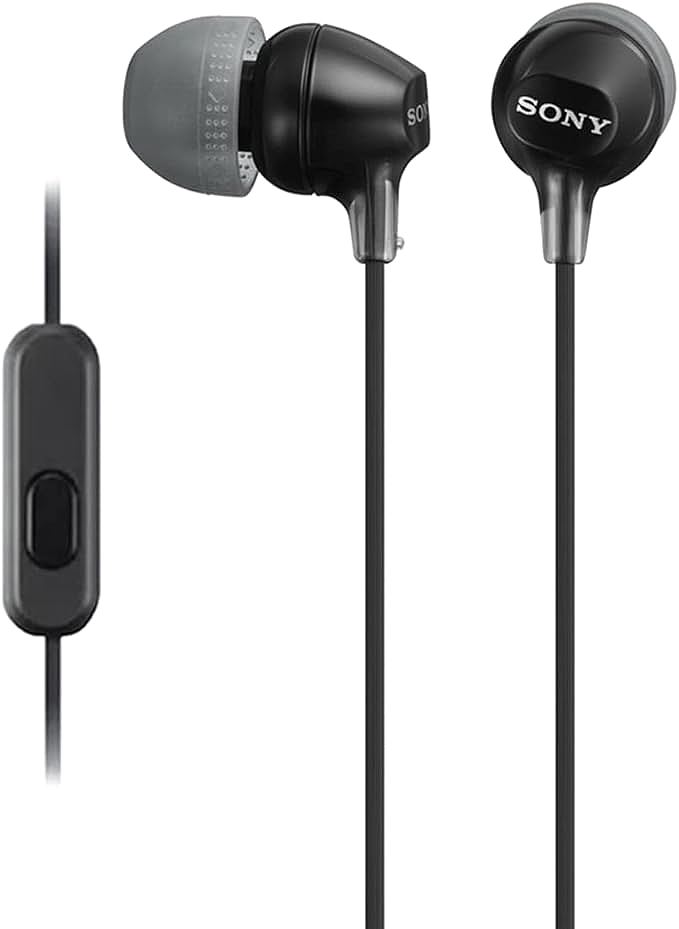
Sony MDREX14AP In-Ear Headphones: Clear Sound & Hands-Free Calling

Wired Over-Ear Headphone Acoustics: Driver, Enclosure, and Cable Explained

Sony PCM-D100 Audio Recorder: Legacy and Design

Master & Dynamic MW50 Wireless On-Ear Headphones – Recommended for Audiophiles

: Focal Bathys Hi-Fi Wireless Closed-Back Active Noise-Canceling Headphones – Exceptional Sound Experience

Lankey Pro U-AIR4 Ear Buds Wireless Bluetooth Headphones

Tiiyee Earphones – Recommended for High Quality Sound and Radiation Reduction

