Bypassing the Tympanic Membrane: Acoustic Engineering for Amphibious Environments


Ruirtarci K9-PRO 3-in-1 Bone Conduction Headphones
The human auditory system is an evolutionary marvel, exquisitely tuned to detect minute fluctuations in atmospheric pressure. However, this biological apparatus is fundamentally optimized for a single medium: air. When the human body transitions into a fluid medium, such as a swimming pool or the open ocean, the biological mechanisms of hearing are severely compromised. The acoustic impedance mismatch between water and the air trapped in the ear canal causes sound waves to reflect rather than transmit, rendering the underwater world muffled and isolating.
Simultaneously, the modern pursuit of continuous digital connectivity demands that our audio streams follow us into these hostile environments. Attempting to force traditional acoustic technologies—which rely on moving air—into amphibious or high-kinetic scenarios reveals immediate, catastrophic physical limitations. Traditional earbuds flood, Bluetooth signals perish, and situational awareness is eradicated.
To resolve these contradictions, acoustic engineers must discard the conventional model of air-driven sound and exploit alternative biological pathways and data transmission architectures. By examining purpose-built amphibious hardware—utilizing the architectural specifications of the Ruirtarci K9-PRO 3-in-1 Bone Conduction Headphones as an engineering baseline—we can deconstruct the fascinating physics of osseous sound transmission, the mathematics of radio frequency attenuation in water, and the psychoacoustic realities of unoccluded listening.
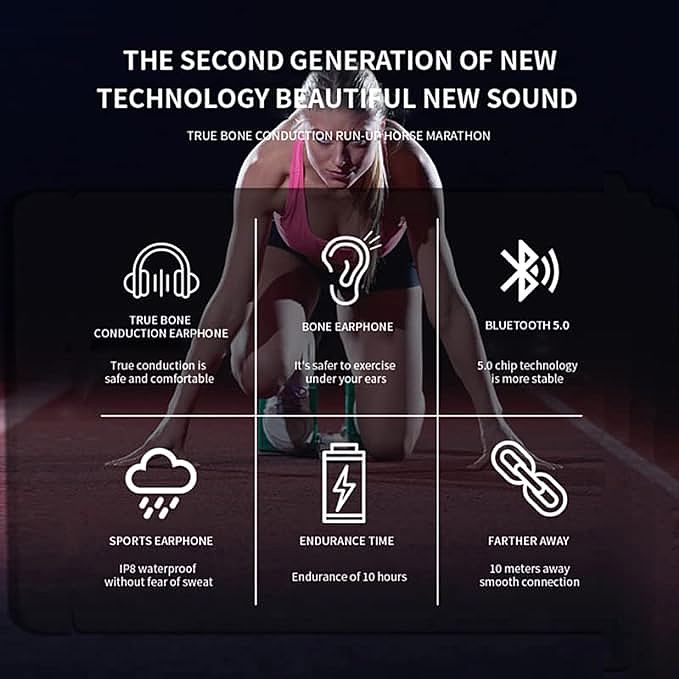
When Beethoven Bit the Piano Rod
To comprehend the modern application of bone conduction, one must trace the historical realization that the human skull is a highly effective acoustic conduit. The standard model of hearing—air conduction—relies on a fragile mechanical chain. Sound waves travel through the air, enter the external auditory meatus (ear canal), and strike the tympanic membrane (eardrum). This membrane vibrates, transferring kinetic energy to the ossicles (the malleus, incus, and stapes) in the middle ear. These tiny bones act as a mechanical transformer, amplifying the force to overcome the impedance mismatch before striking the oval window of the fluid-filled cochlea, where hair cells translate the mechanical wave into electrical nerve impulses.
If any part of this fragile air-to-mechanical chain is damaged or blocked by water, hearing ceases. However, in the late 18th and early 19th centuries, the composer Ludwig van Beethoven, suffering from severe progressive otosclerosis that fused his middle-ear bones, serendipitously documented an alternative pathway. By clenching a wooden rod in his teeth and pressing the opposing end against the soundboard of his piano, Beethoven discovered he could perceive the music.
The acoustic kinetic energy bypassed the outer and middle ear entirely. The vibrations traveled from the piano, through the wooden rod, into his dental structure, and propagated directly through the dense osseous tissue of his jaw and skull. Because the cochlea is embedded within the temporal bone of the skull, the mechanical vibrations of the bone structure directly agitated the cochlear fluid, stimulating the auditory nerve.
Modern bone conduction devices, such as the transducers found in the Ruirtarci K9-PRO, miniaturize this exact physical principle. Instead of a piano and a wooden rod, the device utilizes sophisticated electromechanical transducers resting against the user's zygomatic arch (cheekbone) or the mastoid process directly behind the ear.
These transducers typically operate using either piezoelectric materials or miniaturized electromagnetic voice coils. When an alternating electrical current representing an audio signal is fed into the transducer, it expands and contracts, converting the electrical energy into microscopic, high-velocity mechanical vibrations. These vibrations are injected directly into the dermal layer and propagate through the skull to the inner ear. By completely bypassing the tympanic membrane, the device renders the presence of water in the ear canal acoustically irrelevant. The listener perceives crystal-clear audio originating seemingly from within their own head, while their physical ears remain unplugged and exposed to the environment.
Why Does Bluetooth Die Beneath the Surface?
While bone conduction solves the biological problem of underwater hearing, engineers must simultaneously solve the electromagnetic problem of data transmission. A device can be perfectly sealed against fluid ingress, but if it relies on standard wireless protocols to receive audio data from a host device, it will experience immediate, catastrophic failure the moment it breaks the surface of the water.
The failure mode of Bluetooth in aquatic environments is dictated by the interaction between electromagnetic radiation and molecular dipoles. Bluetooth protocols operate within the Industrial, Scientific, and Medical (ISM) radio band, specifically targeting frequencies between 2.400 GHz and 2.4835 GHz. In a vacuum or in atmospheric air, these microwaves propagate with minimal attenuation, allowing for transmission ranges of tens of meters.
However, water ($H_2O$) is a highly polar molecule. It possesses a distinct positive charge on one side (the hydrogen atoms) and a negative charge on the other (the oxygen atom). When the 2.4 GHz electromagnetic wave from a Bluetooth transmitter enters water, the rapidly alternating electric field interacts with these polar molecules. The water molecules attempt to physically rotate and align themselves with the oscillating field 2.4 billion times per second.
This relentless molecular rotation generates internal friction. The kinetic energy of the radio wave is rapidly absorbed by the water and converted into microscopic amounts of thermal energy (heat). This is the exact physical mechanism utilized by a household microwave oven to heat food, which also operates at 2.45 GHz.
Because the radio wave's energy is aggressively absorbed and dissipated as heat, the signal strength decays exponentially as it penetrates the fluid. The attenuation of 2.4 GHz signals in fresh water is so severe that a Bluetooth connection between a smartphone sitting on a pool deck and a submerged headset will drop within mere centimeters of depth. In saltwater, which contains highly conductive dissolved ions that introduce additional ohmic losses, the attenuation is even more aggressive.
Therefore, relying on a streaming radio link for a swimming headset is a fundamental engineering anti-pattern. A device cannot fight the immutable thermodynamics of dielectric absorption.
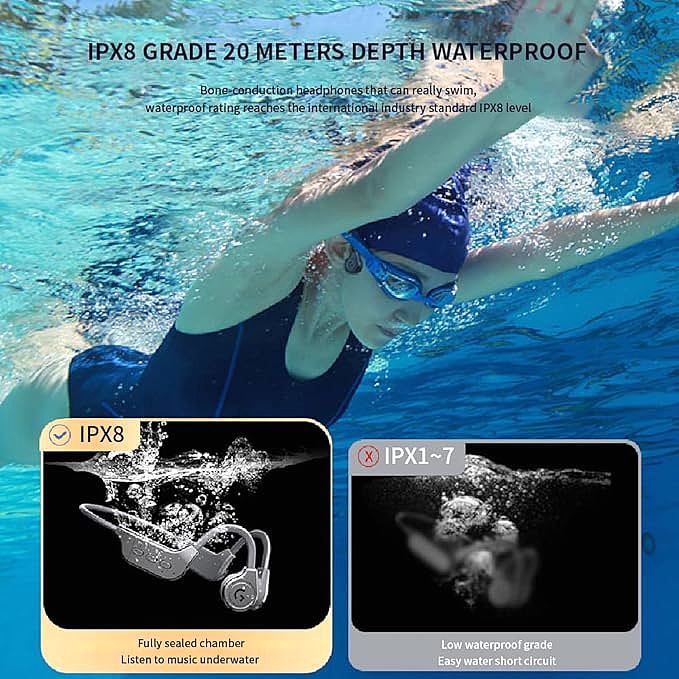
Severing the Radio Tether for Aquatic Autonomy
To guarantee continuous audio playback in a fluid medium, engineers must sever the external radio tether completely. If the data cannot be transmitted through the water in real-time, the data must reside entirely within the submerged device before the user enters the water.
This necessitates a return to localized, solid-state architecture. Devices engineered for true amphibious autonomy, such as the Ruirtarci K9-PRO, integrate a dedicated MP3 player module and NAND flash memory directly into the waterproof chassis.
The integration of local storage—such as a 32GB memory module—represents a significant architectural challenge in micro-wearables. The device must house not only the bone conduction transducers, the lithium-polymer battery, and the Bluetooth System-on-a-Chip (SoC) for terrestrial use, but it must also integrate an independent storage controller and a localized Digital-to-Analog Converter (DAC) capable of decoding MP3, WAV, or FLAC files without drawing excessive current.
A 32GB NAND flash chip provides a massive reservoir of data. Uncompressed audio formats (like 16-bit/44.1kHz WAV) consume roughly 10 megabytes per minute. Highly compressed formats (like 128 kbps MP3) consume approximately 1 megabyte per minute. The local storage allows the device to hold thousands of audio tracks, operating completely independently of a host smartphone.
When the user dives into the water, the device shifts states. The Bluetooth radio is disabled to conserve power, and the internal microprocessor begins pulling binary data directly from the localized NAND flash, decoding it, amplifying it, and driving the electromechanical transducers. By collapsing the entire audio transmission chain—from storage to decoding to transduction—into a single, hermetically sealed physical unit, the device entirely bypasses the catastrophic dielectric absorption of the 2.4 GHz spectrum. The user achieves absolute aquatic autonomy.
The Mechanics of Hydrostatic Ingress Protection
Housing a localized computer and electromechanical vibrators underwater requires uncompromising physical defenses. The industry standard for this level of environmental shielding is quantified by the International Electrotechnical Commission (IEC) standard 60529, resulting in an Ingress Protection (IP) rating.
Amphibious devices target an IPX8 classification. The 'X' indicates the device has not been formally classified against solid particulate ingress (dust), while the '8' mandates that the enclosure must survive continuous immersion in liquid under conditions specified by the manufacturer, which are generally more severe than the 1-meter, 30-minute requirement of IPX7.
Surviving IPX8 requires defending against hydrostatic pressure. Pressure in a fluid increases linearly with depth, calculated by the equation $P = \rho gh$ (where $\rho$ is fluid density, $g$ is gravity, and $h$ is depth). At a depth of 2 meters, the device is subjected to nearly 20 kilopascals (kPa) of inward crushing force.
Traditional consumer electronics rely on snap-fit plastics and adhesive tapes, which instantly fail under this pressure, allowing capillary action to pull conductive water onto the printed circuit board, causing immediate galvanic corrosion and short circuits. IPX8 architecture abandons these methods. The chassis halves are typically fused using ultrasonic welding, melting the thermoplastic polymers together at a molecular level to create a seamless, monolithic shell. Furthermore, because bone conduction transducers do not require open acoustic vents to push air, the outer shell can be completely solid, eliminating the weakest points found in traditional air-conduction earbuds.

The Illusion of Missing Bass
Despite the triumphs of biological integration and hydrostatic engineering, bone conduction technology is frequently subjected to critical comparative analysis regarding its acoustic fidelity. Users transitioning from sealed, air-conduction in-ear monitors to bone conduction devices often report a distinct lack of low-frequency response, characterizing the sound as thin, mid-forward, or lacking "thump."
This perceived deficiency is not a manufacturing defect; it is a rigid physical limitation dictated by acoustic impedance and the mass-spring mechanics of the human skull.
To generate a low-frequency sound wave (bass), a transducer must displace a massive amount of physical material. In an air-conduction earbud, the 10mm diaphragm only has to push a minuscule volume of trapped, highly compressible atmospheric gas inside the ear canal. The driver requires very little kinetic energy to generate high Sound Pressure Levels (SPL) at 40 Hz.
A bone conduction transducer faces a radically different environment. It must inject kinetic energy into the dermal tissue, the subcutaneous fat, and the dense, rigid cortical bone of the skull. Bone has an acoustic impedance roughly 3,000 times greater than air. To force the heavy mass of the human skull to vibrate at 40 Hz with enough amplitude to stimulate the cochlea, the transducer would need to generate massive mechanical force.
If an engineer designed a bone conduction transducer with enough linear excursion and power to deliver a perfectly flat response down to 20 Hz, the physical vibration against the user's cheekbone would be violently uncomfortable, causing the device to physically bounce off the skin and resulting in severe contact fatigue. Furthermore, driving that much kinetic mass would rapidly drain the internal lithium-polymer battery.
Consequently, acoustic engineers must heavily equalize the DSP in bone conduction devices, applying aggressive high-pass filters. They intentionally roll off the sub-bass frequencies to maintain transducer stability, optimize battery life, and ensure wearer comfort.
Furthermore, human perception of bass is psychoacoustic. In traditional listening environments, we do not merely "hear" bass through cochlear stimulation; we feel the barometric pressure change on our tympanic membrane and the physical impact on our torso. Bone conduction bypasses the eardrum entirely, removing the barometric pressure variable from the brain's sensory input. While the user feels a localized, haptic tickle on their cheekbone from the mid-bass frequencies, the brain registers the lack of tympanic pressure as a "thin" sound signature. The technology is inherently biased toward the mid-range and treble frequencies (vocals, guitars, cymbals), making it exceptional for podcasts, audiobooks, and vocal-heavy music, but physically incapable of replicating the enclosed, pressurized environment required for sub-bass heavy electronic or hip-hop music.
Navigating Urban Chaos with Unplugged Canals
While the genesis of waterproof localized storage is rooted in aquatic environments, the open-ear architecture of bone conduction provides a profound, life-saving utility in terrestrial, high-kinetic environments. For urban runners, cyclists, and hikers, the total acoustic isolation provided by modern Active Noise Cancelling (ANC) earbuds is a severe biological liability.
The human auditory system evolved over millions of years as a continuous, omnidirectional threat-detection array. Our ability to localize an approaching object—such as a speeding vehicle outside our visual field—relies on complex psychoacoustic processing.
When a sound wave from an approaching car strikes the human head, it reaches the closer ear a fraction of a millisecond before it reaches the further ear. The brain calculates this Interaural Time Difference (ITD). Furthermore, the human head casts an acoustic shadow, meaning the sound is slightly louder in the closer ear. The brain calculates this Interaural Level Difference (ILD). Finally, the complex ridges and folds of the outer ear (the pinna) act as biological acoustic filters, altering the frequency spectrum of the sound based on its vertical and horizontal angle of elevation. These spectral alterations are known as Head-Related Transfer Functions (HRTFs).
By synthesizing ITD, ILD, and HRTF data, the brain instantly builds a 3D spatial map of the environment, allowing a cyclist to instinctively know a vehicle is approaching from the rear-left at high velocity.
When a user inserts a traditional silicone earbud, they physically plug the ear canal and bypass the pinna. The HRTF filtering is destroyed, and the environmental noise is mechanically blocked (passive isolation) or mathematically erased (ANC). The user's primary 360-degree threat-detection sensor is blinded.
Bone conduction devices fundamentally preserve the biological sensorium. By leaving the ear canal completely unoccluded, the listener's auditory system functions exactly as it did in nature. The ambient environmental noise passes through the pinna and down the ear canal unimpeded, preserving all ITD, ILD, and HRTF spatial cues.
Simultaneously, the digital audio stream is injected directly into the cochlea via the skull. The brain relies on a phenomenon known as the "cocktail party effect"—the neurological capability to selectively focus attention on a specific stimulus (the digital music) while background processes continuously monitor the unadulterated environmental soundscape for anomalies (sirens, horns, footsteps).
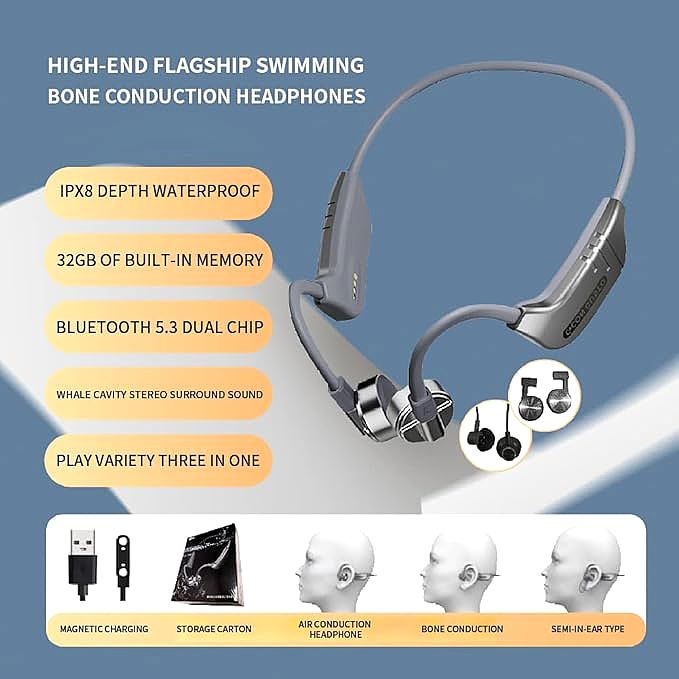
The Convergence of Biology and Solid-State Physics
The evolution of personal audio is not defined by a singular pursuit of absolute acoustic perfection; it is a branching path defined by the constraints of specific environments. The architecture of devices like the Ruirtarci K9-PRO illustrates a radical departure from the sterile, isolated vacuum of traditional audiophile hardware.
By analyzing the application of osseous sound transmission, the thermodynamics of localized NAND storage, the hydrostatic resilience of IPX8 ultrasonic welding, and the psychoacoustic preservation of unoccluded spatial awareness, we observe a technology that refuses to fight human biology or the physical environment. Instead, amphibious and open-ear engineering leverages the human skeleton as an acoustic conduit and respects the necessity of environmental telemetry.
While the fundamental laws of acoustic impedance prevent this architecture from replicating the sub-bass pressure of a sealed monitor, it provides something vastly more important in hostile or chaotic environments: the ability to seamlessly overlay a digital soundscape onto an unfiltered physical reality, regardless of whether the user is navigating a dense urban intersection or entirely submerged beneath the surface of the water.
Ruirtarci K9-PRO 3-in-1 Bone Conduction Headphones
Related Essays

SSONIO Bone Conduction Headphones: Unveiling the Science of Open-Ear Sound & IPX8 Aquatic Audio

ZHYH Sport Headphones: A Splash-Proof Bargain for Underwater Audio

Groove While on the Move with the Wissonly Hi Runner Headphones

Hyyeosd Bone Conduction Headphones: An Excellent Open Ear Headset for Sports

FOVURTE X15 Bone Conduction Headphones: A Must-Have for Outdoor Sports Lovers

GEORDONG k9 Bone Conduction Headphones: Open-Ear Bluetooth for Swimming and Sports

The Swimmer's Guide to Bone Conduction: MP3 Mode vs. Bluetooth
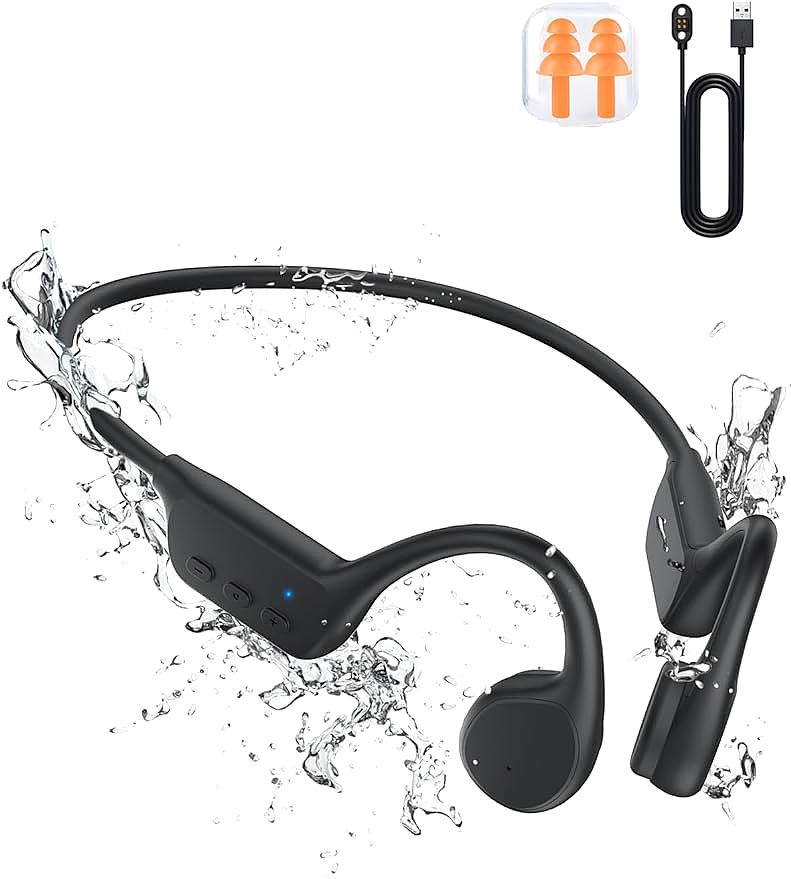
Acoustic Engineering for Amphibious Environments and Cranial Transmission

RR SPORTS BC888 Bone Conduction Headphones: Dive Deeper into Sound and Science

