How Bluetooth 5.2 Changed Wireless Earbuds: Stability, Battery, and Audio

Soundcore Sport X20 by Anker
How Bluetooth 5.2 Changed Wireless Earbuds: Stability, Battery, and Audio
Every time you pull your product-7040 from their case and they connect within seconds, a small engineering miracle happens. The Bluetooth protocol — a technology most people never think about — negotiates a connection, allocates audio channels, and begins streaming sound to two independent devices, each smaller than a jellybean. When it works well, the experience feels effortless. When it doesn't, you get dropouts, lip-sync delays, and that frustrating moment when one earbud dies an hour before the other. Bluetooth 5.2, released in January 2020, quietly reshaped how product-7040 perform. It didn't make headlines the way a new iPhone does, but the changes it introduced — from power management that can halve battery drain to independent earbud connections that eliminate the relay bottleneck — affect anyone who uses true product-7040 today. This article breaks down exactly what changed, why each improvement matters in practice, and what's coming next with LE Audio. ## The Connection You Never Think About Bluetooth has been the invisible backbone of wireless audio for over two decades, yet most people only encounter it as a version number printed on a product box. That number matters more than most realize. Each Bluetooth revision introduces changes to the radio layer, the connection protocol, and the power management system — all of which determine whether your earbuds hold a stable connection across a room or cut out when you turn your head. At its core, Bluetooth audio transmission works by digitizing sound, compressing it through a codec, chopping it into packets, and sending those packets over the 2.4GHz radio frequency band to a receiver that decodes and plays them back. This happens roughly 100 to 300 times per second, depending on the codec. The entire chain — from microphone or digital file to your eardrum — must complete within a narrow time window, or you hear gaps, stutters, or latency between video and audio. Here's the key distinction that most marketing obscures: the Bluetooth version determines how reliably audio arrives at your earbuds, but not how good it sounds when it gets there. Sound quality depends on two separate factors — the codec used to encode the audio, and the physical driver that converts electrical signals back into sound waves. Bluetooth 5.2 can deliver audio more efficiently and with fewer interruptions than version 5.0, but it doesn't inherently make the audio itself sound better. Understanding this separation is the foundation for everything that follows. ## Bluetooth 5.2: Four Improvements That Matter Bluetooth 5.2 introduced four specific technical features, each solving a real-world problem that plagued earlier product-7040. These aren't abstract specification changes — they translate directly into fewer dropouts, longer battery life, and more reliable connections. Enhanced Attribute Protocol (EATT) redesigned how Bluetooth devices handle multiple tasks simultaneously. In earlier versions, if your earbuds were streaming music and you adjusted the volume, the protocol processed these operations sequentially — one at a time. This could cause momentary interruptions in audio while the device handled the volume command. EATT allows concurrent operations, so audio streaming continues uninterrupted while volume changes, battery status updates, and touch sensor inputs are processed in parallel. For the user, this means no more split-second audio gaps when adjusting playback. LE Power Control is perhaps the most impactful feature for battery life. Previously, Bluetooth devices transmitted at a fixed power level regardless of distance. Your earbuds blasted radio signals at full strength even when your phone sat in your pocket six inches away. LE Power Control introduces dynamic transmission adjustment — when devices are close, power drops; when you walk across the room, power automatically increases to maintain the connection. Qualcomm's implementation data suggests this dynamic adjustment can reduce Bluetooth power consumption by up to 50%, which directly translates to longer earbud battery life without any change to the battery itself. Isochronous Channels created the technical foundation for truly independent earbud operation. In older true wireless stereo (TWS) designs, the phone sent the full audio signal to one earbud, which then relayed half to the other earbud over a second Bluetooth connection. This relay architecture introduced latency, doubled the chance of dropouts (two wireless links instead of one), and caused asymmetric battery drain — the relay earbud always died first. Isochronous channels allow both earbuds to receive audio directly from the source device on independent, synchronized channels. Improved 2.4GHz Coexistence addresses the crowded radio spectrum that modern earbuds must navigate. Wi-Fi routers, microwave ovens, other Bluetooth devices, and even USB 3.0 cables generate interference in the 2.4GHz band. Bluetooth 5.2 includes better adaptive frequency hopping algorithms that identify and avoid congested channels more effectively. In practice, this means fewer dropouts when you're in a busy coffee shop, an office building, or any environment with dozens of competing wireless signals. ## True Wireless Stereo: Solving the Relay Problem The relay architecture that defined early TWS earbuds was a compromise born of necessity. When Apple released the first AirPods in 2016, the Bluetooth specification didn't include a mechanism for sending independent left and right audio channels to two separate devices. The solution was a relay chain: the phone transmitted the full stereo signal to the primary earbud (typically the right one), which then extracted one channel and forwarded the other to the secondary earbud. This architecture created several problems. The relay earbud consumed significantly more power because it maintained two Bluetooth connections — one to the phone and one to the other earbud. This caused the primary earbud's battery to drain roughly 20 to 30 percent faster than the secondary earbud, meaning users would find one earbud dead while the other still had charge remaining. The relay also added latency — the secondary earbud received its audio slightly later than the primary, creating a subtle timing asymmetry that affected stereo imaging. Isochronous Channels in Bluetooth 5.2 eliminated this relay requirement.
Both earbuds now maintain independent connections to the source device, receiving synchronized audio streams directly. This architecture has three practical consequences. First, battery drain is symmetrical — both earbuds deplete at roughly the same rate because neither shoulders the relay burden. Second, latency is identical for both channels, preserving stereo imaging and eliminating lip-sync issues. Third, either earbud can operate completely independently in single mode, because each maintains its own connection to the phone rather than depending on the other earbud as an intermediary. The single/twin mode feature that many modern earbuds advertise — where you can use either earbud alone for calls or music — is a direct consequence of this architectural shift. In relay-based systems, removing one earbud could disrupt the connection to the other. With direct-to-source connections, each earbud is fully autonomous. Real-world testing by audio reviewers has confirmed that connection reliability improved measurably with the transition to Bluetooth 5.2, particularly in environments with multiple competing Bluetooth devices. ## Audio Codecs: Where Sound Quality Actually Lives If Bluetooth version doesn't determine sound quality, what does? The answer lies in the codec — the algorithm that compresses audio for transmission and decompresses it for playback. Think of the codec as the language that your phone and earbuds use to communicate audio. Both devices must speak the same language, and the richness of that language determines how much detail survives the journey from source to ear. SBC (Sub-Band Coding) is the mandatory universal codec that every Bluetooth audio device must support. It was designed as a lowest-common-denominator standard to ensure interoperability. SBC typically operates at bitrates between 192 and 345 kbps, which provides acceptable quality for casual listening but falls short of CD-quality transparency, particularly in the upper frequencies and complex musical passages. When you connect any Bluetooth earbud to any device, SBC is the baseline that's always available. AAC (Advanced Audio Coding) offers significantly better audio quality at equivalent bitrates. AAC uses more sophisticated psychoacoustic modeling to identify and discard sounds that the human ear is less likely to perceive, preserving the perceptually important elements of the audio. At its typical Bluetooth bitrate of approximately 250 kbps, AAC can deliver audio quality that approaches or matches the transparency of higher-bitrate codecs for most listeners. Apple's ecosystem is optimized for AAC — iPhones and iPads encode audio in AAC by default when connecting to Bluetooth devices, which is why AAC support is particularly relevant for earbuds marketed to iOS users. The gap between SBC and AAC isn't subtle in controlled listening tests. Researchers and audio reviewers have consistently found that AAC produces cleaner high-frequency reproduction, better transient response, and more natural spatial imaging compared to SBC at similar bitrates. The distinction matters because the codec operates independently of the Bluetooth version — an earbud connected via Bluetooth 5.0 using AAC will deliver the same theoretical audio quality as one connected via Bluetooth 5.2 using AAC, assuming identical hardware. What Bluetooth 5.2 adds is a more reliable delivery mechanism — fewer dropped packets mean fewer audio artifacts, even though the codec's theoretical quality ceiling remains unchanged. The aptX family of codecs, developed by Qualcomm, offers even higher quality potential, but licensing costs keep aptX out of most budget earbuds. This is a practical market constraint rather than a technical limitation — the silicon needed to decode aptX adds cost that budget manufacturers often choose to avoid, relying instead on the royalty-free SBC and AAC options. ## CVC 8.0: Engineering Call Clarity If you've ever taken a call on product-7040 while walking down a busy street and the person on the other end said you sounded clear, you have CVC technology to thank. CVC (Clear Voice Capture) 8.0 is Qualcomm's eighth-generation call noise reduction system, and it operates through a multi-stage digital signal processing pipeline that runs entirely on the earbud's embedded processor. The pipeline begins with Acoustic Echo Cancellation (AEC). When someone speaks to you during a call, their voice plays through your earbud's speaker. Your microphone picks up this sound and would normally transmit it back, creating an echo that makes conversation difficult. AEC builds a real-time digital model of what the speaker is outputting and subtracts this from the microphone signal, isolating only your voice. This process must operate with sub-millisecond timing to be effective — the echo cancellation needs to predict and remove the speaker output before it's transmitted back to the caller. Noise Suppression follows, analyzing the audio spectrum to identify patterns consistent with environmental noise rather than human speech. The algorithm looks for consistent frequency bands (like the drone of an air conditioner or engine rumble) and non-speech spectral patterns, attenuating these while preserving the speech frequency range of roughly 300Hz to 3400Hz. Modern CVC implementations can reduce background noise by up to 30dB during calls — a significant reduction that makes the difference between an intelligible conversation and a frustrating one. Automatic Gain Control (AGC) ensures your voice volume remains consistent regardless of whether you're speaking softly or loudly, or whether your mouth is close to or far from the microphone. Without AGC, the person you're calling would need to constantly adjust their volume as your voice level fluctuates. The system continuously monitors and adjusts the microphone gain to maintain a steady output level. Wind Noise Reduction addresses a specific and common problem: wind blowing across microphone ports creates a distinctive low-frequency rumble that can completely overwhelm speech. CVC 8.0 detects this pattern through spectral analysis and applies targeted filtering in the sub-200Hz range where wind noise concentrates, without significantly affecting the voice frequencies above it. It's important to understand that CVC is fundamentally different from Active Noise Cancellation (ANC). CVC processes the microphone signal — it cleans up what the other person hears during a call. ANC processes the speaker signal — it reduces the environmental noise that reaches
your ears during all audio playback. They operate on opposite ends of the audio chain and serve completely different purposes. An earbud can have CVC without ANC, ANC without CVC, or both. ## Dynamic Drivers and Battery Engineering The physical hardware inside each earbud determines the listening experience as much as any wireless protocol or codec. Most product-7040, including budget models, use dynamic drivers — miniature loudspeakers that convert electrical signals into sound through electromagnetic induction. A dynamic driver consists of three main components: a voice coil (a thin wire wound into a cylinder), a permanent magnet surrounding the coil, and a diaphragm attached to the coil. When an electrical audio signal passes through the voice coil, it creates a fluctuating electromagnetic field that interacts with the permanent magnet's field. This interaction pushes and pulls the voice coil, which moves the attached diaphragm back and forth, displacing air and creating the sound waves you hear. Budget earbuds typically use 6 to 8mm dynamic drivers — a size that balances bass response with the space constraints of an earbud housing. The in-ear design — where the earbud inserts into the ear canal rather than resting on the outer ear — creates a sealed acoustic chamber that provides approximately 20 to 25dB of passive noise isolation. This is comparable to basic foam earplugs and represents a significant reduction in ambient noise without any electronic processing. This passive isolation is why in-ear monitors (IEMs) are the preferred choice for professional musicians performing on loud stages — the physical seal protects their hearing while delivering audio directly into the ear canal. Battery engineering in true product-7040 involves managing a complex set of trade-offs. The earbuds themselves typically contain 30 to 60mAh lithium-polymer cells, while the charging case holds 300 to 500mAh. USB-C fast charging has become standard, with the capability to deliver roughly two hours of playback from a 15-minute charge. This works because USB-C can supply up to 3 amps of current — significantly more than the 0.5 to 1 amp of older USB-A connections — combined with smart charging controllers that manage current flow to prevent overheating. Battery chemistry plays a key role in fast charging behavior. Modern lithium-polymer cells accept higher charge rates for the first 50 percent of capacity, with charging speed tapering off for the remaining 50 percent to protect cell longevity. This is why that 15-minute charge delivers two hours of playback — you're filling the fastest-charging portion of the battery. A full charge from empty takes considerably longer because the final portion requires reduced current to avoid degrading the battery's capacity over its lifecycle. ## What's Next: LE Audio and LC3 Bluetooth 5.2 isn't merely an incremental improvement — it laid the groundwork for LE Audio, the next generation of Bluetooth audio that will define product-7040 through the coming decade. LE Audio builds directly on the Isochronous Channels introduced in Bluetooth 5.2, using them as the transport mechanism for a completely new audio architecture. The centerpiece of LE Audio is the LC3 codec (Low Complexity Communications Codec). LC3 delivers audio quality comparable to or better than SBC at roughly half the bitrate. In standardized listening tests conducted by the Bluetooth SIG, LC3 at 160 kbps was rated equal to or better than SBC at 345 kbps. This efficiency gain has profound implications: lower bitrate means less data to transmit, which means less radio activity, which means longer battery life — even while delivering better audio quality than the current baseline. LE Audio also introduces multi-stream audio, allowing a single source device to transmit independent audio streams to multiple output devices simultaneously and synchronously. This enables features that are technically difficult with current Bluetooth — like sharing audio to two pairs of earbuds from one phone without quality degradation, or using earbuds as a hearing aid system with independent volume and EQ for each ear. Broadcast Audio is perhaps the most ambitious LE Audio feature. It allows a single source to broadcast audio to an unlimited number of receivers within range. Imagine a gym where the television audio is broadcast via LE Audio — anyone with compatible earbuds can tune in without pairing. Or a museum where audio guides stream directly to visitors' personal earbuds. The infrastructure for these scenarios is still developing, but the protocol support is built into LE Audio from the start. The transition from Classic Audio to LE Audio will be gradual. Devices need to support both standards during the transition period, which is why Bluetooth 5.2's Isochronous Channels are so important — they provide the backward-compatible bridge that allows manufacturers to build devices supporting both current and next-generation audio protocols. For consumers, this means that earbuds purchased today with Bluetooth 5.2 support are positioned to take advantage of LE Audio features as the ecosystem develops, rather than becoming obsolete when the new standard arrives. ## The Bigger Picture Understanding the technology inside product-7040 reveals a layered system where each component serves a distinct purpose. Bluetooth 5.2 handles the connection — making it more reliable, more efficient, and more capable than its predecessors. The codec handles the audio encoding, determining how much musical detail survives the wireless journey. The driver handles the sound reproduction, converting electrical signals into the pressure waves you perceive as music. And the battery engineering determines how long all of this can continue before you need to reach for the charging case. The practical improvements that Bluetooth 5.2 delivers — symmetrical battery drain between earbuds, independent single-earbud operation, fewer dropouts in crowded environments, and more efficient power consumption — are the kind of quality-of-life changes that you notice most when they're absent. If you've ever been frustrated by one earbud dying before the other, by audio cutting out when you walk between rooms, or by having to charge your earbuds twice in one day, you've experienced
the problems that Bluetooth 5.2 was
Soundcore Sport X20 by Anker
Related Essays

Yardstick SKY50909 Earbuds: Understanding Bluetooth 5.2, DSP Audio & All-Day Battery Life

Peakfun P3 Wireless Earbuds – Exceptional Sound Quality and Comfort

Miniaturization and Acoustic Engineering: How 6mm Drivers Produce Full-Range Sound

The Invisible Compression: How Wireless Audio Codecs Preserve Sound Quality

From Wires to Wireless Freedom: The Evolution of Stable Sports Audio

Escaping the Acoustic Tether: The Anatomy of Modern Micro-Audio

The $30 Earbud Truth: A Guide to the 4 Hidden Compromises of TWS
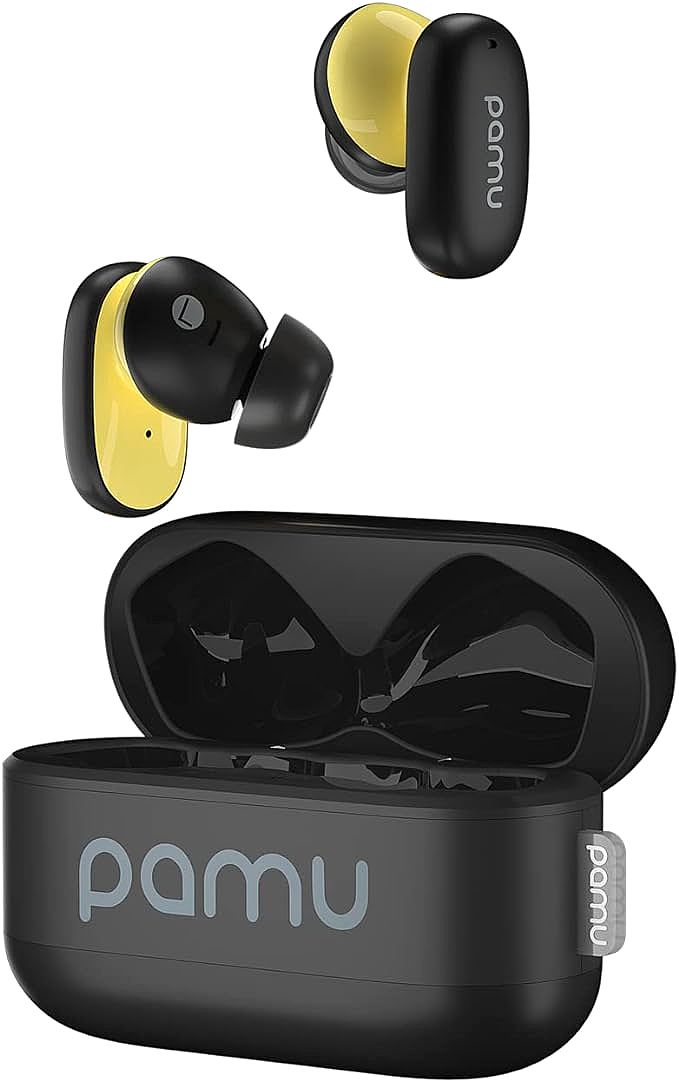
Pamu Z1 Wireless Earbuds: Immerse Yourself in Sound with Dual ANC

Sudio A2 True Wireless Earbuds: Experience Crystal Clear Sound with Active Noise Cancellation
