The Two-Way Quiet Zone: Decoding ANC vs. Noise-Canceling Mics

Soundcore Sport X20 by Anker
The Two-Way Quiet Zone: Decoding ANC vs. Noise-Canceling Mics
Every remote worker knows the feeling. You are deep into a focused work session when the air conditioner kicks on, a dog starts barking next door, and your neighbor decides this is the moment to run a leaf blower. You mute your microphone, frustrated. Minutes later, you join a video call and watch your colleague wince every time someone in your background slams a door. This is the "two-front audio war" — noise hits you from the outside, and noise hits your callers from the inside. The headset industry markets a single term, "noise-canceling," as the solution. But here is the catch: that label hides two fundamentally different technologies serving opposite directions. Active Noise Canceling (ANC) creates a quiet zone for you, the listener. A noise-canceling microphone creates a quiet zone for your caller. Understanding the difference — and why a professional headset needs both — is the key to actually solving the problem rather than throwing money at ambiguous marketing claims. ## Sound as Waves: The Physics Behind the Silence Before diving into how ANC works, it helps to understand what sound actually is. Sound travels through air as a series of pressure waves — alternating zones of compression (where air molecules are pushed together) and expansion (where they spread apart). Every sound wave carries three defining characteristics: frequency (how fast it repeats, measured in Hertz), amplitude (how loud it is, measured in decibels), and phase (the wave's position in its cycle at any given moment). ANC exploits a principle from wave physics called destructive interference. Imagine a sound wave as a series of peaks and troughs. If you create a second wave that is an exact mirror image — peaks where the original has troughs, and troughs where it has peaks — and play them simultaneously, the two waves sum to zero. In mathematical terms: +1 plus -1 equals zero. In acoustic terms, compression meets expansion, and the result is silence [Source 1][Source 5]. The concept is elegant. The execution is brutally difficult. ANC systems must capture ambient noise, analyze its waveform, generate an inverted anti-noise signal, and play it through the speaker — all before the original noise reaches your eardrum. This entire chain must complete in under one millisecond. Any delay, and the original noise slips through before the anti-noise arrives, reducing cancellation to a faint echo rather than silence [Source 3][Source 7]. This speed requirement explains why ANC excels at low-frequency sounds between 20Hz and 800Hz — the hum of jet engines, air conditioning compressors, refrigerator motors, and traffic drone. Low-frequency waves change relatively slowly, giving the DSP time to compute the anti-noise signal. High-frequency sounds — a hand clap, a dog bark, breaking glass — change too fast for the processing loop to keep up. The waveform shifts significantly between the moment the microphone detects it and the moment the anti-noise signal plays, and by then the original sound has moved on to a different phase. Typical ANC achieves between 20 and 40 decibels of noise reduction, which is significant but never total. To put that in perspective, 30dB of reduction means a sound that was at 80dB (a busy office) drops to roughly 50dB (a quiet conversation) [Source 3][Source 5]. The real-time signal chain inside an ANC headset follows five precise steps: detection (microphones capture incoming ambient noise), analysis (a DSP chip analyzes the sound wave's frequency, amplitude, and phase characteristics), generation (the processor creates a mirror-image anti-noise wave, precisely inverted by 180 degrees), playback (the anti-noise signal is output through the speakers alongside any desired audio), and verification (in hybrid systems, internal microphones measure cancellation effectiveness and feed corrections back into the DSP). This loop runs continuously, thousands of times per second, adapting in real time as the noise environment changes [Source 3][Source 7]. ## Three Architectures of ANC: Feedforward, Feedback, and Hybrid Not all ANC is created equal. Engineers have developed three distinct architectures, each with different microphone placements and processing strategies. Understanding these architectures reveals why some headsets cancel noise far more effectively than others, even when both claim the same "ANC" feature. Feedforward ANC places microphones on the outside of the earcup, facing away from the ear. These external mics capture ambient noise before it enters the ear cup, giving the DSP a head start on generating anti-noise. The advantage is processing time — the system has a window measured in tens of microseconds to compute the inverted signal before the noise reaches the eardrum. Feedforward systems excel at canceling mid-frequency noise and generally perform well in consistent noise environments like airplane cabins [Source 1][Source 10]. The limitation of feedforward is rigidity. Because the microphones sit outside the earcup, they cannot account for how the headphone's physical seal changes when you adjust the fit, tilt your head, or wear glasses. A gap in the seal lets noise bypass the ANC entirely, and the external mics never detect this leakage. Additionally, feedforward mics can pick up wind noise directly, which creates false signals that the system attempts to cancel, sometimes introducing artifacts into the audio you actually want to hear [Source 1]. Feedback ANC takes the opposite approach. Microphones are placed inside the ear cup, positioned between the speaker driver and the ear canal. These internal mics measure the sound that actually reaches the ear, creating a self-correcting loop. If the seal weakens and more noise leaks in, the feedback system detects the increase and adjusts the anti-noise accordingly. This makes feedback ANC more resilient to fit variations and physical movement [Source 1][Source 2]. The trade-off is a tighter time constraint. Because the microphones measure noise that has already entered the ear cup, the DSP has less time to react before that noise reaches the eardrum. Feedback ANC also carries a risk of creating feedback loops — the system can pick up its own anti-noise signal and attempt to cancel
it, causing amplification rather than cancellation. Engineers carefully tune feedback systems with frequency rolloff filters to avoid this instability, but the trade-off limits the effective cancellation bandwidth [Source 2]. Hybrid ANC combines both architectures into a single system. External feedforward mics provide early detection for mid-frequency noise. Internal feedback mics correct residual noise and compensate for fit changes. Together, they cover a broader frequency range with higher overall attenuation than either architecture alone. This is why hybrid ANC is considered the gold standard in premium audio devices [Source 1][Source 6]. The engineering challenge is immense. The DSP must process signals from both microphone arrays simultaneously and produce a coherent anti-noise output. According to beyerdynamic, when feedforward microphones are positioned approximately 2 centimeters from the speaker driver, the entire processing chain — including analog-to-digital conversion, DSP computation, and digital-to-analog conversion — must complete in roughly 58 microseconds. That is the time it takes sound to travel 2 centimeters in air. Miss that window, and the anti-noise arrives late, creating distortion instead of silence [Source 6]. It is worth noting that architecture type alone does not guarantee quality. A meticulously tuned feedforward system from a manufacturer with deep audio expertise can outperform a poorly calibrated hybrid system from a brand that treats ANC as a checkbox feature. Implementation quality — DSP tuning algorithms, microphone component selection, earcup acoustic design, and factory calibration — often matters more than the label on the box [Source 1]. ## The Other Direction: How Noise-Canceling Microphones Work ANC solves half the problem. It protects your ears from the world. But what about the other direction — protecting your caller from the noise around you? Noise-canceling microphones operate on an entirely different principle. Instead of creating silence through destructive interference, they use directionality and signal processing to isolate your voice from background noise. The two core technologies are beamforming and DSP-based noise reduction. Beamforming relies on an array of two or more microphone elements positioned at specific distances from each other. When you speak, your voice reaches each microphone element at a slightly different time — the one closer to your mouth receives the signal fractionally earlier. When background noise arrives from across the room, it hits all microphone elements at nearly the same time because the distance difference to a faraway source is negligible. The DSP compares these time-of-arrival differences to calculate the direction of incoming sound. Sounds arriving from directly in front — your mouth — are enhanced. Sounds from other directions are suppressed. The result is a virtual directional "beam" focused on your voice [Source 7]. cVc (Clear Voice Capture), developed by Qualcomm, is a suite of noise reduction algorithms widely used in Bluetooth headsets and smartphones. It operates as a multi-stage processing pipeline that includes adaptive dynamic range compression (preventing distortion from sudden volume spikes), wind noise reduction (filtering the low-frequency rumble caused by air moving across microphone ports), acoustic echo cancellation (removing the far-end caller's voice that leaks from your speaker back into your microphone), and automatic gain control (maintaining consistent voice volume regardless of how close or far you lean from the mic). Together, these stages process the microphone signal to deliver clean, consistent voice audio to the far end of the call [Source 7]. The physical design of the microphone matters enormously. A boom microphone positioned approximately 2 centimeters from the mouth exploits what audio engineers call the proximity effect. At this distance, the voice signal is roughly 20 decibels louder than ambient noise at 1 meter. That 20dB signal-to-noise ratio advantage is built into the hardware before any digital processing begins. This is why boom mics consistently outperform inline or earbud-mounted microphones for call clarity — the physics of proximity gives DSP algorithms a much cleaner signal to work with. A microphone mounted on a cable or in an earbud housing is simply too far from the mouth to capture this hardware-level advantage [Source 7]. To summarize the distinction: | Aspect | ANC (Listener Protection) | Noise-Canceling Mic (Caller Protection) | |--------|---------------------------|----------------------------------------| | Direction | Outside noise → your ears | Your voice → caller's ears | | Core technology | Destructive interference | Beamforming + DSP filtering | | Key hardware | External + internal mics | Directional mic array | | Frequency focus | 20-800Hz (low frequency) | Voice range (300Hz-3.4kHz) | | Primary goal | Create silence for you | Isolate your voice for others | | Effectiveness | 20-40dB reduction | Signal-to-noise improvement | ## From Apollo to Your Desk: A Brief Heritage The technology protecting your call quality has roots in aerospace engineering. In 1933, German physicist Paul Lueg filed the first patent for active noise control, describing a system that could cancel sound waves using loudspeakers to generate opposing signals. The patent was theoretically sound but impractical with the electronics available at the time [Source 4]. The concept remained largely theoretical until the 1950s, when Lawrence J. Fogel developed practical ANC systems in the United States, earning recognition as the inventor of modern active noise control technology [Source 9]. The critical adoption came from aviation. Aircraft cabins generate extreme noise levels — engine roar, wind buffeting, and structural vibration create an environment where unaided voice communication is nearly impossible. In the 1970s and 1980s, airlines began experimenting with ANC headsets for pilots and passengers. Sennheiser developed aviation ANC headsets for Lufthansa in 1984, marking one of the first commercial applications of the technology [Source 2][Source 9]. Plantronics, founded in 1961, supplied headsets for NASA's Apollo missions — including the 1969 moon landing. The company's experience building communication systems that kept astronauts audible inside the noise and vibration of a Saturn V rocket directly informed their later consumer and enterprise headset designs. That aerospace heritage eventually became Poly (now part of HP), and it is no coincidence that enterprise-grade headsets from this lineage consistently earn
certifications like Microsoft Teams approval, which requires passing rigorous audio benchmarks measured by POLQA (Perceptual Objective Listening Quality Analysis) [Source 4][Source 9]. The progression from space capsules to office desks illustrates a broader pattern: technologies developed for extreme environments tend to trickle down to consumer products as processing power becomes cheaper and smaller. The DSP that once filled a rack in a 1970s aircraft cabin now fits inside a USB-C headset. The beamforming algorithms that once helped submarine sonar operators detect distant signals now help your headset focus on your voice and ignore your neighbor's dog. ## The Adjustable ANC Compromise: Why Full Power Is Not Always the Answer If ANC is so effective, why would any headset offer adjustable settings rather than running at full power continuously? The answer involves human physiology and the way our brains process ambient sound. Full-strength ANC can create an uncomfortable sensation that users often describe as "pressure" in the ears — a feeling similar to the cabin pressure changes during an airplane descent. This is not actual physical pressure change. ANC alters the ambient sound profile that your brain uses for spatial orientation. Humans unconsciously rely on constant low-frequency background sounds — the hum of a building, distant traffic, air circulation — to maintain a sense of presence in a space. When ANC eliminates these cues, some people experience mild disorientation, dizziness, or a vague sense of unease. Studies in psychoacoustics suggest this response varies significantly between individuals; some people are entirely unaffected, while others find strong ANC unbearable for extended periods [Source 2][Source 8]. This is why adjustable ANC has become a standard feature in well-designed headsets. A three-setting approach — high, medium, and off — lets users choose the right balance for their environment. Full ANC in a noisy open office, medium ANC during a moderately distracting commute, and no ANC in a quiet home office where natural ambient sound is more comfortable than artificial silence [Source 10]. Turning ANC off when it is not needed also preserves battery life in wireless models and eliminates any subtle audio artifacts that the anti-noise processing might introduce into music or voice playback. Even the best ANC systems introduce a slight modification to the audio signal — the anti-noise waveform is never perfectly transparent to the desired audio, and some listeners with sensitive hearing can detect a faint difference in sound character when ANC is active versus passive. The most sophisticated systems go further with adaptive ANC, which uses microphones to continuously assess the ambient noise level and automatically adjust cancellation intensity without user intervention [Source 8]. ## Building the Complete Quiet Zone: What to Look For Understanding the technology is one thing. Applying that knowledge when evaluating headsets is another. Here is a practical framework for assessing whether a headset genuinely addresses both fronts of the audio war. Passive isolation comes first. Before any electronic cancellation kicks in, the physical design of the headset provides baseline noise reduction. Over-ear cups with memory foam padding create a seal that physically blocks high-frequency sounds — conversation, keyboard clicks, barking — that ANC struggles with. In-ear designs use silicone or foam tips to achieve similar results. Passive isolation and ANC are complementary: passive handles what ANC cannot, and ANC handles what passive cannot. The combination is what delivers full-spectrum noise reduction. A headset with excellent ANC but poor physical sealing will always leave a gap in its noise protection [Source 5][Source 8]. Check the microphone design. A boom microphone positioned near the mouth provides a significant signal-to-noise advantage over inline or integrated microphones. If the headset lists cVc or similar DSP-based noise reduction in its specifications, that indicates dedicated voice-call processing. Multiple microphone elements (arrays) suggest beamforming capability, which provides better background noise rejection than a single omnidirectional mic. Look for specific certifications. Microsoft Teams certification, Zoom certification, or similar UC platform approvals are not just marketing badges. These certifications require passing measurable audio quality benchmarks — minimum microphone frequency response, maximum background noise transmission levels, and minimum speech intelligibility scores. A certified headset has been independently verified to meet professional communication standards [Source 4]. Be skeptical of vague marketing language. Phrases like "advanced noise cancellation" or "crystal-clear calls" without specifying the technology behind them are red flags. Look for concrete terms: hybrid ANC (not just "ANC"), boom microphone (not just "noise-canceling mic"), beamforming (not just "HD voice"). Manufacturers who have invested in quality engineering are usually specific about what their technology does and how it works [Source 1][Source 6]. Wired versus wireless matters for latency. For ANC, the distinction is minimal — the processing happens inside the headset regardless of connection type. For microphone quality, however, wired USB connections avoid the Bluetooth audio encoding and decoding latency that can introduce subtle delays into voice transmission. For professional calls where real-time conversation flow matters, a wired connection provides a marginal but real advantage. Wireless models have improved significantly, but the encoding and decoding steps inherent to Bluetooth audio add processing time that USB audio bypasses entirely [Source 7]. ## The Full Picture: Silence In, Clarity Out The distinction between ANC and noise-canceling microphones is not academic — it is practical. ANC uses destructive interference to create silence around the listener, generating anti-noise waves that cancel incoming sound in real time. Noise-canceling microphones use beamforming and DSP to isolate the speaker's voice, creating a directional focus that rejects background noise. They operate on different principles, target different frequency ranges, and serve different people. The best professional headsets layer all three defenses: passive isolation handles high-frequency noise, ANC handles low-frequency noise, and beamforming handles call clarity. Understanding this layered approach improves headset shopping from a confusing exercise in marketing jargon into a clear evaluation of whether a product genuinely protects both sides of your audio experience. The technology has come a long way from Paul Lueg's 1933 patent
Soundcore Sport X20 by Anker
Related Essays

Why 42mm Drivers Hit the Physics Sweet Spot for Headphone...

The Physics of Silence: Decoding 30dB Reduction and...
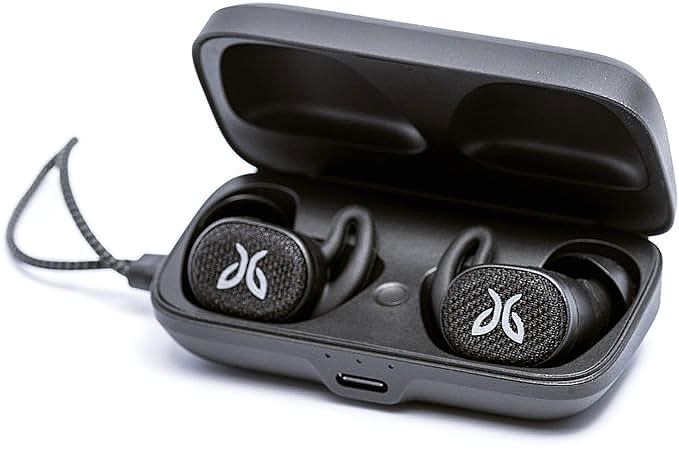
Jaybird Vista 2 True Wireless Headphones: Rugged Yet Stylish Noise-Cancelling Earbuds

Wireless Earbuds: How Premium Technology Became Universally Accessible

The Mechanics of Clarity: ENC Beamforming and Driver Physics
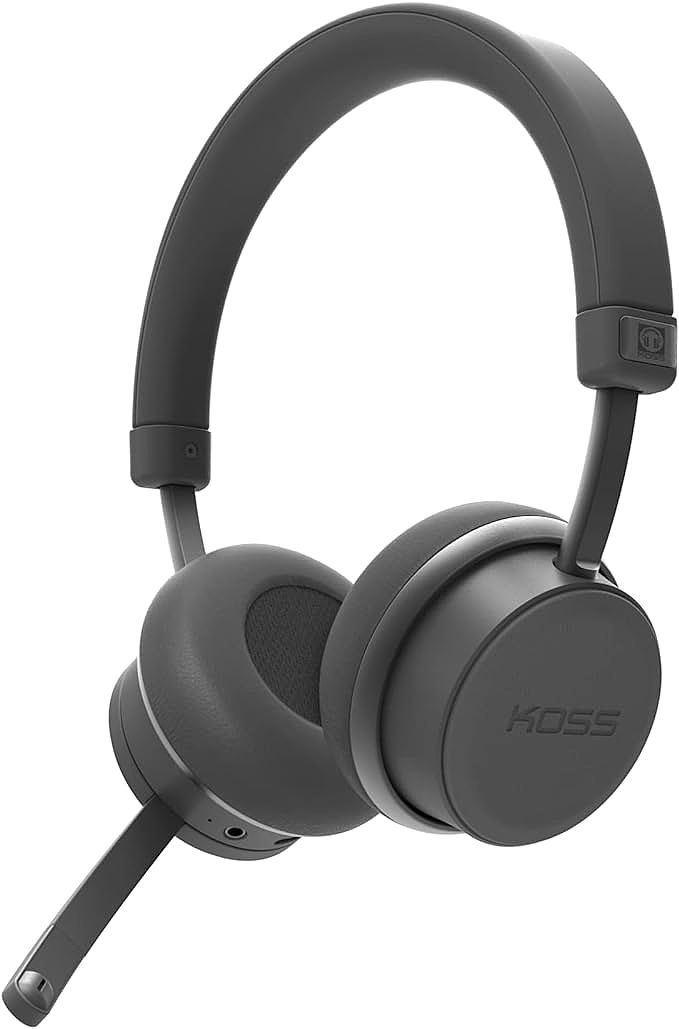
The Silence Engine: Hybrid ANC and CVC 8.0 Algorithms

The Acoustics of Focus: Managing Cognitive Load in the Open Office

The Physics of Budget Silence: Deconstructing the MOVSSOU SE8's Noise Control

Logitech Zone Vibe 125 Wireless Headset: A Superb Wireless Headset for Work and Play
