Why Your New Earbuds Didn't Cancel the Noise — and What Actually Did


SoundGearX Blog
You bought wireless earbuds because the box said "noise cancelling." You unboxed them on a flight, pressed play, and heard every engine rumble, every crying baby, every overhead announcement as clearly as if you had no earbuds at all. The product was not broken. The label was just telling you a different story than the one you expected.
This happens thousands of times a day. The phrase "noise cancelling" on an earbud package can mean two fundamentally different things, and they serve opposite purposes. One technology creates silence for your ears. The other creates clarity for the person listening to you on a call. Both are legitimate. Neither is what most people assume when they read those two words on a retail box.
Two Technologies, One Confusing Label

"Featured image"
Active Noise Cancellation, or ANC, works by listening to the world around you and generating a mirror-image sound wave to cancel it out before it reaches your eardrum. A tiny outward-facing microphone picks up ambient noise. A processor calculates the inverse waveform in real time. A tiny speaker plays that inverse wave into your ear canal. The result: low-frequency sounds like airplane engines, air conditioning hum, and train rumble are physically suppressed.
The engineering principle is straightforward wave interference. Two sound waves of identical frequency and amplitude, but perfectly inverted phase, sum to near-zero pressure. Your eardrum receives less energy. You perceive silence.
Environmental Noise Cancellation, or ENC, does something entirely different. It does not try to create silence for the person wearing the earbuds. Instead, it uses an array of multiple microphones, typically four to six across both earbuds, to isolate the wearer's voice from background noise during phone calls. A technique called beamforming allows the microphones to focus on the direction of your mouth while rejecting sounds arriving from other angles. Digital signal processing algorithms then estimate the noise component and subtract it from the audio signal before transmitting your voice to the caller. The person on the other end of the line hears you clearly, even if you are standing in a crowded coffee shop. You, the wearer, still hear the coffee shop.
Both are called "noise cancelling" on product packaging. Both are technically accurate descriptions. But they cancel noise for different people in different directions.
The Physics That Makes ANC Work

"Professional metal polishing technique with proper SFPM control"
Sound travels as pressure waves through air. When a loudspeaker cone pushes forward, it compresses air molecules in front of it. When it pulls back, it rarefies them. Your eardrum tracks these compressions and rarefactions as vibrations, which your brain interprets as sound. ANC exploits a property of wave superposition: if you add a compression to a rarefaction of equal magnitude, the two cancel each other.
In practice, this means an ANC earbud must do three things extremely quickly. First, the external microphone must sample the ambient sound with minimal delay. Second, the onboard processor must compute the inverse waveform within milliseconds. Third, the internal speaker must reproduce that inverse waveform with sufficient accuracy and low enough latency that the cancellation wave arrives at the eardrum at the same instant as the noise itself. If any of these steps is too slow, the cancellation wave arrives out of phase and can actually amplify the noise instead of suppressing it.
This is why ANC excels at low frequencies and struggles with high frequencies. Low-frequency sounds have long wavelengths, measured in meters rather than millimeters. A long wavelength gives the processor more time to react. A 100 Hz sound wave, typical of an airplane engine drone, has a wavelength of approximately 3.4 meters. The earbud has the full length of that wave cycle to calculate and deliver the anti-noise. A 2000 Hz sound, like a baby crying, has a wavelength of just 17 centimeters. By the time the processor has computed the inverse, the original wave has already passed the eardrum. This is not a limitation of any particular brand or chip. It is a constraint of physics.
ANC also carries trade-offs beyond frequency limitations. The dedicated processor and additional microphone hardware add roughly $20 or more to the manufacturing cost per unit. Running the cancellation algorithm continuously drains 20 to 30 percent more battery compared to operating without it. Some users report a sensation of pressure or mild nausea when ANC is active, caused by the low-frequency anti-noise waves creating a slight change in perceived air pressure inside the sealed ear canal. Not everyone feels this, but enough people do that it appears regularly in user feedback.
The Microphone Math Behind ENC

"Variable speed grinding equipment for stainless steel finishing"
ENC takes a different mathematical approach. Instead of generating inverse sound waves, it solves a signal separation problem. With multiple microphones positioned at known locations on each earbud, the system receives slightly different versions of the same acoustic environment. The voice of the wearer arrives at each microphone with a specific time delay determined by the physical distance between the mouth and each mic. Background noise, coming from various directions, arrives with different delay patterns.
Beamforming algorithms exploit these differences. By applying carefully calculated weights to each microphone's signal, the processor can construct a virtual directional microphone that is sensitive to sound coming from the direction of the wearer's mouth and insensitive to sound arriving from other angles. Think of it like aiming a spotlight at one person on a dark stage while ignoring everyone else in the room.
After beamforming narrows the focus, additional noise estimation algorithms further clean the signal. These algorithms identify spectral patterns that resemble known noise types, such as traffic or wind, and attenuate those frequency bands while preserving the frequency range where human speech is concentrated, roughly 300 Hz to 3400 Hz for telephony. The result is that your voice reaches the caller with background interference dramatically reduced, sometimes by 20 to 30 decibels depending on the environment and the quality of the implementation.
A product like the Drsaec J52 uses a four-microphone ENC array, with two microphones per earbud. One microphone in each earbud is positioned to capture the wearer's voice directly, while the other picks up environmental sound for the noise estimation algorithm to subtract. This configuration is common in earbuds in the $25 to $60 range: focused on call clarity rather than listener silence.
Why the Confusion Persists

"Professional workshop setup for precision metal finishing"
The confusion between ANC and ENC is not accidental. Marketing language on earbud packaging almost universally uses the phrase "noise cancelling" without specifying which direction the cancellation operates in. A consumer shopping for earbuds sees "noise cancelling" and reasonably assumes it means the earbuds will block out the noise around them. For ANC products, this assumption is correct. For ENC-only products, it is not.
The result is a predictable pattern in customer reviews. ENC-focused earbuds frequently receive complaints like "not much noise cancellation" from users who expected silence. But those same users often praise the call quality, noting that people on the other end of phone calls can hear them clearly even in noisy environments. The product works as designed. The expectation was wrong.
This gap between labeling and expectation is especially common in the budget earbud market, where manufacturers face a real engineering trade-off. Adding a quality ANC system requires a dedicated processor, calibration for each earbud individually, and significantly more battery capacity to maintain acceptable playtime. For a product priced under $40, that cost may be better spent on features that users interact with every day, such as call clarity, battery life, waterproofing, and charging convenience. Some engineering teams make a deliberate choice to invest in ENC quality, waterproofing ratings like IPX7, and battery endurance rather than adding an ANC chip that would either raise the price or force compromises elsewhere.
Which Technology Matches Which Moment
The practical distinction comes down to one question: who are you trying to protect from noise?
If you want silence for yourself while listening to music on a commute, during a flight, or in an open-plan office, ANC is the correct technology. It physically reduces the sound energy reaching your eardrum. The trade-off is higher cost, shorter battery life, and the possibility of ear pressure discomfort during extended use.
If you need clear voice transmission during phone calls, video conferences, or voice commands in noisy environments, ENC is the correct technology. A four-microphone ENC system can isolate your voice from cafe chatter, wind noise, or traffic and deliver it cleanly to the person on the other end. The call clarity benefit is real and measurable. The trade-off is that you still hear the noise around you. For many users, particularly those who take calls throughout the workday, this is actually preferable. Being acoustically isolated from your environment while walking or commuting can be unsafe.
Some users need both. Premium earbuds from major brands increasingly offer both ANC for listener silence and multi-microphone ENC for call clarity, but these products typically sit in the $150 to $350 price range. Below that price point, understanding which technology a product actually provides becomes the single most specification worth checking before purchase.
The Engineering Philosophy of Choosing What to Leave Out
There is a broader lesson here about how products get designed. Every engineering decision is a decision about what not to include. A team building wireless earbuds at a modest price point cannot include a high-quality ANC processor, a four-microphone ENC array, an IPX7 waterproof rating for both earbuds and charging case, 42 hours of total battery life, a dual LED battery display, and Qi wireless charging. Something has to give.
The choice of which features to prioritize reveals what the designers believe about how their product will be used. Prioritizing ENC over ANC is a bet that more users at this price point take phone calls in noisy places than sit on long flights wanting silence. Prioritizing waterproofing is a bet that users will wear these during exercise. Prioritizing battery display is a bet that users hate the anxiety of not knowing how much charge remains. Each of these bets excludes an alternative.
This is not unique to earbuds. It is the same calculus that determines why a hammer does not include a screwdriver, why a bicycle does not include an engine, and why a kitchen knife does not include a can opener. Tools are defined by what they leave out. The problem with "noise cancelling" as a marketing label is that it obscures this choice, making it harder for consumers to determine whether the tool in front of them is the right one for their particular job.
The solution is not more features. It is clearer language. If a product uses ANC, the packaging should say "silences your environment." If it uses ENC, it should say "silences your background for callers." Five extra words would eliminate the confusion entirely. Until that happens, the burden falls on the consumer to understand the distinction.
The physics of sound is not ambiguous. Waves cancel or they do not. The ambiguity lives entirely in the marketing department.
SoundGearX Blog
Related Essays
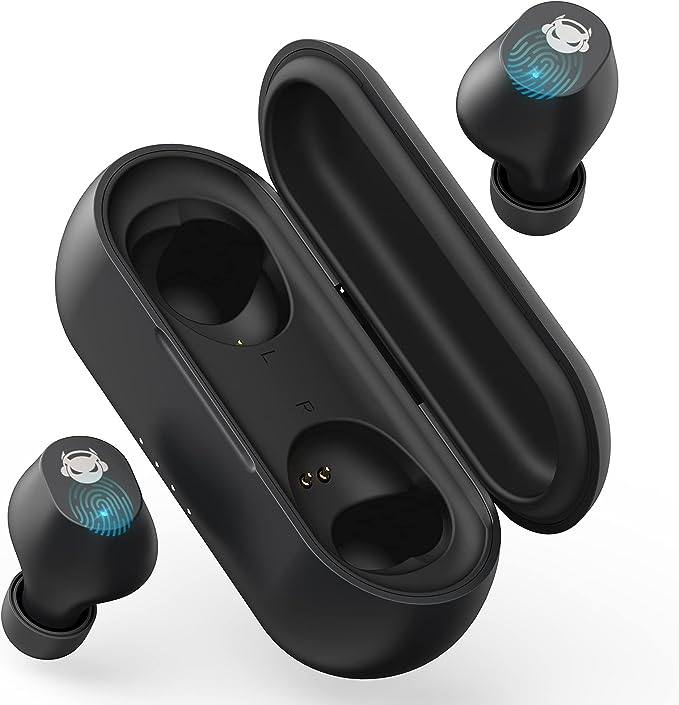
MindBeast T98 Bluetooth Earbuds - Great Sound and Noise Cancellation at an Affordable Price

Masterplug Pods-12 Wireless Earbuds

LARK L1 Bluetooth Wireless Earbuds - Recommended for Budget-conscious Users

How Tiny Drivers Produce Big Sound: The Physics Behind Wireless Earbuds
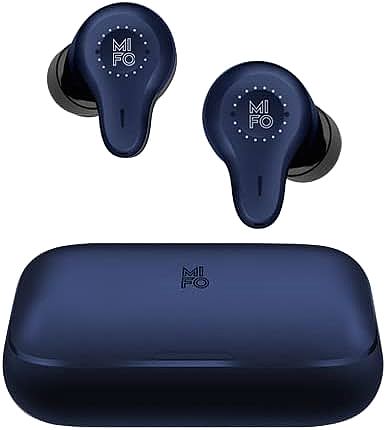
Carbon Nanotube Diaphragms: The Physics Behind Perfect Audio

Decoding "Noise Cancelling" in Earbuds: ANC vs. ENC vs. Passive Isolation

Eranova Bluetooth Earbuds: Comfortable Fit and Punchy Sound

Aurasound BEANbuds: Tiny, Comfortable Earbuds for All-Day Wear and Sleep

Spmmmner Wireless Earbuds – A Seamless Listening Experience

