The Hidden Danger in Your Ears: Open-Ear Design and Outdoor Safety

OJW Open Ear Headphones
You are mid-ride. A delivery truck swings wide into the bike lane. Your music is playing. You never hear it coming.
This is not a hypothetical. According to research published in peer-reviewed transportation safety journals, accidents involving cyclists who wore traditional in-ear headphones showed a statistically significant increase in reaction time compared to those who rode with unobstructed ears. The physical seal created by conventional earbuds does not just block external sound—it creates a cognitive tunnel that makes auditory isolation feel normal until it becomes catastrophic.
The problem is not the music. The problem is the architecture of the listening experience itself.

Redefining What It Means to Hear
Traditional headphones, whether in-ear monitors or over-ear designs, share one fundamental assumption: that the listener wants isolation from their environment. This assumption made sense when headphones were primarily used in controlled settings—homes, studios, studios. But as audio technology expanded intoexercisescenario, the assumption became a design flaw.
Open-ear headphones reject this assumption entirely. Instead of using a physical seal to block the ear canal, they employ precisely positioned acoustic drivers that sit just outside the ear opening. Sound waves are directed into the ear without replacing the natural acoustic environment. The result is a dual-perception experience: you hear your audio content and you hear the world simultaneously.
This is not the same as turning down the volume on traditional headphones. Reducing volume still attenuates critical environmental sounds—sirens, verbal warnings, the rustle of approaching wildlife. Open-ear design maintains full environmental awareness while delivering audio content.
The acoustic physics here are worth understanding. When a traditional earbud creates a seal, it does two things: it blocks incoming sound waves from the environment and it reflects them back into the ear canal where they constructively and destructively interfere with the driver output. This is why sound quality in sealed designs depends heavily on the quality of the seal itself. Open-ear designs eliminate this variable entirely. The ear canal remains naturally open, meaning the ear drum responds to pressure changes in the environment as it evolved to do—without interference.
The Engineering Behind Water Resistance
If you have spent any time researchingexerciseheadphones, you have encountered the term IPX7. But what does it actually mean?
The IP (Ingress Protection) rating system was developed by the International Electrotechnical Commission (IEC) to provide standardized specifications for electronic equipment resistance to solids and liquids. The second digit in an IP rating specifically addresses liquid ingress protection.
An IPX7 rating means the device has been tested under controlled laboratory conditions to withstand temporary immersion in water at a depth of 1 meter for 30 minutes. This is not a marketing claim—it is a measurable standard with published test protocols.
Compare this to the IPX4 rating common in many competing products. IPX4 means the device is protected against water splashing from any direction. This is significantly different from immersion. A device rated IPX4 may fail if submerged even briefly. For a runner caught in unexpected heavy rain or a cyclist whose headphones fall into a puddle, this distinction can determine whether the device survives or becomes damaged.
Achieving an IPX7 rating requires meticulous engineering. Every seam, joint, and opening must be sealed with precision-fitted components. This typically involves dedicated rubber gaskets and O-rings at all potential ingress points. Internal circuitry often receives hydrophobic nano-coatings that cause water to bead and roll off rather than adhere. The engineering investment is substantial, which is why many manufacturers default to lower ratings on products where cost control is prioritized over durability.
For users who exercise in varied weather conditions, sweat heavily, or simply want their equipment to survive accidental submersion, IPX7 represents a practical threshold. Below it, the waterproof claim is essentially marketing. At or above it, the specification corresponds to measurable protection against real-world scenarios.
The Replaceable Battery Question
Battery anxiety is the quiet constant in portable audio. Every user has experienced it—the low battery warning during a crucial moment, the calculation of whether there is enough charge remaining to finish a workout or commute.
Traditional wireless earbuds address this problem with charging cases. The case provides additional charge cycles, extending total listening time. However, this approach has a fundamental limitation: the battery in both the earbuds and the case are fixed. After a certain number of charge cycles—typically measured in hundreds rather than thousands—the capacity begins to degrade. Eventually, the device becomes unusable not because it breaks, but because the battery can no longer hold sufficient charge.
This is not a theoretical problem. Electronics waste statistics consistently identify non-removable batteries as a primary factor in premature device disposal. When a device with an integrated battery degrades, the entire product becomes waste—even if the acoustic drivers, Bluetooth circuitry, and structural components remain functional.
Products designed with user-replaceable batteries offer a different model. When the primary power source depletes, the user swaps in a fresh battery and continues. The total available listening time extends indefinitely, limited only by the availability of replacement batteries. For multi-day outdoor activities—hiking trips, marathon events, extended travel—this approach eliminates battery anxiety entirely from the user experience.
The practical implication is that devices with replaceable battery designs align product longevity with user behavior patterns rather than manufacturing-imposed obsolescence schedules.

Bluetooth Multipoint and the Problem of Context Switching
Modern knowledge workers rarely use a single device. A typical day might involve switching between a laptop for video calls, a phone for music, and a tablet for reference materials. Without multipoint Bluetooth connectivity, each switch requires a manual re-pairing process.
True Bluetooth multipoint—the ability to maintain simultaneous connections to multiple devices—solves this problem differently than quick-switching approaches. With multipoint, all paired devices remain connected simultaneously. When a call arrives on the laptop, the audio automatically routes there. When music plays from the phone, it routes there. The user experiences continuous transitions without any manual intervention.
This capability matters because it reflects how people actually work and exercise. The distinction between "work phone" and "personal phone" has blurred for many users. Athletes who also work remotely need technology that matches their actual usage patterns rather than forcing them to choose which device receives priority.
The technical implementation involves more complex firmware than simple pairing-switching. Bluetooth multipoint pairing enables two devices to stay connected at the same time, which is essential for open ear headphones workout scenarios where users switch between phone calls and music frequently. Maintaining stable connections to multiple devices simultaneously while managing audio routing requires dedicated processing that not all Bluetooth implementations support. Users researching this capability should look for explicit mention of "multipoint" or "simultaneous multi-device connection" rather than "quick switch" or similar terminology.
Cycling Safety and the Audio Environment
Research into cyclist accident patterns reveals that auditory cues—vehicle horns, engine sounds, verbal warnings from pedestrians—play a statistically significant role in collision avoidance. When these cues are attenuated or blocked entirely, the cyclist loses a critical sensory channel for threat detection.
The practical implication extends beyond simple horn recognition. Experienced cyclists report that ambient sound awareness helps them anticipate dangerous situations before they fully develop. The sound of a car accelerating behind them, a pedestrian stepping into the bike lane, another cyclist approaching at speed—these auditory inputs provide information that visual scanning alone cannot capture, particularly in high-traffic environments with multiple simultaneous threats.
Open-ear designs preserve this capability by design. The ear canal remains open, meaning the full spectrum of environmental sound reaches the eardrum as it would without headphones. Audio content is layered on top rather than replacing environmental sound. The cyclist maintains full situational awareness while continuing to receive audio content. Sports headphones situational awareness is not a marketing claim—it is the fundamental engineering outcome that separates open-ear designs from traditional sealed earbuds.
This is the fundamental difference between open-ear and "low volume" approaches to safety. Reducing volume leaves the ear canal blocked. Open-ear design leaves the ear canal open. The acoustic physics are categorically different, and the safety implications follow from that difference.
Choosing Waterproof Equipment forexercise Applications
Not all waterproof ratings are equivalent. Users evaluating headphones forexercise applications should understand the specific meanings of IP ratings rather than treating them as generic marketing categories.
IPX4 protects against splashing water from any direction. This is adequate for light rain and sweat but insufficient for submersion scenarios.
IPX5 protects against water jets from any direction. This handles pressurized water—think of water from a garden hose—effectively compared to IPX4.
IPX7 is the threshold for temporary submersion protection. A device at this rating can survive being dropped into water accidentally, left in heavy rain, or exposed to similar scenarios without damage.
For sports headphones specifically, IPX7 or higher represents a practical minimum for users who want their equipment to survive the conditions they actually encounter rather than the conditions manufacturers use in marketing claims. Open ear headphones safety depends on maintaining situational awareness during workouts. IPX7 waterproof headphones sports users benefit from the ability to use their equipment in any weather without concern.
Battery design philosophy matters equally. Removable batteries extend product lifespan and eliminate the anxiety associated with degradation. Multipoint connectivity provides workflow integration that benefits users who switch between devices frequently.
The decision framework should prioritize: does this device match my actual usage patterns? A cyclist in a dry climate has different requirements than a marathon runner in a tropical environment. Someone who exercises primarily in controlled gym settings has different needs than someone whose workouts include unpredictable weather and extended outdoor exposure.

Long-Term Device Maintenance
IPX7-rated devices require appropriate maintenance to preserve their waterproof characteristics over time. The sealing components—typically rubber gaskets and O-rings—can degrade with exposure to sweat, sunscreen, and environmental contaminants. Regular cleaning with fresh water helps remove these materials before they cause seal degradation.
Charging contacts should be kept clean and dry. Moisture in charging ports can cause short circuits and accelerate corrosion of metal components. Many IPX7-rated devices include protective covers for charging ports that users should employ when the device is not in active use.
Storage recommendations vary by manufacturer, but most IPX7 devices benefit from air-drying before storage in enclosed spaces. Leaving a damp device in a sealed container creates conditions for biological growth and material degradation that can compromise the waterproof seals over time.
The Trajectory of Audio Technology
The shift toward open-ear designs reflects a broader evolution in how people integrate technology into active lifestyles. Early wearable audio assumed a world where technology use and physical activity were separate domains. Users would put on headphones when they wanted to listen and remove them when they needed to engage with their physical environment.
This assumption no longer matches how many people actually live. Work and exercise overlap. Commuting involves physical movement through environments with real safety implications. The boundaries between "using technology" and "existing in physical space" have blurred.
Open-ear audio technology addresses this convergence directly. By maintaining environmental awareness while delivering audio content, these designs reject the premise that audio entertainment and safety are competing values. Instead, they treat both as essential requirements that good design can satisfy simultaneously.
The engineering implications are substantial. Open-ear designs require different acoustic approaches than sealed designs. The lack of ear canal isolation means bass response and noise isolation—traditional headphone performance metrics—cannot be achieved using conventional techniques. Manufacturers must find different paths to audio quality that work within the constraints of open-ear physics.
This constraint has driven significant innovation in driver design, DSP processing, and acoustic architecture. The solutions developed for open-ear applications have broader implications for audio technology development, making this category important beyond its immediate practical applications.
The Question of Sound Quality Trade-offs
Open-ear designs inherently trade certain acoustic characteristics against their safety benefits. The lack of ear canal isolation means these devices cannot achieve the bass response or noise isolation of sealed designs. Users accustomed to the acoustic experience of in-ear monitors may find open-ear sound signature different.
However, the trade-off is worth understanding precisely. Open-ear designs do not sacrifice sound quality in general—they sacrifice the specific acoustic properties that sealed designs exploit through ear canal isolation. The acoustic principles involved are different, and evaluating open-ear designs against sealed designs using the same metrics misses what makes each approach distinctive.
For users whose primary use case involves stationary or low-risk activities, sealed designs may remain appropriate. For users whose activities involve outdoor movement through environments with potential hazards, open-ear designs provide safety benefits that outweigh their acoustic trade-offs.
The market continues to develop across both categories. Sealed designs push toward better isolation and more powerful bass response. Open-ear designs push toward better acoustic clarity and more refined spatial presentation. Neither direction is universally superior—the appropriate choice depends on user priorities and usage patterns.
Where Safety and Technology Converge
The evolution of headphone design illuminates a broader principle in technology development: features are not independent variables. When a design provides a safety benefit, that benefit comes from somewhere—materials choices, acoustic architecture, power management. The engineering decisions that enable situational awareness are not accidental additions but fundamental design choices that shape the entire product.
Users evaluating audio equipment for active use should understand these relationships. The waterproof rating is not a number to compare arbitrarily—it is a measurable specification that corresponds to real-world protection capabilities. The battery architecture is not a convenience feature—it is a structural decision that determines product lifespan and maintenance requirements. The Bluetooth implementation is not a checklist item—it is a technical approach that determines how effectively the device integrates with multi-device workflows.
The convergence of safety and audio technology reflects broader trends in how people incorporate digital tools into physical lives. The question is no longer whether technology can provide entertainment while active—capable designs solved that problem years ago. The question is whether technology can do so while preserving the sensory channels that keep users safe in changing environments.
Open-ear design represents an affirmative answer to that question. The engineering required to provide it is non-trivial, which is why the category remains differentiated despite growing market interest. Understanding this engineering—the real specifications versus marketing language, the genuine trade-offs versus false equivalencies—helps users make informed decisions about equipment that serves their actual needs rather than their perceived wants.
OJW Open Ear Headphones
Related Essays

The Physics of Air Conduction: Large Drivers and Open Soundscapes

Beyond Bone Conduction: The Physics of Air Conduction and Open-Ear Fidelity

The Open-Ear Revolution: How Bone Conduction Headphones Are Changing the Way We Listen

Beyond the Eardrum: The Science and Trade-offs of Bone Conduction Headphones

The Open-Ear Paradox: Why Air Conduction Headphones Are a Trade-Off for Comfort

Loluka Wireless Ear Clip Earbuds: Hear It All with Open-Ear Freedom
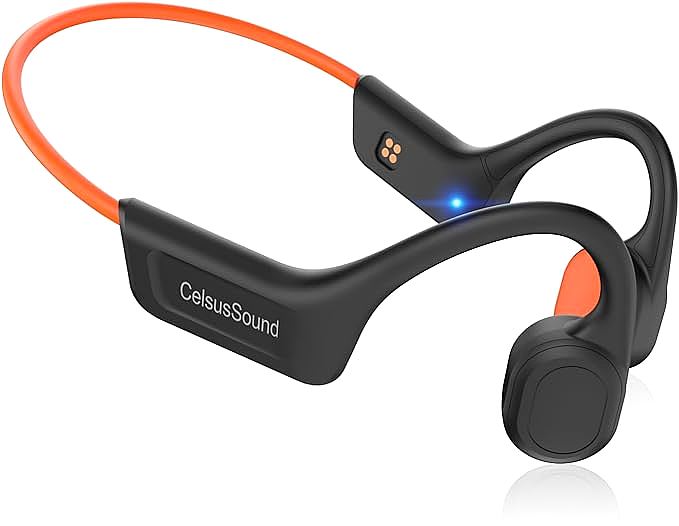
CelsusSound S800C Bone Conduction Headphones: Hear the World, Protect Your Hearing

ASIILOVI VG332 : The Science of Air Conduction & The Future of Open-Ear Audio

Skicuwim w8 Open Ear Wireless Headphones: The Breathable Music Buddy for Comfortable Listening
