Why Wireless Earbuds Drop Signal: The Physics of Bluetooth Audio

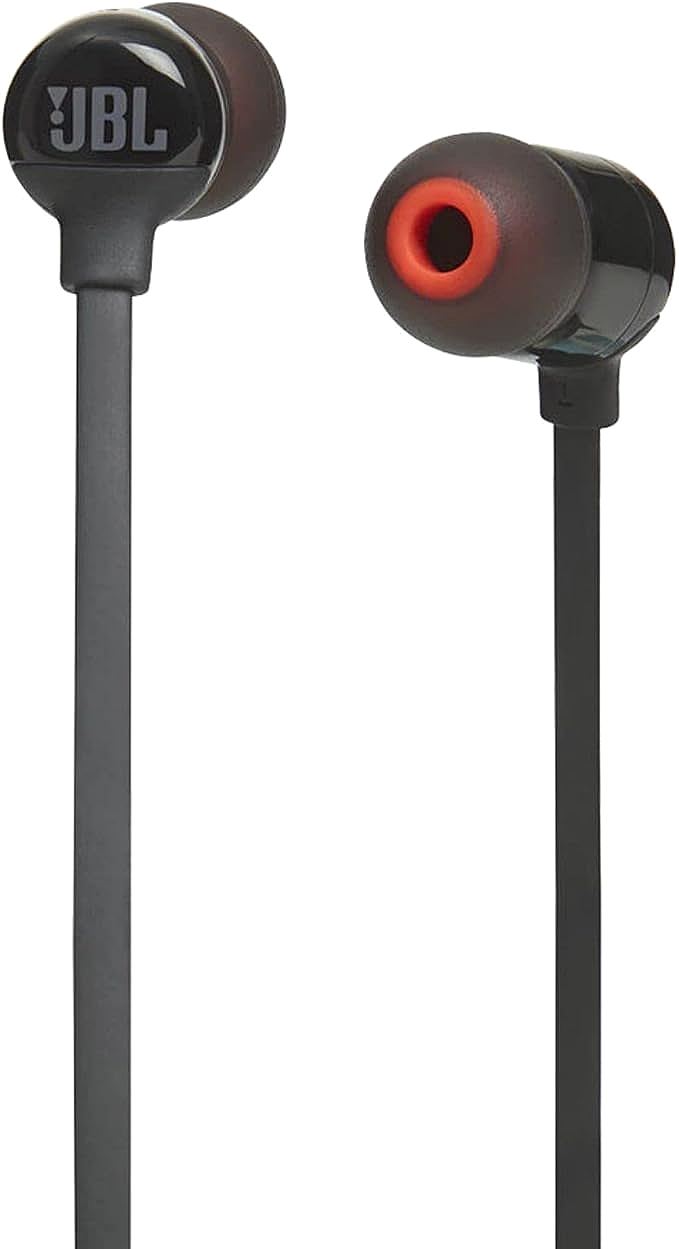
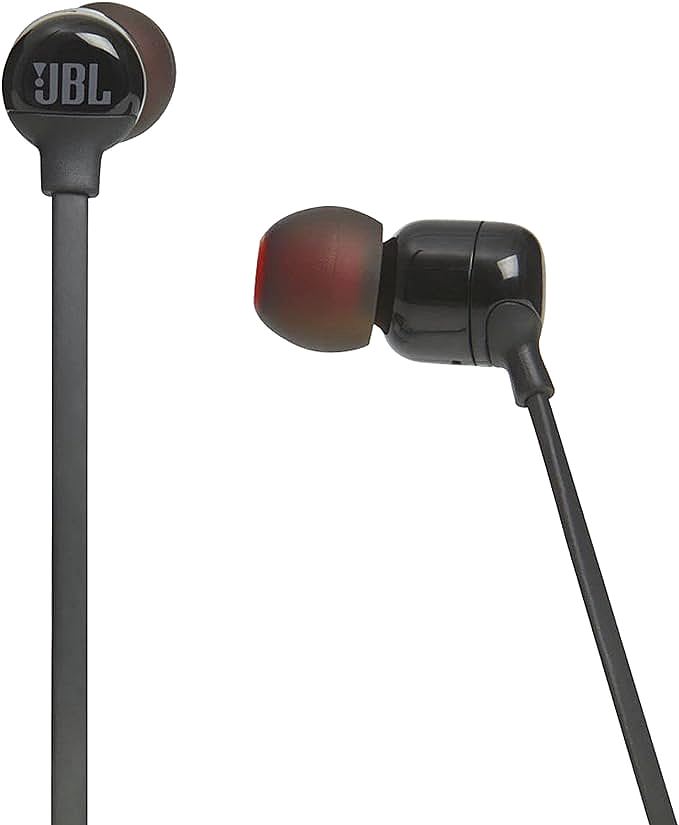
JBL Tune 110BT in-Ear Wireless Headphones
You are halfway through a phone call when the audio cuts out. The words vanish mid-sentence, replaced by dead air. You check your phone. Bluetooth connected. Signal strength looks fine. But the silence is real, and it happens at the worst possible moment. This is not a defect in your earbuds. It is a physics problem hiding inside a device the size of a jellybean.
Wireless audio feels like magic until it fails. At that point, most people blame the hardware. But the real culprit is usually a battle between radio waves and the physical world -- walls, water, other signals, and even your own body. Understanding why this happens reveals a surprisingly rich layer of engineering that most people never think about.

The Invisible Battlefield: Radio Waves in a Crowded Room
Bluetooth operates in the 2.4 GHz ISM band -- a slice of the electromagnetic spectrum set aside for industrial, scientific, and medical use. This band is unlicensed, which means anyone can use it without paying for spectrum rights. That openness is why Bluetooth exists at a price point accessible to students and commuters. But it also means this band is crowded beyond belief.
Your Wi-Fi router lives here. So does your microwave oven. Baby monitors, garage door openers, and even some older cordless phones all broadcast in this same narrow corridor. According to the IEEE 802.15.1 standard that governs Bluetooth, the protocol divides the 2.4 GHz band into 79 distinct channels, each 1 MHz wide. When you pair a device like the wireless earbuds with your phone, both devices agree on a hopping pattern -- a predetermined sequence of channel switches that occurs 1,600 times per second.
This technique, called frequency-hopping spread spectrum, was originally conceived by actress Hedy Lamarr and composer George Antheil during World War II. Their 1942 patent described a radio guidance system for torpedoes that would hop between frequencies to resist jamming. The same principle now keeps your podcast playing through a wall of electromagnetic noise. Each hop takes roughly 625 microseconds, fast enough that interference on one channel does not interrupt the data stream -- the next hop simply lands on a cleaner frequency.
But frequency hopping has limits. If interference is broad enough to affect many channels simultaneously -- say, a microwave oven pumping wideband noise across the entire 2.4 GHz band -- even rapid hopping cannot fully escape. The audio codec must then either conceal the errors, reduce the bitrate, or drop packets entirely. That is when you hear the silence.
How Your Earbud Turns Electricity Into Sound
Dropped signals are one problem. Reproducing convincing bass from a 10mm driver is another entirely. The moving-coil driver inside a typical wireless earbud is a miniature loudspeaker consisting of three core components: a permanent magnet, a voice coil, and a diaphragm. When an electrical audio signal passes through the voice coil, it generates a magnetic field that alternately attracts and repels the permanent magnet. This pushes and pulls the diaphragm, which in turn pushes and pulls the air, creating pressure waves that your eardrum detects as sound.
The physics here is straightforward electromagnetism, but the engineering constraints are brutal. Bass frequencies require large excursions of the diaphragm -- the cone needs to move a significant volume of air to create the low-frequency pressure waves you feel in your chest at a live show. A 10mm driver has roughly 78.5 square millimeters of surface area. Compare that to a 12-inch woofer with over 7,000 square millimeters. The earbud driver must work roughly 90 times harder per unit area to produce the same subjective bass level.
Engineers solve this with acoustic impedance matching. The ear canal is a closed tube approximately 25 millimeters long and 7 millimeters in diameter. When an in-ear bud seals this tube, the trapped air acts as a spring-like acoustic load that resonates at specific frequencies. By tuning the driver and the internal acoustic chamber to match this resonance, manufacturers can boost bass response without requiring enormous diaphragm excursions. This is why getting a proper ear tip seal matters -- not for comfort alone, but for the physics of sound reproduction. An unsealed ear canal leaks bass energy the way an open window leaks heat.
The concept of acoustic impedance matching has deep roots outside consumer audio. Sonar systems on submarines use the same principle to couple transducer vibrations efficiently into seawater. Medical ultrasound probes use matching layers between the piezoelectric crystal and human tissue to maximize energy transfer. The mathematics is identical in each case: minimize the reflection coefficient at the boundary between two media with different acoustic impedances. Your earbud and a Navy sonar array share a foundational equation.
The Battery Paradox: Energy Density Versus Size
All of this signal processing and electromechanical transduction requires power, and here lies another physics constraint. Lithium-ion batteries store energy through the movement of lithium ions between a graphite anode and a lithium-cobalt-oxide cathode. The energy density of modern Li-ion cells sits around 250-270 watt-hours per kilogram at the cell level. That number has improved only modestly over the past decade -- roughly 3-5 percent per year -- because it is bounded by the fundamental chemistry of intercalation reactions.
A wireless earbud weighing 5.5 grams must house not only the battery but also the Bluetooth radio chip, the audio codec, the driver, the microphone, and the charging contacts. The battery itself might occupy roughly 30-40 percent of the internal volume. If the total battery capacity is around 50-60 milliamp-hours -- a reasonable estimate for this form factor -- the theoretical energy available is approximately 0.2 watt-hours. At a typical playback power draw of 25-35 milliwatts for Bluetooth audio with a small driver, this yields roughly 6-8 hours of playback. The gap between manufacturer claims and real-world battery life often comes down to codec selection, volume level, and whether the earbud is also running its antenna at higher power to maintain a connection through obstacles.
The charging case solves this with a second, larger battery that tops up the earbuds multiple times. But the case itself must be recharged from the wall, and here the cycle life of lithium-ion chemistry becomes relevant. Each full charge-discharge cycle degrades the cathode structure slightly. After approximately 300-500 cycles, a Li-ion cell retains only 80 percent of its original capacity. For a device charged daily, that degradation threshold arrives in roughly one to two years. This is not a flaw. It is a consequence of thermodynamics. Every time lithium ions shuttle between electrodes, some small fraction of them become trapped in the crystal lattice, permanently reducing the cell's capacity.
Why Your Body Blocks Your Music
Bluetooth signals attenuate -- they lose strength -- as they pass through materials. The degree of attenuation depends on the material's electrical properties. Drywall costs about 3-5 dB per wall. A concrete wall costs 10-15 dB. Water is particularly effective at absorbing 2.4 GHz radio waves, which is why microwave ovens use this frequency to heat food. And the human body is approximately 60 percent water.
When you place your phone in your back pocket and your earbud in your ear, the signal must pass through your torso. At 2.4 GHz, the human body attenuates a Bluetooth signal by roughly 10-20 dB depending on body mass and composition. This is why many people experience audio dropouts when their phone is in a backpack or rear pocket while the earbuds are in use. The signal literally cannot pass through the water in your tissues without significant loss.
Bluetooth 5.0, the version found in most contemporary budget earbuds, addressed this partly by increasing the maximum effective range to approximately 240 meters in line-of-sight conditions. In practice, with body attenuation and environmental obstacles, reliable range drops to roughly 10 meters -- and that assumes minimal interference. Newer Bluetooth versions (5.2, 5.3) improve power efficiency and connection stability through features like Isochronous Channels and LE Audio, but they do not fundamentally change the physics of radio wave absorption.
The Codec Bottleneck: Squeezing Music Through a Straw
Even when the radio link is solid, another bottleneck exists: the audio codec. Bluetooth audio is compressed before transmission to fit within the limited bandwidth of the wireless link. The default codec for most devices is SBC (Sub-Band Coding), which was designed in the late 1990s when processing power and battery life were far more constrained than today. SBC typically operates at bitrates between 128 and 345 kilobits per second. For comparison, a standard CD-quality audio stream runs at 1,411 kilobits per second.
This compression is lossy. Information is discarded in ways the codec designers hoped you would not notice. Psychoacoustic models identify frequencies that are masked by louder nearby frequencies and simply omit them. The result is a stream of data small enough to transmit reliably over Bluetooth, but it is not a perfect copy of the original recording.
Higher-quality codecs like aptX, AAC, and LDAC improve on SBC by using more efficient encoding algorithms or higher bitrates. AAC, used by Apple devices, operates at approximately 250 kilobits per second but uses perceptual modeling that many listeners find prefer over SBC at the same bitrate. LDAC can reach up to 990 kilobits per second, approaching CD quality, but it demands more power and a cleaner radio link. The codec negotiation between your phone and earbuds determines what you actually hear, and it happens silently every time you connect.
This is a problem rooted in information theory, specifically the Shannon-Hartley theorem, which defines the maximum rate at which information can be transmitted over a communications channel of a specified bandwidth in the presence of noise. Bluetooth's 2.4 GHz channels have finite bandwidth. Noise is ever-present. The codec is the compression layer that makes the math work within those physical constraints.
Practical Steps to Reduce Dropouts
Understanding the physics suggests concrete strategies. Keep your phone on the same side of your body as your earbuds to minimize body attenuation. Avoid placing your phone directly against a wall or inside a metal enclosure -- metal reflects radio waves, creating multipath interference where the signal arrives at slightly different times from multiple paths, confusing the receiver. If you are in a crowded space with many Bluetooth devices, the interference floor rises. Moving even a few meters away from the densest cluster can dramatically improve reliability.
For battery longevity, avoid storing earbuds in a hot car or in direct sunlight. Lithium-ion degradation accelerates exponentially with temperature. A cell stored at 25 degrees Celsius retains approximately 80 percent capacity after one year. The same cell at 40 degrees Celsius drops to 65 percent over the same period. Heat is the primary enemy of battery chemistry, not charge cycles alone.
For audio quality, check your phone's Bluetooth codec settings if available. On Android, developer options allow you to select the Bluetooth audio codec manually. Choosing AAC over SBC can improve perceptual quality without changing any hardware. On iOS, the system handles codec selection automatically, defaulting to AAC.
The Engineering Philosophy of Constraint
What makes budget wireless audio engineering interesting is not what it adds but what it subtracts. Every component exists under simultaneous pressure from three directions: cost, size, and power. The designer cannot throw money at the problem with premium materials. They cannot make the earbud larger because it would not fit in an ear canal. They cannot increase battery capacity because the chemistry is what it is. The result is a device that represents a local optimum -- not perfect, but the best achievable balance given hard physical limits.
This is a pattern that repeats across engineering disciplines. The Apollo Guidance Computer had roughly 74 kilobytes of memory. The engineers who landed humans on the Moon did not complain about the constraint. They designed software that fit. Wireless earbud engineers face the same philosophical challenge at a different scale: deliver satisfying audio through a channel that loses data, with a battery that degrades, through a medium that absorbs the signal. The fact that it works at all -- let alone for under fifty dollars -- is a testament to how far signal processing, codec design, and manufacturing have come.
The next time your audio drops, do not blame the earbud. Blame the water in your body, the Wi-Fi router across the room, and the laws of electromagnetic propagation. Then move your phone to the same pocket as your earbuds, and listen.
JBL Tune 110BT in-Ear Wireless Headphones
Related Essays

Silencing the Copper Wire: The Invisible Architecture of Modern Audio

Koss KSC75 Open-Back On-Ear and Its Two Close Rivals

The Science Behind Wireless Audio: From Bluetooth Origins...

Computational Audio Soundbar: How Five Drivers Replace a Room Full of Speakers

The RF Congestion Crisis: Why Your Wireless Guitar Signal...

What Does IPX7 Protect Against? The Engineering Truth

Why Wireless Earbuds Sound Flat: DSP Trade-Offs Explained

The Studio Vocal Chain: What Every Singer Needs to Know

Balanced Armature or Dynamic Driver: 2026 IEM Truths
