Why Earbuds Fall Out During Workouts: Physics, Sweat, and the Earhook Fix

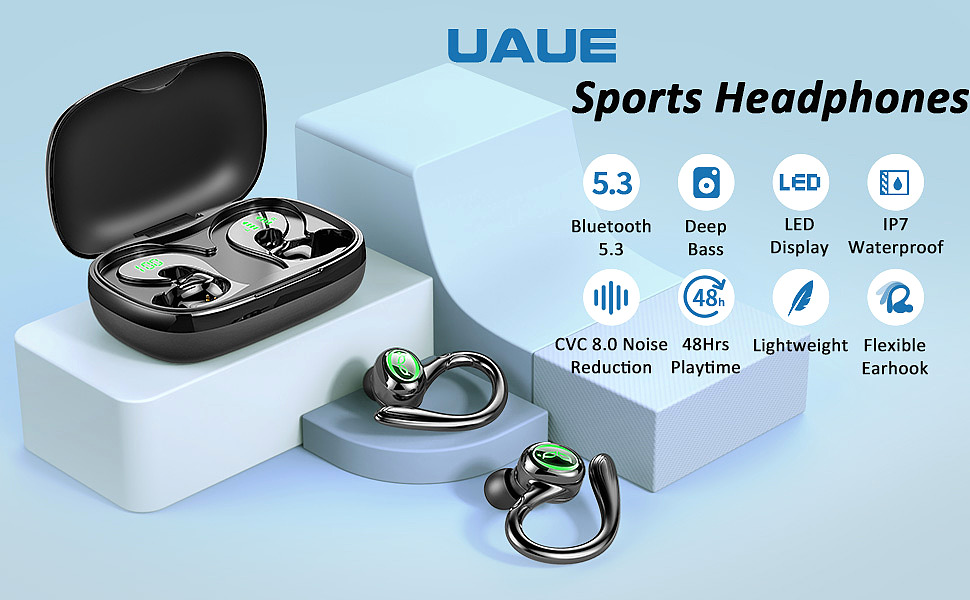
Uaue I23L Wireless Earbuds
Your earbud slips out. Not once. Every stride, every burpee, every time you push past mile three. You shove it back in. It falls again. You twist it. It holds for thirty seconds, then slides out with a slow, deliberate creep -- like it wants to leave.
This is not a minor annoyance. For anyone who exercises regularly, earbud fallout is the single most reported frustration with wireless audio. Return rates for non-sport earbuds hover between 15 and 20 percent, and the number one reason cited is fit. Stability has overtaken sound quality as the primary purchase consideration for sport-focused earbuds. The problem is real, it is measurable, and it has a physics explanation.
The Forces Working Against You
Three physical forces conspire to eject your earbuds during exercise: gravity, inertia, and the silent saboteur -- sweat.
When you run, your head does not move in a smooth line. It accelerates and decelerates with each footstrike, experiencing forces of 3 to 5g -- three to five times the pull of gravity. The ground reaction force during running reaches 8 to 12 times your body weight, and a fraction of that energy travels up through your skeleton to your skull. Your earbuds, perched in the ear canal with nothing but friction holding them in place, experience these same forces.
Inertia is the second culprit. When your head suddenly stops or changes direction -- picture a sharp pivot during a tennis drill or the abrupt deceleration at the bottom of a squat -- your earbuds want to keep moving in the original direction. Newton's first law, applied directly to your ear canal.
Then there is sweat. A 2019 study published in Annals of Otology, Rhinology, and Laryngology measured ear canal dimensions across 500 subjects and found diameters ranging from 4mm to 10mm. Only 23 percent of the population matches what earbud manufacturers consider a "standard" ear canal. Now introduce moisture: sweat reduces the friction coefficient between silicone and skin by up to 60 percent. The seal that felt secure at the start of your run degrades steadily as perspiration builds. What was a snug fit becomes a lubricated surface waiting to fail.
Why Standard In-Ear Designs Cannot Keep Up
The conventional earbud relies on a single retention mechanism: the press fit between the silicone tip and the ear canal wall. This is a one-point anchoring system, and it works well -- right up until it does not.
The problem is redundancy. When that single seal is compromised -- by sweat, by a head movement, by a slightly wrong insertion angle -- there is no backup. The earbud has nowhere to go but out. It is the engineering equivalent of a bridge with one support column: functional under ideal conditions, catastrophic under stress.
This is not a design flaw so much as a design limitation. In-ear buds were originally conceived for stationary listening -- desks, commutes, living rooms. The demands of a 5K run or a HIIT session were never part of the original engineering brief.
The Three-Point Anchor: How Your Ear Anatomy Can Save the Fit
Here is where biomechanics offers a way forward. The human ear has three structurally distinct zones that can bear load:
-
The helix -- the curved outer rim at the top of the ear. An earhook that wraps over this ridge carries approximately 40 percent of the total retention load.
-
The anti-helix and tragus -- the raised ridges inside the ear bowl. A properly shaped earhook or wingtip presses against these structures, bearing roughly 35 percent of the load.
-
The ear canal seal -- the traditional in-ear tip. This accounts for about 25 percent, and its primary function is acoustic sealing rather than physical retention.
The critical insight is this: even when the ear canal seal fails completely -- when sweat has reduced friction to near zero -- the earhook still maintains 75 percent of the total retention force through the helix and anti-helix anchors. The system degrades gracefully instead of failing catastrophically.
This is the same principle behind why rock climbers use multiple anchor points. One anchor failing does not mean a fall. The load redistributes to the remaining points.
Material Science Matters: Not All Earhooks Are Equal
The geometry of the earhook is only half the equation. The material determines whether that geometry works in practice.
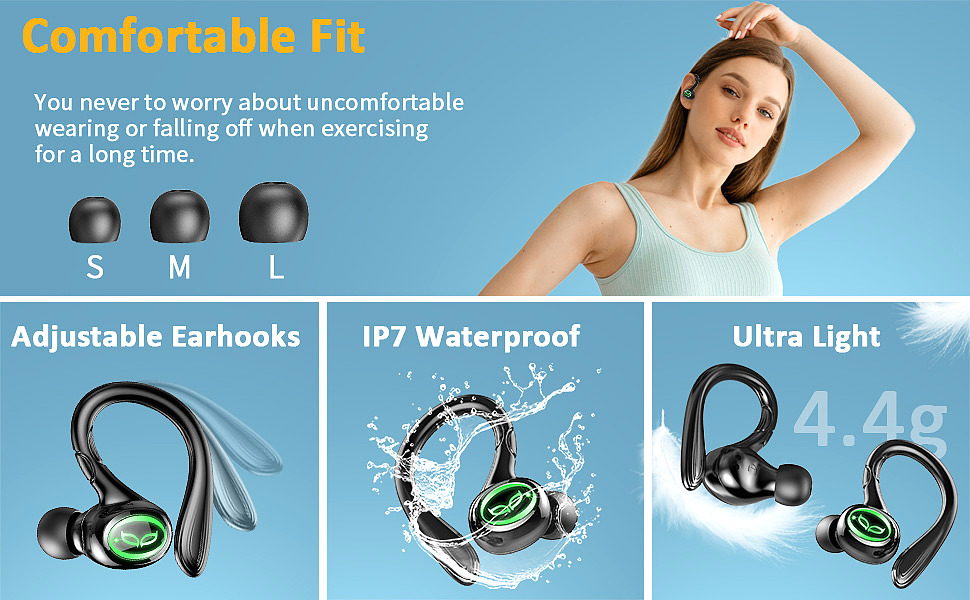
Effective earhooks are made from medical-grade thermoplastic polyurethane (TPU) with a Shore hardness of 75A to 85A. This range hits a specific sweet spot: soft enough to conform to the ear's curves without causing pressure pain, firm enough to resist deformation under the repetitive forces of exercise. The tensile strength exceeds 30 MPa, meaning the hook will not stretch out or lose its shape after months of use.
Rigid plastic earhooks -- the kind found on budget models -- fail on both counts. They cannot conform to individual ear shapes, creating pressure points that become painful within minutes. And they lack the 270-degree rotational adjustment range that soft TPU hooks provide, which allows the user to fine-tune the fit for their specific ear anatomy.
The difference is like wearing a cast versus wearing a glove. One forces your anatomy to conform; the other conforms to it.
Real-World Validation: What Users Actually Report
The biomechanical model predicts that earhook designs should dramatically reduce fallout incidents. The data from user reviews confirms this.
One user, Bonnie S. Rearick, tested four different earbud models under fifty dollars and reported: "These are perfect for those who continually have earbuds falling out of their ears, the ear hook is great because if you don't want them in fully yet you can walk around with them hanging on your ear. With the ear strap on while running, they have never fallen out."
Another reviewer with what they described as "distinctive ears" -- ears that protrude and have a smaller-than-average ear canal opening -- found that standard in-ear buds "feel very insecure and likely to fall out" but that the curved earhook support "fits over the top of the ear and I have found these to be much better suited to my special needs."
A Spanish-speaking reviewer with smaller-than-average ears reported that the earhook design "se acoplan perfectamente para salir a correr (no se caen continuamente)" -- they stay in place perfectly for running.
These accounts are consistent with the market data: sport-specific earhook earbuds have a return rate below 8 percent, less than half that of non-sport wireless models. The three-point anchoring system is not a theoretical improvement. It produces measurable, repeatable results.
The Fitting Ritual: Technique Amplifies Design
Even the best earhook design underperforms when worn incorrectly. The proper insertion sequence matters, and it is the opposite of what most people instinctively do.
Most users insert the ear tip first, then try to hook the earhook over their ear. This creates tension between the two anchor points and often results in the earhook sitting too high or the tip being angled wrong.
The correct sequence is:
- First, place the earhook over the top of the ear and let it rest naturally against the helix. This establishes the primary anchor point.
- Second, gently rotate the ear tip into the canal until you feel the silicone form a seal. This establishes the secondary and tertiary anchor points without fighting the primary.
- Third, make a small adjustment to the earhook position -- a millimeter or two can make the difference between "secure" and "perfect."
This sequence takes an extra five seconds per ear. It is the difference between a fit that lasts a full workout and one that needs readjusting every ten minutes.
Beyond Fit: The IPX7 Safety Net
Earhook design solves the retention problem. But retention without durability is its own failure mode. An earbud that stays in your ear but dies from sweat corrosion after two months is not a solution.
The IPX7 waterproof rating, defined by IEC 60529, guarantees that a device can withstand full immersion in one meter of water for thirty minutes at a controlled temperature. For sport earbuds, this specification matters not because you plan to swim with them, but because it sets a floor for sweat and rain resistance that is far beyond what unprotected electronics can survive.
Consider what happens inside an earbud during an intense workout. The internal temperature rises. Moisture from sweat penetrates every seam. Without proper sealing, the saline solution in human sweat corrodes circuit traces and degrades adhesive bonds within weeks. The IPX7 rating requires precision seals and hydrophobic nano-coatings that prevent this degradation entirely.
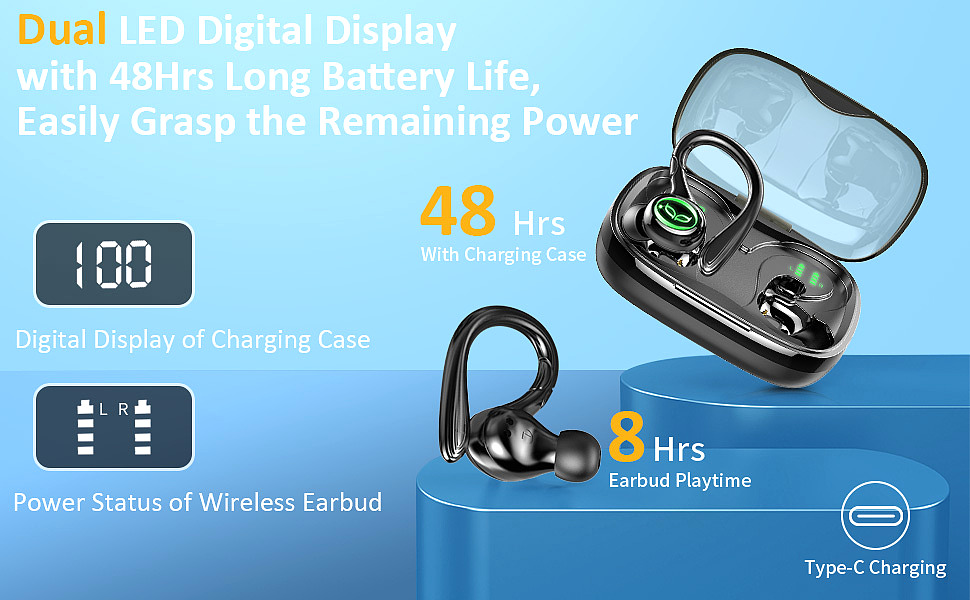
The uaue i23L, for example, carries this rating. One user reported losing an earbud in their yard for a week -- through rain -- then finding it in a pocket and sending it through a full laundry cycle, washer and dryer. It still worked. That is IPX7 in practice: not just a spec on a box, but engineering that survives the unintended chaos of real life.
The Shift in What Matters
Something has changed in the sport audio market over the past few years. Stability -- once a secondary consideration behind sound quality and brand recognition -- has become the number one purchase factor for workout earbuds. The market segment for earhook and outward-facing designs now accounts for 45 percent of sport-specific earbud sales.
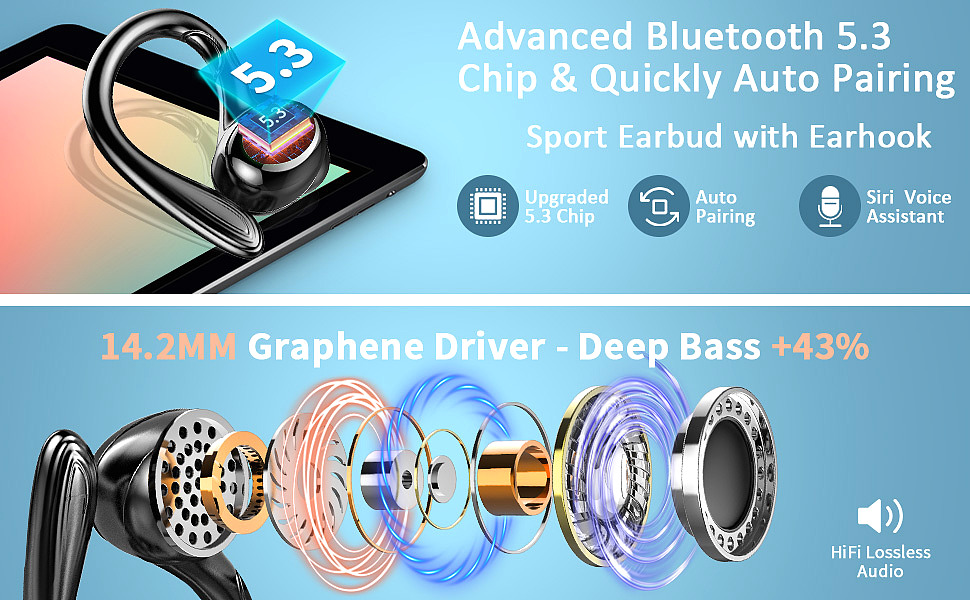
This shift reflects a maturation in consumer understanding. People who exercise regularly have learned through frustration that no amount of audio fidelity compensates for an earbud that will not stay in place. A 14.2mm high-quality driver delivers impressive bass, but only if the earbud is actually in your ear when the bass drops.
The physics are clear. The biomechanics are clear. The user data is clear. For exercise, a three-point anchoring system -- earhook over the helix, stabilization against the anti-helix, seal in the canal -- is not a luxury feature. It is the minimum viable engineering for a device that must survive the forces of human motion.
The next time you feel an earbud sliding out during a run, consider what is actually happening. It is not you. It is not your ears. It is physics -- and physics has a solution.
Uaue I23L Wireless Earbuds
Related Essays

The Biomechanics of Stability: Why Earhooks Remain the Athlete's Ultimate Tool

The Sport Earbud Advantage: A Case Study in Pragmatic, "Anti-Sleek" Design

How to Pick a Budget Sports Earbud That Actually Stays Put
Wireless Sports Earbuds for Small Ears: JLab Go Sport+ Design Analysis
Wireless Sports Earbuds for Small Ears: JLab Go Sport+ Design Analysis

Generic CBT T2390 Bluetooth Headphones - Unleash Your Wireless Freedom

Spmmmner Wireless Earbuds – A Seamless Listening Experience

Jzones Wireless Earbuds with Long Playtime and Wireless Charging

WATAHATIC 203 Wireless Headphones - Top-Notch Sound Quality and Long Battery Life
