The Physics of Independence: Decoding the Standalone Audio Architecture of the LOBKIN S19


LOBKIN S19 Over Ear Wireless Headphone
In the contemporary audio landscape, headphones are predominantly defined by their dependency. They are satellites, tethered invisibly to the gravitational pull of a smartphone or computer. Without a host device, they are inert. The LOBKIN S19, however, represents a divergent engineering philosophy: the headphone as an autonomous system.
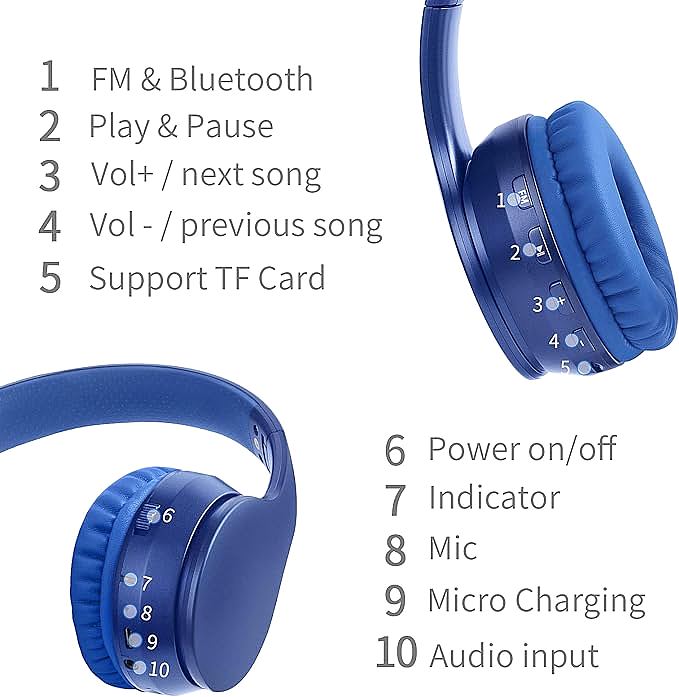
By integrating FM radio reception and local file decoding (TF/MicroSD) alongside standard Bluetooth connectivity, the S19 is less of a peripheral and more of a Standalone Audio Hub. To understand how a budget-friendly device achieves this "Swiss Army Knife" versatility, we must look deeply into the miniaturization of System-on-Chip (SoC) technology and the physics of signal chains.

The Silicon Brain: SoC Integration Density
The engineering marvel of the S19 isn't its size, but its density. Traditionally, an FM tuner, an MP3 decoder, and a Bluetooth receiver were separate components requiring significant circuit board real estate. The S19 utilizes highly integrated Audio SoCs. These silicon chips compress multiple subsystems onto a single die:
* RF Transceiver: Handles the 2.4 GHz Bluetooth handshake and data stream.
* DSP (Digital Signal Processor): Decodes compressed audio files from the memory card.
* FM Demodulator: Processes analog radio signals.
This integration reduces power consumption and latency, allowing complex multi-mode switching (e.g., from Bluetooth call to FM radio) to happen instantaneously within a constrained power budget.
Local Decoding: The Physics of the TF Card Slot
While streaming is convenient, it introduces compression artifacts and latency. The S19's TF (TransFlash/MicroSD) Card mode fundamentally changes the signal path. * Source-Side Decoding: When playing music from a card, the digital file is decoded directly by the headphone's onboard chip. This eliminates the "double compression" often found in Bluetooth transmission (where a file is compressed, transmitted via SBC/AAC, and decompressed). * Zero Wireless Latency: Because the source is physically connected to the DAC (Digital-to-Analog Converter) via the internal bus, there is zero transmission lag. For critical listening or audiobooks, this direct path offers a theoretical fidelity advantage over standard Bluetooth codecs, limited only by the quality of the source file and the onboard DAC.

Radio Frequency Engineering: The Antenna Challenge
Implementing FM Radio (87.5-108 MHz) in a headphone presents a unique physics problem: Antenna Length. Ideally, an FM antenna should be roughly 75cm (quarter-wavelength) for optimal reception. * The Headphone Solution: LOBKIN likely utilizes the internal wiring of the headband or the copper shielding of the voice coil cables to act as a makeshift antenna. While not as efficient as a telescopic rod, this engineering compromise allows for the reception of strong local signals without external appendages. * Signal-to-Noise Ratio (SNR): Analog radio is susceptible to interference. The S19's circuit design must carefully shield the FM demodulator from the high-frequency switching noise of the Bluetooth chip and battery regulator to prevent the "static" hiss common in poorly designed hybrids.
Acoustic Mechanics: The 40mm Dynamic Driver
Regardless of the source (Bluetooth, FM, or TF Card), the sound is ultimately produced by the 40mm Dynamic Drivers. * Surface Area Physics: A 40mm diameter is the "sweet spot" for over-ear portability. It provides enough surface area to move a substantial volume of air, creating perceptible bass pressure (impact), while remaining light enough for the voice coil to move rapidly for treble detail. * Closed-Back Isolation: The S19 employs a Closed-Back enclosure. Acoustically, this seals the rear volume of the driver. This trapped air acts as a spring, dampening the driver's movement and enhancing low-frequency resonance. This design choice is critical for outdoor use, providing passive noise isolation that works in tandem with the audio output to mask environmental noise.

Structural Engineering: Foldable Kinematics
Portability dictates mechanical design. The S19 features a Foldable Hinge Mechanism. * Stress Distribution: The hinge is the highest stress point in any headphone. The use of "Adjustable Metal" reinforcement in the slider mechanism is a critical durability feature. It prevents the plastic fatigue that typically causes budget headphones to snap after repeated folding cycles. * Ergonomics: The "Memory-protein" ear cushions utilize viscoelastic foam. This material softens with body heat, conforming to the unique topography of the user's jawline to create an airtight acoustic seal—essential for maximizing the bass response of the 40mm drivers.
Conclusion: The Democratization of Multi-Functionality
The LOBKIN S19 is a testament to the maturity of the global electronics supply chain. It proves that sophisticated features like standalone decoding and RF reception are no longer premium luxuries but accessible commodities. By integrating these distinct technologies into a single, cohesive acoustic package, it offers a level of independence that challenges the smartphone-centric model of modern audio consumption. It is a device designed for those who want their music to be as mobile and untethered as they are.
LOBKIN S19 Over Ear Wireless Headphone
Related Essays

Koss KSC75 Open-Back On-Ear and Its Two Close Rivals

The Science Behind Wireless Audio: From Bluetooth Origins...

Computational Audio Soundbar: How Five Drivers Replace a Room Full of Speakers

The RF Congestion Crisis: Why Your Wireless Guitar Signal...

What Does IPX7 Protect Against? The Engineering Truth

Why Wireless Earbuds Sound Flat: DSP Trade-Offs Explained

The Studio Vocal Chain: What Every Singer Needs to Know

Balanced Armature or Dynamic Driver: 2026 IEM Truths

Open Back Headphones: Why They Sound Different

