How Noise-Cancelling Headphones Use Physics to Fight Sound With Sound

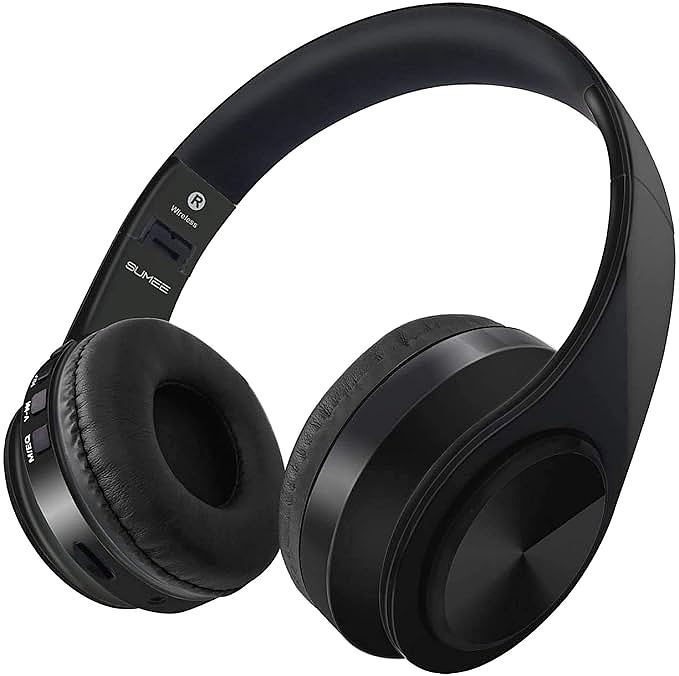
ZIHNIC Pn 9 Headphones
You sit down on a flight, press the power button on your headphones, and the engine drone drops to a whisper. Not muted. Not covered up. Cancelled. The noise is still physically there -- pressure waves hammering the fuselage at 120 decibels -- but your brain stops registering it. Something inside those earcups is generating a second sound that reaches your eardrum at exactly the wrong moment, destructively interfering with the roar before you perceive it.
That something is Active Noise Cancellation, and it rests on a principle so counterintuitive it sounds like a parlor trick: you can silence a room by adding more noise. The engineering that makes this happen inside a pair of headphones -- especially an affordable pair -- involves real-time signal processing, microphone placement strategy, and trade-offs that reveal as much about the limits of cheap silicon as they do about the physics of sound.

Destructive Interference: The Acoustic Weapons Treaty
Sound travels as longitudinal pressure waves -- alternating regions of compressed and rarefied air. When two waves occupy the same space, they combine through superposition. If a compression from wave A meets a rarefaction from wave B at the same instant, the pressures partially cancel. This is destructive interference, and it is not a laboratory curiosity. It is the reason noise cancellation works at all.
The condition for full cancellation is demanding. The anti-noise signal must match the original sound in amplitude but arrive exactly half a wavelength out of phase -- 180 degrees. For a pure tone at 200 Hz, the wavelength is approximately 1.7 meters. Half of that is 85 centimeters. The anti-noise speaker inside an earcup sits only a few centimeters from your eardrum, so the DSP (digital signal processor) must compute the inverted waveform and push it through the speaker with microsecond-level timing accuracy. Even a 0.1-millisecond error at 1 kHz shifts the phase by 36 degrees, degrading cancellation from near-total to partial.
This timing constraint is the fundamental reason ANC performance varies so dramatically between price points. A faster DSP with lower latency can maintain tighter phase alignment, which translates directly into deeper silence. Budget implementations use slower processors with higher round-trip latency, and the cancellation window narrows accordingly.
The Two-Microphone Problem: Feedforward and Feedback
Modern ANC headphones use two distinct microphone architectures, each with specific strengths and blind spots.
Feedforward systems place microphones on the outside of the earcup, facing outward. These mics hear the ambient noise before it reaches your ear, giving the DSP a head start. The processor analyzes the incoming waveform, generates the inverse, and plays it through the driver at precisely the moment the original sound would arrive at the eardrum. Because the microphone captures noise in advance, feedforward ANC can target a wide frequency range -- typically from roughly 50 Hz up to about 1-2 kHz. It handles airplane engines, train rumble, and air conditioning hum with reasonable effectiveness.
The weakness is isolation. The feedforward microphone does not know what actually reaches your ear. If the earcup seal is imperfect -- and on budget headphones with simpler padding, it often is -- ambient sound leaks in through gaps that the outward-facing mic never measured. The anti-noise signal was computed for a sealed system, so the leakage goes uncancelled. This produces an audible artifact: a hollow, pressurized sensation some users describe as feeling like their head is underwater.
Feedback systems place the microphone inside the earcup, between the driver and your ear. This mic hears exactly what you hear, allowing the DSP to correct for leakage, fit variations, and even the acoustic properties of the earcup itself. The system forms a closed loop: if cancellation is imperfect, the internal mic detects the residual noise and adjusts the anti-noise signal in real time.
The trade-off is latency. Because the feedback mic detects noise that has already entered the earcup, the DSP has zero advance notice. It must react faster than the sound can complete a full cycle, which means feedback ANC is effective only at lower frequencies -- typically below 300-500 Hz. Attempting to cancel higher frequencies with feedback creates instability: the correction signal arrives late, reinforces the original wave instead of cancelling it, and the system oscillates into an audible high-pitched whistle. Engineers call this "feedback howl," and avoiding it sets a hard upper bound on the frequency range a feedback loop can address.
Premium headphones combine both architectures into what is called hybrid ANC, using feedforward mics for broad-spectrum cancellation and feedback mics for low-frequency precision and fit compensation. Budget models frequently employ only the feedforward approach, saving the cost of the internal microphone and the more complex DSP required to manage two signal paths simultaneously. This is one of the most consequential engineering decisions in affordable ANC design, and it explains why budget headphones can feel effective against engine drone but struggle with the irregular acoustics of a coffee shop.
Why Budget ANC Targets Low Frequencies
Anyone who has used both premium and affordable noise-cancelling headphones has noticed a pattern: the cheap ones suppress airplane noise reasonably well but let through keyboard clicks, conversation fragments, and barking dogs. This is not an accident. It is a calculated engineering decision rooted in physics and cost.
Low-frequency sounds have long wavelengths. A 100 Hz tone has a wavelength of about 3.4 meters. The spatial variation of such a wave across the few centimeters between the outside of an earcup and the eardrum is negligible. This means the feedforward microphone can capture a waveform that is essentially identical to what will reach the ear moments later, making cancellation straightforward. The DSP does not need to be fast or precise -- the target is large, slow, and predictable.
High-frequency sounds tell a different story. A 4 kHz tone has a wavelength of about 8.5 centimeters. Over the distance from the external mic to the eardrum, the phase of this wave shifts substantially. Tiny variations in fit, ear shape, and head position change the phase relationship unpredictably. Cancelling a 4 kHz wave requires the anti-noise signal to be accurate within roughly 0.02 milliseconds -- a timing budget that demands expensive, fast processors and tight manufacturing tolerances on driver response.
Budget ANC chips simply cannot meet this timing requirement. Instead, engineers optimize the DSP algorithms for the frequency band where cheap silicon can still perform well: approximately 50-500 Hz. This band happens to contain the most fatiguing environmental noises -- engine rumble, road traffic, HVAC hum, train vibration. By concentrating limited processing power on this range, budget headphones deliver perceptible relief from the sounds that cause the most stress, while leaving higher frequencies to passive isolation from the earcup's physical seal.
This strategy is surprisingly effective for its target use case. On an airplane or a commuter train, low-frequency suppression addresses roughly 80% of the acoustic annoyance. The remaining mid and high frequencies -- cabin chatter, clinking glasses, safety announcements -- are partially attenuated by the physical barrier of the earcups and memory foam pads. The result is not silence, but it is a meaningful reduction in fatigue over a long trip.

The Latency Budget: Where Milliseconds Become Decibels
Every digital ANC system introduces latency -- the time between when a microphone captures sound and when the anti-noise signal exits the speaker. This latency comes from three sources: the analog-to-digital converter (ADC), the DSP computation, and the digital-to-analog converter (DAC). In a well-optimized system, total round-trip latency might be 2-5 microseconds. In a budget implementation, it can be 10-30 microseconds or more.
The impact of this latency is frequency-dependent. At low frequencies, where wavelengths are long, a few extra microseconds of delay barely matters -- the phase error is small. But as frequency increases, the same absolute time delay represents a larger fraction of the wavelength, and the cancellation degrades. This is the mathematical reason budget ANC has a sharp frequency ceiling.
Engineers express this ceiling as a curve. If you plot cancellation depth in decibels against frequency, budget ANC typically shows a deep notch between 100-300 Hz (where cancellation might reach 15-20 dB), tapering off sharply above 500 Hz and becoming negligible by 1-2 kHz. Premium hybrid systems extend this curve upward, maintaining meaningful cancellation to 1 kHz or beyond.
The analog alternative exists -- purely analog feedback circuits with no ADC or DAC, and therefore near-zero latency. Some of the earliest ANC implementations in aviation headsets from the 1980s used exactly this approach. Analog circuits are cheap and fast, but they lack the flexibility to adapt to changing noise environments. Digital processing, even with its latency penalty, allows algorithms to adjust in real time, apply multiple filters simultaneously, and manage both feedforward and feedback paths -- capabilities that analog simply cannot match.
Passive Isolation: The Unsung Partner
No discussion of ANC is complete without acknowledging the role of passive noise isolation -- the physical blocking of sound by the headphone's structure. Passive isolation operates independently of electronics. It depends on three factors: the clamping force of the headband (which presses the earpads against the head), the density and conformity of the earpad material, and the acoustic sealing of the earcup shell.
Over-ear designs have a natural advantage here. The large earcup encloses the entire ear, creating a sealed cavity that physically blocks high-frequency sound waves. Memory foam earpads conform to the irregular contours around the ear, filling gaps that would otherwise leak sound. At frequencies above roughly 1 kHz -- where ANC on budget headphones has already given up -- passive isolation takes over, providing 15-25 dB of attenuation depending on fit and materials.
This partnership between active and passive noise reduction explains why the same ANC chip can produce different results in different headphone designs. A well-sealed over-ear cup with dense memory foam pads will outperform a looser design with thinner padding, even if both use identical electronics. The physical structure is not just a housing for the technology -- it is an active participant in noise reduction.

Signal Processing on a Shoestring: The Cost of Cost
The DSP at the heart of an ANC system performs a deceptively simple task: capture audio, invert its phase, and output the result with minimal delay. In practice, this requires several signal-processing stages operating in parallel. The incoming microphone signal must be filtered to remove frequencies outside the cancellation band (there is no point wasting processing power on a 10 kHz tone the system cannot cancel). The filtered signal must be phase-inverted, amplitude-matched, and mixed with the audio playback signal before being sent to the driver.
Premium ANC processors -- such as those from Qualcomm (the QCC series) or Analog Devices -- dedicate hardware accelerators to these tasks, performing billions of multiply-accumulate operations per second at power budgets measured in milliwatts. Budget headphones often rely on general-purpose audio SoCs (System-on-Chip designs) that handle Bluetooth decoding, microphone input, and ANC processing on a shared processor core. When Bluetooth traffic spikes -- during a momentary connection hiccup, for example -- the ANC algorithm may receive fewer CPU cycles, and cancellation quality dips.
This resource contention is invisible in specifications but audible in practice. Users of budget ANC headphones sometimes report that noise cancellation feels inconsistent -- strong one moment, slightly weaker the next. This variability is often the sound of a single chip juggling too many tasks with too little processing headroom.
The Psychoacoustics of "Enough" Cancellation
There is a psychological dimension to ANC effectiveness that raw decibel measurements do not capture. Human hearing does not perceive loudness linearly. A 10 dB reduction in sound pressure level is perceived as roughly half as loud. This means even modest ANC performance -- say, 10-12 dB of reduction in the 100-300 Hz range -- can halve the perceived intensity of an airplane engine. The result is not silence, but it is a dramatic reduction in the cognitive fatigue that prolonged low-frequency noise produces.
Research in environmental psychology has consistently shown that continuous low-frequency noise -- the kind generated by transportation, industrial equipment, and building systems -- is among the most stress-inducing acoustic environments, even at moderate volume levels. The ear's inner hair cells respond to low frequencies with sustained firing patterns that the brain interprets as a persistent threat signal. Breaking this pattern, even partially, produces disproportionate relief.
This is the real engineering insight behind budget ANC: the designers are not trying to create anechoic silence. They are trying to disrupt the specific acoustic patterns that cause the most psychological stress, using the minimum processing power required to achieve that disruption. It is a solution shaped as much by neuroscience as by electrical engineering.
What Remains Unsolved
The next frontier in noise cancellation is not better low-frequency performance -- that problem is largely solved, even at modest price points. The challenge is transient sound: sudden, unpredictable events like a door slamming, a dog barking, or a nearby laugh. These sounds rise and fall in milliseconds, giving any ANC system -- feedforward or feedback -- insufficient time to compute and deliver an anti-noise signal.
Research prototypes have explored predictive algorithms that use machine learning to anticipate transient events based on the early portion of the waveform, but these approaches remain computationally expensive and unreliable in practice. For now, the primary defense against sudden noise remains physical: the mass and seal of the earcup itself, supplemented by the music or audio content you choose to play over the cancellation.
There is a philosophical tension at the heart of noise cancellation technology. The goal is to subtract energy from the acoustic environment -- to make something disappear. But subtraction requires addition first: a microphone, a processor, a speaker, a battery, all working to inject a second sound that erases the first. The quieter the headphone, the more invisible machinery is running behind the curtain. In budget designs, the curtain is thinner, the machinery is simpler, and a few more sound waves slip through the gaps. But the fundamental trick -- fighting sound with inverted sound -- works the same way whether the headphone costs fifty dollars or five hundred. The physics does not care about the price tag.
ZIHNIC Pn 9 Headphones
Related Essays

When Inches Shrink: The Hidden Physics Behind Tiny Wireless Earbuds
The Physics of Cheap Sound: How Budget Audio Gear Punches Above Its Weight
